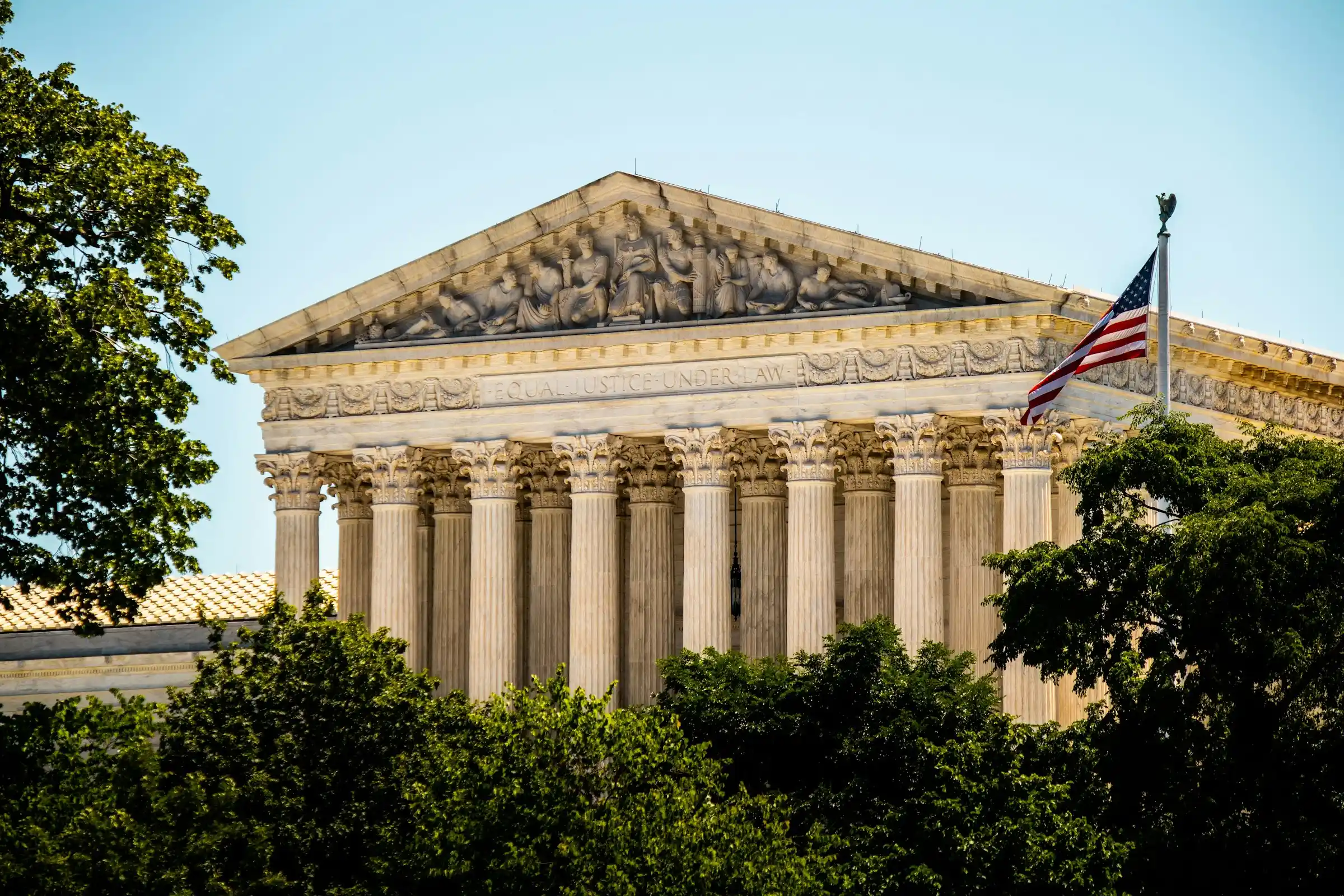
Four years after the Supreme Court eliminated the constitutional right to abortion, the loudest headlines still come from state legislatures and courtrooms — new bans, new lawsuits, new emergency-room horror stories. But the more consequential story may be happening somewhere quieter: inside the minds of voters.
For nearly half a century, American opinion on abortion was one of the most stable features of our politics. Polling from the mid-1970s through the year before Dobbs v. Jackson Women’s Health Organization looked almost identical decade after decade. A solid plurality favored legal abortion under certain circumstances, a smaller minority wanted it banned outright, and the rest sat somewhere in between. Politicians built entire careers on this equilibrium. Republicans could campaign against Roe indefinitely, secure in the knowledge that the actual right was never really at risk. Democrats could treat abortion as one issue among many, confident it would motivate a reliable slice of the electorate without much variance year to year.
That equilibrium is gone, and it isn’t coming back.
The mechanism behind this shift is almost embarrassingly simple: abortion policy stopped being hypothetical. For fifty years, “pro-life” and “pro-choice” were identity labels people could wear without much practical stake in the outcome — the federal right was a backstop no state legislature could touch. Once that backstop disappeared, the labels started to cost something. A ban wasn’t a talking point anymore; it was a six-week cutoff, a denied prescription, a woman bleeding in a parking lot because a hospital’s lawyers weren’t sure her miscarriage qualified as an emergency.
Americans, it turns out, respond very differently to abstract debates than to visible consequences. Extensive coverage of women turned away during miscarriages and dangerous pregnancy complications did more to move public opinion than decades of campaign ads ever did. People increasingly judge these laws by what actually happens to patients, not by which week a legislature chose as a cutoff — and polling suggests a large share of Americans don’t have a precise sense of how pregnancy is even dated, which makes the fine print of “moderate” gestational limits far less persuasive than lawmakers assume.
That has real strategic implications. Republican legislators in states like North Carolina and Virginia have tried to sell 12- or 15-week bans as sensible middle ground — the kind of compromise that might have worked in 1990. It isn’t landing. Voters increasingly see little daylight between a “moderate” restriction and a stricter one, because both produce the same headline: a woman denied care she needed.
The coalition math has flipped
Perhaps the most politically dangerous change for Republicans isn’t happening among Democrats at all — it’s happening inside their own coalition. For decades, abortion mattered more to the pro-life right than to the pro-choice left; opposition to Roe was a unifying, low-cost cause precisely because it never had to be cashed in. Now the intensity has reversed. Since Dobbs, Democrats and abortion-rights supporters have consistently ranked abortion as a higher voting priority than Republicans and abortion opponents have — a flip that shows up clearly in both the 2022 and 2024 elections, where pro-choice Democrats turned out at elevated rates and stayed loyal to their party.
Meanwhile, a meaningful bloc within the GOP — something like a third of self-identified Republicans, by some estimates — holds abortion views that don’t match their party’s official position. Many of these voters are either quietly pro-choice or support legal abortion in at least some circumstances. Under Roe, that mismatch cost them nothing; the constitutional right absorbed the tension for them. Post-Dobbs, a Republican vote can translate directly into a ban in their own state. That’s a much harder thing to rationalize, and the data shows it: cross-pressured Republicans are turning out less and crossing party lines more than they used to. A coalition built for decades around a comfortable contradiction is now being asked to resolve it at the ballot box, and it’s fraying at the seam.
A new gender gap
Perhaps the starkest new fault line is between men and women. For most of the Roe era, the sexes held remarkably similar views on abortion — a fact that often surprised people who assumed it was inherently a “women’s issue” in terms of opinion, not just impact. That similarity has evaporated. Women are now substantially more likely than men to support legal abortion in all or most circumstances, and the gap is wide enough to reshape turnout models on its own.
This isn’t mysterious. Women are the ones who experience pregnancy, miscarriage, and the medical system’s response to both. When restrictions went from theoretical to enforced, women didn’t shrug — many recoiled, and recalibrated their politics accordingly. It’s a textbook case of policy backlash: push in one direction hard enough, and public opinion pushes back the other way.
Why 2026 is different
None of this means abortion alone will decide the 2026 midterms. The economy, inflation, and the usual gravitational pull of an incumbent president’s approval rating will all matter enormously, as they always do. Abortion has never been, and won’t become, the single variable that explains American elections.
But it no longer needs to be the only issue to matter — it just needs to be a durable one, and the evidence suggests it now is. It’s motivating a Democratic base that used to be, if anything, slightly less energized on the topic than the opposition. It’s straining a Republican coalition that spent decades getting a free pass on a symbolic position now turned real. And it’s opened a gender divide that campaigns on both sides will have to reckon with in candidate selection, messaging, and turnout strategy.
The deeper lesson of the last four years may be this: constitutional rights don’t just protect people from government action — they also function as a kind of political anesthetic, letting voters hold strong opinions without ever having to act on the consequences. Remove the anesthetic, and opinions that once sat quietly in the background start driving behavior in the foreground.
Fifty years of stability on abortion attitudes wasn’t really stability at all — it was a right doing the work that public opinion never had to. Now that the right is gone, the opinion is left standing on its own, and it is proving far more assertive, more gendered, and more electorally consequential than anyone expected four years ago. Whatever happens in November, one thing seems clear: American voters, having glimpsed what life without Roe actually looks like, are not interested in going back to pretending the question is abstract.