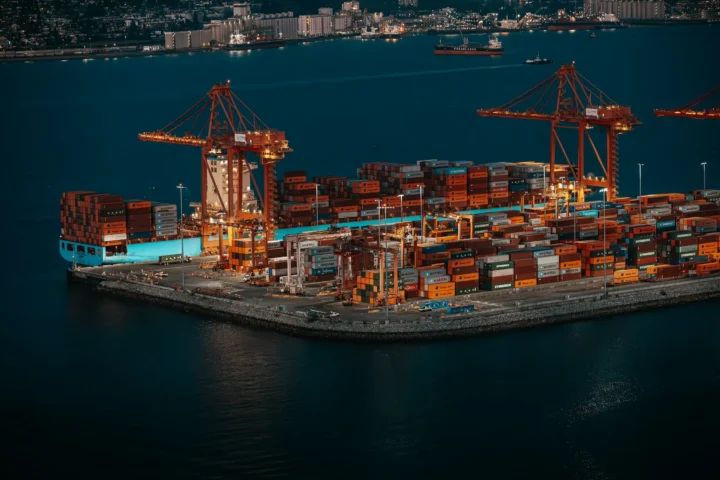
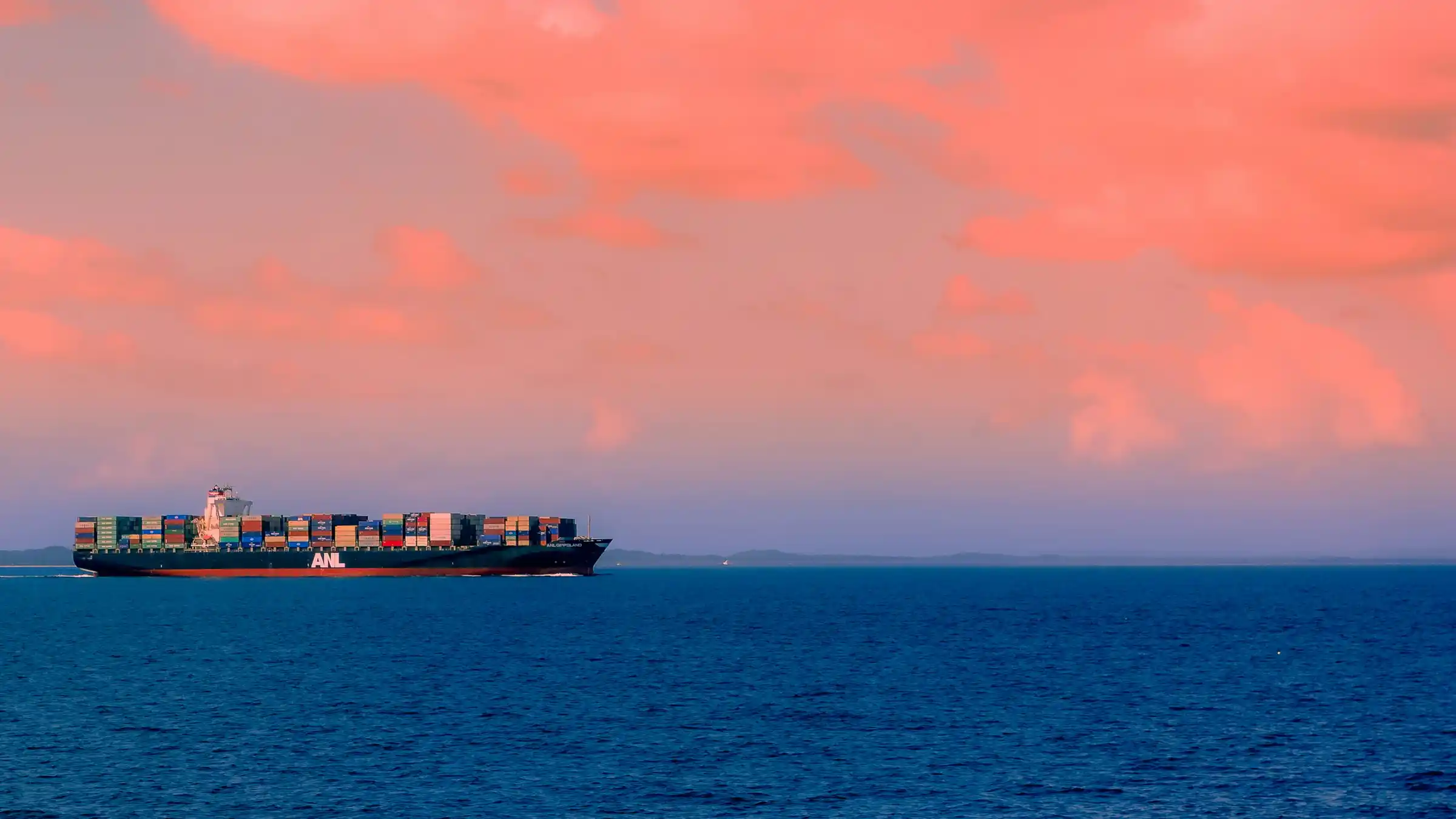
More than 80% of global trade by volume travels by sea, which makes maritime shipping lanes one of the quiet load-bearing structures of the world economy. That fact became impossible to ignore during the recent war in Iran, when Tehran effectively shut the Strait of Hormuz to commercial traffic and Washington answered with a blockade of Iranian ports.
For most of the post-Cold War era, this kind of confrontation at sea was rare. Sanctions were enforced far from the water, through the plumbing of global finance — bank messaging systems, insurance markets, shipping registries, port access rules. Governments could squeeze a country’s trade without ever sending a ship to intercept another.
That system is now straining under its own success. The more the United States and its allies have leaned on sanctions as a tool of geopolitical conflict, the more skilled targeted states have become at slipping around them. In response, Washington and its partners are drifting back toward a blunter, older instrument: stopping ships at sea.
Since late 2024, naval forces from Europe and NATO have detained or inspected a growing number of vessels suspected of carrying sanctioned cargo, mostly so-called shadow fleet tankers hauling Russian oil. Since the U.S. blockade of Venezuelan oil began in late 2025, that net has widened to include Iranian and Venezuelan-linked ships, with European and Indian authorities now joining the effort. These vessels are built for ambiguity — shifting ownership structures, frequent flag changes, improvised insurance arrangements — all designed to keep them just outside the reach of conventional enforcement.
As someone who has spent years tracking international security and geopolitical risk, I don’t see this as a coordinated global strategy. I see something more structural: sanctions enforcement is migrating out of the financial system and back into physical space.
Why Financial Leverage Is Fading
Modern sanctions regimes were built around chokepoints in global commerce. U.S. and European restrictions on Iran and Russia demonstrated how much damage could be done simply by cutting access to dollar clearing, the SWIFT banking network, and maritime insurance. If a bank won’t process the payment, an insurer won’t cover the cargo, and a port won’t legally accept the shipment, trade grinds to a halt without a single ship being boarded.
But that leverage only works as long as enforcement agencies can see what’s happening and sanctioned actors feel bound to comply. Neither condition holds as firmly as it once did.
Russia’s shadow fleet is the starkest illustration. Hundreds of tankers now move oil entirely outside Western insurance and registry systems, threading through ownership chains deliberately built to obscure who owns them and where they’re headed. Iran offers a parallel story: years of sanctions targeting its access to dollar clearing and maritime services pushed Tehran to build its own evasive shipping networks — ship-to-ship transfers, flag-hopping, layers of intermediaries — to keep oil flowing, mostly to Asian buyers and above all China.
The scale is no longer marginal. A 2025 S&P Global estimate put the global shadow fleet at roughly 1,000 tankers, representing somewhere between 17% and 18.5% of the world’s total tanker capacity.
As financial tools lose their grip, governments are confronting an old problem in a new form: how do you enforce a sanctions regime once the financial system can no longer see or control where the money and cargo are actually going?
Interdiction Makes a Comeback
Increasingly, the answer countries are reaching for is direct physical interdiction.
Boarding ships is nothing new in naval history, but the frequency with which it’s now being used as a sanctions tool is. Since late 2024, a string of European interdictions has targeted shadow fleet vessels across the Baltic and Mediterranean — Finland’s boarding of the Eagle S, Germany’s seizure of the Eventin, Estonia’s detention of the stateless Kiwala.
The European Union has gone further still. Operation IRINI, a naval mission originally launched in 2020 to enforce a United Nations arms embargo on Libya, has since expanded into shadow fleet inspections. By June 2026 it had boarded three EU-sanctioned tankers — the Oneiroi, the Nelsa, and the Sandhya — operating in international waters.
Other governments are borrowing the same playbook for very different ends. In June 2025, Iran’s Revolutionary Guard Corps seized the tanker Talara in the Gulf of Oman, invoking national security. The legal justifications diverge, but the underlying logic converges: naval power used to interrupt commercial shipping in pursuit of a strategic goal.
This spread of maritime interdiction is running headlong into an international legal order that was never designed to accommodate it.
Under the U.N. Convention on the Law of the Sea, vessels on the high seas answer to their flag state alone. The principle exists to keep global shipping predictable and to prevent nations from harassing one another’s commerce. The exceptions are narrow: warships may board vessels suspected of piracy, slave trading, statelessness, or flying a false flag. Beyond that, boarding is generally off-limits.
Sanctions enforcement is now being squeezed into those narrow exceptions. Because shadow fleet vessels so often rely on shifting flags and murky ownership, states can plausibly argue a given ship is effectively stateless or fraudulently registered. But sanctions evasion, on its own, is not a recognized legal basis for a boarding. Enforcement therefore hinges on interpretation — on what counts as a legitimate flag or a valid registration — rather than on settled law. A legal system built around clean categories is colliding with a maritime economy built to make those categories meaningless.
No Shared Playbook
What’s most striking about this new enforcement landscape is how inconsistent it is. Some ships are boarded and released within days. Others are fined, seized outright, or redirected. Outcomes hinge on domestic law, political timing, and shifting enforcement priorities — and even among allied nations, there’s no shared definition of what a successful interdiction looks like.
Compare this to the 1990s and early 2000s, when U.N. sanctions on Iraq were enforced through naval operations carried out under a single Security Council mandate, with standardized rules known in advance to everyone involved. Nothing like that framework exists for today’s shadow fleet enforcement. States are acting in parallel, not in concert, and the result is a patchwork of contradictory precedents.
Although current activity clusters around Europe and the Strait of Hormuz, the logic behind it won’t stay contained. In the South China Sea, China has already expanded maritime law enforcement under broad domestic justifications like fisheries protection and anti-smuggling operations — a different flag draped over the same basic idea: use legal classification to justify a coercive presence at sea. Iran has shown how easily tanker seizures can be recast as sanctions enforcement or national security response.
There is no tribunal, no inspection authority, and no agreed mechanism anywhere for resolving disputes over a vessel’s status or the legitimacy of its cargo. Enforcement capability is outrunning governance capacity, and naval forces are increasingly operating in a legal gray zone that no institution is positioned to referee.
Physical interdiction isn’t replacing financial sanctions — banks and insurers remain central to economic pressure — but it’s no longer sufficient on its own, and states are layering the two together. Ships are being boarded not because financial tools have vanished, but because those tools no longer close every gap.
The danger is that this hybrid system of enforcement is taking shape without agreed rules or common standards, raising the odds of miscalculation and confrontation at sea. If boarding practices harden into routine under expansive legal interpretations, other states will adopt similar tactics for their own purposes. The real risk isn’t that nations converge on a shared policy — it’s that they’re setting precedents that steadily erode the line between law enforcement, coercion, and ordinary commerce.