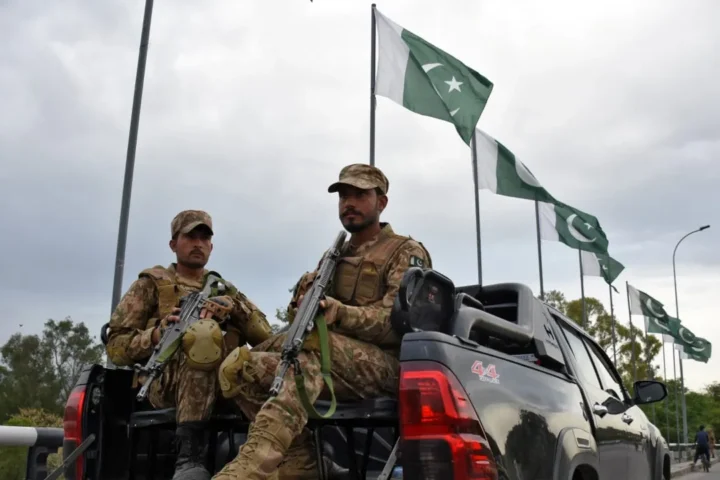
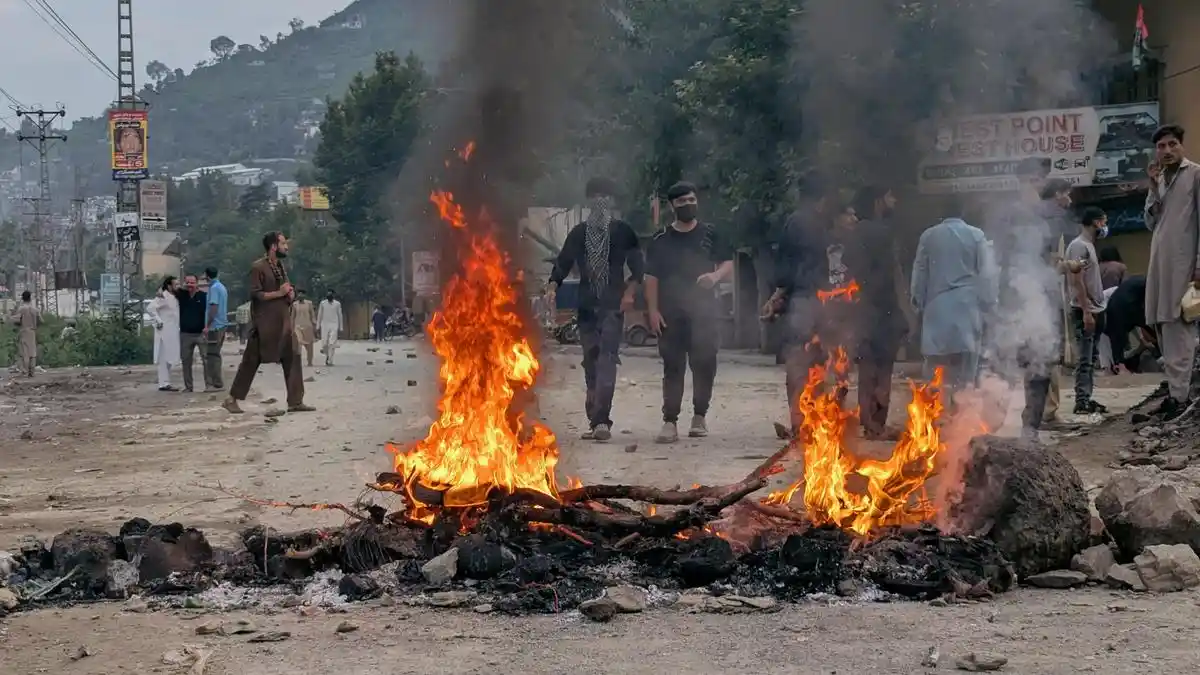
For two months, the mountain towns of Pakistan-administered Kashmir have been under a kind of siege that rarely makes it into Western headlines. Rangers have fired on unarmed crowds. Internet and mobile networks have gone dark for weeks at a stretch. A grassroots rights coalition has been formally designated a terrorist organization. And in the first days of August, Islamabad extended its campaign of information control to an audience well beyond its own borders, restricting access to Al Jazeera English after the network aired ground reporting from Muzaffarabad. Pakistan’s Information and Broadcasting Ministry did not deny the coverage was accurate; it simply accused the network of “selective reporting” and “yellow journalism,” and the site went dark for millions of Pakistani users.
This is not a story about a distant territorial dispute. It is a story about what happens when a state facing a genuine, home-grown uprising over bread-and-butter grievances chooses bullets, blackouts and blacklists over dialogue — and about how easily that playbook extends to silencing the outside world’s view of it.
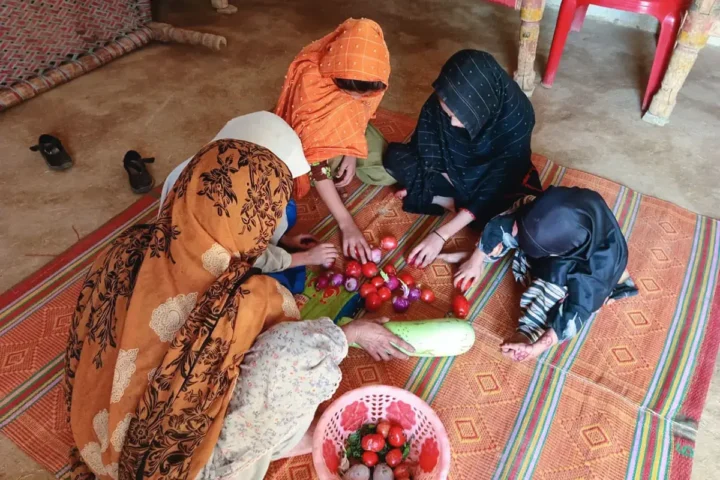
The uprising did not begin with guns or with any external actor. It began with flour prices, electricity bills and a demand for basic representation. The Jammu and Kashmir Joint Awami Action Committee, a civil-society coalition known as JAAC, has spent several years organizing around economic grievances in the territory Pakistan calls Azad Jammu and Kashmir — chronic shortages, discriminatory subsidies, and a legislative assembly structure that reserves seats for refugee constituencies in ways JAAC says dilutes local representation. Talks between JAAC and federal officials broke down in late May over that seat-reservation dispute, and the group announced a region-wide strike for June 9.
Islamabad’s answer arrived before the strike did. On June 5, authorities in the territory designated JAAC a “proscribed organization” under the Azad Jammu and Kashmir Anti-Terrorism Act of 2014 — the same legal category reserved, in theory, for militant networks. Amnesty International called the move a dangerous escalation, warning that branding a grassroots movement as terrorist while simultaneously cutting the region off from the outside world raised serious concerns about the authorities’ disregard for basic rights. The authorities’ violent and sweeping crackdown on protests in Pakistan-administrated Jammu and Kashmir – including an internet shutdown, mass arbitrary arrests, and deadly use of force – continues an alarming deterioration of human rights in the region, the organization said at the time.
What followed was not an isolated overreaction but an escalating campaign. Clashes tied to the seat-reservation dispute killed several people in early June. By mid-July, protest columns advancing on Rawalakot and marching toward Muzaffarabad were met with tear gas and, in multiple documented incidents, live ammunition. A Wikipedia timeline of the unrest, drawing on wire and local reporting, records that between eleven and fifteen people were killed and more than seventy were injured during the unrest, including protesters and security personnel in one bout of violence alone, with JAAC’s own leadership describing the events in Rawalakot as a massacre. Casualty estimates diverged sharply as the information blackout deepened — a predictable consequence of the blackout itself, and precisely the dynamic that makes independent verification so essential.
Elections under fire
The violence peaked around the territory’s legislative elections on July 27. Amnesty International’s Acting Regional Director for South Asia, Isabelle Lassee, said reports that security forces had used lethal force against protesters in Rawalakot on the first day of the vote were consistent with a long pattern of unlawful conduct, and that a communications blackout would make it far harder for anyone to establish the truth. A prompt, independent, and transparent investigation must be ordered into the security forces’ use of force against protesters, she said, adding that so long as networks remained down, it will severely impede the independent verification of the full extent of the situation on the ground. By Amnesty’s count at the time, at least 40 people had been killed in the run-up to the election, the great majority of them protesters rather than security personnel.
The United Nations weighed in as well. On July 17, UN officials called for impartial investigations into the mounting death toll, noting that dozens of people — mostly protesters, but also law-enforcement personnel — had reportedly been killed since June ahead of the legislative vote. That kind of language from UN human-rights bodies, cautious and procedural as it is, is nonetheless a marker of how far the situation had already deteriorated by mid-summer, weeks before the worst of the August crackdown.
Local activists and rights monitors have also documented a pattern of enforced disappearances alongside the shootings. Shaukat Nawaz Mir, one of JAAC’s most prominent leaders, was reportedly detained by security forces and has not been produced before any court or confirmed at any police station since. A student organizer was separately detained in Lahore. A group tracking the crackdown noted that the campaign amounted to a systematic effort to suppress dissent ahead of the region’s elections, combining criminalization of a civil-society organization under anti-terrorism law with communications blackouts, mass arbitrary arrests, and lethal force — and it called on Pakistan to immediately lift the terrorism designation and stop prosecuting civil-society members and journalists under laws meant for militants.
Then came Al Jazeera
If the shootings and the disappearances were the most brutal instruments in Islamabad’s toolkit, the blocking of Al Jazeera English on August 2 was the most revealing about intent. The network had spent the preceding days airing detailed reports on the election-related unrest and the security crackdown in Muzaffarabad. Within roughly 24 hours, users across Pakistan began reporting that the site had gone dark. Pakistan’s government has, notably, never formally confirmed ordering the block — a pattern of official deniability that has become its own signature of this crackdown, alongside the blackout itself. What the Information and Broadcasting Ministry did confirm, in a post on social media, was its displeasure: the ministry accused Al Jazeera of relying on hand-picked polling stations and scripted interviews to misrepresent the vote.
That framing matters. A government confident that its account of events could survive scrutiny would invite independent observers in and let the footage speak for itself. Instead, Islamabad reached for the oldest trick in the authoritarian playbook: when you cannot dispute the facts, discredit the messenger. Notably, this was not Pakistan’s first recourse to blocking Al Jazeera over an inconvenient story — the network’s website was briefly restricted in 2013 after it published a commission report on official failures surrounding Osama bin Laden’s years-long presence in the country. The reflex, in other words, predates this crisis by more than a decade; what has changed is the frequency and breadth with which it is now being deployed.
The Al Jazeera block did not arrive in isolation. It followed a judicial magistrate’s effort weeks earlier to block YouTube channels covering the unrest, after a cybercrime-agency investigation opened in early June. It followed the detention of a local journalist under Pakistan’s electronic-crimes law over YouTube coverage of the protest movement. And it coincided with what the Committee to Protect Journalists has described as a deteriorating landscape for press freedom across the territory, marked by internet blackouts, telecommunications shutdowns, restrictions on reporting, and — most alarmingly — the detention and disappearance of journalists attempting to cover the story firsthand. Amnesty International, in a parallel statement, called the pattern in Rawalakot consistent with the authorities’ long history of unlawful violence against protesters and demanded an independent inquiry.
The US-based Human Rights Foundation has also condemned the reported use of force against demonstrators and urged Pakistani authorities to halt the crackdown, restore communications, and hold accountable anyone responsible for unlawful violence. That three separate, ideologically distinct international monitors — a global human-rights organization, a press-freedom watchdog, and a foundation focused on democratic dissidents — have converged on the same set of demands within days of each other is itself a data point. This is not a story being manufactured by a single interested party. It is a pattern visible to anyone willing to look.
Why this matters
It would be easy for an international audience to file this away as a remote, localized dispute — one more crackdown in one more contested corner of South Asia. That would be a mistake, for three reasons.
First, the tools on display here are not exotic. Anti-terrorism statutes stretched to cover peaceful civil-society coalitions; internet shutdowns imposed under the cover of “restoring order”; independent broadcasters accused of bias the moment their coverage becomes inconvenient — these are now standard features of the authoritarian toolkit worldwide, and Pakistan’s application of them in its own administered territory offers a case study in how quickly they escalate once deployed. A government that will designate a coalition demanding fair flour prices as a proscribed terrorist entity has told the world something important about how it will treat dissent more broadly.
Second, the information blackout is not incidental to the violence — it is a precondition for it. Every rights organization that has examined this crackdown has made the same point: without functioning networks and without journalists on the ground, casualty figures cannot be verified, allegations of torture or disappearance cannot be checked, and official denials cannot be tested against evidence. The blackout is not a side effect of the crackdown; it is a tool of the crackdown, purpose-built to ensure that whatever happens in Rawalakot stays unprovable.
Third, and most directly relevant to publications like this one, the blocking of an international broadcaster is an attack not just on Pakistani citizens’ access to information but on the basic proposition that foreign correspondents can report from a conflict zone without having their signal cut. If a government can silence a network as large and well-resourced as Al Jazeera simply by asserting, without evidence, that its reporting is biased, then no independent outlet operating in a contested territory is safe from the same maneuver. Today it is Al Jazeera’s website that goes dark after reporting from Muzaffarabad. Tomorrow the target could be any wire service, any stringer, any outlet whose footage happens to contradict an official narrative.
The demands from Amnesty, the Committee to Protect Journalists, and the Human Rights Foundation are neither radical nor especially hard to satisfy for a government with nothing to hide: restore internet and mobile service across the territory, allow independent journalists and observers in, account for those who have been detained or gone missing, and open a transparent investigation into every reported killing. Lifting the terrorism designation on JAAC — a coalition whose public demands concern electricity tariffs and legislative representation, not violent overthrow — would cost Islamabad nothing except the convenience of being able to arrest its critics without due process.
None of this requires outside powers to adjudicate the underlying territorial question, which long predates this crisis and will not be resolved by an editorial page. What it requires is a much simpler thing: that governments, press-freedom bodies and news organizations everywhere refuse to let the blocking of a website be treated as a routine bureaucratic footnote. A state that meets a bread-and-butter protest movement with live fire, mass arrests and a communications blackout, and then moves to block the one network still reporting on it, is not managing an unruly protest. It is trying to make sure the rest of the world never finds out how it manages one. The measure of the international community’s commitment to press freedom will be whether it lets that effort succeed.