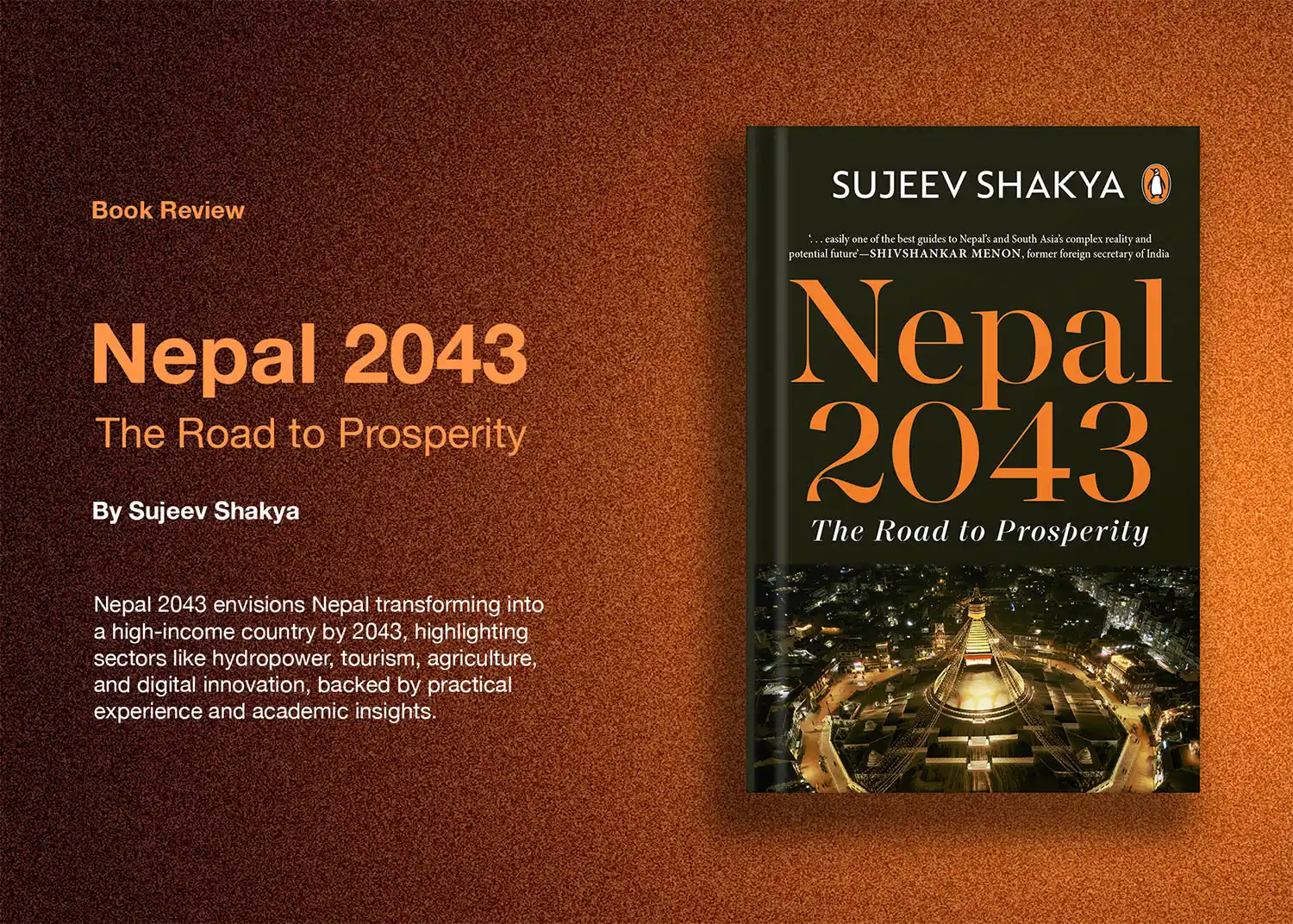
At a critical moment in Nepal’s socio-political and economic evolution, Sujeev Shakya’s Nepal 2043: The Road to Prosperity offers an aspirational vision and blueprint for reform. Published by Penguin Random House and launched amid distinguished diplomatic and intellectual voices in Delhi, the book stands as a nuanced intervention in Nepal’s national discourse, an invitation to move beyond narratives of instability toward a future defined by optimism grounded in realism.
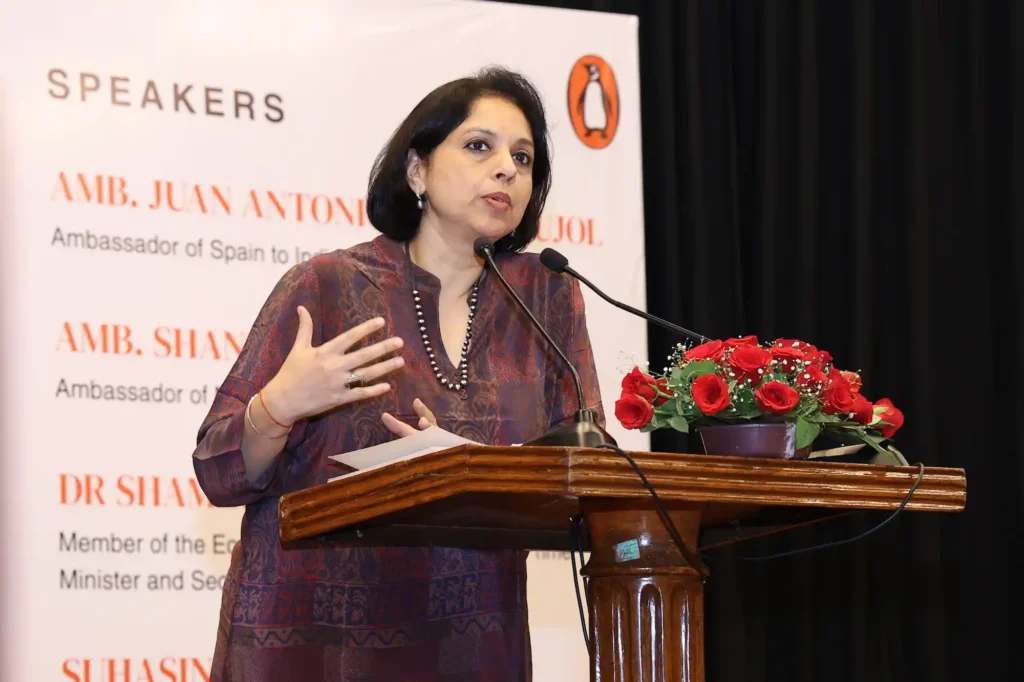
At the Delhi launch, Suhasini Haidar, Diplomatic Affairs Editor of The Hindu, aptly captured the spirit of the occasion by describing Nepal 2043 as a work of non-fiction romance, a testament to Sujeev’s enduring love for Nepal and his faith in its future.
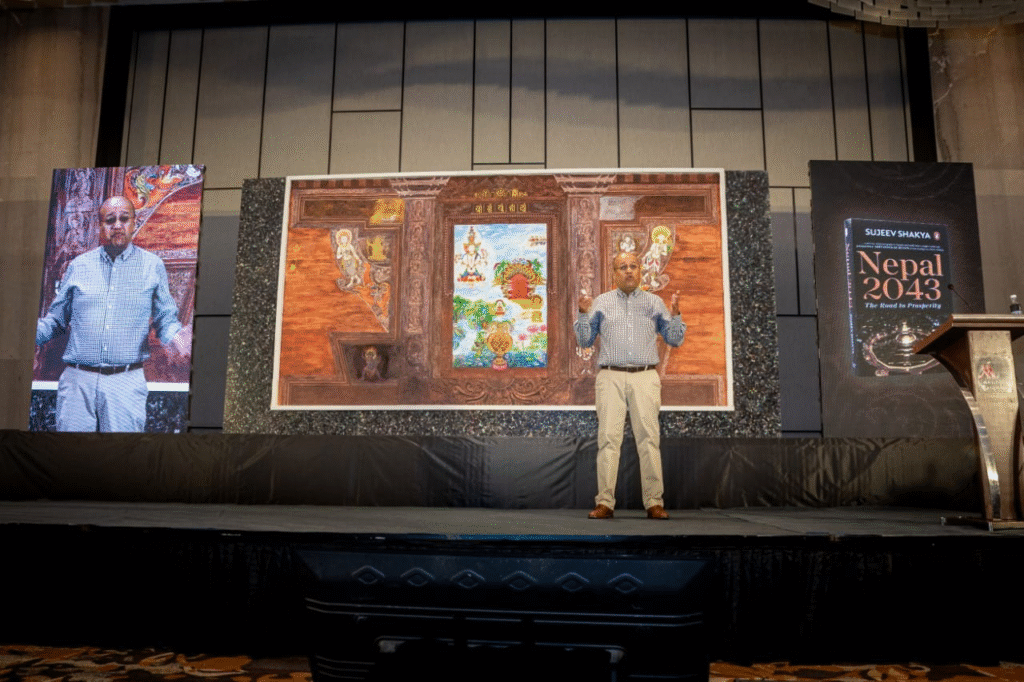
Sujeev Shakya, widely acknowledged as Nepal’s “Chief Eternal Optimist,” is a management consultant, entrepreneur, and policy thinker whose earlier books, Unleashing Nepal and Unleashing the Vajra, charted the possibilities of Nepal’s economic emergence and social transformation. His trajectory as a strategist and commentator, culminating now in Nepal 2043, reflects a steadfast belief that Nepal’s geographic land-linked advantage, young demography, and diaspora can be harnessed to propel it into the ranks of high-income nations within two decades.
This belief is poignantly situated in the aftermath of Nepal’s recent Gen Z protests, which exposed the fractures of governance, corruption, and youth disenfranchisement. These protests articulate a generational demand for reform that resonates deeply with the book’s core premise: that Nepal’s youth are not just passive actors but vital stakeholders in the nation’s promising future.
Vision Meets Pragmatism
Nepal 2043 adeptly balances visionary grandeur with grounded policy prescriptions. Sujeev’s narrative unfolds by first anchoring the reader in Nepal’s remarkable economic gains over the past two decades, despite political volatility, natural disasters like earthquakes and floods, and the pandemic’s disruptions. This success story, often overlooked in dominant media narratives, sets a hopeful baseline for the book’s compelling case for transformative growth.
Central to his thesis is Nepal’s strategic position: sandwiched between the two fast-expanding economies of China and India, with a robust diaspora that acts as an economic and intellectual conduit. He articulates how sectors such as hydropower, agriculture, tourism, migration, and digital transformation can be leveraged not merely for incremental gains but for a sixfold increase in GDP by 2043. The book does not shy away from systemic challenges but frames them as surmountable with the right mix of policy reforms and institutional strengthening.
A Blueprint for Reform
The policy architecture Sujeev proposes is both comprehensive and intersectional. His recognition of demographic dividends underscores why “youth are the future,” with the recent protests demanding transparency and accountability reinforcing this notion. He calls for a re-imagined governance framework that empowers young Nepalese through inclusive institutions, digital innovation, and economic diversification.
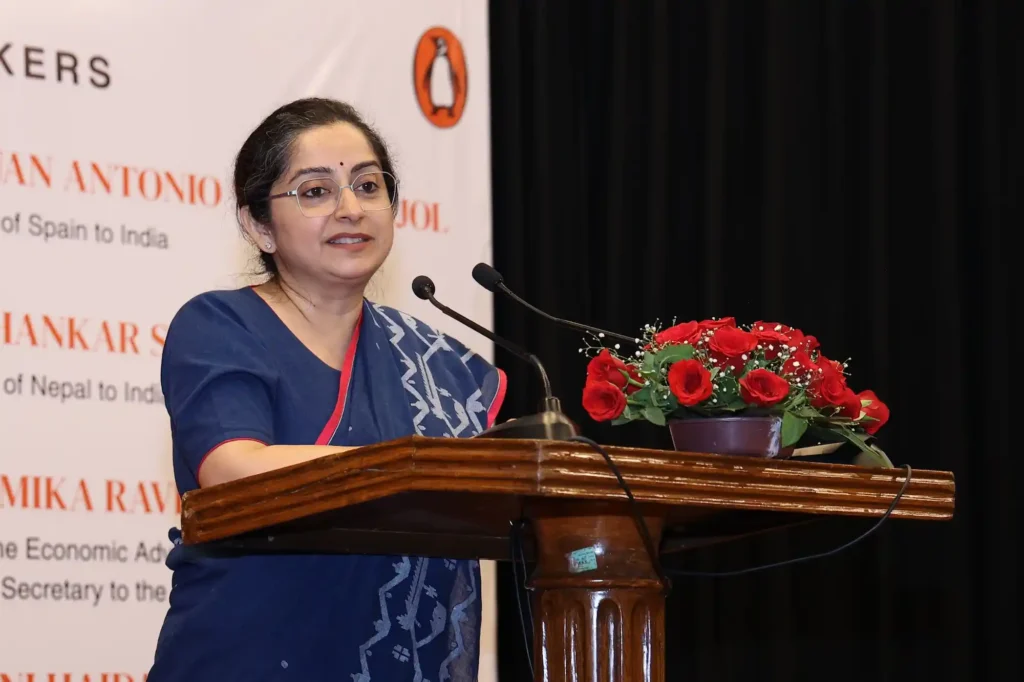
Speaking at the Delhi launch, Dr. Shamika Ravi, Member of the Economic Advisory Council to the Prime Minister and Secretary to the Government of India, noted that the vision articulated in Nepal 2043 is equally consequential for India, which shares not just borders but economic aspirations with Nepal. She highlighted that deepening financial and trade connectivity across the frontier, particularly with states such as Bihar and Uttar Pradesh, will be essential to nurturing startups and entrepreneurs seeking cross-border market access and shared prosperity.
In the book, Sujeev points out that hydropower is a critical resource that Nepal must develop sustainably, not only for domestic consumption but also for regional energy markets; a potential game changer for economic resilience. In parallel, agricultural modernization and tourism enhancement are presented as vital for inclusive growth, ensuring that prosperity permeates rural heartlands.
Migration is discussed as a complex dynamic, one that both drains and enriches the country through remittances and also necessitates strategic management to harness talent and entrepreneurial potential. Across these sectors, digital transformation acts as a unifying force, enabling Nepal to leapfrog developmental stages.
This policy journey is not abstract but deeply tied to Nepal’s socio-cultural fabric, reflecting Sujeev’s vantage shaped by both academic rigor and practical insights from the Nepal Economic Forum, which he chairs.
Nepal 2043 in the Current Context
The recent Gen Z protests in Nepal provide a pressing backdrop to Nepal 2043. They reflect widespread youth frustration with corruption, governance failures, and economic stagnation, underscoring the urgency of the reforms Sujeev proposes. This generational activism aligns with the book’s optimistic yet realistic stance that Nepal’s transformation hinges on a collective resolve to reform politics and public institutions.

Moreover, Sujeev’s blueprint offers more than a national prescription: it serves as a model for other emerging economies grappling with similar demographic and geostrategic challenges. Its timely release, amid ongoing political debates and economic restructuring, makes it not just a book but a manifesto for a future-focused Nepal.
Although Nepal 2043 was written and published just before the recent Gen Z protests erupted across Nepal, its central message remains strikingly relevant. The book’s emphasis on forward-looking policy thinking, institutional renewal, and youth empowerment directly speaks to the underlying causes of these movements. Even in the wake of new political volatility, Sujeev’s future-focused framework offers an enduring compass for Nepal to translate generational discontent into constructive reform and long-term national transformation.
A Logical Progression
Building on his earlier books, Sujeev Shakya’s Nepal 2043 is the logical next step in an arc that moves from diagnosing Nepal’s latent potential in Unleashing Nepal to envisioning a resilient, prosperity-oriented future. The book smartly integrates lessons learned from Nepal’s past, political transitions and economic reforms, with the immediacy of contemporary crises and aspirations.
Unlike works that fall into despair or nostalgia, the book is a bold statement of intent, urging policymakers, civil society, and especially Nepali youth to seize the moment. It complements the political dialogue around inclusion and accountability by providing a fresh, actionable narrative that grounds hope in tangible policy reforms.
My personal favourite chapter in the book is Thriving in Chaos. Despite enduring decades of political instability, devastating earthquakes, and the disruptions of the COVID-19 pandemic, through every wave of instability, the spirit of the people has remained remarkably resilient. This idea that progress can emerge from disorder is not merely a macroeconomic lesson but a profoundly personal one. In an age defined by uncertainty, the ability to adapt, persevere, and find purpose amid turbulence may well be the ultimate key to success.
Nepal 2043: The Road to Prosperity is a must-read for all who care about Nepal’s future: policymakers, economists, diplomats, engaged citizens, and those who simply love the country and believe in its promise. As Nepal’s Chief Optimist, Sujeev’s deft weaving of optimism with strategic realism, and his keen focus on youth empowerment and sectoral reforms, make this book an indispensable guide to Nepal’s next chapter. It challenges Nepal to rise above its historical struggles, urging a collective journey towards prosperity, innovation, and democratic renewal by the middle of the century.
This book’s power lies not just in what it envisions but in the policy rigor and narrative clarity it brings to that vision, qualities that promise to shape Nepal’s discourse for years to come.