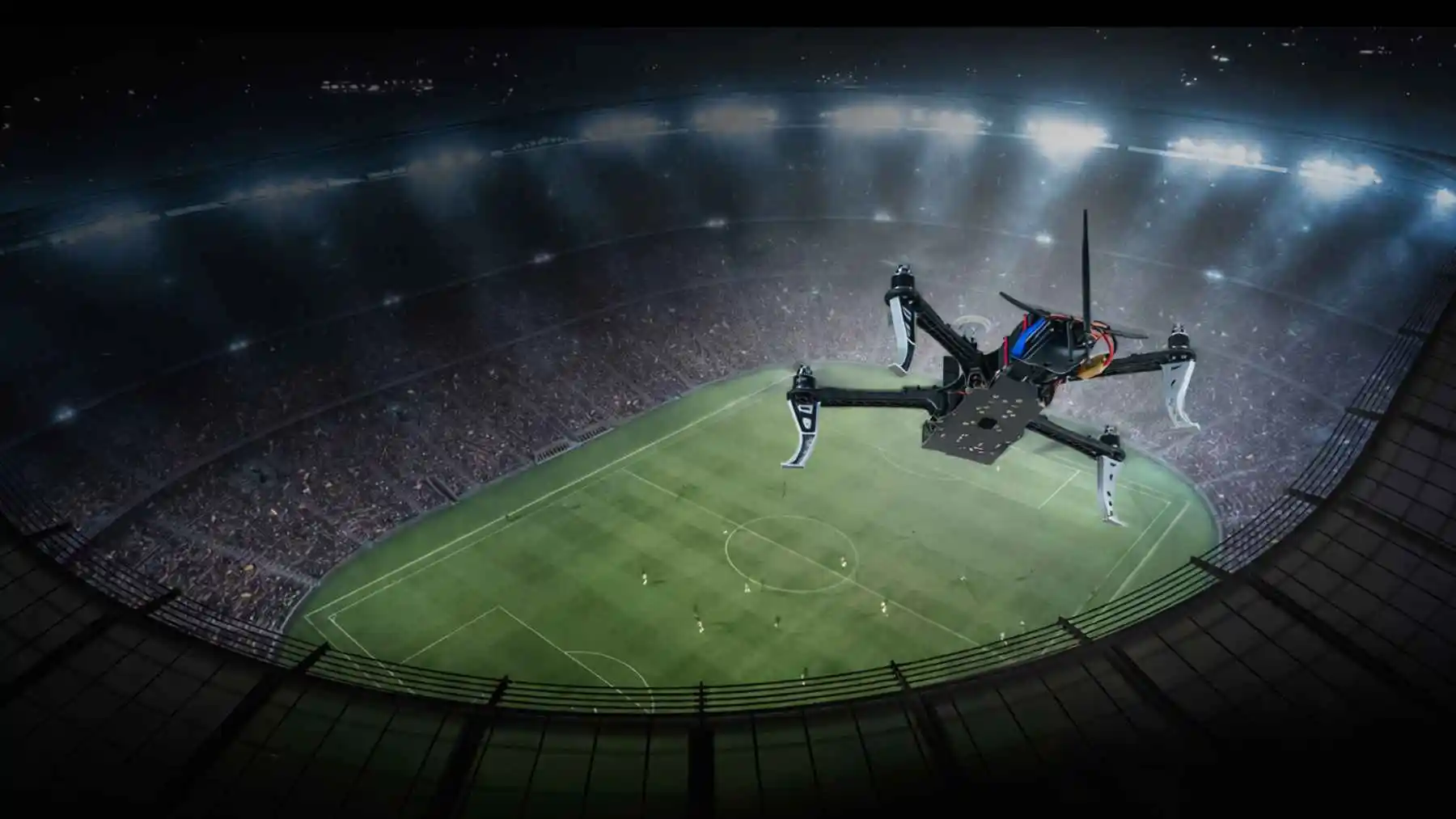
The World Cup is supposed to be a tournament of joy, spectacle and shared civic pride. Instead, just weeks before kickoff, host cities are scrambling to harden stadium airspace against a threat that is cheap, portable and stubbornly hard to stop: drones. The timing could hardly be worse. Security planners are trying to solve a fast-moving technical problem while also recovering from a government shutdown that slowed coordination, delayed planning and emptied out parts of the system that are supposed to keep big events safe.
That is the uncomfortable truth underneath the headlines. The threat is not hypothetical. Federal officials and security experts have spent months warning that commercially available drones can disrupt matches, panic crowds, interfere with surveillance and, in the worst case, be used to carry harmful payloads. The World Cup is exactly the kind of target that attracts attention: massive crowds, iconic venues, global media and an international audience that turns every vulnerability into a live broadcast.
What makes this especially maddening is that the basic contours of the risk have been visible for years. Sporting events have already shown how one small aircraft can shut down play, trigger evacuations or force police into a reactive posture. Drones are no longer a novelty; they are a familiar nuisance and, increasingly, a security question. The 2026 tournament simply magnifies the stakes because it is spread across 11 U.S. host cities, which means planners are defending multiple arenas, multiple jurisdictions and multiple command structures at once.
The federal response has not been nonexistent. Quite the opposite: Washington has put serious money on the table. The Department of Homeland Security announced $115 million for counter-drone measures, and FEMA separately released $625 million in security funding for host cities. FAA restrictions have also designated World Cup venues as no-drone zones, with steep penalties for violations. On paper, that is a robust framework. In practice, money and rules are only the beginning. What matters on match day is whether local police, federal agents, stadium staff and aviation authorities can actually see a rogue drone, identify it quickly and stop it without causing collateral chaos.
That is where the real problem lies: capability gaps, not just legal ones. Security teams still face limited equipment, fragmented authority and the logistical difficulty of protecting “lower airspace” across many venues simultaneously. Some of the most useful counter-drone tools are expensive, tightly regulated or not yet widely deployed. Congress has already signaled that current law remains a bottleneck, with lawmakers urging broader authority for the National Guard and faster deployment of counter-UAS systems. The core issue is simple: drones move quickly, but bureaucracy moves slowly.
The shutdown made that worse. Officials told the Senate that planning had been delayed, coordination with state and local partners had been hindered, and key personnel had been lost in the disruption. That matters because security for a tournament this large is not something you can invent in May and perfect by June. It depends on training, rehearsals, communications protocols and trust between agencies that do not always work from the same playbook. A lapse of several weeks is not a minor inconvenience; it can become a structural weakness.
There is also a deeper policy failure here. America has built a patchwork approach to counter-drone defense: some authority at the federal level, some at the state level, some in local hands, and still more in temporary emergency arrangements. That may be survivable for an ordinary weekend. It is not ideal for a global tournament with millions of visitors. The result is a system that is good at announcing preparedness and less good at proving it under pressure.
So what should happen now? First, host cities and federal agencies need to treat drone defense as a live operations problem, not a procurement slogan. The most important measures are the unglamorous ones: integrated detection networks, rehearsed response chains, clear radio discipline and rapid decision-making. Second, lawmakers should resist pretending the current legal patch is enough. If the National Guard or trained local officers can safely operate under federal supervision, then Congress should give them the authority and guardrails to do so at scale. Third, officials should communicate plainly with the public. Fans need to know that the airspace around stadiums is not a gray area. It is off limits.
The good news is that this is not an impossible mission. The threat is known, the tools exist, and training is underway. But the bad news is that “underway” is not the same as “ready,” especially when the calendar is unforgiving. A World Cup should be remembered for goals, upsets and the usual emotional chaos of elite sport. It should not be remembered for whether governments could keep a drone out of the stadium sky.
The timing sucks, yes. But the larger failure would be treating that as a fact of nature rather than a warning shot.