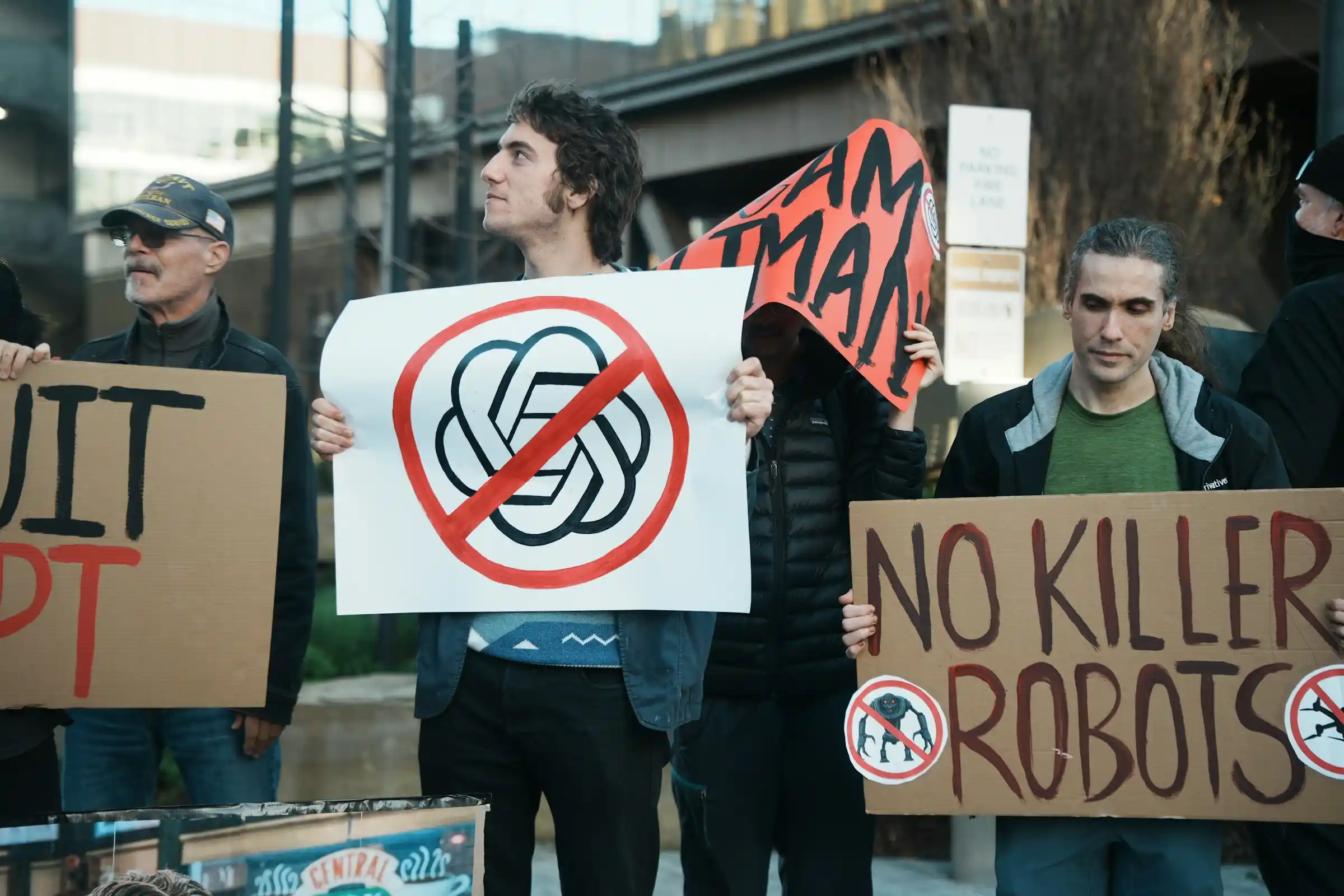
In the escalating debate over artificial intelligence, spanning congressional hearings in Washington, venture capital boardrooms in Silicon Valley, and policy circles around the world—few terms have generated as much confusion as “AI safety.” Once a niche phrase used by academic researchers and long-term thinkers, it has now become a political lightning rod. Depending on who you ask, AI safety is either an urgent moral imperative or a convenient excuse to slow down innovation.
The irony is that nearly everyone agrees, at least superficially, that AI systems should be safe. No serious actor is openly arguing for unsafe technology. Yet beneath this apparent consensus lies a deep and growing divide—not about whether safety matters, but about what the term actually means, how urgent the risks are, and who gets to define them.
At its core, AI safety is about ensuring that artificial intelligence systems behave in ways that are predictable, reliable, and aligned with human values. That includes preventing systems from producing harmful outputs, such as misinformation, bias, or dangerous instructions. It also extends to broader concerns: ensuring that advanced systems do not act in unintended ways, that they remain controllable as they grow more capable, and that their deployment does not destabilize societies or economies.
This definition sounds straightforward. But in practice, it fragments into at least three competing interpretations.
The first is what might be called “near-term safety.” This is the domain of engineers and product teams working on today’s systems. It focuses on issues like hallucinations, data privacy, algorithmic bias, and misuse. For example, a chatbot that confidently spreads false medical advice or a recommendation algorithm that amplifies harmful content poses immediate, tangible risks. Companies like OpenAI, Google, and Anthropic invest heavily in mitigating these problems through testing, guardrails, and content moderation systems.
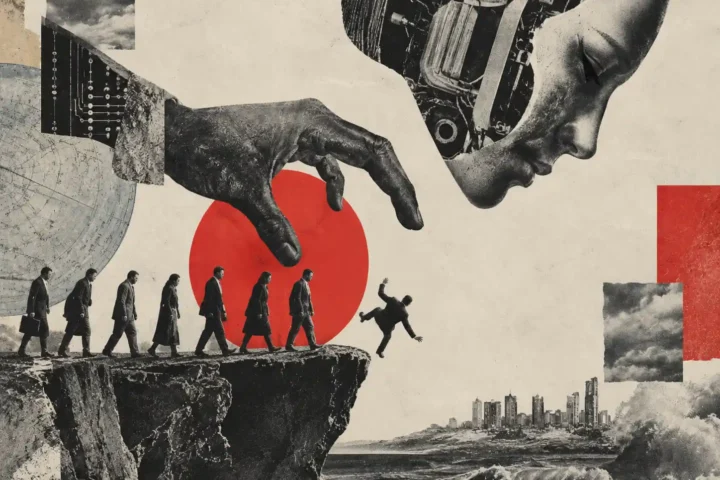
The second interpretation is “systemic safety.” This view looks beyond individual products to the broader societal impact of AI. It includes concerns about job displacement, concentration of power among a few tech companies, and the potential for AI to be weaponized in cyberwarfare or surveillance. Policymakers in Washington and Brussels often focus here, asking questions about regulation, accountability, and economic disruption.
The third—and most controversial—interpretation is “long-term safety,” sometimes called existential risk. This perspective, associated with a subset of researchers and thinkers, warns that as AI systems become more advanced, they could surpass human intelligence and act in ways that are difficult or impossible to control. In the worst-case scenario, such systems could pose a threat to humanity itself.
It is this third category that has turned “AI safety” into a battleground.
Critics, particularly within parts of Silicon Valley, argue that long-term safety concerns are speculative distractions. They contend that focusing on hypothetical future risks diverts attention and resources from real, present-day harms. Some go further, suggesting that talk of existential risk is strategically deployed by large AI companies to justify tighter regulation—regulation that, conveniently, smaller competitors cannot afford to comply with.
From this perspective, “AI safety” becomes a rhetorical tool. By emphasizing the dangers of powerful AI, incumbents can position themselves as responsible stewards while raising barriers to entry. The result, critics argue, is not a safer ecosystem, but a more concentrated one.
On the other side are researchers and policymakers who believe these concerns are not only valid but urgent. They point out that technological progress often accelerates faster than institutions can adapt. Waiting until risks are fully visible, they argue, is a recipe for disaster. Just as early warnings about climate change were once dismissed as alarmist, warnings about advanced AI could prove prescient.
Importantly, this camp does not necessarily claim that catastrophic outcomes are inevitable. Rather, they argue that the stakes are high enough to justify precaution. If AI systems are becoming more autonomous, more capable, and more deeply integrated into critical infrastructure, then ensuring their alignment with human intentions is not optional—it is foundational.
So who, exactly, “doesn’t believe in making these tools safe”?
The answer is more nuanced than the question suggests. Very few actors reject safety outright. Instead, disagreements cluster around priorities, timelines, and trade-offs.
Some technology leaders prioritize speed and innovation, believing that rapid progress will ultimately produce the tools needed to solve safety challenges. In their view, overregulation could stifle breakthroughs and cede leadership to less constrained actors, including geopolitical rivals. Safety, in this framework, is something that evolves alongside capability—not something that should significantly slow it down.
Others, particularly in open-source communities, resist centralized control over AI development. They argue that democratizing access to AI systems can enhance safety by preventing power from being concentrated in a handful of corporations. From their perspective, restrictions framed as “safety measures” can sometimes function as gatekeeping mechanisms.
There are also skeptics who question whether “alignment with human values” is even a coherent goal. Whose values, they ask? In a world of deep cultural, political, and ethical diversity, defining a universal standard for AI behavior is fraught with difficulty. Attempts to do so risk embedding the biases of those who design and regulate these systems.
Meanwhile, policymakers face their own dilemmas. Regulate too aggressively, and they risk stifling innovation and economic growth. Regulate too lightly, and they may fail to prevent harm. The result is a patchwork of approaches: the European Union’s precautionary regulatory framework, the United States’ more market-driven stance, and China’s state-centric model emphasizing control and strategic advantage.
Amid all this, the phrase “AI safety” has become a kind of Rorschach test. It reflects the priorities and anxieties of whoever invokes it.
For engineers, it is a technical challenge: how to build systems that do what they are supposed to do—and nothing more. For ethicists, it is a moral question: how to ensure that AI respects human dignity and rights. For policymakers, it is a governance problem: how to balance innovation with protection. And for the public, it is increasingly a matter of trust.
This multiplicity of meanings is not inherently a problem. Complex technologies often require layered approaches. But the lack of clarity becomes dangerous when it obscures real disagreements.
If one group uses “AI safety” to mean reducing chatbot errors, while another uses it to mean preventing human extinction, they may talk past each other entirely. Worse, the term can be co-opted to serve strategic interests, masking competition as caution or vice versa.
What would a more grounded conversation look like?
First, it would acknowledge that AI safety is not a single issue but a spectrum of concerns, ranging from immediate harms to long-term risks. Addressing one does not negate the importance of the others.
Second, it would separate genuine safety measures from economic self-interest. Not every call for regulation is a cynical ploy, but neither is every safety argument purely altruistic. Transparency about incentives matters.
Third, it would involve a broader set of voices. Decisions about AI safety should not be confined to tech executives and policymakers. They affect workers, educators, healthcare providers, and citizens at large. A more inclusive dialogue can help surface risks and values that might otherwise be overlooked.
Finally, it would embrace a degree of humility. AI is evolving rapidly, and our understanding of its implications remains incomplete. Overconfidence—whether in the inevitability of progress or the certainty of catastrophe—is itself a risk.
The debate over AI safety is, in many ways, a proxy for a larger question: how society should govern powerful, transformative technologies. It is not just about preventing harm, but about shaping the future we want.
Stripped of its political baggage, “AI safety” is a simple idea: build systems that help rather than harm, that empower rather than undermine, and that remain under meaningful human control. The challenge lies not in agreeing with this principle, but in translating it into practice amid competing interests, uncertain risks, and accelerating change.
In the end, the controversy surrounding AI safety may be less about the concept itself and more about the stakes it represents. As artificial intelligence moves from the periphery to the center of economic and social life, the question is no longer whether it should be safe. It is who decides what “safe” means—and who bears the consequences if they get it wrong.