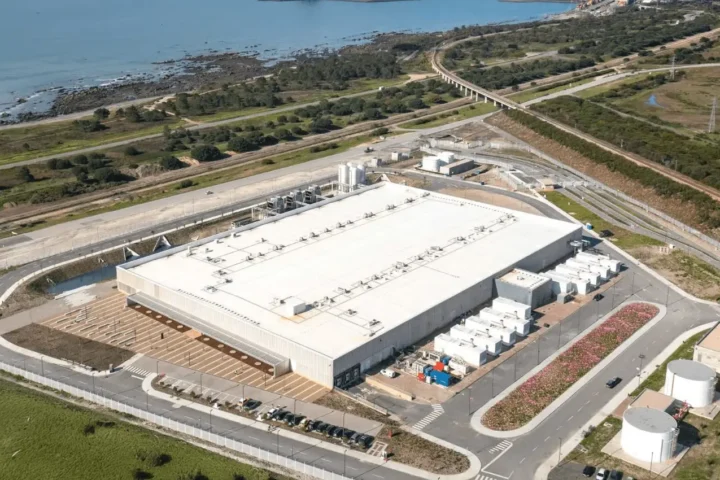
Democrats are right to worry that artificial intelligence could deepen inequality, weaken labor power, threaten privacy, and expose children to new forms of harm. But they will fail to build a persuasive political response if they reduce the issue to slogans about data centers, electricity use, or the excesses of a few technology executives.
The stronger argument is also the more immediate one: artificial intelligence is already changing how people work, who captures economic gains, and how much control ordinary citizens have over the systems shaping their lives. It is advancing faster than the laws, institutions, and social protections meant to keep concentrated power in check.
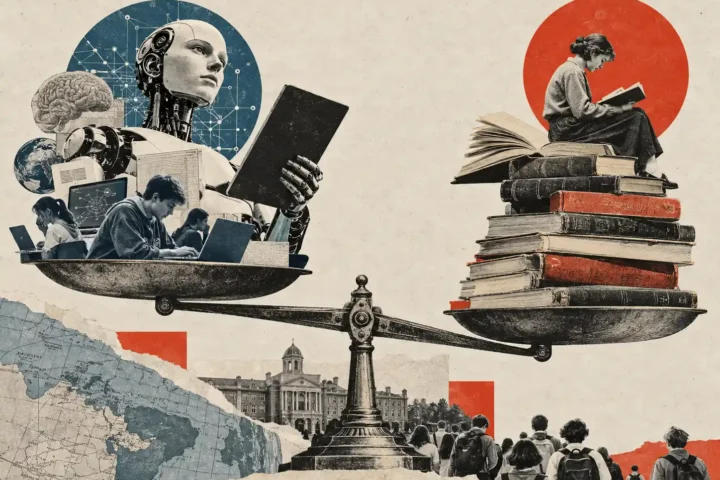
That is why Representative Greg Casar’s call for Democrats to become “AI populists” is politically resonant. It identifies the central question that too much of the AI debate avoids: not simply whether the technology will be productive, but who will benefit from that productivity and who will bear its costs.
If the gains from AI flow overwhelmingly to a small group of technology companies, executives, shareholders, and investors, voters will not experience the transformation as progress. They will experience it as another transfer of power away from workers and toward institutions they already believe are unaccountable.
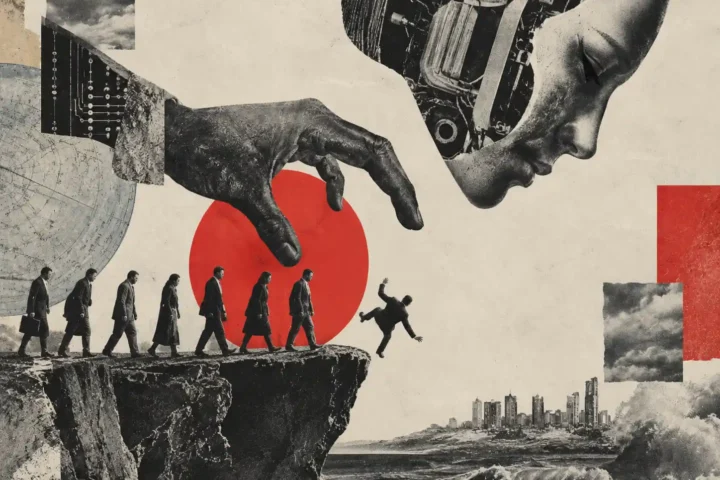
The most immediate danger is not a cinematic robot apocalypse. It is a quieter and more uneven labor shock.
AI systems are increasingly capable of performing tasks in administration, office support, customer service, sales, marketing, basic legal research, entry-level programming, design, finance, and other white-collar occupations that were once considered relatively secure. In many workplaces, the technology may not eliminate an entire job overnight. Instead, it may reduce the number of employees needed, weaken workers’ leverage, intensify performance demands, and allow employers to replace experienced staff with fewer, lower-paid workers supervising automated systems.
That distinction matters. Political leaders often discuss automation as though its only measurable consequence were unemployment. But displacement takes many forms. It can mean reduced salaries, fewer promotions, shorter careers, unpredictable contract work, and the disappearance of entry-level positions that once allowed young people to build skills and move into the middle class.
A graduate who cannot find a first job because firms have automated junior tasks may never appear in a headline about mass layoffs. Yet the long-term consequences can be profound: lower lifetime earnings, delayed homeownership, postponed family formation, greater debt, and a growing belief that education and hard work no longer produce the security people were promised.
The destruction of career ladders may be one of AI’s most politically destabilizing effects. Many senior professionals learned their craft by doing routine work early in their careers. If companies automate those junior responsibilities, where will the next generation acquire judgment, experience, and institutional knowledge? A system that eliminates the first rung of the ladder may eventually discover that it has also weakened the top.
The deeper structural question, however, is not merely what jobs AI changes. It is who owns the technology and who captures the economic value it creates.
AI requires enormous amounts of capital, computing infrastructure, proprietary data, energy, and technical expertise. Those advantages naturally favor firms that are already dominant. The companies best positioned to profit from AI are often the same companies that control cloud computing, digital advertising, online marketplaces, operating systems, and vast reservoirs of consumer data.
That creates a familiar economic pattern. Productivity rises, corporate valuations increase, and investors celebrate efficiency. But wages do not necessarily rise at the same pace. Workers may be expected to produce more with fewer colleagues, while the financial rewards flow primarily to shareholders and executives.
This is the essence of the populist critique. Technology does not distribute its own benefits. Productivity gains are divided according to power.
When workers have strong unions, effective labor protections, ownership stakes, or meaningful bargaining rights, technological progress can support higher wages, shorter working hours, and greater economic security. When workers lack leverage, the same progress can produce layoffs, surveillance, work intensification, and a larger share of national wealth flowing to the top.
Democrats should therefore resist the claim that any effort to regulate AI is anti-innovation. The real question is what kind of innovation the country wants and under what social contract it will occur.
An economy in which companies receive the full financial benefit of automation while workers, families, and local governments absorb the disruption is not an innovative economy. It is a subsidized transfer of risk. Businesses keep the profits; the public pays for unemployment, retraining, lost tax revenue, strained communities, and declining economic mobility.
AI populism must also look beyond corporate balance sheets. The technology is already producing harms that appear in schools, homes, and workplaces long before they are reflected in economic statistics.
Deepfakes can be used to impersonate political candidates, defraud families, harass students, and create non-consensual intimate images. Facial-recognition systems can misidentify people and reinforce existing discrimination. Employers can use algorithmic tools to monitor workers, evaluate performance, or screen applicants without meaningful transparency. Chatbots can manipulate vulnerable users, encourage emotional dependency, or expose minors to interactions for which neither families nor regulators are prepared.
These are not hypothetical concerns. They demonstrate why waiting for a single comprehensive federal law is not a serious governing strategy. Federal standards are necessary, but in their absence, states must retain the ability to regulate harmful uses, establish liability, and respond to emerging risks. Technology companies should not be allowed to demand national preemption while opposing meaningful national rules.
A credible Democratic position should make three arguments at once.
First, AI can be genuinely useful. It may improve medical research, expand access to knowledge, assist people with disabilities, reduce repetitive work, and help small businesses operate more efficiently. Democrats should not sound frightened of technology or nostalgic for every job and business model that existed before it.
Second, workers must share in the upside. Companies should not be permitted to use AI to eliminate jobs, suppress wages, or intensify workloads while treating the resulting social costs as somebody else’s problem. Workers deserve a voice in how AI is introduced, what data are collected, how performance is measured, and how productivity gains are distributed.
Third, the public has a right to enforceable protections. That means transparency when consequential decisions are automated, clear liability when AI systems cause harm, strong safeguards for children, restrictions on non-consensual deepfakes, privacy rules governing personal data, and the right to human review in employment, housing, education, healthcare, and other high-stakes settings.
Policy must match the rhetoric. Democrats should support stronger labor law, portable benefits, wage insurance, apprenticeships, public investment in new industries, and retraining programs tied to actual employment opportunities rather than vague promises of digital skills. Workers displaced by automation should not be handed an online course and told to reinvent themselves.
Lawmakers should also consider targeted fees or taxes when large firms conduct major AI-driven layoffs, provided the revenue is dedicated to wage support, local economic development, and credible pathways into new employment. The goal should not be to punish every efficiency improvement. It should be to prevent companies from privatizing the gains while socializing the losses.
The political test is whether Democrats can turn AI from a technocratic discussion into a material one.
Most voters do not care about model benchmarks, parameter counts, or abstract debates among venture capitalists. They care whether their jobs remain secure, whether their children are safe, whether their images and personal information can be exploited, and whether their communities will benefit from technological change or merely endure it.
If Democrats frame AI as a struggle over wages, ownership, accountability, and human dignity, they can build a durable coalition around responsible innovation. They can offer something more credible than either blind technological optimism or reflexive resistance.
But if they treat AI as a niche policy issue, or reduce it to a debate about where data centers are built, they will leave the field to those who profit most from automation and face the least accountability for its consequences.
The future of AI will not be decided by technology alone. It will be decided by politics: by who writes the rules, who has bargaining power, and whether progress is measured by corporate wealth or by the security and freedom of ordinary people.