Silicon Valley has always known where power resides, even when it is cloaked in ritual rather than code. Its latest pilgrimage—to the Vatican—is less surprising than it might appear. As Pope Leo XIV prepares his first encyclical, technology firms and Western diplomats are making a calculated appeal: shape the Church’s moral framework for artificial intelligence before it hardens into doctrine.
The effort is not merely symbolic. For over a billion Catholics, papal encyclicals are not casual reflections; they are enduring moral guideposts. They influence not only individual conscience but also education systems, development agendas, and public policy across continents. If AI is to be the defining technology of this century, then the Vatican is one of the few institutions capable of giving it a moral vocabulary that resonates far beyond Silicon Valley boardrooms.
That is precisely why the valley has arrived early.
Executives from major AI firms, policy advocates, and Western diplomats have spent months quietly engaging Vatican officials. Their message is consistent: artificial intelligence, if guided responsibly, can serve humanity—improving healthcare, expanding education, and addressing climate challenges. But beneath this language of optimism lies a more strategic concern. Regulation is coming, and moral framing often precedes legal constraint.
The Catholic Church has long positioned itself as a mediator between technological progress and ethical reflection. From industrial labor rights in the 19th century to bioethics in the 20th, it has sought to humanize systems that risk reducing people to inputs or outputs. AI presents a similar challenge, but at a far greater scale. It is not just a tool; it is an infrastructure shaping knowledge, labor, and even human identity.
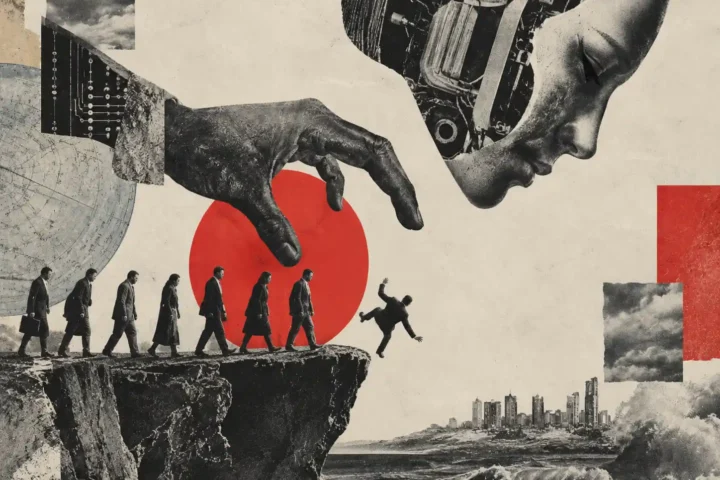
For Silicon Valley, the risk is not that the Church will reject AI outright. That outcome is unlikely. The greater risk is that the Vatican articulates a vision of AI that demands accountability, transparency, and limits—principles that could constrain business models built on data extraction and algorithmic opacity.
Already, there are signs of tension. Catholic scholars and ethicists have raised concerns about algorithmic bias, the concentration of technological power, and the erosion of human agency. There is unease about systems that make decisions without clear accountability, and about economic disruptions that could deepen inequality. These concerns are not abstract. In regions where the Church has strong influence—Latin America, Africa, parts of Asia—the social consequences of AI-driven automation and surveillance are immediate and profound.
Western diplomats, for their part, see the Vatican as an ally in shaping a global consensus that aligns with democratic values. In an era of technological competition with authoritarian models of governance, the moral authority of the Church becomes a geopolitical asset. A papal endorsement of principles like human dignity, data rights, and ethical oversight could bolster efforts to establish international norms.
Yet this convergence of interests—corporate and diplomatic—raises its own questions. Who gets to define “ethical AI”? And whose interests are ultimately being served?
There is a risk that the conversation within the Vatican becomes skewed toward voices with the greatest access. Technology firms, with their resources and networks, are well positioned to frame the debate. They can present themselves as responsible stewards, emphasizing voluntary guidelines and self-regulation. But history suggests that industries rarely regulate themselves effectively when profits are at stake.
The Church, if it is to maintain its moral credibility, must resist becoming a passive recipient of these narratives. Its strength lies in its independence and its commitment to principles that transcend market logic. This means engaging not only with executives and diplomats but also with workers, marginalized communities, and those most vulnerable to technological disruption.
Pope Leo XIV faces a delicate task. His encyclical will need to navigate between embracing the potential of AI and confronting its dangers. It will need to speak in a language that is both timeless and urgently contemporary. And it will need to do so in a way that does not merely echo the assurances of those who stand to benefit most from the technology’s expansion.
There are precedents to draw upon. Pope Francis, in his writings on the “technocratic paradigm,” warned against a worldview that prioritizes efficiency and control over human dignity. That critique is even more relevant in the age of AI, where decision-making can be outsourced to systems that are neither transparent nor accountable. Leo XIV has the opportunity to build on this foundation, articulating a vision of technology that serves the common good rather than narrow interests.
Such a vision would likely emphasize several core principles: the primacy of human dignity, the importance of accountability, the need for inclusivity, and the protection of labor. It might call for international cooperation to ensure that AI benefits are shared equitably, rather than concentrated in a few countries or corporations. It could also challenge the assumption that technological advancement is inherently beneficial, insisting instead that progress must be evaluated in moral as well as economic terms.
For Silicon Valley, this could be both a challenge and an opportunity. A clear ethical framework from the Vatican might impose constraints, but it could also provide legitimacy. In a time when public trust in technology companies is fragile, alignment with widely respected moral principles could help rebuild credibility.
But legitimacy cannot be manufactured through proximity alone. It must be earned through genuine accountability and change. If the valley seeks the Church’s blessing, it must be prepared to accept its judgment.
The broader significance of this moment extends beyond AI. It reflects a deeper question about the relationship between technology and society. Who sets the terms of progress? Is it those who build the tools, those who regulate them, or those who live with their consequences?
The Vatican’s intervention suggests that moral authority still matters, even in an age dominated by technical expertise. It reminds us that questions of ethics cannot be outsourced to engineers or left to market forces. They require deliberation, reflection, and a willingness to confront uncomfortable truths.
As the world awaits Pope Leo XIV’s encyclical, the presence of Silicon Valley in the Vatican is a sign of what is at stake. This is not just a conversation about algorithms or innovation. It is a contest over the values that will shape the future.
Whether the Church will simply bless the trajectory of AI or challenge it in meaningful ways remains to be seen. But one thing is clear: the outcome will resonate far beyond the walls of the Vatican, influencing how societies around the world understand and govern one of the most powerful technologies ever created.