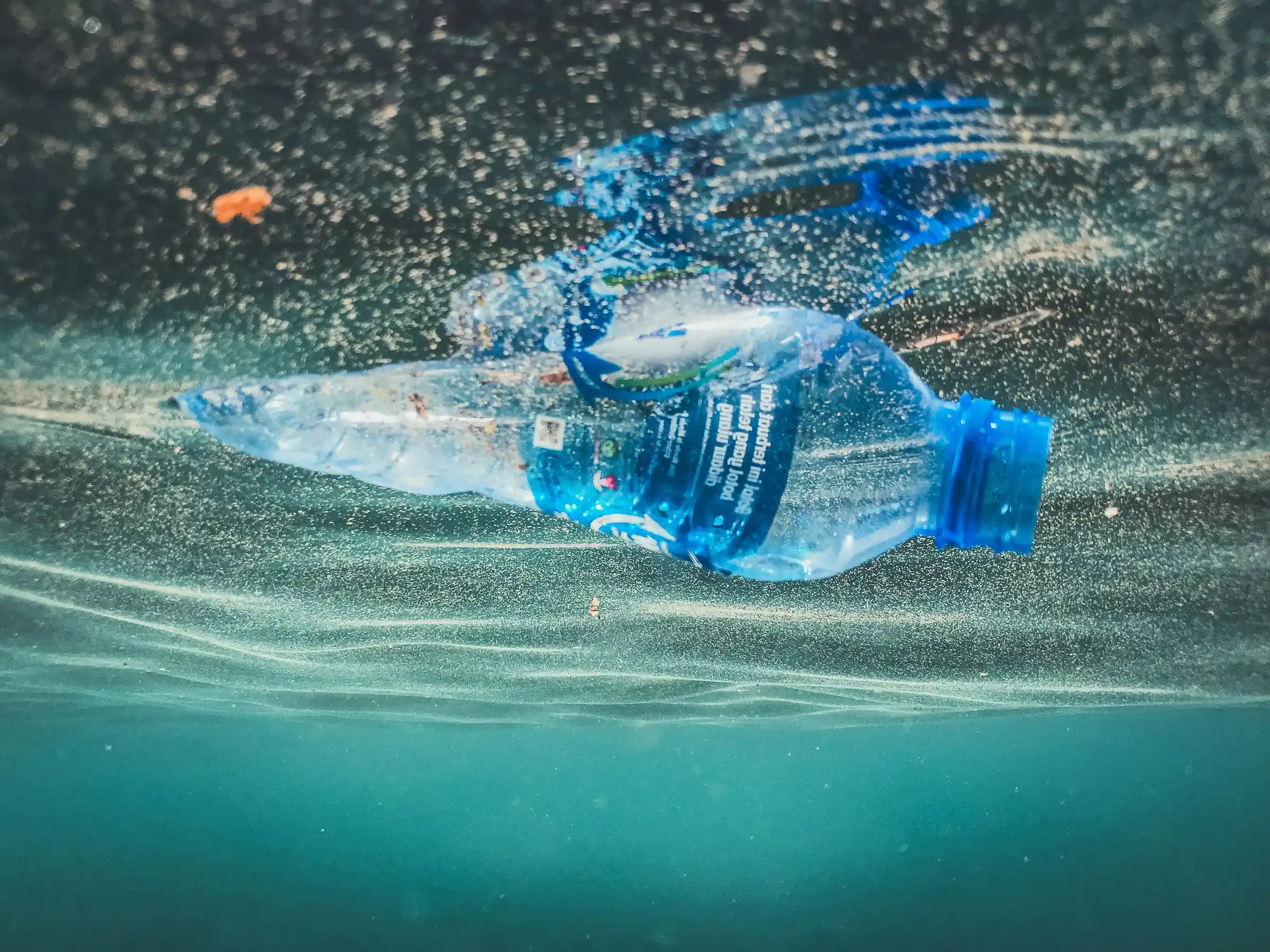
Look at what you had for lunch today. The plastic film on your sandwich. The cap on your water bottle. The container your leftovers came in. Chances are, you threw them away without a second thought. And chances are, something very similar to one of those items is sitting on a beach right now — not near a city dump, not near a factory, but on a shoreline somewhere in the world, having traveled from a bin, a gutter, a river, or simply a street.
We have known for years that plastic pollution is a global crisis. What we have been slower to accept is exactly who is responsible for it — and the answer, uncomfortable as it is, points squarely at the food and beverage industry, and at every one of us who buys its products.
Researchers have spent decades collecting data on what actually washes up on the world’s coastlines. When you step back and look at all of that evidence together — across more than a hundred nations, from the Mediterranean to the Pacific, from Arctic shores to the beaches of West Africa — one conclusion is almost impossible to avoid. The litter is not random. It is not mysterious. It is, overwhelmingly, the packaging that surrounds our food and drink.
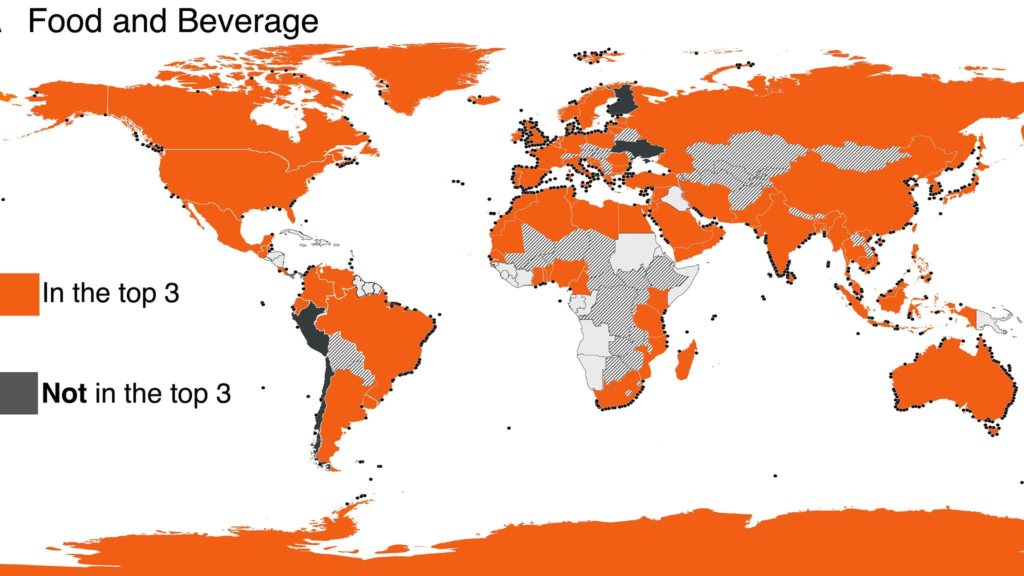
Food packaging, bottle caps, and plastic bottles are among the most commonly found items on shorelines in more than half the nations examined. Taken together as a category, food and beverage plastics rank among the top three types of plastic pollution in nine out of ten countries studied. Plastic bags and cigarettes follow, but at a significant distance. The food and drink sector stands in a category of its own.
This is not a coincidence. It is a direct reflection of how much short-lived plastic the food system produces, and how poorly designed that system is for what happens after the product is consumed. Conservative estimates suggest that food and beverage packaging accounts for roughly a fifth of all plastic produced globally — the vast majority of it designed for a single use, destined to be discarded within minutes of purchase. When you combine that volume with population density and the uneven quality of waste management around the world, the outcome we see on shorelines is entirely predictable.
There is a temptation, when faced with statistics like these, to reach for individual behavior as the primary solution. Carry a reusable bag. Use a refillable bottle. Refuse the straw. These are not bad habits to develop, and they reflect a genuine and admirable instinct to take responsibility. But they cannot carry the weight of a problem this large on their own.
The mathematics are stark. Around 460 million metric tons of plastic are produced every year. Approximately 20 million metric tons enter the environment annually. By 2060, the ocean is projected to hold 145 million metric tons of accumulated plastic debris. No amount of personal virtue, practiced by individuals acting in isolation, will move numbers of that magnitude. The problem is structural, and structural problems require structural solutions.
What that means in practice is pressure — the kind that flows from informed citizens toward the companies and governments that set the conditions of production.
Consider what has already worked. The plastic bag tax introduced in England in 2015 reduced the number of single-use carrier bags sold by major retailers by more than 95% within a few years of its introduction. Ireland saw similar results. These were not voluntary schemes dependent on individual goodwill. They were simple, upstream interventions that changed the economics of a product, and they worked. Plastic bags still appear on shorelines — enforcement matters, and habits take time to shift — but the principle is proven. Targeted measures aimed at specific items can drive real reductions.
The same logic applies to food and beverage packaging. The question is not whether we can reduce it, but whether we have the political and commercial will to do so. That is where public awareness becomes genuinely important — not as a substitute for policy, but as the force that makes policy possible.
When people understand that the plastic fork from a takeaway lunch and the film lid on a ready meal are among the most environmentally consequential purchases they make, the conversation changes. Buying decisions shift, however incrementally. More importantly, expectations shift. Consumers begin to ask why products designed to be used for ten minutes come wrapped in materials that will persist in the environment for centuries. Companies, sensitive to reputation and market pressure, begin to ask the same question internally.
There are nuances worth acknowledging. In parts of the world where tap water is unsafe or unavailable, single-use plastic bottles are not a luxury or a convenience — they are a lifeline. Any serious effort to reduce plastic packaging must reckon with this honestly, ensuring that interventions in wealthier, well-resourced nations do not simply export harm or ignore genuine need elsewhere. Equity has to be built into the design of solutions, not bolted on as an afterthought.
Similarly, the alternative materials sometimes proposed as replacements for plastic packaging deserve scrutiny rather than automatic celebration. Some biodegradable plastics do not degrade meaningfully in open environments. Some paper alternatives carry a heavy carbon and water footprint in production. The goal is not to swap one set of problems for another — it is to reduce the sheer volume of short-lived, single-use packaging that enters the world in the first place. Reduction, not substitution, is the more honest ambition.
There is a piece of good news buried in all of this, and it is worth dwelling on. The fact that food and beverage plastics dominate global shorelines so consistently — across cultures, continents, and income levels — actually makes the problem easier to address than it might otherwise be. We do not need a different solution for every country. We need a small number of targeted, high-impact measures focused on the sector responsible for the majority of the harm.
That clarity is rare in environmental policy, where causes are often diffuse and solutions genuinely uncertain. Here, the evidence points in a single direction. The items clogging the world’s coastlines are not exotic or obscure. They are the packaging of everyday life. Which means the levers to reduce them are, in principle, available to us: product design standards, extended producer responsibility frameworks that make manufacturers accountable for end-of-life costs, taxes and bans on the highest-volume offenders, and investment in alternatives that actually work.
None of that happens without a public that understands the problem and expects better. The wrapper on your lunch is not just your problem to manage. It is part of a system that needs to change — and knowing that is where change begins.