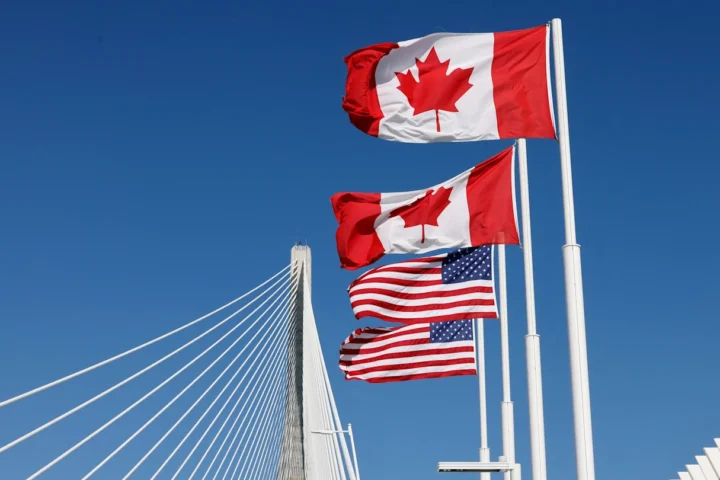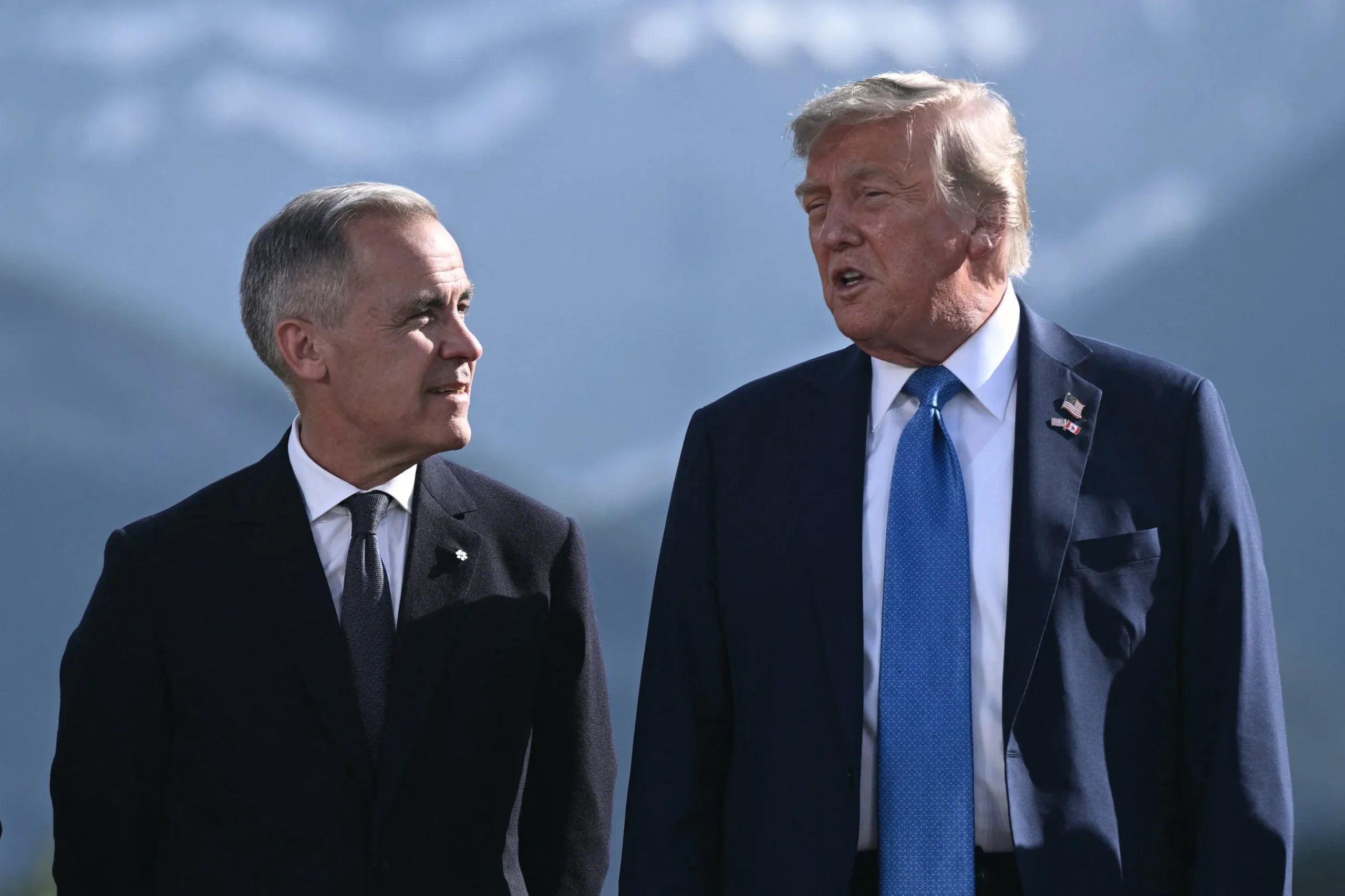
On Monday, President Trump signed three proclamations imposing 50 percent tariffs on a wide swath of Canadian goods — wine, hockey sticks, cement, electrical equipment, machinery, and more — under Section 338 of the Tariff Act of 1930, an authority so rarely invoked that it has sat dormant for decades. The White House says the move answers Canadian “discrimination” against American autos, alcohol, and dairy. Whatever the merits of that grievance, the remedy on offer is not a negotiation. It’s a demolition charge set beneath the most integrated economic relationship on earth.
The tariffs take effect in 30 days, covering roughly $20 billion in annual trade. That gap between announcement and enforcement is not generosity — it is leverage. It forces Canadian officials, exporters, and manufacturers to plan for a shock that hasn’t landed yet while leaving Washington free to escalate further if Ottawa doesn’t move fast enough. This is coercion dressed up as diplomacy: concede before the damage is fully visible, or absorb it anyway.
And the damage would not stop at the border. A 50 percent tariff functions less like “taxing foreigners” and more like a tax on an entire supply chain — one that runs through American factories that depend on Canadian steel, aluminum, and parts, and through American households that will pay more for the finished goods on the other end. The tariffs’ own carve-outs — energy, potash, fish, critical minerals — are a tacit admission of how much of that supply chain Washington still can’t afford to touch.
An ally, not a rival
Canada is not a distant trade adversary. It is one of America’s closest allies and most deeply woven manufacturing, energy, and agricultural partner. That is precisely why this approach is so self-defeating: what looks like punishment aimed at Ottawa lands just as hard in Detroit, Buffalo, and the dozens of American industrial towns that run on cross-border supply chains built over decades.
The pattern is not new. This latest action follows a year of escalating tariffs — 35 percent in the summer of 2025, a jump to 50 percent on steel and aluminum that spring, threats tied to wildfire smoke — each one layered on the last, each one landing before the previous round had even been fully absorbed. The old USMCA framework that was supposed to provide predictability wasn’t renewed; negotiations over what replaces it could now stretch to 2036. In the meantime, businesses on both sides of the border are making decisions in a vacuum.
Bargaining or bullying?
Supporters of this approach will say pressure works — that if Canada wants relief, it should reopen the markets Washington says are unfairly closed. There’s a certain hard logic to that. But treating a close ally the way you’d treat a rogue trading partner teaches that ally to stop trusting you, and that lesson doesn’t expire when the next deal is signed. Firms that have watched 50 percent tariffs arrive with a month’s notice, three separate times inside a year, don’t plan in fiscal quarters anymore. They stockpile. They diversify suppliers. They delay the capital investment that actually builds long-term competitiveness. The chilling effect of the threat often outlasts the tariff itself.
There is a credibility cost for the United States too. A trading partner that rewrites the terms of engagement with its friendliest neighbor, again and again, makes it harder to convince anyone else that an American commitment will hold once it becomes politically inconvenient.
What steadier ground looks like
None of this means Washington’s underlying complaints are baseless — dairy tariff structures and auto-sector access are legitimate points of friction that deserve a real fix. But a fix built on 30-day ultimatums and rarely used wartime-era statutes is not a negotiating strategy; it’s a demonstration of how much collateral damage the administration is willing to accept to make a point.
Canada, for its part, has already begun hedging — pushing more trade toward non-U.S. markets, a rational response to a partner that has become this unpredictable. That’s not disloyalty; it’s what any country does when it learns that overdependence on a single customer is a vulnerability, not a virtue.
North America doesn’t need a tariff war to prove who has leverage. It needs a trade relationship where disputes get settled at the table, not through statutes built for a different century, deployed against the closest ally the U.S. has. A 50 percent tariff doesn’t make that relationship stronger. It makes it brittle — and everyone on both sides of the border will end up paying for the crack.
Fair note: defenders of the administration’s approach argue that decades of gradual, low-pressure negotiation with Canada produced exactly the “discriminatory” barriers now cited as justification, and that only a credible, near-term cost has ever moved Ottawa to the table on dairy and auto-sector access. Readers weighing this piece should hold that argument alongside it.