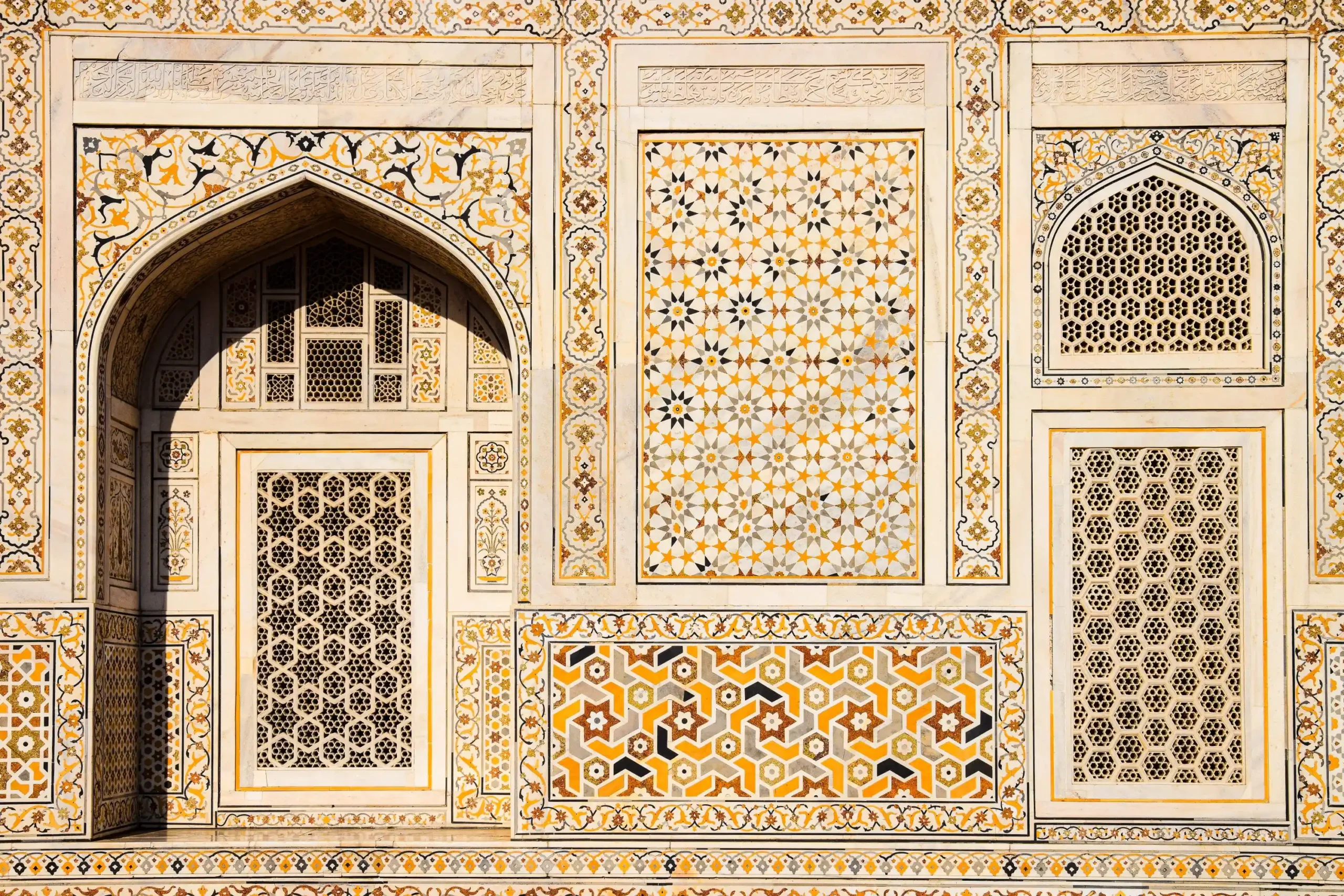
Somewhere in the High Atlas Mountains of Morocco, a woman is dyeing wool. In Agra, India, an artisan bends over a sliver of marble smaller than a fingernail, fitting it into a pattern that will take months to finish. In Kenya’s Taita Hills, agave fiber is stripped and softened by hand, then woven into a basket that will help pay a child’s school fees. These scenes have almost nothing in common on the surface — different continents, different materials, different histories. And yet they share the same quiet urgency: they are all, in one way or another, running out of time.
That urgency is the subject of Handmade Future, a new documentary from sustainable fashion pioneer Kirsten Dickerson, which follows nine artisans across six countries. The film is not a nostalgia piece. It is not an argument for preserving the past for its own sake. It is a case — patient, specific, and ultimately hopeful — that the world’s handmade traditions are not relics but infrastructure: economic, ecological, and cultural infrastructure that we are allowing to erode at exactly the moment we need it most.
The problem was never a lack of skill
Every craft in Handmade Future is defined by extraordinary competence. Marble inlay artisans in Agra, India continue a technique that adorns the Taj Mahal, cutting and setting stone with a precision that takes decades to master. Block printers in Bagru, Rajasthan, align hand-carved wooden stamps by eye, pressing them into cloth again and again with a consistency that would put most machines to shame. Master weaver Arturo Hernandez, working from a backstrap loom in Mitla, Mexico, uses his own body as part of the mechanism, leaning into each thread the way generations of his family have before him.
What threatens these traditions is not a shortage of talent. It is a shortage of dignity in the systems built around that talent. For years, middlemen in Morocco controlled artisans’ access to both materials and markets, leaving skilled weavers with little bargaining power and less income. In Agra, marble inlay pieces pass through so many hands before reaching a buyer that prices multiply while the artisans’ pay stays flat — a gap wide enough that fewer young people see a future in the craft at all. This is the pattern across nearly every story in the film: talent that has survived centuries, undone not by obsolescence but by extraction.
Craft as a form of stewardship
What makes Handmade Future more than a portrait of struggling artists is its insistence that craft and ecology are not separate concerns. In Kenya, Hadithi Crafts connects more than 1,900 basket weavers whose income directly reduces communities’ reliance on charcoal production and poaching — activities that degrade the very ecosystems the artisans depend on. In Morocco, some cooperatives are now experimenting with carbon-negative wool, produced using solar power, wind energy, and rainwater before it ever reaches a loom. In rural England, designer Celia Birchall has rebuilt her entire supply chain so that wool never leaves the region it came from, tracing every garment “as far back as I could,” as she puts it.
None of this is incidental. When a livelihood depends on the health of the land, environmental stewardship stops being an abstraction and becomes a condition of survival. The artisans in this film are not being asked to care about sustainability — their work already requires it. What they need is a market willing to pay for it.
Who gets to define value
There is a deeper argument running underneath all nine stories: that handmade work has been systematically undervalued not because it lacks worth, but because of who has historically been allowed to define worth. In Kenya, the women-led Anchor Crafts is explicit about this, working to position African craftsmanship as design-forward and globally relevant rather than “informal” — a word that has quietly justified decades of underpayment. In Oaxaca, Doña Viviana Alávez turned a barter-based candle-making tradition into a livelihood by simply selling her work beyond her village, then opening her workshop to other women once demand grew. In Kentucky, Sunhouse Craft is proving that even a craft as unglamorous as broom making can rebuild an economy, if buyers are willing to pay wages that reflect the skill involved rather than prices set by mass production.
In every case, the shift is the same: from extraction to circulation, from anonymity to authorship, from labor rendered invisible to labor that is seen, credited, and fairly paid.
Why this matters beyond craft
It would be easy to file all of this under “supporting artisans” and move on. But the stakes are broader. As Dickerson puts it, “artisans don’t just create livelihoods. They carry culture, identity, and a sense of community that cannot be replaced.” Once a technique disappears — once the last marble inlay master retires without an apprentice, once a weaving pattern tied to Zapotec cosmology stops being taught — it does not come back. There is no factory that can reproduce centuries of accumulated ecological and cultural knowledge. It either survives through the hands that hold it, or it doesn’t survive at all.
We are living through an era that prizes speed, scale, and automation almost by default. Handmade Future is not an argument against those things. It is an argument that an economy built entirely on them is an impoverished one — and that the alternative is not a rejection of modernity but a correction of it: direct trade instead of exploitative middlemen, transparent supply chains instead of anonymous ones, recognition instead of erasure.
The choice, ultimately, sits closer to home than we might think. It shows up in what we buy, who we buy it from, and whether we’re willing to pay what a hand-carved block print or a hand-woven basket actually costs to make well. Every woven, carved, or stitched object carries the imprint of a specific person in a specific place. That is not sentimentality. It is information — about who made this, under what conditions, and whether that way of working has a future.
Humans have always shaped beauty from the materials around them, the way birds weave nests and bees build hives. The question Handmade Future leaves us with isn’t whether we still know how to make things by hand. It’s whether we’re willing to make room — economically, culturally, materially — for that knowledge to survive.