The recent conflict involving Iran has done far more than disrupt tanker traffic and lift fuel prices for a few weeks. It has triggered a deeper strategic reassessment across developing Asia, where governments and utilities are increasingly treating reliance on imported oil and liquefied natural gas (LNG) as a matter of national security rather than simple commercial procurement. This report examines how the war exposed structural vulnerabilities in Asia’s energy systems, why India has become the clearest case study of this shift, and what the crisis suggests about the future balance between coal, gas, and renewable energy across the region. The central finding is that the war has not produced a clean energy transition. Instead, it has produced a hierarchy of priorities in which security comes first and decarbonization second, while simultaneously strengthening the long-term argument for diversification, domestic generation, and reduced dependence on any single supply corridor.
For decades, Asian energy planners approached oil and gas procurement primarily as a cost-optimization problem. Utilities and national oil companies sought the cheapest available cargoes, often relying on just-in-time delivery models that minimized the need for expensive storage and strategic reserves. This approach worked reasonably well in a world of relatively stable shipping lanes and diversified supply options.
The Iran war has upended that assumption. When a regional conflict can translate within days into higher shipping insurance costs, tighter spot LNG availability, squeezed refinery margins, and rising electricity prices thousands of kilometers away, the old commercial logic no longer holds. Governments across developing Asia have begun responding not merely by seeking new suppliers, but by rethinking the entire architecture of their energy systems. The goal, increasingly articulated in policy circles, is to “unshackle” domestic energy security from the volatility of global commodity markets — not by abandoning trade altogether, but by reducing the degree to which any single chokepoint or region can hold an economy hostage.
The Strait of Hormuz: A Single Point of Failure
At the heart of this crisis lies a geographic reality that has shaped global energy markets for half a century: an enormous share of the world’s traded oil and gas passes through the Strait of Hormuz. Under normal conditions, roughly 20 million barrels per day of crude oil and refined petroleum products move through this narrow passage, alongside a substantial portion of LNG exports originating from Qatar and the United Arab Emirates.
Because oil and LNG are priced as global commodities, any threat to this corridor reverberates far beyond the Persian Gulf. A tanker delay or an insurance premium spike in the Gulf does not stay contained to the Gulf; it shows up almost immediately in fuel bills in South Asia, in electricity tariffs in Southeast Asia, and in industrial input costs across East Asia. This is what makes the Strait of Hormuz uniquely dangerous as a single point of failure: it is not just a regional shipping lane, but a load-bearing structure for the entire global energy trading system.
Asia is disproportionately exposed to this risk because its largest economies depend heavily on Middle Eastern supply. India, China, Japan, and South Korea together account for a substantial share of the LNG cargoes that transit the strait, while India’s exposure through crude oil and liquefied petroleum gas (LPG) imports is especially pronounced. Japan and South Korea remain heavily dependent on Middle Eastern energy as well, and China continues to carry significant exposure across both its oil and LNG supply chains. The practical consequence is that a military escalation involving Iran becomes, almost instantaneously, an economic event in New Delhi, Dhaka, Karachi, Manila, and Bangkok.
Measuring Asia’s Import Dependence
The scale of the region’s vulnerability becomes clear when import statistics are examined directly. India’s share of crude oil sourced from the Middle East climbed to around 55 percent earlier this year, while roughly two-thirds of its LNG supply came from Middle Eastern suppliers, including Qatar and Oman. Japan sources approximately 95 percent of its oil from the Middle East, an extraordinary level of concentration for one of the world’s largest economies. South Korea similarly relies heavily on the region for both crude oil and LNG.
These figures are not minor footnotes in national energy statistics; they represent the structural backbone of the region’s energy security challenge. Developing economies within Asia face an even more difficult position than wealthier importers like Japan and South Korea, because many lack the financial reserves, storage infrastructure, and fiscal flexibility needed to absorb sudden price shocks. India, despite its scale and relative sophistication, was forced to intervene directly in LPG distribution, redirect refinery output toward domestic priorities, and scramble for non-Middle Eastern LNG cargoes once the conflict intensified.
Smaller economies fared worse. Bangladesh, Pakistan, and Sri Lanka — all of which had leaned on long-term LNG supply contracts as a hedge against spot-market volatility — discovered that such contracts offer limited protection when the underlying Gulf supply itself becomes unreliable. The crisis did not create these countries’ dependence on imported fuel; it simply exposed how expensive and precarious that dependence had already become.
India as the Central Case Study
Among all Asian economies, India offers the clearest window into how the war is reshaping energy policy in real time. As both one of the world’s largest oil importers and one of its fastest-growing LNG markets, India was forced to recalibrate the balance among LNG, coal, domestic production, and alternative international suppliers almost overnight.
In the weeks following the escalation, India secured additional LNG cargoes from outside the Middle East, with supply arriving from Oman, the United States, Nigeria, and Angola to help cushion the disruption. Despite these efforts, overall import volumes still weakened at points during the year, illustrating just how difficult it is to fully substitute for a Gulf-based supply shock even with an aggressive diversification strategy.
Perhaps the most consequential response has been India’s renewed reliance on coal. Officials and energy commentators have repeatedly described coal as the “backbone” of the country’s energy security during the crisis, with government-held stocks kept elevated and coal auctions accelerated to guarantee near-term availability. As gas-based power generation lost ground amid supply uncertainty, coal-fired generation increased to fill the gap. Renewable energy capacity continued to expand throughout this period, but it could not yet substitute for the reliability that dispatchable thermal power provides on short notice, particularly during demand peaks or supply interruptions.
This dynamic captures the central paradox running through the entire crisis: the war is simultaneously pushing India toward long-term diversification and reduced import dependence, while in the short run reinforcing greater reliance on coal — the fuel most closely associated with emissions and air pollution. Energy security and decarbonization, in other words, are pulling in opposite directions during moments of acute crisis, even if they may converge over a longer time horizon.
The Erosion of LNG’s “Bridge Fuel” Narrative
Prior to the war, LNG occupied a privileged position in the region’s energy discourse. It was frequently described as a cleaner-burning transition fuel, a flexible bridge that could carry power systems from coal-heavy generation toward a renewables-dominated future. The Iran conflict has seriously undermined that narrative across Asia.
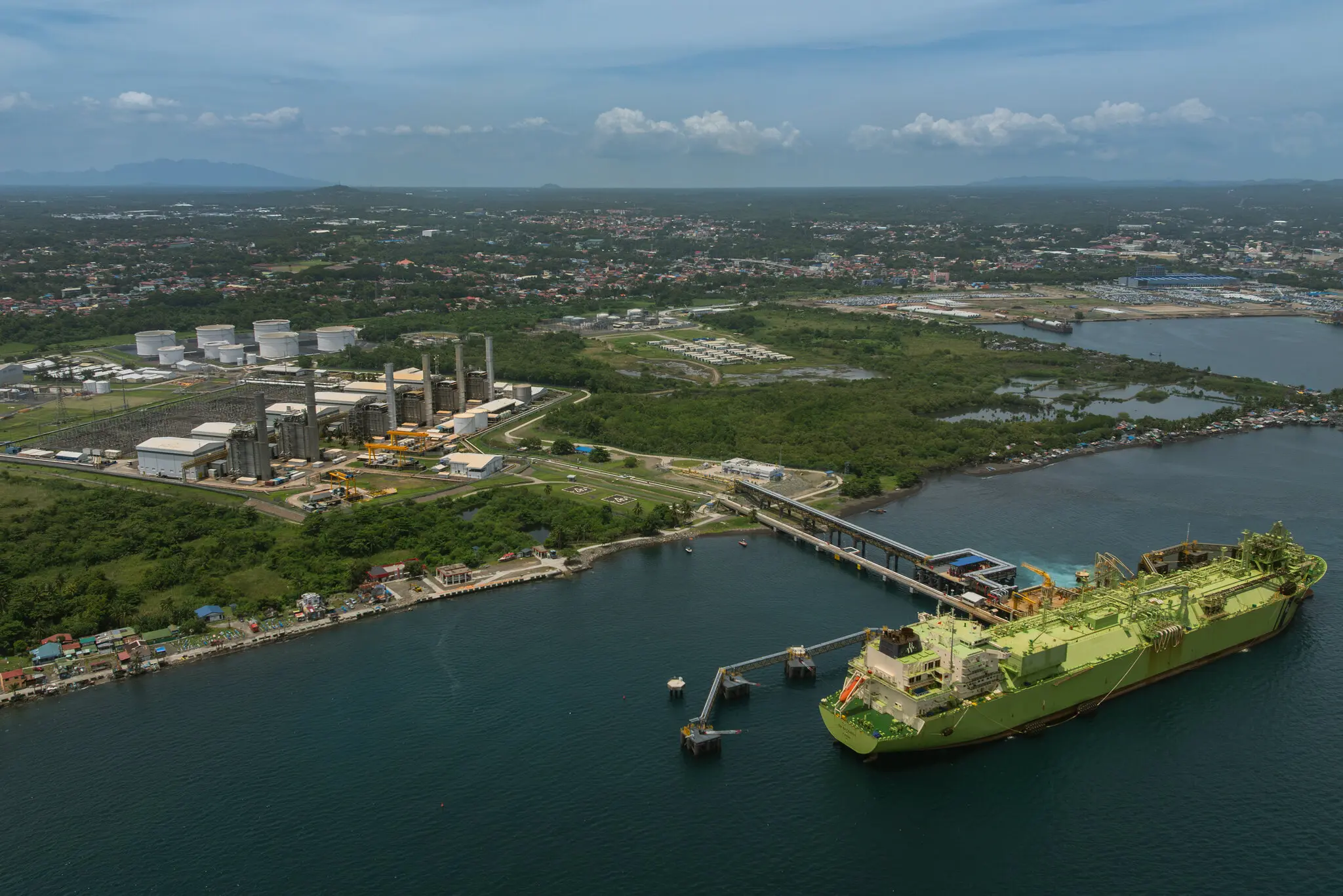
LNG trade is structurally dependent on long-distance shipping, a limited number of export terminals, and a spot market that can reprice rapidly whenever supply tightens. Once the Strait of Hormuz became genuinely unstable, LNG stopped functioning as the dependable bridge fuel it was marketed as and began behaving instead like a fragile, auction-driven commodity subject to the same geopolitical risk premiums as crude oil.
This has led a growing number of energy analysts to argue that Asian LNG demand may weaken on a structural, rather than merely cyclical, basis. LNG imports across parts of Asia fell to multi-year lows during 2026, and countries including China, India, Pakistan, Thailand, and Vietnam have begun reassessing their planned expansions of gas-fired generation capacity. The underlying logic is straightforward: if LNG supply can be effectively weaponized or disrupted by conflict, then building an increasing share of a country’s power system around imported gas creates a long-term vulnerability rather than the flexible buffer it was once assumed to provide. Some governments may continue purchasing LNG cargoes opportunistically, but the crisis appears to have made policymakers considerably more cautious about betting their long-term energy strategy on it.
Coal, Renewables, and the Hierarchy of Resilience
When supply shocks hit, the first response available to most governments is rarely the most elegant one — it is simply to use whatever domestic resources are already at hand. This explains the renewed prominence of coal in India and elsewhere in Asia, where it continues to provide firm, dispatchable power at moments when gas becomes scarce or prohibitively expensive. Energy analysts have cautioned that while coal can stabilize electricity supply in the near term, this stability comes at the cost of deepening both air pollution and long-term climate liabilities.
In this sense, the Iran war has not accelerated a clean energy transition in any straightforward way. It has instead produced a clear hierarchy of priorities, with immediate energy security placed ahead of decarbonization goals. This is not necessarily a permanent reordering of values, but it does reflect the reality that governments facing blackouts, fuel shortages, or balance-of-payments pressure will generally prioritize keeping the lights on over meeting emissions targets.
That said, the crisis may ultimately strengthen the longer-run case for renewables, nuclear power, energy storage, and grid modernization. A number of analysts and energy companies have suggested that the war is pushing planners toward greater redundancy, supply diversification, and domestically generated power. The key insight is not that renewable energy is immune to every kind of disruption, but that its ongoing operating costs are not tied to the same geopolitical risk premiums that affect imported fossil fuels. For governments genuinely seeking to reduce their exposure to global market volatility, expanded clean power capacity and stronger grid infrastructure represent the most durable long-term path forward.
Policy Implications
Two major policy implications emerge from this crisis. The first concerns the need for genuine portfolio thinking in energy planning. Countries such as India are already diversifying their supplier base, reinforcing storage discipline, and blending coal, gas, and renewables more deliberately rather than defaulting to whichever fuel is cheapest at a given moment. Other developing Asian economies are likely to follow with a similar mix of measures: expanded long-term contracts with suppliers outside the Gulf region, accelerated development of domestic fuel resources, larger strategic reserves, and faster deployment of clean energy infrastructure. The objective is not complete energy self-sufficiency, which remains unrealistic for most import-dependent economies, but a meaningful reduction in vulnerability to disruption at any single chokepoint or in any single supplier region.
The second implication is fiscal in nature. Elevated import costs place direct strain on current account balances, widen the fiscal burden of energy subsidies, and force governments into difficult trade-offs between shielding consumers from price increases and protecting national budgets. This tension is especially acute for poorer Asian economies operating with limited foreign exchange reserves and thin social safety nets. If the Iran war leaves one lasting institutional legacy, it may be the elevation of energy security from a largely technical, utility-level concern into a central pillar of industrial policy, foreign policy, and macroeconomic management.
A Lasting Reset
The Iran war should be understood not only as a geopolitical crisis, but as a crisis in the design of global energy markets themselves. It has demonstrated that the globalized trade in oil and gas still rests on a small number of fragile sea lanes and export hubs, and that the costs of any disruption fall disproportionately on developing importers with the least capacity to absorb them.
For Asia, the practical response can no longer be limited to chasing the cheapest available barrel or cargo. It must instead involve building energy systems resilient enough to withstand geopolitical shocks, even where that requires paying more in the short term or accelerating the shift toward domestically sourced energy. This is the meaning behind the phrase “unshackling” energy systems from global markets: not a rejection of international trade, but an effort to escape the trap of near-total dependence on external supply chains that can be severed by war, sabotage, or shipping disruption at any moment.
In the aftermath of the Iran conflict, developing Asia appears to be absorbing a difficult but clarifying lesson: resilience carries a price, but so, unmistakably, does dependence.