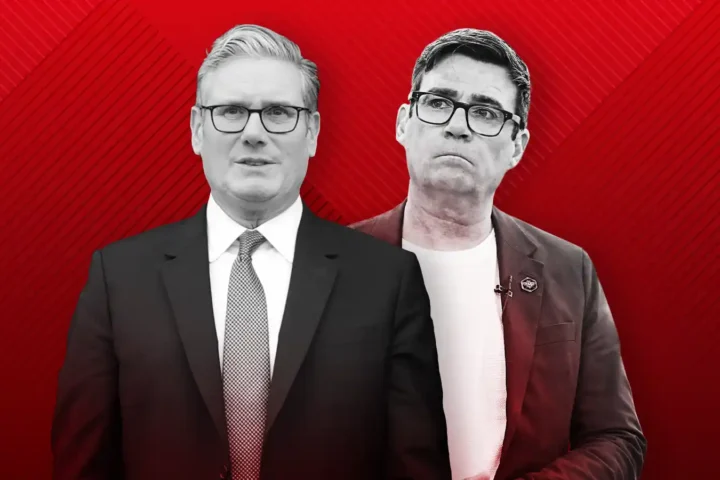
There is a particular kind of political death reserved for people who agree on almost everything: they kill each other slowly, over process, while the people who disagree with them on everything watch and wait. This is roughly where France’s centrist bloc finds itself seven months before the 2027 presidential election, with two former prime ministers — Edouard Philippe and Gabriel Attal — locked in a contest that looks less like a battle of ideas and more like a scheduling conflict that neither man can bring himself to resolve.
The numbers explain the urgency. In the most recent polling averages, Jordan Bardella and Marine Le Pen sit comfortably atop the field, with the National Rally candidate (whichever of the two it ends up being) polling somewhere in the low-to-mid thirties in the first round. Philippe trails at around 18 percent. Attal is further back, in the low teens. Jean-Luc Mélenchon’s far-left has, if anything, been the more startling story of the past two months: some surveys now show him running neck-and-neck with Philippe for the second runoff spot, a scenario that would hand the far right a walkover in round two and leave centrists watching the final act from the sidelines entirely. Put simply, the two mainstream forces that between them cannot currently out-poll either extreme are also refusing to combine into one force that might.
Philippe and Attal are not strangers, and this is not really a fight over policy. Both are creatures of Macronism who served the same president, sat in the same cabinet meetings, and share a broadly similar prospectus: pro-European, market-friendly, allergic to the “50 shades of managing decline” that Attal complained of when he launched his bid in a village of seven hundred people. The quarrel is generational and personal. Philippe, 55, has spent years quietly building Horizons into a vehicle for his own candidacy and has consistently been the centrist better placed to survive a runoff against the far right. Attal, 37, argues that the moment calls for a clean break from an era voters have already rejected — and he now controls Renaissance, the party Macron built, giving him money and machinery Philippe lacks. Each believes the other is the reason the center cannot get out of its own way, and each has enough evidence to make the case.
To their credit, the two men appear to have recognized the trap they are setting for their own coalition. They have reportedly agreed to some mechanism for assessing, by early next year, which of them is genuinely better placed to make the second round — and for the loser to stand aside. That is a more mature arrangement than French politics usually produces, and it beats the alternative: two centrist candidates splitting a shrinking pie down to seven or eight points each, guaranteeing that neither survives the first round while Bardella cruises through with a third of the vote and a fractured field on the other side of him.
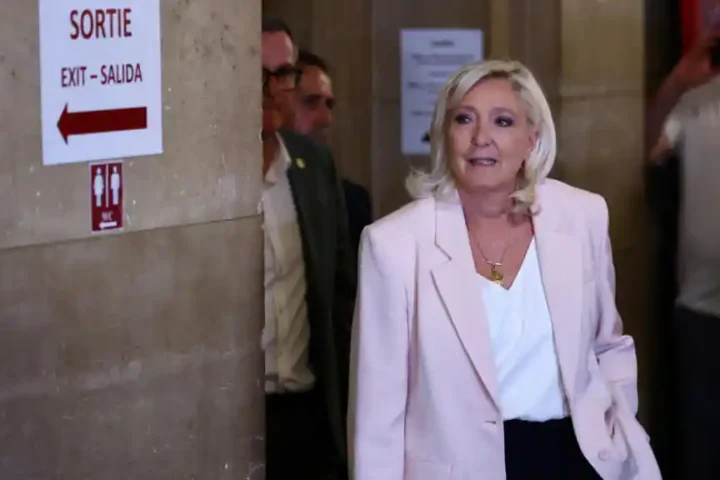
But “an agreement to eventually agree” is not unity, and voters can tell the difference. Every month that passes without a resolution is a month spent under two overlapping banners, competing for the same donors, the same mayors, the same airtime — while Bardella needs to do nothing but wait, and Mélenchon’s left consolidates around a single, if divisive, standard-bearer. Marine Le Pen’s own path is legally uncertain after her conviction and ban, which has only sharpened Bardella’s position as heir apparent; the far right, for all its internal tensions, is not the one suffering from an excess of candidates. The center is unilaterally disarming through indecision at precisely the moment its opponents have never been more disciplined.
There is a case to be made that this competition is healthy — that a real primary, however messy, produces a stronger nominee than a backroom coronation, and that France’s centrists deserve more democratic legitimacy than a deal struck between two men and their advisers. That argument has merit; imposed unity candidates have a way of looking weak precisely because they were never tested. Others would go further and argue the problem isn’t tactical at all — that after eight years of Macronism, no rebranding of the same governing philosophy, however earnestly contested, is what a restive electorate is actually asking for, and that the center’s energy would be better spent renewing its ideas than its org chart.
Both critiques deserve a hearing. But they assume a luxury of time that the polling does not support. If Philippe and Attal genuinely believe an extremist presidency — of either stripe — would be a historic setback for the country they both served, then the test of that conviction is not the sincerity of their private diagnosis. It is whether they can do the one thing their voters most need them to do, which is stop competing with each other in public long enough to give the center a candidate who can actually win in the spring.