When Democrats took both the House and the Senate on Tuesday, the instinct in New Delhi may well have been relief. A president who has lost Congress, the thinking goes, will be constrained, and the leader who put a 50 per cent tariff on Indian goods in 2025 will have to moderate. It is a comforting theory. It is also the wrong lesson.
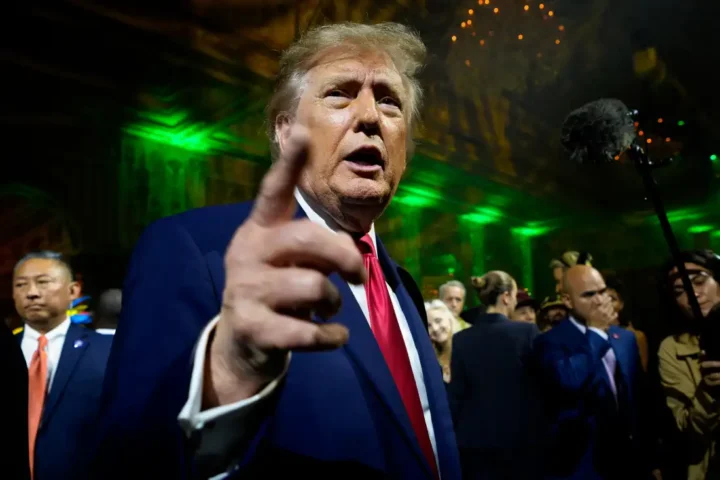
The rebuke was sharp. Before the vote, Trump’s approval sat near 37 per cent in the horserace.report average, and Reuters/Ipsos recorded an all-time low of 32 per cent in September. A New York Times/Siena poll that month had Democrats ahead 51 to 43. Yet by Wednesday Trump was telling CNBC he could work with Democrats on “many more things than people understand,” while appearing to rule out any rollback of his tariffs. A weakened president is not a more predictable one. He is one who goes looking for levers Congress does not control.
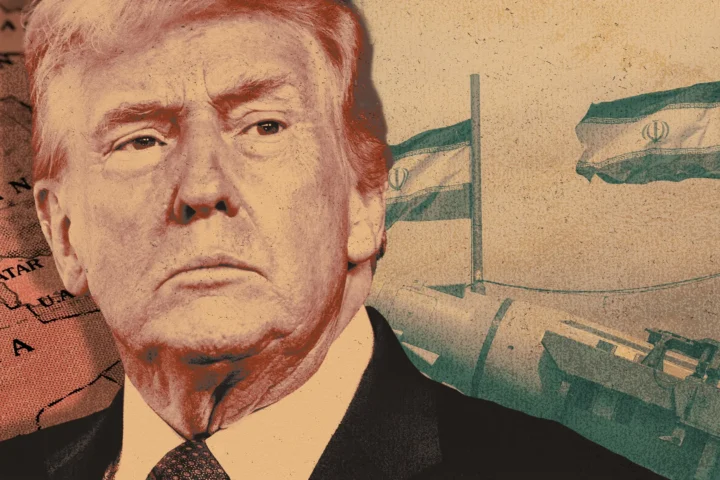
India has already watched that playbook run. Tariffs on Indian goods peaked at 50 per cent last year. A framework announced in February promised an 18 per cent rate that never took effect. Days later the extra 25 per cent Russian-oil penalty was rescinded, and on 20 February the Supreme Court struck down the reciprocal tariffs. A 10 per cent global tariff followed, and on 24 July a 10 per cent Section 301 tariff replaced it. On the eve of the midterms, the White House was listing India among deals ‘secured’ even though the interim agreement remained unsigned.
Visas tell the same story. The $100,000 fee on new H-1B petitions, announced in September 2025, landed on a community that receives roughly 71 per cent of such visas. A federal judge struck it down on 8 June, and on 24 July an appeals court declined to pause that ruling. The administration’s answer was not retreat but a new route: a proposed fee of $103,265 through formal rulemaking. A president beaten in court and at the ballot box does not stop. He changes channels.
Six tariff regimes in 16 months: Washington’s rules for India keep changing
Additional US duty on most Indian goods (percentage points over standard MFN rates) and the status of the $100,000 H-1B fee, March 2025 to 7 November 2026
- Additional US tariff
- Court ruling
- Announced, never took effect
- Authorised, not applied
- H-1B fee in force
- Fee blocked by courts
- Re-proposed via rulemaking
- 12 Apr 2025. 26% announced (10% baseline + 16% reciprocal). The reciprocal part is paused on 9 Apr, leaving 10%.
- 27 Aug 2025. 25% duty takes effect.
- 327 Aug 2025. Extra 25% Russian-oil penalty lifts the total to 50%, the peak.
- 42 Feb 2026. Deal announced, promising 18%. That rate never took effect.
- 57 Feb 2026. Russian-oil penalty rescinded; 25% remains.
- 620 Feb 2026. US Supreme Court strikes down the reciprocal tariffs. A 10% global tariff follows on 24 Feb.
- 77 May 2026. US trade court rules the 10% global tariff illegal, with a narrow block.
- 824 Jul 2026. Global tariff expires; a 10% Section 301 tariff (forced-labour grounds) takes over.
- 918 Sep 2026. Sanctioning Russia and Iran Act signed: allows tariffs of up to 100% on Russian-oil buyers. No sign yet it has been applied to India.
- A21 Sep 2025 · H-1B fee. $100,000 fee on new H-1B petitions takes effect.
- B8 Jun 2026 · H-1B fee. Federal judge strikes the fee down.
- C24 Jul 2026 · H-1B fee. Appeals court declines to pause that ruling.
- DAug 2026 · H-1B fee. Administration proposes a $103,265 fee through formal rulemaking.
View the data as a table
| Period | Extra duty | Basis |
|---|---|---|
| 2 Apr – 6 Aug 2025 | 10% | Baseline tariff (16% reciprocal part paused 9 Apr) |
| 7 – 26 Aug 2025 | 25% | Reciprocal tariff |
| 27 Aug 2025 – 6 Feb 2026 | 50% | Reciprocal + 25% Russian-oil penalty |
| 7 – 23 Feb 2026 | 25% | Penalty rescinded; promised 18% never took effect |
| 24 Feb – 23 Jul 2026 | 10% | Global tariff (Section 122) after Supreme Court ruling |
| 24 Jul 2026 onward | 10% | Section 301 tariff (forced-labour grounds) |
| 21 Sep 2025 – 8 Jun 2026 | $100,000 fee | H-1B new petitions; struck down 8 Jun, appeals court declined to pause 24 Jul |
| Aug 2026 | $103,265 fee | Proposed via formal rulemaking |
Source: DT Next chronology of US tariffs on Indian goods; PSU Watch; Mondaq (Khaitan & Co); Scroll.in; Indian Express; IANS/Siasat; author’s compilation. Rates are additional duties on most goods; sector-specific duties (e.g. steel at 50%) and exempt products (smartphones, medicines, energy) are not shown. The Sanctioning Russia and Iran Act authorises, but has not been shown to apply, tariffs to India.
That is why a Democratic Congress is a weaker shield than it looks. A Democratic House can summon officials, hold hearings and scrutinise tariff, trade and visa policy, but its imprint on India would come mostly through oversight rather than new law, and a president can veto what it passes. Scrutiny is useful. It is not a guarantee.
Three conclusions follow for India.
First, durability. Two of the most consequential American measures aimed at India, the tariff wall and the H-1B fee, were unwound or suspended by courts within a single year. Any bargain priced on instruments that can be reversed overnight is a bargain priced on sand. Delhi is right to refuse to sign at a rate that may not survive its own signing.
Second, partisanship will not rescue India. Democrats will bring their own demands, and 2028 brings its own uncertainty. Neither party offers a blank cheque. India’s task is to build ties across the aisle, including with the new committee chairs, rather than bet on one side.
Third, energy. Russia’s share of India’s crude imports rose from 1.7 per cent in 2019-20 to about 40 per cent in 2023-24, making it the biggest supplier. Last October Trump claimed Prime Minister Modi had agreed to stop buying it; Indian refiners said they had not been asked. Reliance alone is reported to hold a term deal with Rosneft for 500,000 barrels a day. Whatever Delhi decides, its energy basket should not hinge on one capital’s mood.
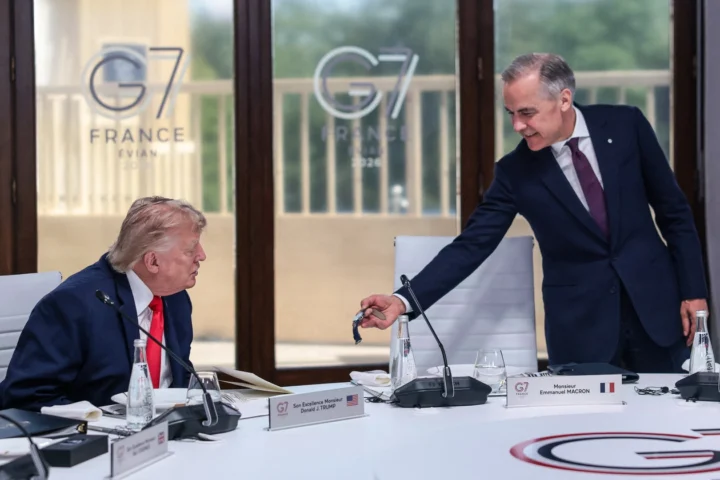
The hedge is already under construction, and it should be accelerated. India and the European Union concluded a free trade agreement on 27 January after nearly two decades of talks. Formal signing is expected in December, with entry into force in February or March 2027. Ursula von der Leyen has described the result as a market of two billion people accounting for a quarter of global GDP. Services trade between the two sides stood at $83.1 billion in 2024, and a mobility agreement and a security and defence partnership came with the deal. The mobility pact matters most: if Washington makes the H-1B road costlier, European routes for Indian students and skilled workers offer a second path. Add the pacts with the United Kingdom and the European Free Trade Association, and India has the beginnings of a trade map that no single White House can redraw.
One in five export dollars faces a tariff regime still in flux
India’s goods exports by destination, FY2024-25, share of $437.7 billion, grouped by trade-deal status
- United States
- EU-27
- UAE
- United Kingdom
- China
- Rest of world
EU-27 is shown as a bloc; it includes the Netherlands ($22.8 billion), India’s third-largest single destination.
Solid line and filled dot: done by 7 Nov 2026. Dashed line and hollow dot: pending or target date.
The hedge, in numbers: the EU, UAE and UK together take about 1.5 times as much as the US (29.0% vs 19.8%), yet the US share held at 19.7% through Apr–Feb FY26. The diversification has been negotiated, not yet delivered.
View the data as a table
| Destination | $ bn | Share | Trade-deal status |
|---|---|---|---|
| United States | 86.5 | 19.8% | Tariff regime in flux; interim deal unsigned |
| EU-27 (bloc) | 75.9 | 17.3% | FTA concluded Jan 2026; signing due Dec |
| UAE | 36.6 | 8.4% | CEPA trade pact in force |
| United Kingdom | 14.6 | 3.3% | Trade pact (CETA) concluded |
| China | 14.3 | 3.3% | No trade agreement |
| Rest of world | 209.9 | 48.0% | Mixed; other pacts and no pacts |
Source: Ministry of Commerce data via Business Standard, Outlook Business and FactoData (FY2024-25 destinations); EU figure from Outlook Business/Deccan Herald citing government data; Assocham (Apr–Feb FY26 US share); India Briefing (FY2024-25 total of $437.7 billion); Steel Orbis and Wikipedia (EU FTA timeline); IANS/Siasat (US deal unsigned as of 3 Nov 2026). Shares are author’s calculations.
Hedging is not hostility. The United States remains India’s largest export market and an indispensable partner in technology and defence; nothing here argues for stepping back from the Quad or from the trade talks. It argues for diversifying exposure: sign Brussels on schedule, insist that any Washington deal rest on firm legal authority, deepen defence and technology ties on a bipartisan basis, and keep energy options open.
Every American partner is learning the same lesson at the same time: the White House is powerful, but it is no longer the only variable. The midterms have shrunk Trump’s room for legislation. They have not shrunk his appetite for improvisation. For India, the prudent response to a wounded, restless superpower is not to cling closer or to drift away. It is to be needed by many.