Italy’s nuclear comeback would be less about whether Europe “likes” nuclear than about whether Europe can afford not to hedge. And if Italy demonstrates that the hedge can be made credible—legally, technically, and socially—it could redraw the future boundaries of what “European decarbonization” can look like.
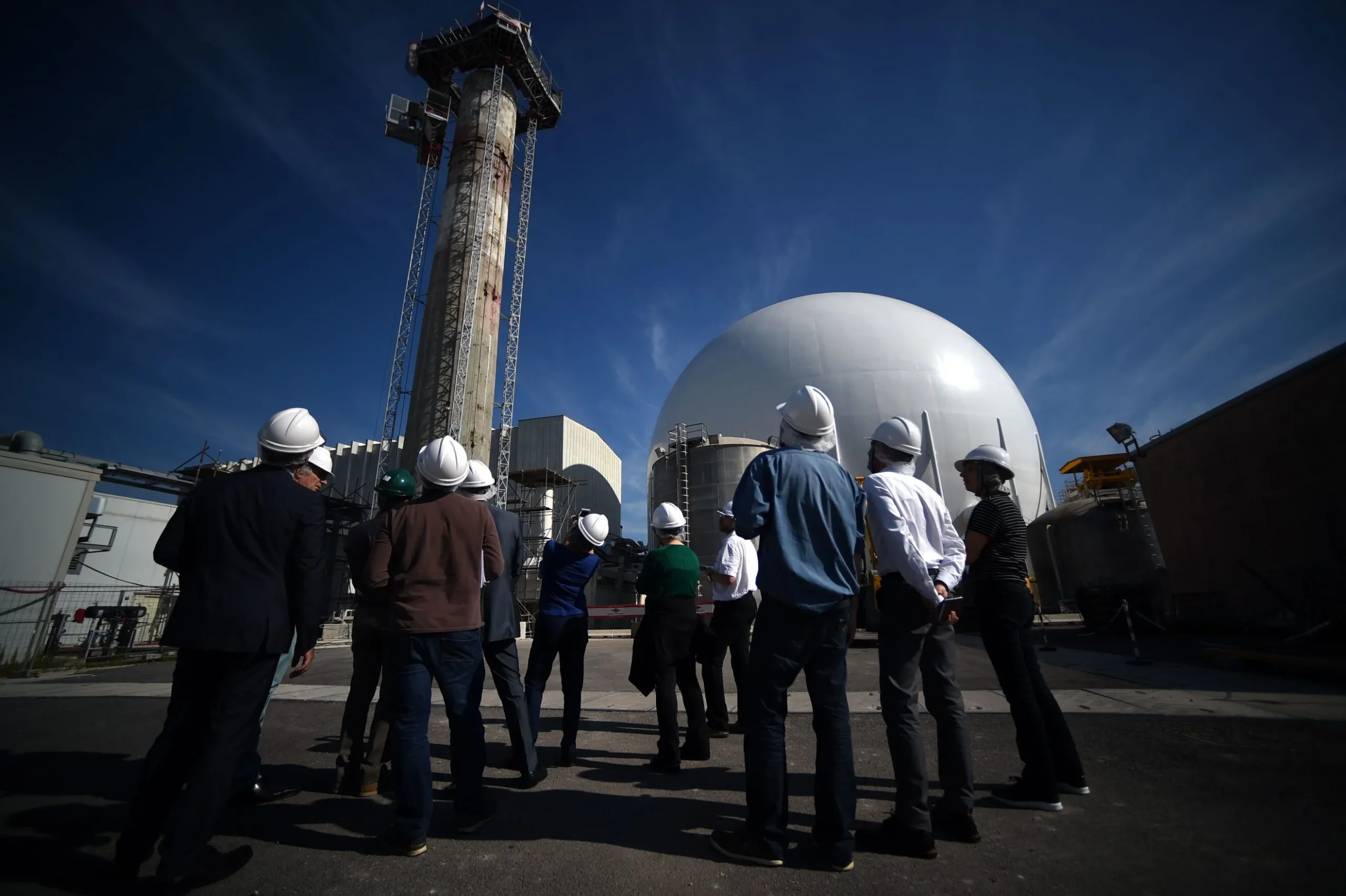
Italy is trying to take Europe’s most emotionally charged energy taboo and turn it into a policy lever—because the continent’s power system is under stress, and the political math for decarbonization is getting harder to ignore. If Italy truly reopens the door to nuclear by the mid-2030s, it would not just add megawatts; it would reshape Europe’s energy security debate, industrial strategy, grid politics, and the way governments think about speed, cost, and risk.
First, the premise: Italy is moving toward legislation that would establish a legal pathway for new reactors, after decades of nuclear shutdown. The energy minister, Gilberto Pichetto Fratin, has said Italy could be generating nuclear electricity again by 2035, as a landmark bill heads for a vote in the Senate after passing the lower house. Italy’s political reset is built on the memory of 1987 referendum opposition tied to the Chernobyl disaster and the closure of the last plants in 1990.
That history matters—because Italy is not merely changing technology options; it is revising a national identity around what counts as “acceptable” energy risk. This makes the European implications unusually large: if a country with Italy’s nuclear skepticism reverses course, other governments that have treated nuclear as either too divisive or too slow will get permission to reconsider.
Europe’s second premise is economic and geopolitical pressure. Europe’s industrial electricity costs are among the highest in the region for many businesses, and that kind of sustained price pressure tends to push energy debates out of the abstract and into the balance sheet. At the same time, geopolitical uncertainty has made supply security a daily reality rather than a theoretical concern. For Italy, nuclear is being positioned less as a replacement for renewables than as a stabilizing complement—something that can provide firm power when weather-dependent generation can’t.
What does this mean for Italy specifically?
It means Italy would be trying to convert an old referendum-era decision into a modern industrial policy. The June lower-house approval didn’t immediately authorize plants; instead, it empowers the government to draft rules for “a new generation” of nuclear projects, with implementing decrees expected within a year after final parliamentary approval. In other words, this is the long march: establishing licensing, safety standards, waste management, and siting frameworks before any construction becomes plausible. Even optimistic timelines—like “by 2035”—imply a pipeline of regulatory, engineering, procurement, financing, and public-acceptance work that takes years.
The Italian political significance is that this strategy tries to decouple “nuclear energy” from the specific historical trauma of the late 1980s in two ways. One is technical framing: next-generation nuclear is positioned as different from what came before. The other is governance framing: by treating nuclear as something regulated through a new modern legal pathway, Italy can present it as a controlled, standardized choice rather than a reversion to an era remembered as unsafe. Whether the public buys that distinction will depend on transparency, local siting decisions, and whether Italy can credibly address waste and safety to a standard that goes beyond promises and into demonstrated systems.
It also means Italy would likely be forced to confront a more uncomfortable reality: even if nuclear is back on the table, the rest of the grid still has to be built and operated. Italy is already balancing renewables growth with the need for dispatchable power and grid stability. If nuclear becomes part of that portfolio, it could reduce reliance on fossil generation for baseload and flexibility, but it would not replace the need for transmission expansion, interconnection, and grid modernization. In fact, introducing a large new thermal source can change power flows, planning assumptions, and investment priorities across regions.
Zooming out to Europe
- 1) A shift in Europe’s energy coalition politics
Europe has long split on nuclear. Some member states treat it as necessary for decarbonization and security; others treat it as too risky, too expensive, or too slow relative to renewables and storage. Italy’s move would be a signal that the “anti-nuclear” coalition can no longer count on the issue being frozen. The minister’s stated 2035 target and the bill’s momentum after lower-house passage make it harder for neighboring governments to dismiss Italy as “never going to happen.”
In European terms, this could make nuclear a less permanent wedge and more of a pragmatic option within national plans. That matters because EU energy policy is often shaped by bargaining among member states rather than by a single technocratic ideal. When a large economy changes its stance, the bargaining dynamics shift.
- 2) Competitive pressure on costs—and industrial strategy
Europe’s business electricity costs are a major political driver. If Italy adds an additional firm low-carbon source (eventually), it could become part of how Europe competes economically—especially in energy-intensive industries. While nuclear’s cost profile varies by project and financing, the political argument is clear: long-term energy price stability is valuable, and firm generation helps reduce exposure to volatile fossil fuel markets.
Even if electricity prices do not immediately fall (because construction and commissioning take time), the forward-looking effect could be significant: investors and industrial planners tend to respond not only to current tariffs but to credible signals about future supply mix and policy direction.
- 3) A supply-chain and technology ecosystem effect
If Italy moves from debate to regulatory frameworks, it draws attention to an ecosystem: engineering firms, reactor components, safety and licensing services, construction capacity, and long-term waste management capabilities. Once a credible pipeline exists—even if the first plants are not imminent—European industrial actors can justify investments in skills and manufacturing.
There’s also the strategic angle: Italy’s rethinking is being discussed in a context that connects to the emerging EU nuclear industry narrative, including small modular reactor research and broader waste-management planning. Even if the bill is intentionally cautious—delegating authority to the government to draft details—the creation of a ruleset is what unlocks industrial mobilization.
- 4) Regulatory “learning” across borders
One of Europe’s strongest institutions is that it often standardizes through shared legal and technical norms, even when member states differ. If Italy creates a modern licensing and safety pathway for “next-generation” nuclear technologies, the rest of the continent will watch the design choices: what safety standards are codified, how radioactive waste is governed, how siting is handled, and how the state interacts with local communities. If those elements are credible, other member states could use Italy’s approach as a template—directly or indirectly.
Conversely, if Italy struggles—politically or technically—Europe could learn what not to do. Either way, Europe gets a live case study.
- 5) The core climate question: complement vs replacement
A crucial point in the Italian framing is that nuclear is treated as a complement to renewables rather than a replacement. That matters because the climate urgency in Europe is not only about emissions; it’s about timelines. If nuclear is pitched as complementary, it can fit into a diversified portfolio: renewables scale for energy volumes, while firm low-carbon generation underwrites reliability.
But complementarity is only a promise if the rest of the system is aligned. If Italy cannot build grid capacity or manage integration issues, then nuclear could arrive into a bottlenecked environment. So Europe’s implication is not simply “more power”; it’s “power plus system readiness.”
What risks and uncertainties could temper the impact?
The biggest uncertainty is the gap between legislation and electrons. The bill, as described, establishes pathways and drafting obligations rather than immediately authorizing construction. That means the political victory may be real, while the physical payoff may still be delayed.
There is also the public legitimacy challenge. Italy’s nuclear relationship has been repeatedly shaped by referendum outcomes tied to Chernobyl and the perceived risk of nuclear accidents. Any European impact depends on whether Italy can regain social consent around safety, waste, and siting—not just pass paperwork.
Finally, even if nuclear returns, Europe’s energy transition still runs on multiple simultaneous tracks: renewables permitting, grid build-out, storage scaling, and demand-side changes. Nuclear can help decarbonize and stabilize, but it does not remove the need to solve those parallel problems.
So what would this ultimately mean for Italy and Europe?
For Italy, it would mean reasserting national energy sovereignty with a new technological option that is meant to reduce dependence on volatile fossil supply while supporting decarbonization goals. It also means reopening the conversation with a public that has long treated nuclear as synonymous with unacceptable catastrophe risk—an argument now reframed around next-generation safety and modern governance. And it means the state will have to prove, not just legislate.
For Europe, it would mean that nuclear is becoming more politically possible again, not because energy security has become kinder, but because it has become harsher. High business electricity costs and ongoing geopolitical uncertainty increase the incentives to diversify firm low-carbon supply. If Italy follows through, Europe may see nuclear move from a culture-war symbol toward a pragmatic element of how governments hedge against both climate risk and energy-system fragility.