The struggle over the future world order is no longer simply between China and the West. From BRICS and development finance to technology and reform of the United Nations, India and China are advancing different visions of how the Global South should exercise its growing power. The countries between them increasingly intend to choose neither.
For decades, discussions about the future of global power were framed around a relatively simple question: could China eventually challenge the United States?
That question now looks increasingly inadequate.
The transformation underway in international politics is larger than the rise of one challenger to one superpower. Across Asia, Africa, Latin America and the Middle East, countries that once occupied the margins of global decision-making are demanding a greater role in writing its rules.
The loosely defined “Global South” contains most of humanity and encompasses some of the world’s fastest-growing economies. Its members differ enormously in income, political systems and strategic interests. They are not a bloc, and rarely behave like one.
Yet they share an increasingly powerful complaint: institutions built in the aftermath of the Second World War do not adequately reflect the distribution of population, economic power and political ambition in the 21st century.
China has understood this for years.
Increasingly, so has India.
And the contrast between their approaches may prove as consequential to the emerging international order as the much more familiar rivalry between Beijing and Washington.
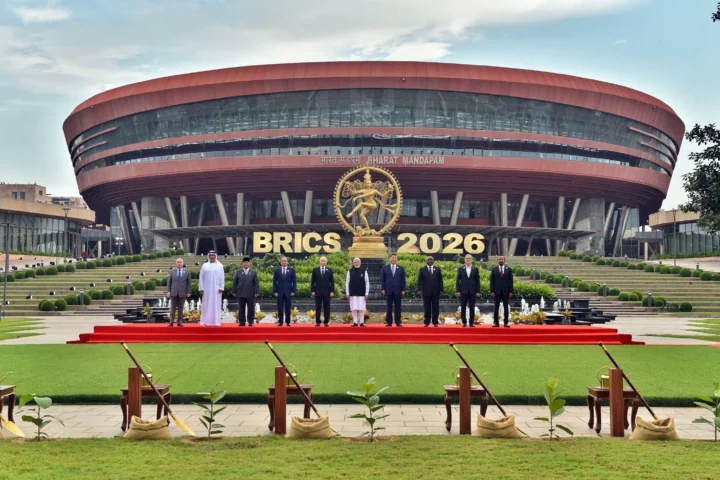
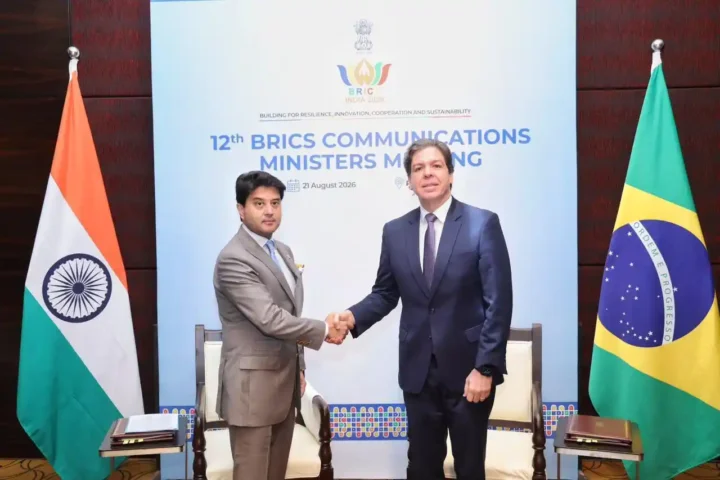
That contrast was unusually visible at the BRICS summit in New Delhi this September. India used its presidency to argue that the Global South must move from being a “rule-taker” to a “rule-shaper”, while China called on BRICS to consolidate the collective strength of developing countries and proposed deeper cooperation in trade, artificial intelligence and economic integration.
The language was similar. The strategic philosophies beneath it were not.
India and China agree on a surprising amount when discussing global governance.
Both argue that developing countries remain underrepresented in institutions created when Western economic and political dominance was overwhelming. Both want reforms to international financial institutions. Both defend a more multipolar world. Both emphasize sovereignty. Both object to arrangements in which a small number of wealthy countries retain disproportionate influence over global rule-making.
The New Delhi BRICS declaration reflected much of this common ground, calling for a more representative international order and greater influence for emerging and developing economies.
But agreement over what is wrong with the existing system should not be confused with agreement over what should replace it.
China’s approach is built on scale.
India’s is increasingly built on representation.
China offers infrastructure, industrial capacity, trade, finance and an increasingly elaborate intellectual framework for reorganizing global governance.
India presents itself differently: as a developing country that has become a major power without abandoning strategic autonomy, as a bridge between developing and developed countries, and as an advocate of reforming international institutions without organizing the Global South into an explicitly anti-Western coalition.
This distinction matters.
The emerging competition is not simply about whether Delhi or Beijing can claim to “lead” the Global South. Most countries in the Global South have little interest in acquiring another leader.
It is about which model gives them greater room to manoeuvre.
China’s advantage is scale
On material power, the comparison is unequal.
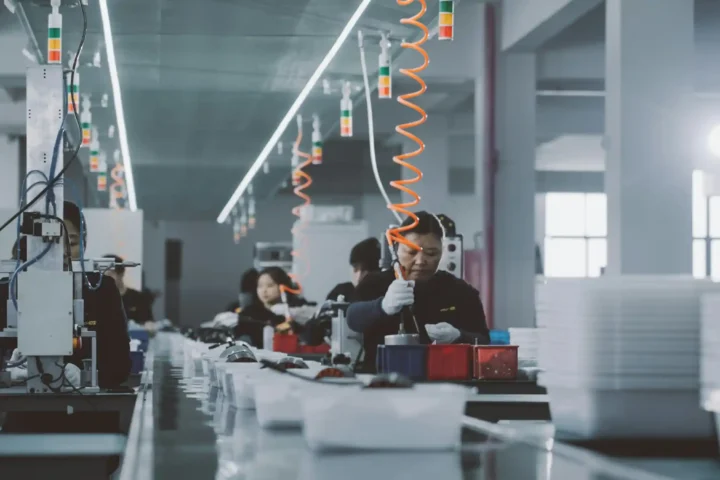
China possesses financial and industrial capabilities India cannot yet match. The Belt and Road Initiative alone has created a Chinese economic presence across much of Asia, Africa, Latin America and the Middle East.
After several years in which Beijing appeared to be recalibrating the BRI towards smaller and more financially cautious projects, Chinese overseas engagement accelerated sharply again. Research by Griffith University estimates that Chinese BRI construction contracts and investments together exceeded $200 billion in 2025, the highest annual level recorded since the initiative began.
Energy, mining and infrastructure featured prominently.
That matters because much of the developing world has an enormous infrastructure deficit. Governments need ports, railways, electricity grids, telecommunications networks, roads and industrial capacity. Western governments have frequently promised alternatives, but China has demonstrated an ability to deliver projects at a scale few competitors can reproduce.
Beijing has supplemented that economic presence with an increasingly ambitious political architecture.
Xi Jinping launched the Global Development Initiative in 2021, followed by initiatives covering security and civilization, and in 2025 added a Global Governance Initiative. The last explicitly argues for greater representation for the Global South and stresses sovereign equality and non-interference.
China’s proposition is therefore becoming comprehensive.
It offers capital and infrastructure alongside an idea of international politics: states should be free to choose their political systems, outside powers should interfere less in domestic governance, and developing countries should have substantially greater influence over international institutions.
For governments frustrated by Western political conditionality, the attraction is obvious.
India’s proposition is different
India cannot compete dollar-for-dollar with the BRI, and largely does not try.
Its development diplomacy has evolved through a different architecture: concessional credit, grants, technical assistance, education and training, humanitarian support, capacity-building and, increasingly, digital infrastructure.
India says it has extended more than 300 development lines of credit worth about $32 billion to 68 countries, covering roughly 600 projects. Africa alone has received 196 lines of credit worth approximately $12 billion.
These numbers are significant, but they remain substantially below the scale China can mobilize.
India’s comparative advantage lies elsewhere.
It can present its own development experience as something potentially reproducible by countries that neither possess China’s centralized political system nor the financial resources of advanced Western economies.
Digital public infrastructure has become particularly important to this argument.
India has promoted technologies and frameworks associated with its digital transformation—including digital identity, payments and public-service platforms—as tools that developing countries can adapt rather than simply purchase.
That represents a subtly different form of influence.
China can build infrastructure for a country.
India increasingly wants to help countries build systems of their own.
The distinction should not be exaggerated: China also provides extensive training and technology, while India finances physical infrastructure. But it illustrates the different diplomatic brands the two countries are constructing.
India’s $150 million partnership fund with the United Nations is another example. By April this year, it had allocated $73 million across 92 projects in 65 countries, emphasizing locally led projects and national ownership.
India’s message is therefore not that it can outspend China.
It is that its own rise gives it an understanding of the constraints developing countries face.
The G20 demonstrated India’s strategy
The clearest expression of this approach came during India’s G20 presidency in 2023.
Before hosting the summit, Delhi convened the Voice of Global South Summit, involving representatives from 125 countries, explicitly attempting to carry developing-country concerns into the G20.
Its most consequential institutional achievement was helping secure permanent G20 membership for the African Union.
For India, this was strategically useful as well as diplomatically significant.
It strengthened Delhi’s claim that Global South leadership should mean creating greater representation for others rather than simply accumulating influence for itself.
The same philosophy appeared again during India’s 2026 BRICS presidency.
Prime Minister Narendra Modi described the existing system as a “pyramid of privilege” that should become a “platform of partnership”. He argued that the Global South sits in the front row when global crises strike but in the back row when decisions are made.
The formulation captures India’s pitch remarkably well.
Delhi is not calling for the abandonment of the existing multilateral system. It wants a larger seat within it—for itself, certainly, but also for Africa and other underrepresented regions.
This is why India simultaneously participates in BRICS and the Quad, works with Russia while deepening strategic ties with the United States, and campaigns for Global South representation while remaining closely connected economically and technologically to Western economies.
What can look like contradiction from outside is, from Delhi’s perspective, strategic autonomy.
China wants reform too—but on different terms
Beijing also insists that it is strengthening rather than destroying multilateralism.
China’s 2025 Global Governance Initiative calls for the authority of the United Nations to be upheld while demanding greater representation for developing countries.
Xi made similar arguments at the New Delhi BRICS summit this month, calling the collective rise of the Global South a central feature of an increasingly multipolar world.
But China’s conception of reform is inseparable from its own enormous weight within the developing world.
It is the world’s second-largest economy, a permanent member of the UN Security Council, a nuclear power, the central trading partner for numerous developing economies and an industrial superpower.
That produces an inherent tension in China’s claim to represent the Global South.
Beijing speaks as a developing country while possessing capabilities vastly greater than most countries whose interests it invokes.
India faces a related contradiction as its power grows, but China’s scale makes the problem considerably sharper.
Smaller countries therefore have reason to seek Chinese capital while simultaneously avoiding excessive dependence on Beijing.
The Global South’s emerging politics may consequently be less about choosing leaders than about balancing them.
India and China are rivals (and indispensable partners)
Nothing illustrates the complexity better than the relationship between the two Asian giants themselves.
India and China remain strategic competitors. Their disputed Himalayan border produced deadly clashes in 2020, and Delhi remains concerned about China’s growing influence across South Asia and the Indian Ocean.
Yet relations have gradually stabilized since 2024. Modi and Xi met again during this month’s BRICS summit and emphasized the need to prevent differences from becoming disputes.
Economically, separation is even harder.
India imported roughly $132 billion in Chinese goods during the 2025-26 financial year. Bilateral trade reached about $151 billion, leaving India with a trade deficit exceeding $100 billion.
Indian manufacturing remains dependent on Chinese machinery, components and industrial inputs in several important sectors.
The paradox is striking.
The two countries can compete for influence across the developing world while becoming economically intertwined.
They can disagree over Asian security while cooperating inside BRICS.
They can court the same African, Middle Eastern and Southeast Asian governments while jointly demanding reform of institutions dominated by the developed world.
This is not an aberration.
It may be a preview of how multipolarity actually works.
The Global South does not want a Cold War
There is a larger mistake in treating the Global South merely as territory over which great powers compete.
Countries such as Brazil, Indonesia, Saudi Arabia, South Africa and the United Arab Emirates possess their own ambitions. Smaller states do too.
They frequently want Chinese investment, American security relationships, European markets, Indian technology and Gulf capital simultaneously.
Why should they choose?
For much of the Cold War, alignment could require governments to position themselves within competing ideological camps. Today’s international system increasingly rewards something different: diversified partnerships.
That is why the India-China contest cannot simply reproduce the US-Soviet rivalry.
Indeed, India’s own foreign policy demonstrates the attraction of avoiding such binary choices.
The more choices developing countries possess, the greater their bargaining power becomes.
A railway financed by China, a digital system developed with India, security cooperation with the United States and climate financing from Europe need not be mutually exclusive.
This is precisely what a genuinely multipolar world looks like.
The real contest is over who writes the rules
The most important struggle may therefore occur not over territory but over rule-making.
Who determines standards for artificial intelligence?
Who governs critical minerals and supply chains?
Who controls development finance?
Whose currencies and payment systems facilitate trade?
Who decides when sanctions are legitimate?
And who receives permanent representation at institutions such as the UN Security Council?
These questions will define international power as surely as military strength does.
India and China both understand this.
China enters the contest with enormous economic leverage and a coherent state-driven strategy.
India enters with fewer resources but a potentially powerful political proposition: that multipolarity should create several centres of power rather than simply facilitate the replacement of Western dominance by another dominant state.
Neither vision is guaranteed to prevail.
Nor will the Global South necessarily choose between them.
The deeper transformation is that it increasingly has the capacity to refuse the choice altogether.
For the West, this requires a conceptual adjustment. The defining geopolitical question is no longer simply whether Washington can prevent Beijing from rewriting the international order.
The international order is already being rewritten.
The more important question is how much influence countries that were once expected merely to follow its rules will have in writing the next version.
China intends to be central to that process.
India does too.
And from Brasília to Jakarta, Pretoria to Riyadh, Nairobi to Abu Dhabi, other powers are unlikely to surrender the pen to either of them.