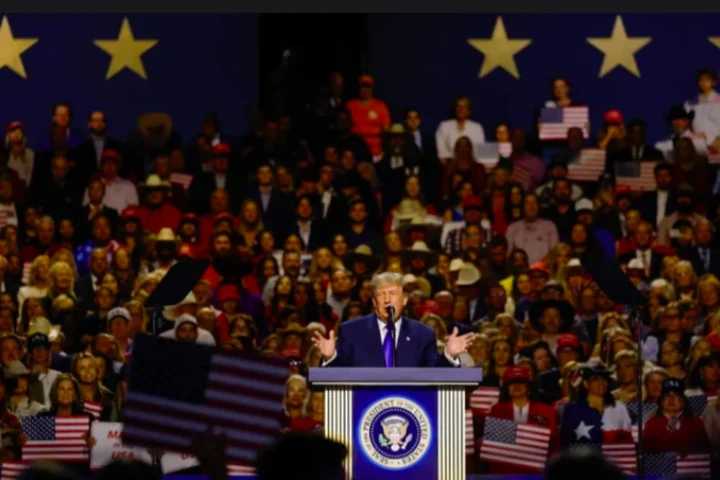
On September 18, 2026, President Donald Trump signed the Lindsey O. Graham Sanctioning Russia and Iran Act into law. The statute authorized tariffs of up to 100 percent on the top importers of Russian crude and natural gas—principally India and China—while expanding secondary sanctions designed to choke the revenues financing Moscow’s war. In my report published last month, I had argued how domestic protection, geopolitical coercion, and tariffs consistently fail as instruments of statecraft.
Now three weeks later, on October 9, U.S. President Donald Trump announced after a phone call with Russian President Vladimir Putin that Russia would supply more than 300,000 tons of diesel immediately, another 500,000 tons in November, one million tons thereafter, and potentially three million more depending on the condition of Russian refineries damaged by Ukrainian strikes. The Treasury promptly issued a temporary general license authorizing Russian diesel for the global market through April 7, 2027.
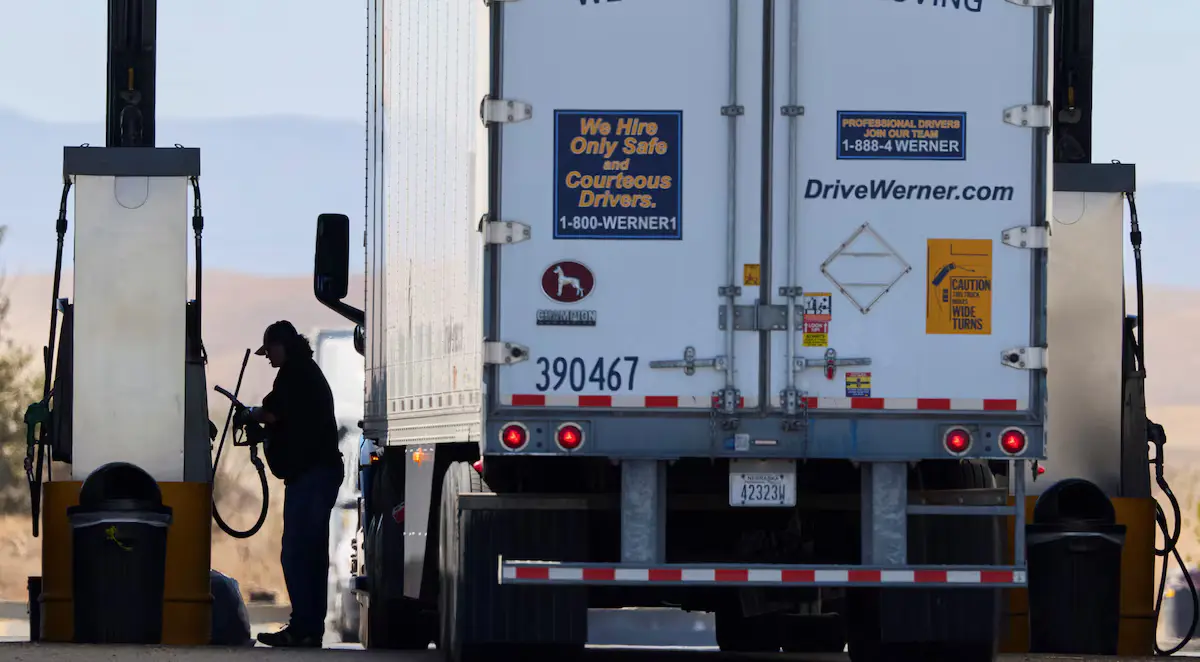
The reversal was not subtle. It arrived with U.S. diesel prices at a record $6.28 a gallon, driven by the Iran war’s disruption of the Strait of Hormuz and Ukrainian attacks that have idled substantial Russian refining capacity. Midterm elections loomed on November 3, with affordability the dominant voter concern and Trump’s approval ratings under pressure from the cost-of-living crisis the war he launched had worsened. The administration had already pressed allies for emergency stock releases and deferred fuel taxes; the Putin deal was the most dramatic step yet to flood the market.
Ukrainian President Volodymyr Zelenskyy saw something else. While his negotiating team sat in Florida for talks aimed at an energy ceasefire and broader de-escalation, Trump was on the phone with Putin. Zelenskyy called the timing a smokescreen: “I believe our team is simply being used as a smokescreen… It is definitely not how partners should behave. And it is a weak decision. Unfortunately, a weak decision by strong partners.” He described the arrangement as additional money for the war against Ukraine—millions or billions that would let Moscow “kill more, wage war for longer.” He rejected any easing of sanctions absent a clear, lasting de-escalation, calling the deal a gift that plays into Russia’s hands.
The episode crystallizes a longer pattern. Secondary sanctions and punitive tariffs on third countries have been central to Western strategy since 2022. The theory was straightforward: starve the Kremlin of oil and gas revenue by making buyers pay a price in lost Western market access. The practice has been different. Russia rerouted the bulk of its seaborne crude to India and China at deep discounts relative to Brent. Those discounts narrowed when global supply tightened after the Iran war, but the volumes held. India’s imports of Russian crude have repeatedly returned to roughly half of its total after temporary dips under U.S. pressure. China has remained the largest or co-largest buyer. Shadow fleets, ship-to-ship transfers, and non-Western insurers and traders absorbed the friction. Russian oil and refined-product revenues, while lower than pre-war peaks in some periods, have remained sufficient to sustain the war machine.
The economic arithmetic favors resilience. India imports more than 88 percent of its crude. For a country of 1.4 billion people whose growth depends on affordable energy, the marginal cost of oil is not a moral abstraction. Russian Urals has often been the cheapest medium-sour grade available once logistics and quality are accounted for. Alternatives exist—Iraq, Saudi Arabia, the UAE, the United States, West Africa, the Americas—but they are not always cheaper or immediately available in the required volumes and grades. Indian refiners have diversified their basket precisely because they treat energy security as non-negotiable. When Washington imposed an additional 25 percent tariff on Indian goods in August 2025 explicitly over Russian oil purchases, New Delhi reduced volumes temporarily during trade talks. When the punitive duty was lifted in February 2026 after a framework deal in which India committed to curtailing Russian purchases, volumes rebounded once the Iran war tightened global supply and the U.S. itself issued temporary waivers for stranded Russian cargoes. The pattern is consistent: pressure produces tactical adjustments, not structural abandonment of the lowest-cost option.
China’s position is even less elastic. Its state refiners and independent teapot plants have continued absorbing Russian barrels through a mix of official and opaque channels. Secondary sanctions raise compliance costs and force more expensive routing, but they do not eliminate the underlying supply-demand match. Both countries face a global oil market in which sanctioned barrels from Russia, Iran, and Venezuela have created a parallel pricing structure. Buyers capture the discount; sellers still clear volume. The net effect of sustained secondary pressure has been higher transaction costs, greater opacity, and accelerated experimentation with non-dollar settlement—not a decisive cut in Russian export revenues sufficient to force a strategic retreat.
The U.S. U-turn underscores the same market reality from the opposite direction. When domestic diesel inventories sit well below the five-year average and prices threaten to feed broader inflation in the months before an election, Washington prioritizes supply over consistency. Critics noted the contradiction immediately: Congress had just given the president tools to tariff major Russian oil buyers, and the administration promptly arranged for the United States itself to become a buyer. Scott Lincicome of the Cato Institute asked the obvious question on X: “Can America tariff America?” The temporary license and the volume commitments demonstrate that the constraint is not moral or legal principle but physical availability and political pain at the pump. Earlier 30-day waivers for stranded Russian oil after the Iran war began already revealed the same hierarchy of priorities.
For partners such as India, the lesson is corrosive. New Delhi has repeatedly stated that it will source energy on the basis of market dynamics and the need to keep fuel affordable for its population. Its Ministry of External Affairs response to the Graham Act was measured but clear: energy security for 1.4 billion people comes first, the implications for the bilateral relationship and global markets have been articulated at high levels, and India will take necessary measures to protect its trade and economic interests. Trade talks remain stalled on Russian oil, agriculture, and other issues. The threat of 100 percent tariffs under the new law hangs over roughly $100 billion in annual Indian exports to the United States. Yet India has multiple suppliers, a diversified refining system, and growing leverage as a market and as a strategic counterweight in the Indo-Pacific. Alienating it over energy purchases that the United States itself has now licensed does not shrink Russian revenues in any durable way; it raises the cost of partnership and invites further hedging toward alternative suppliers, payment systems, and security relationships.
Sanctions and tariffs are not costless theater. They raise the price of evasion, complicate logistics, and signal resolve. Against a small, isolated economy with few alternative buyers they can be decisive. Against large, growing economies that collectively account for a rising share of global oil demand and that possess both alternative suppliers and the capacity to absorb discounted barrels, they function more as a tax on efficiency than as a lever for regime change or battlefield outcomes. The revenues that continue to flow—discounted but still substantial—fund the war. The buyers that absorb the barrels secure cheaper energy and preserve strategic autonomy. The sanctioning power that later needs the same product faces the political cost of inconsistency.
The deeper problem is the mismatch between the instruments and the market. Energy is fungible. Demand from Asia is rising. Russia, Iran, and others retain production capacity and the ability to sell into a multipolar trading system that has already adapted. Domestic political cycles in the United States impose their own timelines: midterms, inflation readings, and trucker and farmer constituencies do not wait for Ukrainian battlefield conditions or Russian refinery repairs. When those pressures intensify, principle yields to volume.
Zelenskyy’s charge of a smokescreen captures the optics. Ukrainian negotiators were in the room talking peace while the U.S. president arranged additional hard-currency revenue for the country they are fighting. The underlying economics are more prosaic and more durable. Tariffs and secondary sanctions have not prevented India and China from remaining the principal outlets for Russian oil. They have not prevented the United States from licensing Russian diesel when its own prices spiked. They have, however, repeatedly tested the patience of partners whose energy security calculations differ from Washington’s and who possess the scale and alternatives to wait out coercive pressure. In a market where supply is tight and demand is concentrated among countries that will not subordinate their growth to another government’s foreign-policy preferences, the sanctioner that overplays its hand risks losing both the revenue cut it seeks and the strategic relationships it needs. The October 9 announcement did not invent that constraint. It simply made it impossible to ignore.