On Tuesday, as Americans vote in the midterm elections, a quiet but potent collision will be tested at the ballot box: President Donald Trump’s aggressive push to accelerate artificial intelligence through rapid data-center construction versus a bipartisan, often rural and suburban backlash that is hitting his own political base hardest. The outcome will not decide the AI race with China, but it will signal whether a national-security and economic priority framed in Washington can override the concrete costs felt in local communities—higher electricity bills, strained water supplies, noise, tax giveaways, and the sense that Big Tech reaps the gains while residents bear the burdens.
Trump has staked a clear position. He treats the AI competition with China as existential, arguing that whoever dominates the technology wins. Data centers—the sprawling warehouses of servers that train and run models—are the physical infrastructure required. He has expedited federal permitting, encouraged development on public lands, and repeatedly championed the facilities as economic “Golden Geese” that bring jobs, tax revenue, and competitiveness. In late August he wrote that communities rejecting them would end up “backwards and poor.” He has labeled the opposition a “sick conspiracy” that helps China. More recently he suggested developers pay communities a “dividend” and generate their own power to avoid raising local rates, while still insisting the buildout must proceed. His administration has kept a largely hands-off regulatory stance, prioritizing speed over new federal rules.
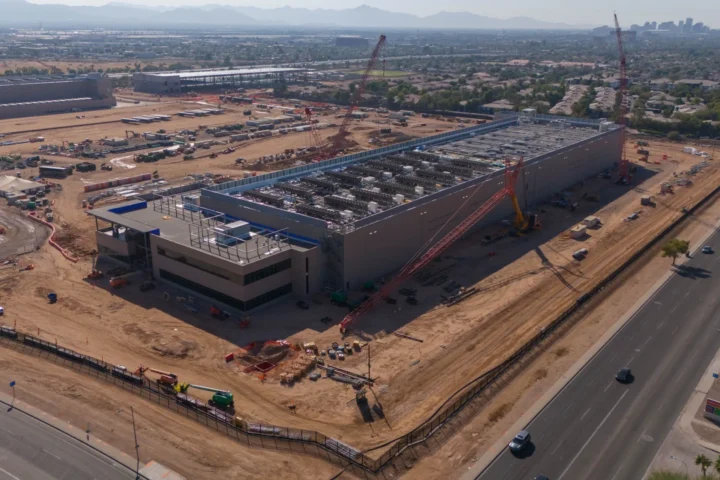
The scale is enormous. Trackers put operational U.S. data centers in the low thousands (estimates vary widely by definition, from roughly 1,400 to over 3,000), with hundreds under construction and thousands more announced. Pipeline capacity runs into the hundreds of gigawatts; construction starts are on pace to exceed $180 billion in 2026 alone, and total associated capital in some projections reaches trillions. Tech giants are pouring hundreds of billions into the U.S. buildout this year. AI-related investment has been a major contributor to recent GDP growth—one analysis put related sectors at a substantial share of expansion over recent quarters—even as the broader economy faces inflation pressures and uneven job gains. Outside Virginia, the densest cluster, the large majority of new construction is occurring in states Trump won in 2024, often in rural or semi-rural areas seeking the investment.
Local reality looks different. Polling consistently shows strong opposition. A CNBC All-America Economic Survey found 63 percent of registered voters oppose a data center within 10 miles of home and only 13 percent support one; among MAGA identifiers the near-home support drops to 29 percent against 40 percent opposition. A Washington Post-ABC News-Ipsos poll reported two-thirds of Americans oppose new U.S. data-center construction, 57 percent view AI as bad for society, and 67 percent disapprove of Trump’s handling of the technology. Other surveys (New York Times/Siena, Economist/YouGov, POLITICO) show 50–70 percent opposition overall, with Republican and independent numbers high enough to matter in competitive districts—often 40 percent or more opposed near home. Emerson and other polls rank data centers and AI regulation among top issues, behind the economy and the Iran conflict but rising fast.
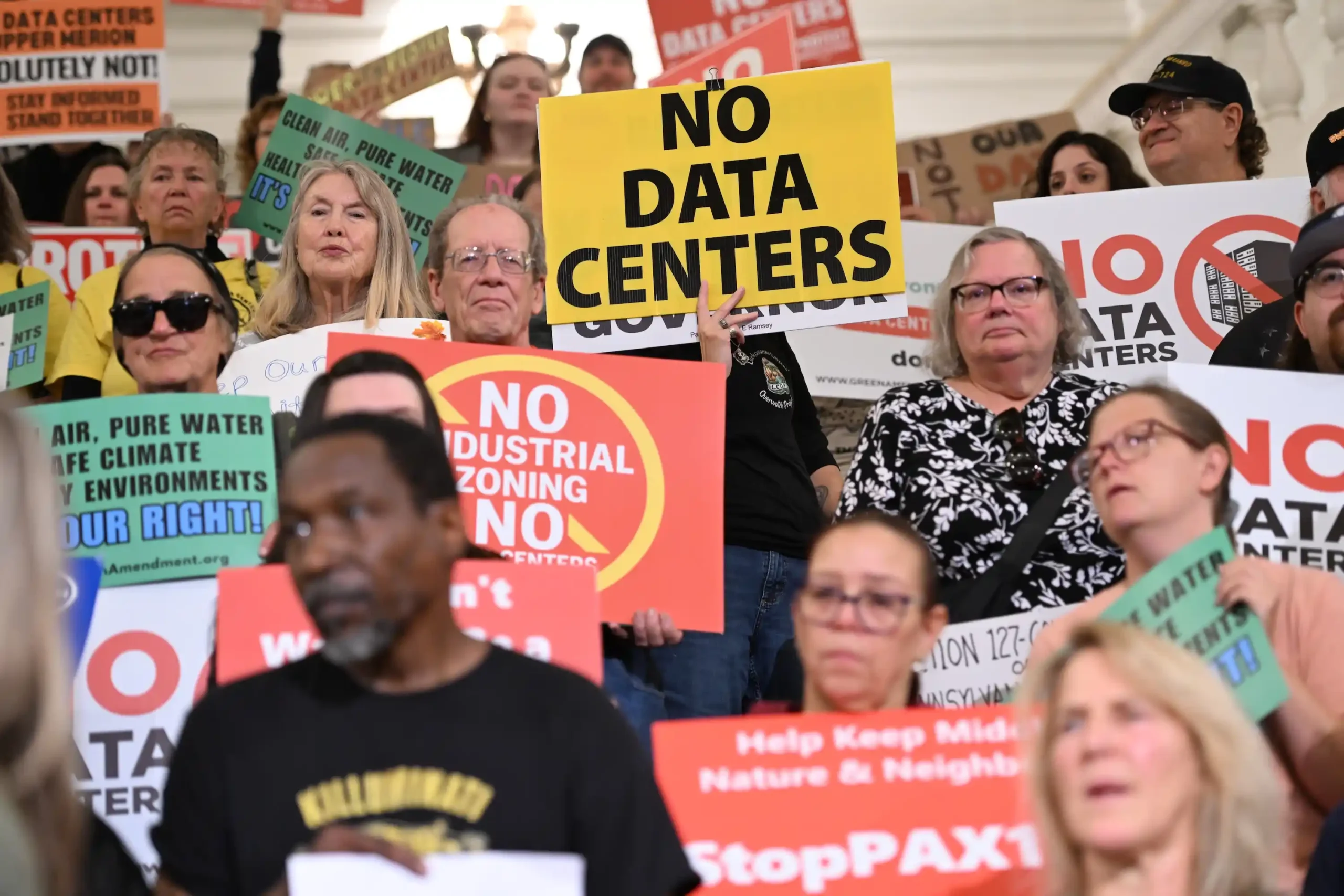
The grievances are concrete. Data centers consume vast electricity; wholesale price analyses attribute several percentage points of recent increases nationally (and higher in hotspots such as parts of the PJM grid serving the Midwest and mid-Atlantic, or northern Virginia) to the load, with capacity-market costs in PJM soaring. Residential rates have risen nationally, and voters connect the dots to their bills. Water use for cooling, noise from cooling systems and backup diesel generators, land conversion (including farmland), and opacity around deals (NDAs, tax abatements) fuel anger. Permanent jobs are typically modest—often cited in the low hundreds per large facility—relative to the scale and subsidies. Residents describe it as a David-versus-Goliath fight against well-resourced developers. Community opposition groups multiplied; hundreds of local moratoriums or bans have already been enacted, and dozens of projects have been delayed or canceled.
Tuesday provides a direct test. Voters in roughly 10 states and dozens of local jurisdictions (reports range from about 20 communities to 38 jurisdictions considering 41 measures) will decide ballot initiatives that would delay, restrict, impose new requirements on, or ban data-center development. Ohio leads with more than a dozen jurisdictions and 21 proposals. Many of these communities are in Republican-led areas. All six data-center measures decided earlier in 2026 went against development. The measures follow roughly 400 local moratoriums or bans already on the books.
Republican candidates have taken notice. GOP strategists, including pollster Tony Fabrizio and the National Republican Senatorial Committee, warned that unqualified support for more data centers is a losing position and that the issue could sink candidates—explicitly calling it an “anchor” around Ohio Senator Jon Husted’s neck as he faces Sherrod Brown. Husted has shifted toward emphasizing local control. Texas Governor Greg Abbott, who once called the state the “epicenter of AI development,” paused new permits for audits of water and grid impacts after rural backlash and faces a tighter race. Other Republicans have endorsed pauses, ended or limited tax breaks, or demanded developers fund infrastructure and provide community benefits (free electricity has been floated). On Truth Social, responses to Trump’s pro-data-center posts ran heavily negative, including from MAGA accounts. Democrats, sensing an opening, have made opposition a campaign theme in House, Senate, and gubernatorial races, tying it to cost-of-living concerns.
This is not simple partisan theater. It cuts across lines: environmentalists, fiscal conservatives wary of subsidies, rural property owners, and suburban parents worried about rates. It echoes classic NIMBY dynamics but is amplified by the speed, scale, secrecy, and concentration of wealth in a handful of tech firms. Industry advocates argue the projects are essential for national competitiveness, create construction and some permanent jobs, generate tax revenue that can lower burdens elsewhere if structured properly, and that some rate designs can even protect or reduce costs for existing customers when large loads pay their way. They note that energy-price drivers are multifactorial (fuel costs, grid upgrades, other demand) and that opposition has not yet meaningfully slowed the overall boom. Critics counter that the benefits are uneven, the externalities real and immediate, and that speed without local consent risks political backlash that ultimately constrains the very buildout needed to compete with China.
The midterms will not halt AI. Hyperscalers have already committed vast capital; many projects will proceed under existing permits or in more welcoming jurisdictions. But widespread passage of local restrictions, or Republican losses in data-center-heavy districts where the issue was salient, would signal that Trump’s strategy is undercutting his base. It could force more deals—community dividends, self-generation requirements, stricter cost allocation, better transparency—or encourage a slower, more regulated pace. A strong showing for the status quo would suggest that the China-competition framing and economic upside still carry weight where it counts, or that other issues (economy, foreign conflicts) dominate.
Either way, the collision reveals a durable tension in American politics: the gap between national strategic imperatives framed by presidents and the local lived experience of infrastructure. Data centers are the current flashpoint for AI’s physical footprint, just as earlier eras saw fights over factories, highways, or power plants. Tuesday’s results will show whether the president’s prioritization of AI speed can coexist with the consent of the communities asked to host it—or whether the backlash has become a lasting constraint on how fast, and how, the United States builds the infrastructure of the next technological era.