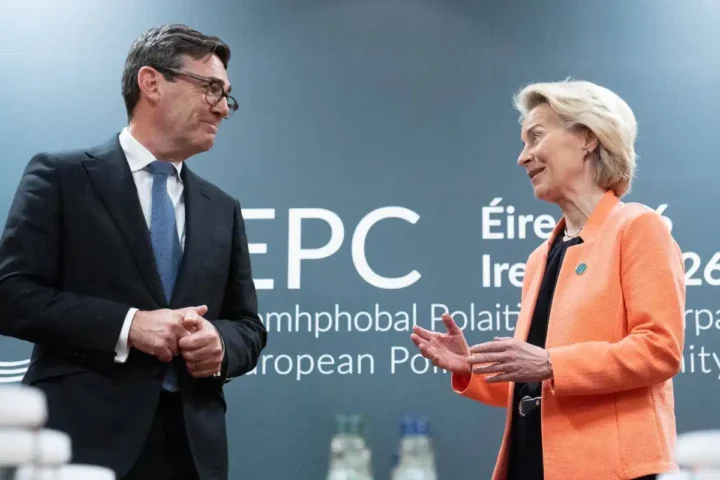

A decade after Britain voted to leave the European Union, the relationship between London and Brussels is entering a distinctly different phase. The UK-EU summit of November 20, 2026, marks an important attempt to rebuild economic, institutional and social connections that were disrupted by Brexit. Agreements covering agricultural trade, emissions trading and youth mobility indicate that both sides increasingly recognise the limitations of political and economic disengagement.
Yet perhaps the most consequential aspect of this rapprochement concerns not goods, regulations or tariffs, but people.
The proposed Youth Experience Scheme, alongside renewed educational cooperation and ongoing negotiations over university tuition fees, represents an acknowledgement that restricting human mobility carries significant economic, social and strategic costs.
The central question is whether Britain can construct a sustainable relationship with Europe without becoming trapped in the ideological divisions that have dominated its domestic politics since 2016.
The challenge is no longer simply about managing immigration. It is about determining how Britain intends to remain competitive in an increasingly interconnected global economy, where access to talent, knowledge and international networks is becoming as important as access to markets.
From Brexit Exceptionalism to Economic Pragmatism
For much of the past decade, Britain's relationship with Europe has been shaped by the pursuit of sovereignty, regulatory independence and immigration control. While these objectives reflected legitimate political concerns, their implementation exposed structural weaknesses in the British economy.
The Office for Budget Responsibility (OBR), Britain's independent fiscal watchdog, continues to estimate that Brexit will reduce the country's long-term productivity by approximately 4% compared with remaining in the EU, while reducing the volume of imports and exports by around 15%. These projections underscore the economic consequences of erecting barriers between deeply integrated economies.
The latest reset reflects a growing recognition that sovereignty and international cooperation need not be mutually exclusive. Britain can retain political independence while pursuing arrangements that facilitate trade, investment, research and labour mobility.
The British government estimates that the proposed agreement on food and agricultural trade could contribute up to £5.1 billion annually to the economy. However, economic integration cannot be viewed exclusively through the prism of merchandise trade. Human capital, intellectual exchange and workforce mobility are equally important components of modern economic growth.
The youth mobility agreement must therefore be understood as part of a broader attempt to address Britain's post-Brexit economic vulnerabilities rather than merely as an immigration concession.
Youth Mobility Is Not a Return to Free Movement
Under the newly agreed Youth Experience Scheme, up to 100,000 young British citizens and an equivalent number of young Europeans will annually be eligible to live, work, study, volunteer or travel in each other's territories.
The arrangement will cover individuals aged 18 to 31, initially granting permission for two years, with the possibility of extending their stay by another year. The first participants are expected to travel under the scheme by January 2030 at the latest.
Unlike the pre-Brexit freedom of movement framework, the arrangement will operate through visas, numerical limits and eligibility requirements. Participants will not automatically qualify for welfare benefits or be permitted to bring dependants.
These distinctions matter because immigration remains one of the most politically sensitive issues in Britain.
Conflating regulated youth mobility with unrestricted immigration risks overlooking the economic and demographic realities confronting the country. An ageing population, persistent workforce shortages and sluggish productivity growth necessitate a more nuanced approach to international labour mobility.
Young international workers can contribute to economic activity, consumer spending and tax revenues while supporting sectors experiencing recruitment difficulties. Equally, British participants returning from Europe can bring valuable professional experience, linguistic capabilities and international business networks.
Government modelling published alongside the agreement estimates that the scheme could increase Britain's aggregate GDP by between 0.1% and 0.2% within five years of implementation. Additional net migration is projected at between 18,000 and 43,000 in the first year, declining to between 8,000 and 14,000 annually by the fourth year.
However, the same modelling suggests that GDP per capita would remain broadly unchanged.
This distinction is important. Immigration alone cannot resolve Britain's productivity crisis. Mobility must be complemented by investment, technological innovation, workforce training and improvements in public infrastructure.
The scheme's greatest potential may ultimately lie in its longer-term contribution to skills development and international competitiveness rather than its immediate economic output.
The Educational Cost of Brexit
Perhaps nowhere have the consequences of Britain's departure from the European Union been more visible than in higher education.
For decades, British universities attracted European students through their academic reputation, relatively accessible tuition arrangements and membership of a wider European educational ecosystem. Brexit fundamentally altered that equation.
From the 2021-22 academic year, most newly arriving EU students lost access to domestic tuition rates and government-backed student loans. They were instead required to pay international fees and navigate additional immigration requirements.
The consequences were dramatic.
Higher Education Statistics Agency data show that new enrolments from the EU declined from approximately 66,685 in 2020-21 to 27,210 in 2024-25, representing a contraction of nearly 59%. Total EU student enrolments fell from approximately 153,000 to 63,600 over the same period.
The decline has been particularly pronounced among undergraduate students. Parliamentary research indicates that the number of EU students beginning full-time undergraduate courses fell by 68% between 2020 and 2024, reaching its lowest level since 1994.
These figures represent more than a reduction in university admissions. They reflect the erosion of educational accessibility, cross-cultural engagement and institutional connections built over several decades.
The financial barriers have also disproportionately affected students from less affluent European countries. Between 2020-21 and 2023-24, new enrolments from Romania and Poland declined by approximately 80%.
Britain has effectively transformed educational mobility from an accessible regional opportunity into an increasingly expensive international commodity.
While wealthy European families may still afford British university education, talented students from middle-income and disadvantaged backgrounds face considerably greater obstacles.
A country that derives substantial international influence from its educational institutions cannot afford to overlook the long-term implications of such exclusion.
The Tuition Fee Dilemma
Despite progress on youth mobility, university tuition fees remain a significant unresolved issue in the UK-EU negotiations.
Brussels has sought arrangements that would allow European students to access British universities at domestic tuition rates. London, meanwhile, faces considerable resistance arising from the precarious financial position of its higher education sector.
The domestic undergraduate tuition fee cap in England stands at £9,790 for the 2026-27 academic year. International fees remain substantially higher, frequently exceeding £20,000 or £30,000 annually, depending on the institution and programme.
Both sides have committed to concluding tuition fee negotiations within six months of the November summit. Importantly, the proposed arrangement would cover eligible students irrespective of their immigration route, extending potentially beyond participants in the youth mobility programme.
The financial concerns of British universities cannot simply be dismissed.
According to the Office for Students, 35.8% of English higher education institutions recorded financial deficits in 2024-25. Without mitigating measures, this proportion could rise to 42.7% in 2025-26. International student recruitment also declined by 7.7% in 2024-25, adding further pressure to institutional finances.
Universities have increasingly relied on international tuition revenue to subsidise research, domestic teaching and operational expenditure. Abruptly restoring domestic fees for European students without compensatory funding could exacerbate existing financial vulnerabilities.
Nevertheless, maintaining excessively high financial barriers is hardly a sustainable alternative.
Universities must consider whether recruiting larger numbers of European students at affordable rates could generate more sustainable revenues, strengthen institutional partnerships and reduce their exposure to recruitment volatility.
A phased approach, supported by transitional government funding, could reconcile these competing objectives. Britain must also distinguish between restoring affordable tuition and providing access to publicly financed student loans, since the two involve different fiscal commitments.
The broader lesson is that Britain's higher education funding model requires structural reform rather than continued dependence on international students paying premium prices.
Erasmus and the Rebuilding of European Connections
Britain's return to the Erasmus+ programme in 2027 represents another significant opportunity to reverse the educational consequences of Brexit.
The government has agreed to contribute approximately £570 million towards participation in 2027, following negotiations that secured a 30% discount on the default financial terms.
Beyond university students, Erasmus+ facilitates vocational training, apprenticeships, professional development, youth exchanges and institutional cooperation. Continued participation beyond the agreed period will require further negotiations.
The programme's importance extends far beyond academic qualifications.
International educational experiences contribute to intercultural understanding, language acquisition, adaptability and professional confidence. These capabilities are increasingly important in an economy characterised by artificial intelligence, technological transformation and globally distributed workplaces.
Britain's future workforce will need to operate across national boundaries regardless of the country's formal relationship with European institutions.
Restricting opportunities for young people to acquire international experience risks creating a generation less equipped to compete globally.
However, meaningful participation requires ensuring that overseas educational opportunities do not become the exclusive privilege of affluent households. Scholarships, accommodation assistance and targeted financial support must accompany mobility programmes if they are to achieve their broader social objectives.
Implications for India and the Wider International Community
The UK-EU reset also carries important implications for countries outside Europe, particularly India.
According to HESA statistics for 2024-25, India remained Britain's largest overseas source of university students for the third consecutive year. Indian and Chinese students together accounted for 47% of all non-EU international students.
The decline in European enrolments following Brexit coincided with British universities expanding recruitment across Asia and other emerging markets.
Any preferential tuition arrangement for European students could consequently influence international recruitment strategies, institutional finances and competition for university places.
While reciprocal agreements between neighbouring economies are understandable, Britain must ensure that closer European integration does not translate into diminishing opportunities for students from other regions.
International students should not be viewed primarily as instruments for balancing university finances. They contribute to research, local economies, entrepreneurship, technological innovation and the development of enduring diplomatic and commercial relationships.
For India, which possesses a substantial young population and an expanding pool of skilled professionals, educational cooperation with Britain remains strategically important.
London would benefit from pursuing stronger educational partnerships with India alongside its European reset, including joint degrees, research collaborations, institutional exchanges and more predictable post-study employment arrangements.
Britain's global ambitions should complement its European relationships rather than compete with them.
Moving Beyond the Politics of Immigration
The fundamental weakness of Britain's immigration debate is its tendency to treat migration as a homogeneous phenomenon.
International students, temporary workers, skilled professionals, humanitarian migrants and irregular entrants are frequently discussed within the same political framework despite their substantially different circumstances and economic implications.
The resulting discourse often prioritises headline migration numbers over the quality, composition and long-term contribution of migration.
Legitimate concerns surrounding housing affordability, wage competition, public services and infrastructure capacity must be addressed. Governments cannot assume that the benefits of immigration are distributed evenly across society.
However, these challenges require effective domestic policy rather than indiscriminate restrictions on international mobility.
Britain needs an immigration framework capable of distinguishing between temporary educational exchange, economically productive labour mobility and permanent settlement.
The Youth Experience Scheme offers an opportunity to demonstrate that controlled international mobility can coexist with effective border management.
Its success will depend on transparent implementation, appropriate employment protections and regular assessment of its economic and social consequences.
Rebuilding Europe's Human Infrastructure
The significance of the UK-EU reset ultimately extends beyond its immediate economic objectives.
Europe faces increasingly complex geopolitical challenges, ranging from technological competition and energy security to demographic decline and shifting global power structures.
In this environment, closer cooperation between Britain and continental Europe is a strategic necessity.
Universities, research institutions, professional networks and cultural exchanges constitute an often underestimated component of geopolitical influence. They create relationships that endure beyond electoral cycles and diplomatic disagreements.
Students who study abroad frequently become future entrepreneurs, scientists, policymakers, diplomats and business leaders. The relationships established during their formative years can subsequently facilitate international investment, scientific collaboration and diplomatic understanding.
These connections represent a form of human infrastructure that cannot be reconstructed overnight.
Brexit demonstrated how quickly political decisions can dismantle decades of institutional integration. The latest reset presents an opportunity to rebuild those connections without necessarily reopening the constitutional question of EU membership.
But its success will require greater ambition than narrowly negotiated economic concessions.
Britain must recognise that its attractiveness as a destination for education, innovation, investment and talent is inseparable from its international openness.
Restoring affordable educational access, facilitating responsible youth mobility and establishing sustainable university funding should therefore be regarded as strategic national investments.
Ultimately, the choices Britain makes today will determine whether the next generation inherits a country constrained by the political anxieties of Brexit or one capable of engaging confidently with Europe and the wider world.
The future of Britain's relationship with Europe should not be defined exclusively by the borders it controls, but equally by the opportunities it creates.