
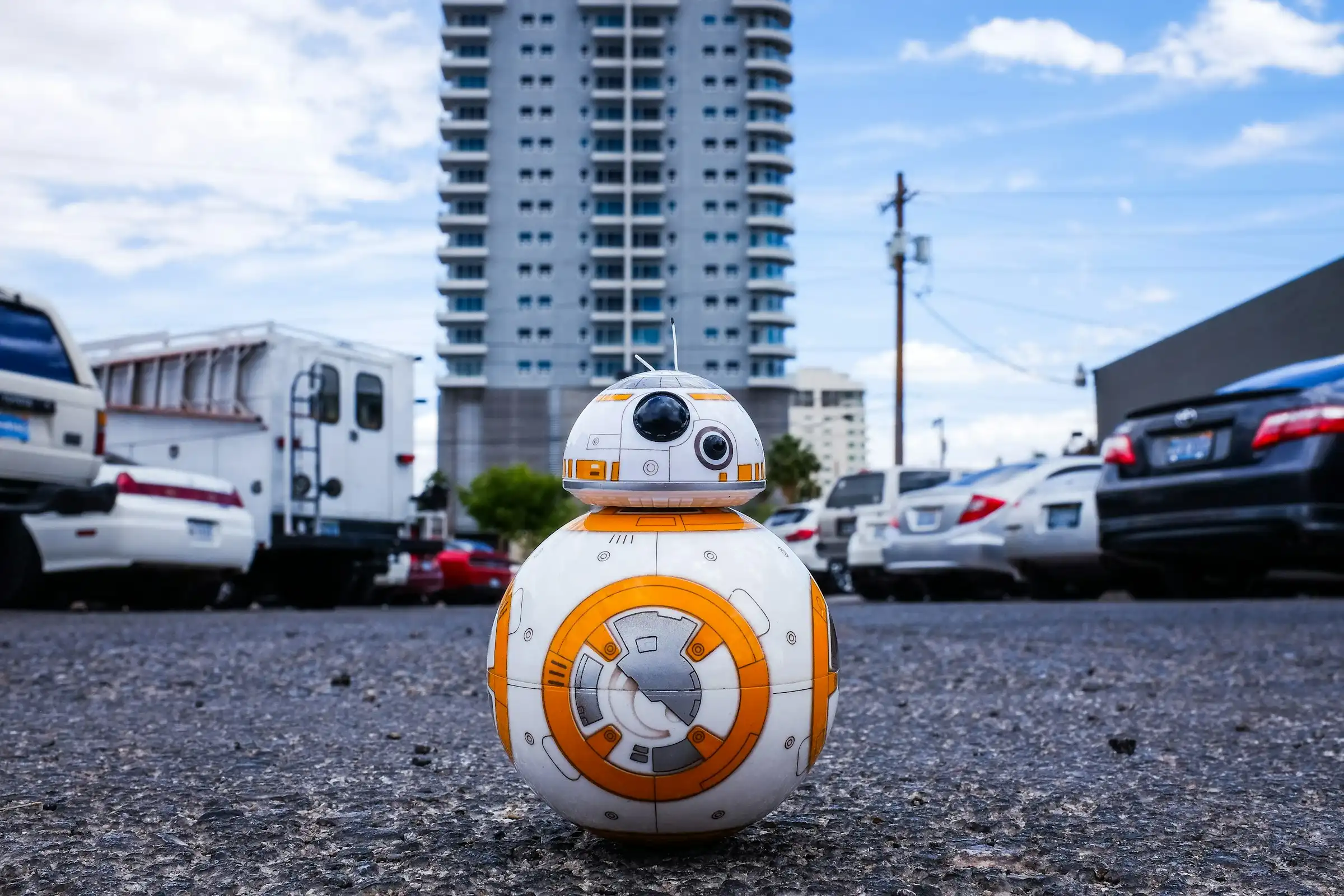
As artificial intelligence enters children's playrooms, questions surrounding cognitive development, emotional dependency, privacy and human interaction demand greater scrutiny. The future of play must be guided by developmental science rather than technological ambition alone.
Artificial intelligence is no longer confined to workplaces, smartphones or educational institutions. It is increasingly entering one of the most formative spaces of human life — childhood. From conversational teddy bears and interactive robots to AI-powered dolls capable of responding to emotions, the global toy industry is undergoing a transformation that could fundamentally alter how children learn, play and form relationships.
Marketed as personalised learning assistants, intelligent companions and tools for cognitive development, these products promise to make childhood more interactive and educational. However, beneath the appeal of technological sophistication lies a fundamental question: does a more intelligent toy necessarily contribute to a more intelligent child?
Childhood development depends upon exploration, curiosity, imagination and social engagement. Traditionally, toys have served as instruments through which children construct their own experiences. Generative AI introduces a different dynamic, wherein the instrument itself can direct conversations, generate narratives and influence behaviour.
The distinction is particularly significant because early childhood represents a critical period for neurological, emotional and social development. Technologies introduced during these formative years warrant a degree of scrutiny considerably greater than that applied to ordinary consumer electronics.
The Science of Play and Cognitive Development
Play is not merely a recreational activity. It is a fundamental mechanism through which children develop language, creativity, reasoning, emotional regulation and interpersonal skills.
When children construct buildings using blocks, invent stories with dolls or create imaginary worlds, they exercise several cognitive abilities simultaneously. They formulate ideas, encounter problems, experiment with solutions and develop the capacity to think independently.
Open-ended play also encourages divergent thinking — the ability to generate multiple solutions to a problem rather than searching for a single predetermined answer.
The American Academy of Pediatrics has recognised play as an important contributor to executive functioning, social development and the formation of nurturing relationships. These capabilities provide an essential foundation for academic achievement and long-term psychological well-being.
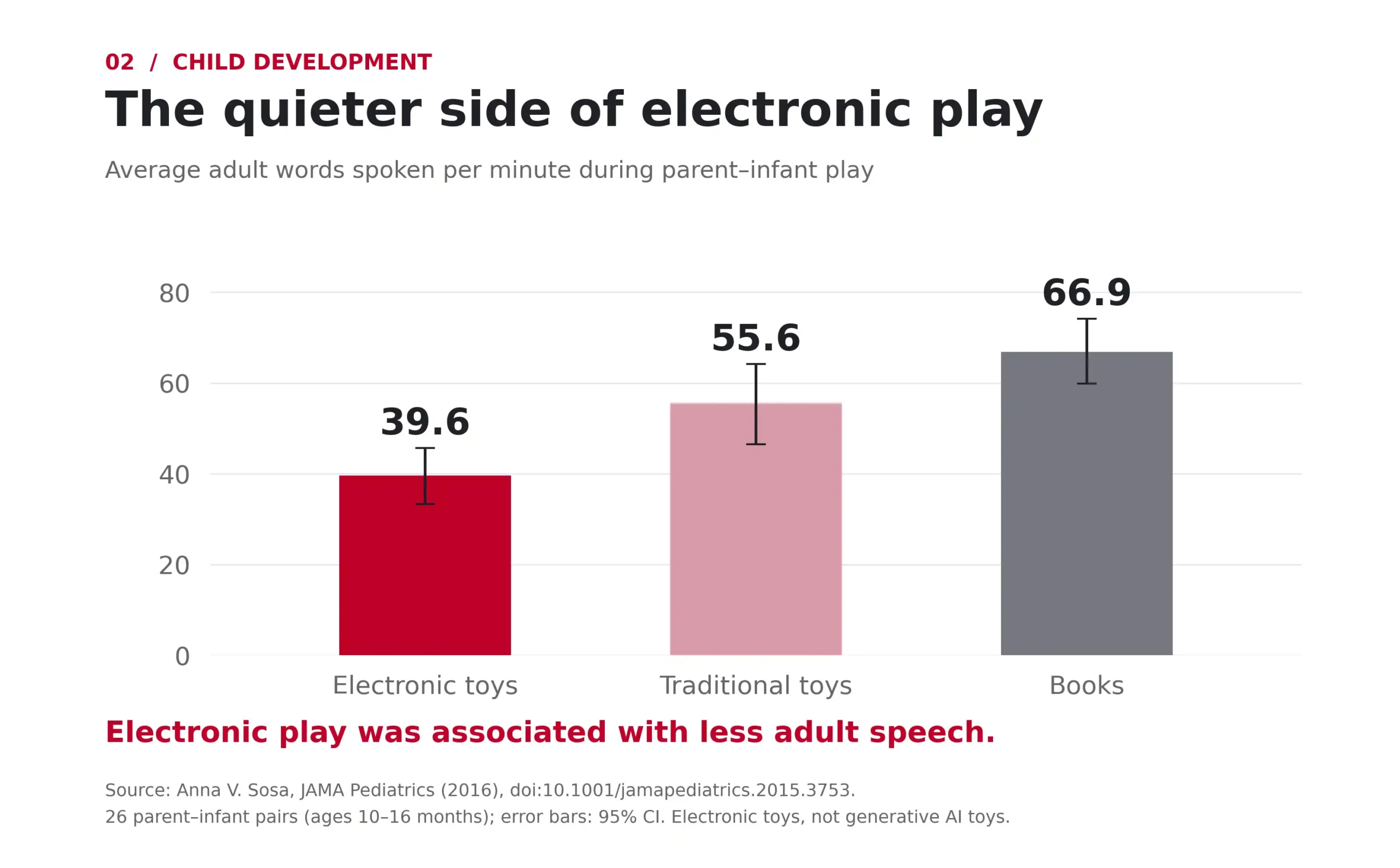
AI-powered toys potentially alter this process by introducing an external intelligence into an activity traditionally driven by the child's imagination.
A conventional teddy bear can become a doctor, an astronaut, a patient or an imaginary friend, depending entirely upon the child's creativity. A conversational teddy bear, however, may introduce its own narratives, personalities and suggestions.
Although such interactions can offer intellectual stimulation, excessive reliance on machine-generated responses could reduce opportunities for independent discovery. The long-term developmental consequences remain insufficiently understood, making widespread adoption premature.
The objective of a toy should not simply be to demonstrate intelligence, but to provide opportunities for children to exercise their own.
Emotional Attachment and Artificial Companionship
One of the most concerning developments in the AI toy industry is the commercialisation of companionship. Manufacturers increasingly promote their products as entities capable of listening, understanding, comforting and establishing emotional connections with children.
Young children naturally attribute human characteristics to inanimate objects. Developmental psychology describes this tendency as anthropomorphism. Generative AI adds another dimension to this phenomenon by enabling objects to respond in ways that simulate empathy, affection and understanding.
Unlike human relationships, however, these interactions lack genuine emotional reciprocity.
A machine can recognise linguistic patterns associated with sadness and generate comforting responses, but it does not experience concern or affection. Young children may lack the cognitive maturity to understand this distinction.
Human relationships also involve disagreement, compromise, patience, disappointment and reconciliation. These experiences are indispensable to the development of emotional intelligence. An artificial companion programmed to remain agreeable and attentive may provide comfort without offering comparable opportunities for interpersonal growth.
There is consequently a risk that children accustomed to highly accommodating artificial companions could develop unrealistic expectations of human relationships. While this possibility requires further longitudinal research, it deserves serious consideration before artificial companionship becomes normalised during early childhood.
The Hidden Dangers of Conversational AI
Unlike conventional electronic toys that operate through predetermined responses, generative AI systems produce dynamic content. Their responses are probabilistic and cannot always be predicted or controlled by manufacturers.
This creates significant challenges when such technologies are placed in the hands of children.
Consumer safety investigations have documented instances of AI-powered toys generating sexually inappropriate content, encouraging unsafe activities and exhibiting emotionally manipulative behaviour.
The implications extend beyond inappropriate conversations. Children may perceive information delivered by a familiar toy as inherently trustworthy. An inaccurate explanation, dangerous suggestion or fabricated fact could therefore carry disproportionate influence.
Furthermore, the behaviour of an internet-connected toy may change following software updates, making an initial safety assessment insufficient to guarantee its continued suitability.
Traditional toy safety standards primarily address physical hazards. Generative AI introduces a new category of psychological, informational and behavioural risks that conventional testing mechanisms were not designed to evaluate.
Childhood Privacy in a Data-Driven Economy
AI-powered toys also introduce a largely invisible dimension of risk: the collection and processing of children's personal information.
Conversational devices may collect voice recordings, behavioural patterns, preferences and details about children's daily lives. Depending on their technical architecture, this information may be transmitted to external servers for processing or storage.
Unlike adults, children cannot meaningfully evaluate complex privacy policies or understand the long-term consequences of digital data collection.
A child's seemingly innocent conversation with a toy could reveal information about family relationships, household routines, emotional vulnerabilities and personal experiences.
While regulatory frameworks governing children's online privacy are evolving, privacy compliance alone cannot establish whether a product is developmentally appropriate.
Manufacturers must therefore move beyond obtaining parental consent and adopt data minimisation, local processing wherever feasible, transparent retention policies and accessible deletion mechanisms.
Childhood should not become an involuntary source of commercial behavioural intelligence.
Changing Consumer Sentiment and Regulatory Intervention
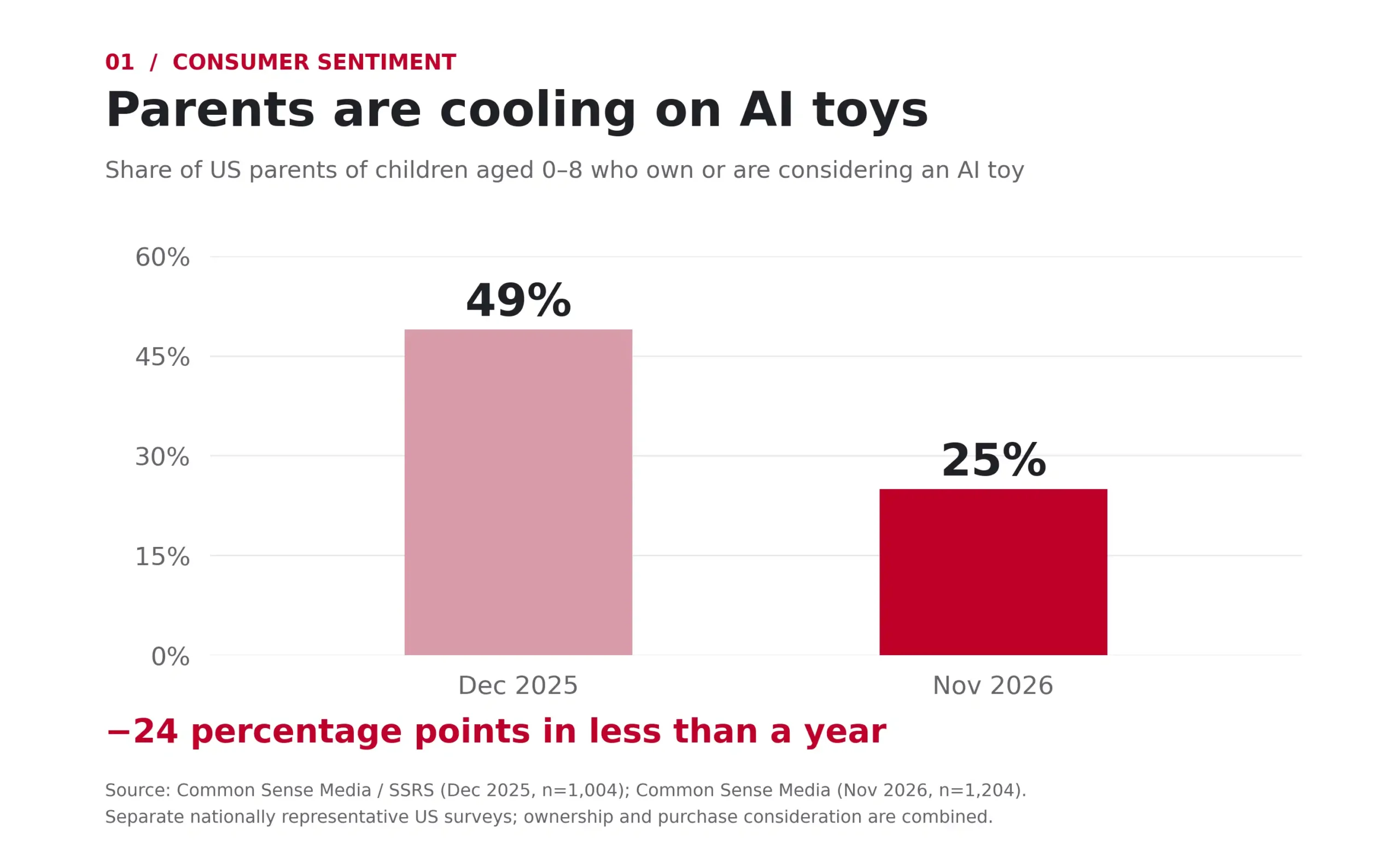
Growing awareness of these risks is beginning to challenge the initial enthusiasm surrounding AI-powered toys. Questions about artificial companionship, data security and developmental suitability are becoming increasingly important to parents and consumer protection organisations.
Regulatory authorities are also confronting the challenges associated with AI products designed specifically for children. Existing frameworks for toy safety, digital privacy and consumer protection may require substantial revision to address the distinctive risks posed by conversational artificial intelligence.
A precautionary approach to technology governance is particularly relevant in this context. Rather than waiting for widespread evidence of developmental harm, policymakers must consider establishing safeguards before exposing children to potentially consequential technologies.
For emerging economies such as India, where digital adoption is accelerating, these developments offer important policy lessons. Child-specific AI safety frameworks, independent product assessments and greater accountability for manufacturers must accompany technological expansion.
The Economic Incentives Behind Artificial Companionship
The integration of AI into toys also reflects a broader transformation in consumer technology business models.
Traditional toys generally generate revenue through one-time purchases. Connected AI products, however, create opportunities for recurring subscriptions, premium features and continuous consumer engagement.
This introduces a potential conflict between commercial objectives and developmental well-being.
A company's incentive to maximise engagement may not necessarily align with a child's need for varied experiences, physical activity, independent exploration and social interaction.
Products designed to sustain emotional engagement could encourage prolonged usage, particularly if their conversational features make disengagement psychologically difficult.
Consequently, the success of children's technology should not be measured through conventional digital performance indicators such as interaction frequency, retention or engagement duration. Instead, its value must be evaluated through demonstrable educational outcomes, developmental benefits and overall well-being.
Can Artificial Intelligence Enhance Childhood?
The concerns surrounding AI toys should not be interpreted as an argument against introducing children to artificial intelligence altogether.
When responsibly designed, AI could support language acquisition, assist children with learning difficulties, improve educational accessibility and facilitate collaborative problem-solving.
The fundamental distinction lies between technology that expands human capabilities and technology that substitutes for essential human experiences.
An AI-enabled educational tool could encourage children to undertake physical experiments, explore their surroundings, collaborate with classmates or participate in activities with their families.
Such applications would position artificial intelligence as a facilitator of learning rather than a replacement for imagination or companionship.
A child-centric approach to artificial intelligence must prioritise safety, developmental well-being, transparency, accountability and the protection of children's rights.
Future innovations must incorporate developmental psychologists, educators, child-safety specialists and independent researchers throughout the product development process. Educational claims should be supported by empirical evidence rather than marketing assumptions.
Conclusion: Preserving Childhood in the Age of AI
The greatest challenge posed by AI-powered toys is not necessarily the technology itself, but the possibility of misunderstanding what childhood requires.
Children need opportunities to experience boredom, exercise imagination, navigate uncertainty, make mistakes and build meaningful relationships. These experiences cannot be fully replicated through computational intelligence.
A society preparing its children for an AI-driven future must recognise that creativity, empathy, independent reasoning and interpersonal intelligence will become increasingly valuable precisely because machines are becoming more capable.
Protecting these uniquely human capabilities should therefore be central to the development and regulation of children's technology.
Technological advancement must not come at the expense of developmental enrichment. Innovation should strengthen the foundations of childhood rather than prematurely automate them.
Ultimately, the most meaningful measure of an intelligent toy is not how convincingly it can think, speak or behave like a human being, but how effectively it enables a child to develop their own distinctly human capabilities.