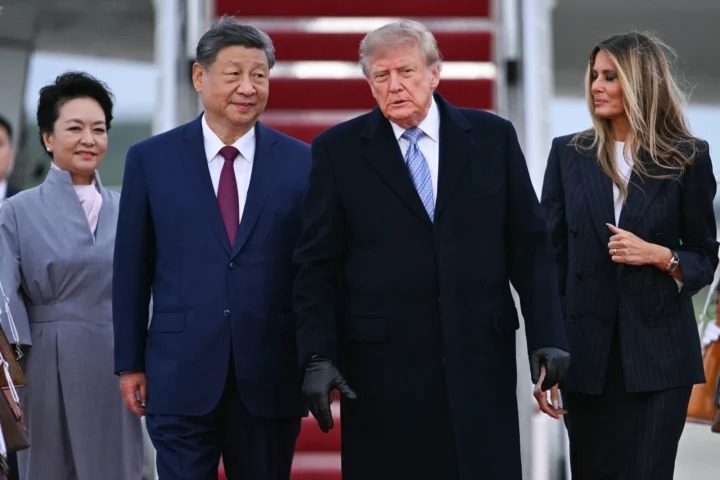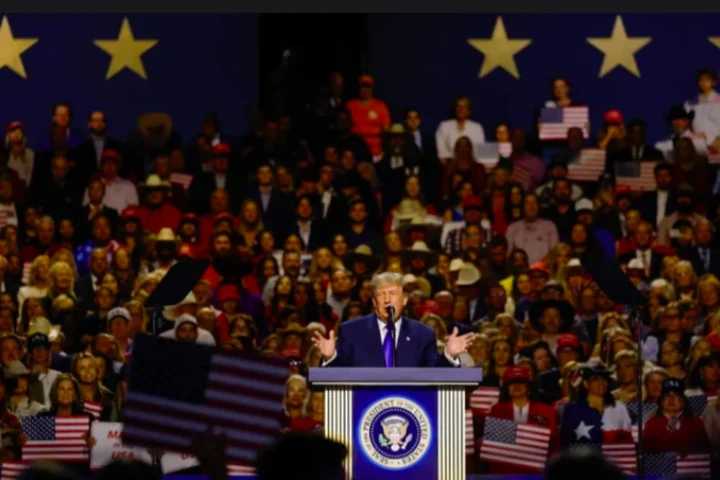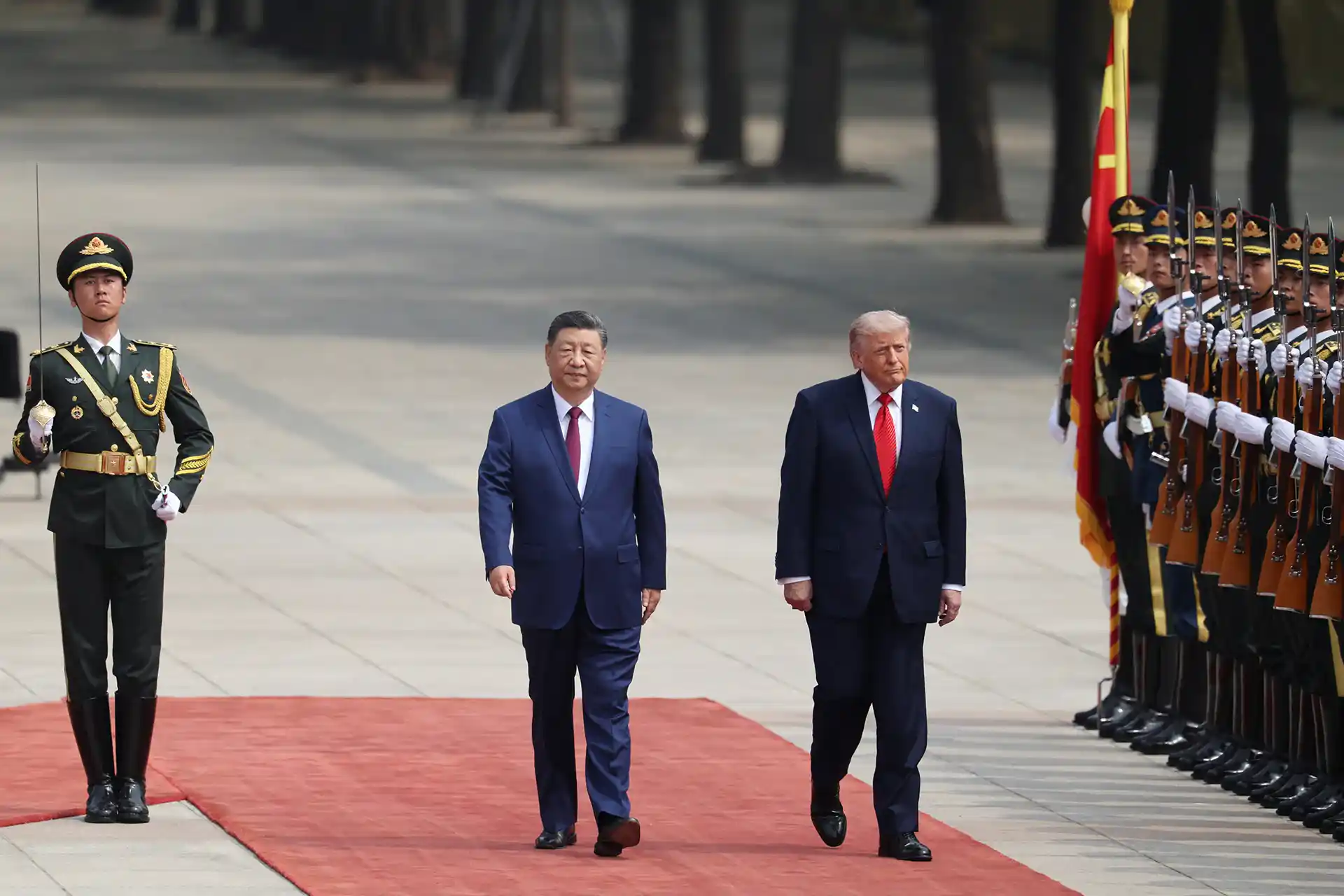
President Donald Trump and Chinese President Xi Jinping have agreed in principle to create new bilateral mechanisms — including a Board of Trade and a Board of Investment — under a “reciprocal tariff reduction framework” aimed at selectively lowering tariffs on non‑sensitive goods while keeping high barriers on strategic sectors. In parallel, the Trump administration is developing a U.S. proposal for a new trade body to “manage” commerce with China, with early concepts focused on slashing tariffs on mutually favored categories of low‑tech and consumer goods and possibly using managed‑trade tools such as purchase commitments and quotas. Business groups view this as a rare opening to dial back exceptionally high effective tariffs on Chinese imports, which currently average close to 30 percent due to overlapping Section 301, Section 232, and global tariffs.
Over the next 12–24 months, there are three main plausible trajectories: (1) a narrow, transactional managed‑trade deal centered on a roughly 30‑billion‑dollar‑per‑side tariff‑cut package for non‑sensitive goods; (2) a stall or breakdown in negotiations leading to re‑escalation as the current tariff truce expires in November 2026; or (3) a modestly broader framework that couples targeted tariff reductions with new rules or coordination on issues like excess industrial capacity and AI safety. The balance of evidence from current negotiating parameters, domestic politics in both countries, and business‑sector incentives suggests the first outcome — a narrow, transactional arrangement with limited but meaningful tariff relief — is the most probable in the near term.
Current Tariff Landscape and the “Tariff Opening”
The U.S.–China trade relationship in 2026 is governed by an unusually complex, overlapping tariff regime built up since 2018 under multiple legal authorities. Section 301 tariffs cover more than 500 billion dollars in Chinese goods with rates ranging from 7.5 to 25 percent on large product lists and up to 100 percent on strategic items such as electric vehicles, semiconductors, and certain medical and clean‑energy products following a 2024 four‑year review. Section 232 tariffs add 25–50 percent duties on steel, aluminum, copper products, autos and auto parts, and some wood products, stacking on top of Section 301 in many cases.
Following the Supreme Court’s February 2026 decision striking down Trump’s IEEPA‑based “fentanyl” and “reciprocal” tariffs, the administration imposed a temporary 10 percent global tariff under Section 122 of the Trade Act for 150 days, further increasing effective rates on many Chinese imports until at least July 2026. Even with some earlier IEEPA‑based levies voided, the trade‑weighted average U.S. tariff on Chinese goods remains close to 30 percent, the highest applied to any major trading partner. On the Chinese side, retaliatory tariffs and other countermeasures have been partially rolled back under the October 2025 Busan trade truce and subsequent Xi–Trump understandings, but elevated duties remain on a range of U.S. exports and could snap back up if the truce lapses.
The New Trade Body and Boards of Trade and Investment
At their May 2026 summit in Beijing, Trump and Xi confirmed the establishment of a Board of Trade and a Board of Investment, described by Chinese Foreign Minister Wang Yi as operating under a “reciprocal tariff reduction framework.” According to a Supply Chain Federation briefing, the initial framework envisions 30 billion dollars‑for‑30 billion dollars in barrier reductions on non‑sensitive goods, with specific products to be negotiated in subsequent meetings. Separately, Xi committed to “double‑digit billions” in annual agricultural purchases over three years, and China renewed export permits for U.S. beef plants, albeit at a scaled‑back level compared with early signals.
In Washington, U.S. Trade Representative Jamieson Greer has publicly framed Trump’s new “board of trade” concept as a way to identify a minimum basket of goods on each side that both governments agree “we should trade,” signaling a more explicitly managed approach than traditional WTO‑style liberalization. People briefed by U.S. officials told Politico that internal concepts range from straightforward reciprocal tariff cuts on low‑tech and consumer products to more traditional managed‑trade instruments, including Chinese purchase commitments and quotas aimed at balancing bilateral trade flows. The administration has not yet issued a detailed blueprint or consulted widely with industry on which products might qualify as “non‑sensitive goods.”
Business Community Reactions and Incentives
Business groups and sectoral associations view the emerging framework primarily through the lens of tariff relief and predictability, given the high and volatile duties accumulated over the past eight years. Many multinationals have already diversified supply chains to Vietnam, India, and other locations, but large volumes of trade in electronics, consumer goods, machinery, and agrifood commodities still run through China and bear significant tariff costs. Industry is therefore pressing for clarity on the product scope and criteria for inclusion in the new tariff‑reduction scheme.
Executives and trade associations told Politico that they see Trump’s desire to “manage” trade, and his need to show a deal with Beijing, as creating a window to argue for lower tariffs on a targeted list of products, especially low‑tech consumer electronics and household goods. Ed Brzytwa of the Consumer Technology Association said companies still do not know how officials are defining “non‑sensitive goods,” underscoring fears that strategic‑sector politics could sharply limit the breadth of any tariff cuts. At the same time, powerful lobbies in autos, steel, and advanced technology are warning against any Chinese investment openings or tariff relief that would intensify competition in sectors seen as critical to national security and the energy transition.
Scenario 1: Narrow Managed‑Trade Package (Most Likely)
The most probable near‑term outcome is a narrow managed‑trade package built around the 30‑billion‑dollar‑per‑side tariff‑reduction envelope already floated by both governments. Negotiating within that ceiling allows the Trump administration to claim a “historic” deal that lowers costs on everyday consumer goods while preserving high barriers on strategic sectors such as EVs, batteries, semiconductors, and critical minerals that have been the focus of recent Section 301 and 232 hikes. For Beijing, channeling tariff reductions into agriculturals and selected manufactured imports supports domestic priorities (food security and access to high‑quality industrial inputs) without conceding on core industrial‑policy tools.
Politically, this design aligns with Trump’s preference for visible, quantifiable wins — such as aircraft orders and agricultural purchase commitments — rather than systemic rule‑making. The Xi leadership has likewise signaled tolerance for defined‑amount, time‑bound purchase commitments and targeted tariff relief, as seen in its pledges to buy U.S. soybeans and beef and to re‑certify U.S. beef plants while retaining the ability to recalibrate commitments later. Because the framework explicitly excludes “sensitive” areas, it sidesteps the most contentious battlegrounds over advanced technology, export controls, and data, reducing the risk of domestic backlash in both countries.
Business incentives also point toward a modest, transactional deal. Consumer‑facing firms and retailers stand to gain quickly from cuts on low‑tech and household products, while agribusiness would welcome more predictable Chinese buying programs after years of swings driven by retaliatory tariffs and truce extensions. At the same time, lobbyists know that a more ambitious liberalization is unlikely given bipartisan U.S. concern about Chinese industrial overcapacity and national‑security risks, which have driven recent Section 301 reviews and congressional hearings. On balance, these forces make a narrow package of tariff cuts and purchase commitments the path of least resistance.
Scenario 2: Truce Lapses and Re‑escalation (Significant Risk)
A second, less likely but still significant scenario is a failure to reach sufficient agreement before the current trade truce expires on November 10, 2026, leading to an automatic jump in effective U.S. tariff rates on Chinese goods from about 47 percent back to 57 percent as suspended levies and product exclusions snap back. The May 27 Supply Chain Federation update emphasizes that Trump and Xi did not discuss extending the Busan‑era truce during their Beijing summit, leaving the expiration date and the associated step‑up in tariffs in place. In parallel, USTR is running statutory four‑year continuation reviews of the original Section 301 actions and new investigations into excess industrial capacity and forced labor targeting China and other partners.
If those investigations conclude with recommendations for additional or higher tariffs — particularly on steel, aluminum, EVs, and clean‑energy products — the administration could find it politically difficult to justify tariff reductions elsewhere without offsetting measures. Congressional hawks have already signaled skepticism about any deal that appears to trade away leverage on China, and some have suggested new tariffs if the Beijing summit fails to deliver concrete concessions on security‑sensitive issues. On the Chinese side, there is a track record of prompt retaliatory action when Washington escalates, including steep duties on U.S. agricultural and energy products and export controls on rare earths and other critical inputs.
Given how quickly the 2018–2019 and 2025 tariff spirals escalated once trigger points were reached, a lapse of the truce combined with adverse findings in Section 301 reviews could reignite a tariff war, especially if geopolitical tensions over Taiwan or the South China Sea flare. However, both governments have invested political capital in promoting a “constructive relationship of strategic stability,” and business constituencies in both countries are lobbying heavily against another cycle of across‑the‑board tariff hikes. These moderating forces reduce but do not eliminate the probability of this re‑escalation path.
Scenario 3: Broader Framework with Limited Structural Elements (Lower Probability)
A third trajectory is the emergence of a somewhat broader, but still constrained, framework that couples targeted tariff reductions with new sectoral or thematic coordination, for example on excess industrial capacity, AI safety, or specific supply‑chain risks. The Beijing summit produced an outline for an AI safety protocol aimed at keeping frontier AI models out of the hands of non‑state actors, framed as a non‑binding best‑practices regime rather than a treaty. It also took place alongside U.S. investigations into China’s excess industrial capacity and forced labor, and U.S. efforts to coordinate responses with allies such as the EU and Japan.
In this scenario, Washington and Beijing could use the new Board of Trade as a venue not only to select tariff‑cut product lists but also to pilot technical discussions on issues like transparency around industrial subsidies or coordination of export‑control implementation in narrow domains. The incentive here would be to reduce the risk that future unilateral actions — for instance, new Chinese export controls on rare earths or broader U.S. entity‑list measures — unexpectedly disrupt agreed tariff‑reduction baskets. Business would welcome any additional predictability that such side‑understandings could provide, particularly in high‑capex sectors where firms must make decade‑long investment decisions.
However, there are strong reasons to view this broader framework as a lower‑probability outcome in the near term. Previous efforts, including the 2020 Phase One deal and various dialogue mechanisms, struggled to deliver durable constraints on Chinese industrial policy or to address deep concerns around subsidies and overcapacity, which U.S. officials now describe as “categorically different” from other countries’ practices. Moreover, Xi’s domestic political priorities emphasize self‑reliance in strategic technologies, while Trump has consistently preferred unilateral, flexible tools — tariffs and export controls — over binding rule‑making. These structural factors make it more likely that any new trade body remains primarily a managed‑trade instrument rather than a platform for institutionalized structural reforms.
Why a Narrow Managed‑Trade Deal Is Most Probable
Weighing these scenarios, several factors tilt the probabilities toward a narrow managed‑trade package with limited but tangible tariff cuts on non‑sensitive goods. First, both leaders face domestic political incentives to claim success in stabilizing the economic relationship without appearing soft on security‑sensitive issues; a focused tariff‑cutting deal delivers visible economic benefits — cheaper consumer goods, more farm exports, aircraft orders — while leaving intact high protection for strategic sectors. Second, the pre‑defined 30‑billion‑dollar‑per‑side barrier‑reduction envelope creates a natural focal point for negotiations and manages expectations about scope.
Third, years of tariff escalation have created powerful business‑sector demand, in both countries, for at least partial relief and greater predictability, but firms have largely adjusted to the reality that deep, across‑the‑board liberalization is off the table. This encourages industry to channel lobbying into making the most of a narrow opening — by shaping which products are classified as “non‑sensitive” — rather than pushing for a wholesale rollback that is politically infeasible. Finally, the institutional set‑up of Boards of Trade and Investment is inherently flexible and transactional: it can administer lists of tariff‑cut products and purchase commitments without requiring major legislative changes or WTO‑level negotiations, which suits both governments’ preference for executive‑driven, ad hoc deals.
In combination, these factors suggest that while there is meaningful risk of re‑escalation if the truce lapses and investigations go badly, and some possibility of modest structural add‑ons around AI or supply‑chain coordination, the baseline expectation should be for a limited managed‑trade arrangement that modestly lowers tariffs on a defined set of goods while solidifying a higher‑tariff equilibrium on strategic sectors.
Implications for Businesses and Policy
For businesses, the key practical takeaway is that the era of low, uniform U.S.–China tariffs is unlikely to return soon; instead, firms should plan for a bifurcated regime with pockets of relief and enduring high barriers on strategic goods. Companies that trade in low‑tech consumer goods, basic industrial inputs, and agricultural products have the most to gain from engaging with the public‑comment processes USTR has promised for identifying candidate products for tariff cuts. In contrast, sectors such as EVs, batteries, semiconductors, and critical minerals should assume that current or higher tariff levels will persist, and that managed‑trade mechanisms will not meaningfully ease structural decoupling pressures.
For policymakers, the design and implementation of the new trade body and boards will be a test of whether managed trade can be used to stabilize a politically fraught relationship without simply entrenching a fragmented, rent‑seeking tariff architecture. The choices made about which products qualify as “non‑sensitive,” how transparent selection processes are, and how mechanisms interact with ongoing Section 301 and 232 actions will determine whether the emerging framework modestly lowers costs and uncertainty or becomes another arena for opaque bargaining and sudden reversals.