Executive Summary
Since its creation in 1961, the U.S. Agency for International Development (USAID) has helped expand access to vaccines, food, schooling, and emergency relief for millions of people, particularly in Africa, Asia, and Latin America. Yet its record is also inseparable from Washington’s strategic interests and a global economic order that systematically favors the United States and its corporations. This report examines whether USAID has functioned less as a neutral development agency and more as a tool of neo-colonial control—ameliorating misery while reproducing dependence on American money, expertise, and markets.
Drawing on historical scholarship, critical political economy, and recent case studies, the report argues that USAID has operated along a continuum: on one end, genuine, life-saving interventions in health and disaster relief; on the other, programs that entrench unequal exchange, prop up authoritarian allies, and discipline governments that challenge U.S. priorities. The result is a system in which poor countries are repeatedly asked to be grateful for the bandages while being denied the ability to cure the underlying disease.
Defining Neo-Colonialism and Dependency
Neo-colonialism describes formally independent states whose economic and political life is effectively steered from outside, often through flows of capital, aid, and expertise rather than direct territorial rule. Ghana’s first president, Kwame Nkrumah, argued that newly decolonized countries would face a “last stage of imperialism” in which the former imperial power, or a new hegemon, retains control via financial leverage, technical advisers, and conditional support for governments that uphold the old economic structures.
Dependency theory, developed by Latin American and African scholars in the 1960s and 1970s, adds that underdevelopment is not a natural condition but a relationship: wealth is systematically drained from the periphery to the core through unequal trade, debt, and corporate extraction, while aid and technical assistance often work to stabilize this order rather than transform it. In this view, development agencies can simultaneously alleviate suffering and deepen dependency, especially when they treat symptoms—food shortages, epidemics, budget gaps—without challenging the rules of the game.
USAID’s own stated mission has long acknowledged that it serves “on behalf of the American people” to promote democratic values abroad while “opening markets” and “creating export opportunities for American businesses.” That dual mandate—development and U.S. advantage—is at the heart of the neo-colonial critique.
USAID’s Origins: Cold War Development
USAID was born at the intersection of decolonization and the Cold War. John F. Kennedy created the agency in 1961, arguing that existing aid bureaucracies were “not suited” to the moment because they had been designed primarily as an instrument against communism rather than for constructive economic and social advancement. The new agency was supposed to help newly independent states “help themselves,” signaling a more ambitious commitment to tackling poverty.
In practice, the Cold War logic never disappeared. Aid was explicitly framed as a way to prove that liberal capitalism could deliver modernization faster and more humanely than Soviet-style planning. Programs like the Alliance for Progress in Latin America tied USAID funding to policy conditions—liberalization, private investment, anti-communist alignment—turning development into a tool to keep governments in Washington’s orbit.
This often meant partnering with authoritarian or military regimes willing to guarantee order and openness to U.S. capital. By the late 1960s, USAID’s largest mission was in South Vietnam, where development schemes were meant to shore up a deeply corrupt and unpopular regime against insurgency. The agency claimed successes in countries such as South Korea, Taiwan, Brazil, and Turkey, but the gap between rich and poor nations narrowed little, and Africa remained particularly marginalized.
Successes: Health, Disaster Relief, and Lives Saved
Any serious assessment has to acknowledge that USAID-backed programs have saved lives on a massive scale. The global under-five child mortality rate fell from around 23 percent in 1950 to under 4 percent by the early 2020s, a change driven in part by expanded immunization, primary health care, and disease control campaigns supported by bilateral aid agencies and multilateral funds. Global life expectancy has risen from the mid-40s to the early-70s over the same period, with gains visible even in many of the poorest countries.
USAID has also been central to U.S. global health assistance, disbursing nearly three-quarters of Washington’s bilateral health aid in recent years. Flagship programs include large-scale HIV/AIDS treatment and prevention efforts under PEPFAR, child vaccination campaigns, and emergency responses to Ebola and other outbreaks. Independent evaluations and medical journals credit such initiatives with millions of lives saved, even where they fall short of transforming underlying social determinants of disease.
In disaster relief, USAID has funded food, shelter, and reconstruction after earthquakes, hurricanes, and conflicts from Haiti and Pakistan to the Democratic Republic of Congo. Scholars of “catastrophic diplomacy” note that U.S. foreign disaster assistance, including USAID, has in many cases reduced immediate suffering and helped rebuild basic infrastructure following crises. At a budget cost of well under one percent of U.S. federal spending, these interventions are cheap relative to their humanitarian impact.
Structural Problems: Who Controls the Money?
The neo-colonial critique focuses less on discrete health or relief projects and more on who ultimately controls the flows of aid money and the terms on which they are delivered. USAID itself acknowledges that only a modest share of its funds historically went directly to local actors—governments, community organizations, or domestic firms—in recipient countries. The bulk of contracts and grants have been routed through U.S.-based NGOs, consulting firms, universities, and international organizations.
Analyses of USAID’s contracting practices estimate that up to 80 percent of its funds are funneled back to U.S. firms, many located in Washington, D.C. and closely intertwined with the agency through revolving-door personnel and long-term relationships. This “development industry” creates incentives to design projects that maximize billable hours, reporting requirements, and technical complexity rather than local ownership or quick exit.
A critical study of USAID’s operations in Haiti, for example, found that only a small fraction of earthquake-related funding went to Haitian organizations, with the overwhelming majority captured by U.S. and other foreign NGOs and contractors. In the Democratic Republic of Congo, USAID is one of the largest aid providers, yet external contractors and multinational firms remain central, while Congolese authorities and civil society groups have limited control over program design.
These patterns make it difficult for recipient states to build their own capacity and policy autonomy. When development funds pay foreign consultants at Western rates to advise ministries, or when health systems are organized around parallel aid-supported facilities staffed by expatriates, domestic institutions risk becoming dependent on an external architecture they do not own.
Aid, Markets, and Neoliberal Reform
Beginning in the 1980s, USAID became an important vehicle for diffusing neoliberal economic policies—privatization, deregulation, export-led growth—across the Global South. In Latin America, the agency helped design structural adjustment programs alongside the International Monetary Fund and World Bank, pushing countries to reorient production toward export markets, liberalize trade, and shrink state-led welfare provisions to service external debts.
In Haiti, USAID and the Bretton Woods institutions recommended such reforms after the fall of the Duvalier dictatorship, arguing that “salvation rested in orienting production towards the export market and adopting free trade policies.” Researchers note that these measures reinforced inequality and dependency, undermining food sovereignty and making local farmers more vulnerable to imported staples and price shocks.
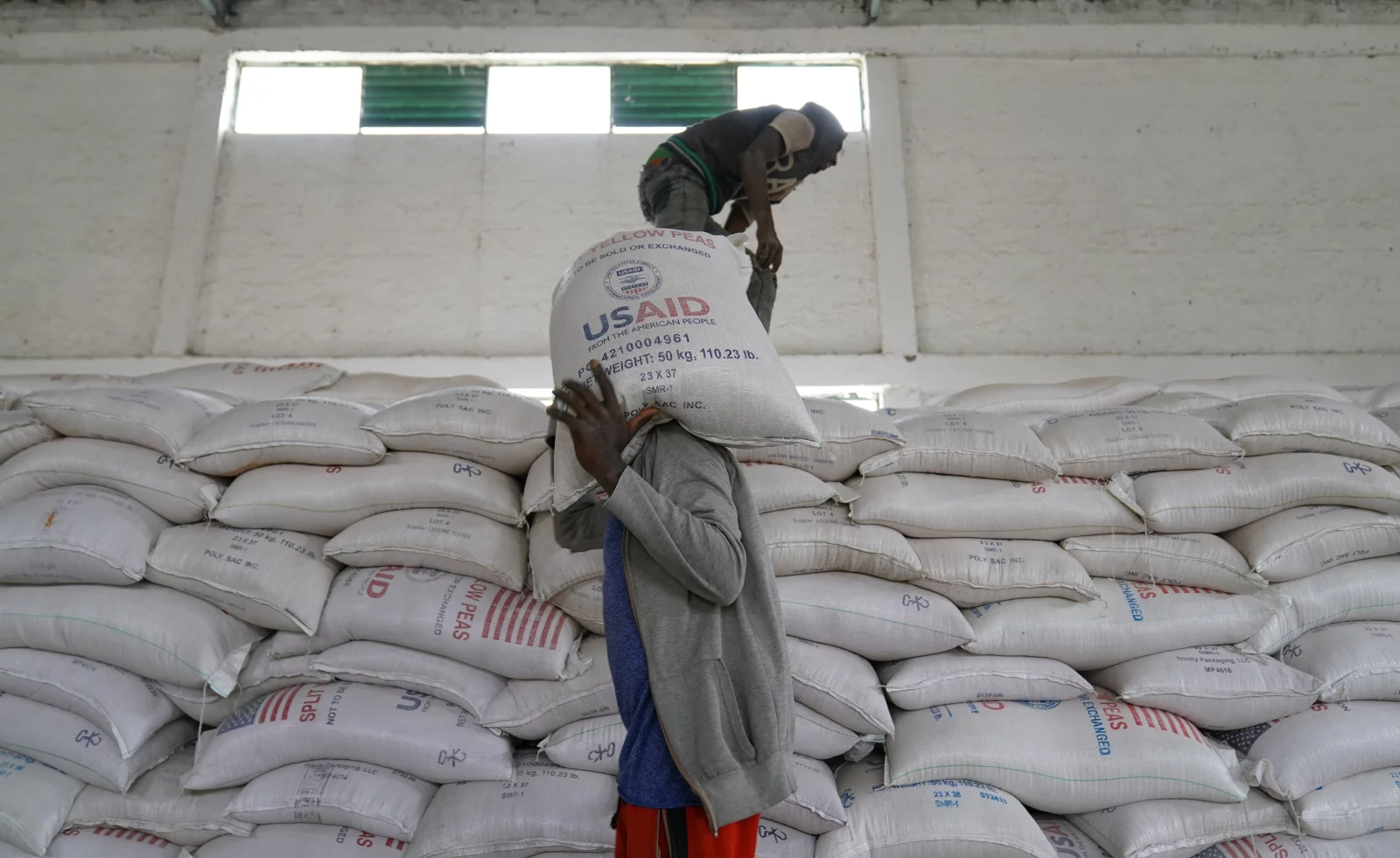
Food aid has often been structured around surplus U.S. production, shipping subsidized grain into fragile markets. Studies of U.S. food assistance highlight a dynamic in which local agricultural sectors are undercut by inflows of cheap or free food, creating a cycle where countries become dependent on continued shipments instead of building self-sufficient food systems. USAID’s own “self-reliance” rhetoric, critics argue, frequently reproduces neoliberal assumptions, privileging private-sector leadership and market-driven food systems over solidarity with grassroots movements demanding land reform and public investment.
This approach fits a broader pattern: USAID policy documents have stressed “opening markets for U.S. firms” and creating investment opportunities for American businesses. Development projects in areas such as electricity, transport, and health commodities are routinely framed as ways to catalyze private investment and integrate partner countries into global supply chains dominated by Northern multinationals.
Political Interference and Regime Management
Neo-colonial control is not just economic; it is also political. Historical records show that U.S. foreign aid, including USAID-linked programs, has been used alongside covert operations to shape political outcomes in recipient states. In the Democratic Republic of Congo, for instance, declassified documents detail a sustained U.S. effort to remove Prime Minister Patrice Lumumba in the early 1960s and support Joseph Mobutu’s dictatorship, motivated by fears about Soviet influence and the desire to secure access to mineral wealth.
Mobutu’s regime received billions in military and economic aid, with U.S. officials explicitly noting that he “served the interests” of successive Washington administrations. Aid helped stabilize an authoritarian government that maintained nominal independence while granting Western companies significant shares of Congo’s resources. When Mobutu eventually became a global embarrassment, U.S. backing shifted—but the core dynamic of external leverage through aid and security ties persisted.
Beyond high politics, USAID has funded media, civil-society organizations, and opposition movements framed as “independent” but reliant on U.S. money. One critical account notes that USAID supported thousands of journalists and non-state outlets in over thirty countries, effectively building a communication infrastructure that promoted narratives congenial to U.S. interests. In places like Cuba, Bolivia, and Nicaragua, USAID programming has been accused of aiding groups opposed to left-wing governments and contributing to polarization under the banner of democracy promotion.
Some USAID counterterrorism and stabilization programs also illustrate how aid can misdiagnose and exacerbate conflict. Research on Somalia argues that USAID strategies focused heavily on perceived cultural and ideological pathologies of “extremism” while neglecting material grievances, contributing to political violence rather than reducing it. These efforts entwine development with security agendas in ways that prioritize donor geopolitics over local peacebuilding.
Disaster Capitalism: Haiti and Beyond
The notion of “disaster capitalism” captures how crises create opportunities for external actors to push through controversial economic reforms and capture lucrative contracts. Haiti’s 2010 earthquake, which killed hundreds of thousands and displaced millions, offers a stark example.
USAID and other donors promised a massive reconstruction effort, but investigations show that much of the funding flowed to foreign consulting firms, NGOs, and multinational corporations rather than Haitian institutions. The U.S. and its partners used the crisis to accelerate pre-existing plans for export-oriented industrial parks and tourism, while local demands for jobs, education, and equitable rebuilding were sidelined.
A survey of Haitian households found that many perceived food prices rising and saw little impact from food aid on their expenditures; what they wanted most—stable employment and schools—remained in short supply. USAID’s Feed the Future North project spent tens of millions of dollars to improve agriculture, but critics note that the agency did not meaningfully engage the Haitian government or beneficiaries in design and failed to address chronic water scarcity and drought.
Similar dynamics appear in other crisis zones. Scholars of U.S. foreign disaster assistance argue that USAID-backed operations are often militarized, combining humanitarian language with stabilization missions that leave underlying power imbalances unchanged. The result is aid that blunts immediate hardship but entrenches the basic architecture of dependency: domestic economies oriented toward serving external investors, local governance overshadowed by donor and corporate priorities.
Africa, Aid, and the Persistence of Poverty
Africa has been both a major focus of USAID programming and a primary source of neo-colonial critique. Despite decades of aid, many African states remain structurally dependent on commodity exports, external loans, and donor-funded social programs. A Clinton-era bipartisan task force found that much of Africa was economically worse off in the 1990s than it had been two decades earlier, notwithstanding large aid inflows.
Economist Angus Deaton and others have argued that large aid flows can distort domestic politics, undercut democratic accountability, and strengthen ruling elites by giving them external revenue streams outside taxation. Former African Union ambassador to the U.S., Arikana Chihombori-Quao, has been especially blunt, contending that USAID and similar donors have “little to show” for their involvement in Africa and often interfere in local politics while insisting that African states effectively beg for engagement.
Recent research on unequal exchange calculates that resource and wealth transfers from the Global South to the Global North exceed incoming aid by a factor of roughly thirty, amounting to trillions of dollars annually. In this context, USAID’s projects—however well-intentioned—operate inside an economic regime that systematically extracts more from African economies than it gives back, even as aid narratives emphasize generosity.
USAID-funded environmental and conservation initiatives have also been criticized as “green colonialism,” imposing strict land-use rules on African communities, sometimes in the name of protecting global climate, while doing little to alleviate rural poverty. One quantitative study finds that environmental variables play a limited role in explaining USAID aid allocation compared with donor interests and resource potential, and that aid often fails to reach the populations most in need.
The NGO Industrial Complex and Parallel Systems
USAID’s reliance on external contractors has contributed to what critics call an NGO–industrial complex: a dense network of organizations whose survival depends on continued flows of donor money and compliance with bureaucratic reporting demands. These actors build parallel systems—health clinics, education projects, governance training programs—that sit beside, rather than within, domestic state structures.
Former USAID officials and outside observers note that the agency’s incentive structures reward ever-more-complex documentation and metrics, sometimes generating hundreds of pages of quarterly reports, while field staff struggle to spend sufficient time engaging communities. Localization targets—to raise the share of funds going to local organizations—have repeatedly been missed, even as USAID rhetorically champions “country ownership.”
This parallelism has real consequences. When NGOs deliver core services that governments should provide, citizens’ accountability demands shift from elected leaders to donors and project managers. When programs are designed in Washington or consultant offices, exit strategies are often weak or absent, because contractors have no incentive to work themselves out of a job.
One USAID administrator has publicly acknowledged that only around one-tenth of the agency’s funds in some contexts go directly to local groups, underscoring how deeply the center of gravity remains in the U.S. Scholars describe this as a form of neo-colonial governance: foreign technical and financial infrastructures effectively steer policy spaces that formally reside within sovereign states.
Reform Efforts and Their Limits
USAID has not been oblivious to these critiques. Over time, it has adopted rhetoric of “localization,” “self-reliance,” and “country-led development,” set targets for increasing direct funding to local actors, and participated in multilateral efforts to align aid with the Sustainable Development Goals. Some reforms have improved transparency, expanded gender-sensitive programming, and reduced overt support for police and military forces.
The agency has backed initiatives to track results more rigorously, including large data systems for monitoring health, education, and economic indicators. It has also experimented with payment-by-results contracts, social impact bonds, and pooled procurement of health commodities designed to reduce costs and corruption.
Yet many structural features remain unchanged. USAID’s budget is still programmed jointly with the State Department, and appropriations are influenced by geopolitical considerations, not solely poverty or need. Contractors based in the U.S. continue to dominate the procurement landscape. And the wider international financial architecture—trade rules, debt regimes, intellectual property protections—still tilts heavily toward the interests of wealthy nations.
Attempts to portray USAID as purely benevolent therefore ring hollow, but so do claims that abolishing the agency altogether would automatically liberate recipient countries. Absent broader changes in global economic governance, the vacuum left by reduced U.S. aid may be filled by other external actors—China, Gulf states, or private investors—whose own strategies can be equally or more predatory.
Conclusion: Aid Between Solidarity and Control
USAID embodies a tension that runs through the entire history of foreign aid. On one side is an internationalist impulse: the belief that it is both morally right and pragmatically wise to fight hunger, disease, and disaster beyond one’s borders, and that American resources and expertise can help do so. On the other is a strategic calculus: the use of aid to secure allies, open markets, and stabilize a global order that keeps the United States at the top.
Measured against Nkrumah’s definition of neo-colonialism and dependency theorists’ warnings, USAID has indeed played a significant neo-colonial role. It has helped maintain export-oriented, unequal economic structures; it has privileged U.S. contractors and firms; it has buttressed friendly regimes and undermined others; and it has often treated the symptoms of underdevelopment while leaving intact the conditions that cause it.
At the same time, abandoning the agency without replacing it with more solidaristic forms of cooperation risks compounding suffering in places where USAID-supported clinics, food programs, and disaster responses have become part of the social fabric. The challenge is not simply whether USAID is neo-colonial, but how any future architecture of international assistance can move from charity and control toward genuine partnership and redistribution.
That requires shifting the locus of decision-making toward those on the receiving end of aid, ending the automatic privileging of donor-country contractors, and confronting the economic rules—trade, tax, debt, investment—that render poor nations dependent in the first place. Without such changes, the pattern will endure: grateful recipients of American generosity, living in systems that ensure they will need that generosity again and again.
References and Further Reading
Origins: Current Events in Historical Perspective. (2025, May 15). The birth and death of USAID. https://origins.osu.edu/read/birth-and-death-usaidorigins.osu+1
Mises Institute. (2025, May 13). USAID’s legacy of failure. https://mises.org/mises-wire/usaids-legacy-failuremises
Roy, D. (2025, February 7). What is USAID and why is it at risk? Council on Foreign Relations. https://www.cfr.org/articles/what-usaid-and-why-is-it-riskcfr+3
USAID Alumni Association. (2022). A history of the U.S. Agency for International Development [PDF]. https://usaidalumni.org/wp-content/uploads/2022/10/06-33.2-Maxwell.pdfusaidalumni
Unisa Press Journals. (n.d.). Dependency theory and donor aid: A critical analysis. Africanus. https://unisapressjournals.co.za/index.php/Africanus/article/download/1096/1725/14802unisapressjournals
StatusQuo305. (2026, May 20). The politics of assistance: USAID control, dependence, & imperialism. Substack. https://statusquo305.substack.com/p/the-politics-of-assistance-usaidstatusquo305.substack
Wikipedia contributors. (n.d.). United States Agency for International Development. In Wikipedia, The Free Encyclopedia. Retrieved July 4, 2026, from https://en.wikipedia.org/wiki/United_States_Agency_for_International_Developmentwikipedia
Axios. (2026, January 14). Inside Trump’s $11 billion health plan to replace “neo-colonial” USAID. https://www.axios.com/2026/01/14/trump-foreign-aid-africa-usaidaxios
Leiden University. (n.d.). Foreign aid as neocolonialism? US aid to Northern Triangle [Master’s thesis]. https://studenttheses.universiteitleiden.nl/access/item:3250067/viewstudenttheses.universiteitleiden
National Taiwan University, Department of Political Science. (2024, August 31). War, geopolitics, and development aid: The case of the Taiwan–Vietnam “Saigon Export Processing Zone” in the 1960s. https://politics.ntu.edu.tw/psr/?post_type=english&p=5537politics.ntu.edu
International Studies Quarterly. (2022, February 20). Foreign aid, development, and US strategic interests in the Cold War (Article abstract). https://academic.oup.com/isq/article-abstract/66/1/sqab090/6470669academic.oup
Eastern Michigan University. (n.d.). The effectiveness of U.S. development assistance in fostering sustainable development in Sub-Saharan Africa [McNair Scholars research project]. https://commons.emich.edu/cgi/viewcontent.cgi?article=1119&context=mcnaircommons.emich
Maastricht University. (n.d.). U.S. and Soviet foreign aid during the Cold War: A case study of Ethiopia [Master’s thesis]. https://cris.maastrichtuniversity.nl/en/publications/us-and-soviet-foreign-aid-during-the-cold-war-a-case-study-of-eth