The G7 meeting in France is best understood not as a photo-op for seven wealthy democracies, but as a stress test of the Western order itself. It exposed two realities at once: the world’s most powerful industrial states still matter when they coordinate, but they now do so under the pressure of wars in Ukraine and West Asia that they do not fully control.
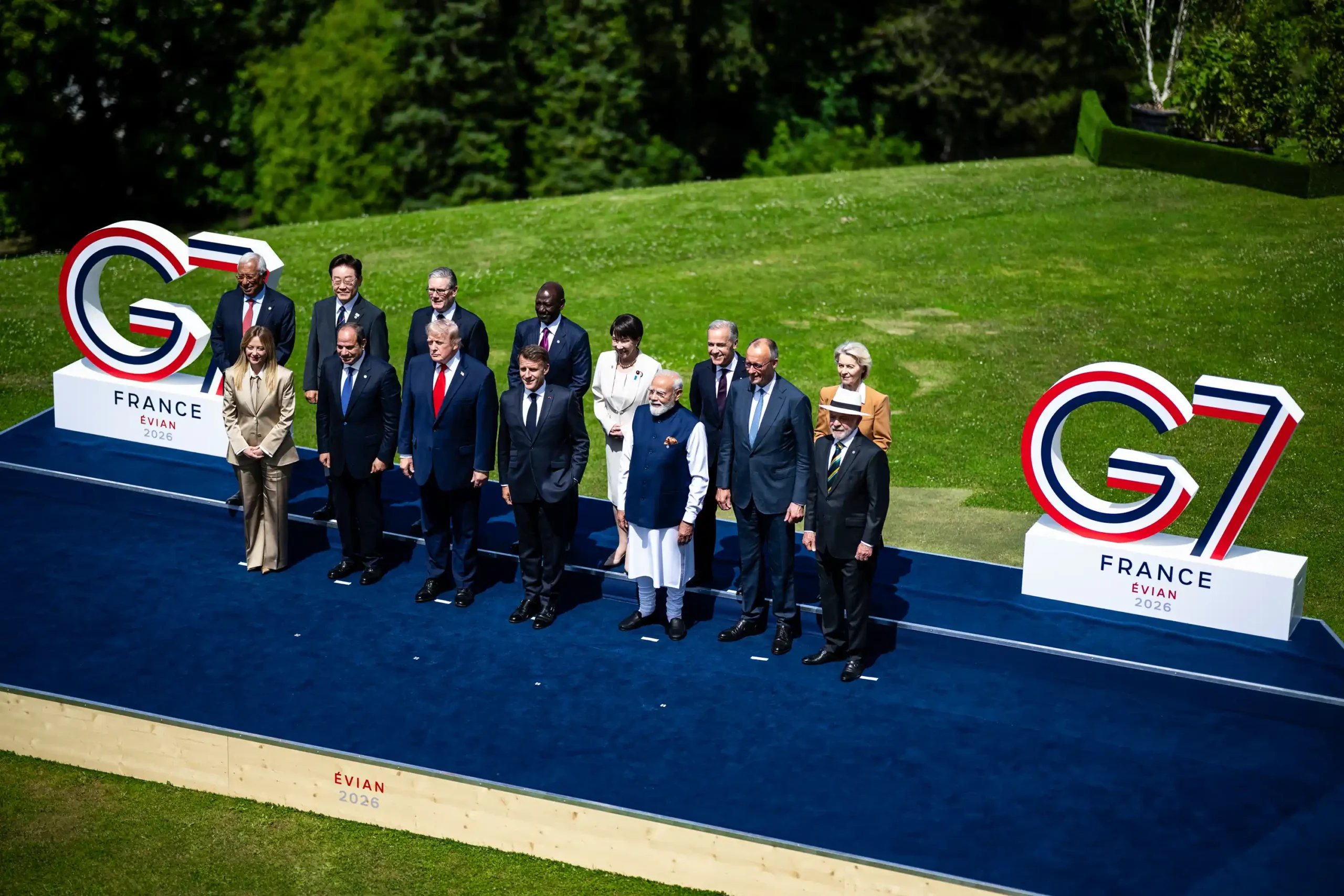
In Evian-les-Bains, France hosted the 52nd G7 summit, and the agenda quickly became dominated by security rather than economics. Ukraine and the Middle East—described in reporting as the West Asia file—were the two central crises shaping the talks.
The summit showed that Europe still sees Washington as indispensable, but also that European leaders are increasingly anxious to keep the United States engaged on Ukraine while preventing the region-wide fallout from West Asia from pulling attention and leverage away from Europe’s war.
The West Asia discussion at the summit focused on peace, trade routes, and the risk that regional conflict could damage global shipping and energy markets. Reporting from the sidelines showed leaders emphasizing dialogue, diplomacy, and respect for international law, while also highlighting the need to keep the Strait of Hormuz open to trade and navigation.
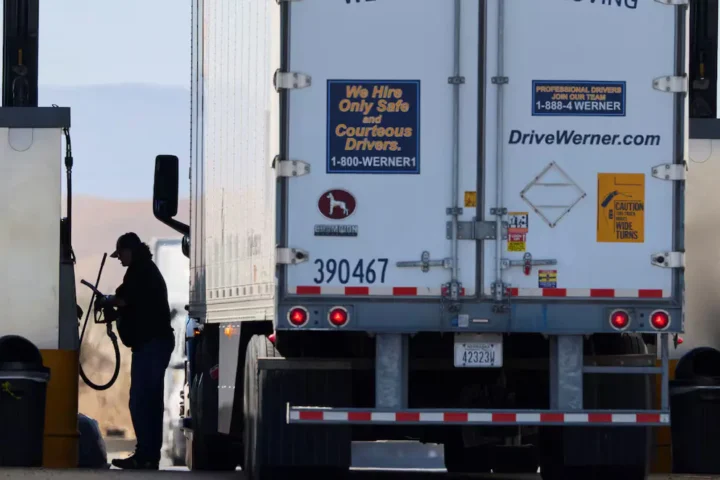
That language is not accidental. When leaders talk about “freedom of navigation” and “unimpeded commerce” through the Strait of Hormuz, they are speaking not just to regional allies but to consumers, truckers, and manufacturers across the American Midwest who feel energy shocks through fuel prices and supply chains. The issue is not limited to the Gulf; it touches the price of doing business everywhere.
The West Asia discussions also pointed to a broader strategic shift: major powers are now trying to build resilience around instability instead of pretending it can be wished away. Coverage noted references to alternative trade and energy corridors, including IMEC, suggesting that the G7 wants to reduce vulnerability to maritime chokepoints even as it publicly urges restraint and diplomacy.
Ukraine was brought back to the center of the summit by G7 allies who wanted to keep the war visible despite the attention captured by the Middle East. NPR’s reporting described allied efforts to push the conflict back onto President Donald Trump’s agenda, underscoring how much of the conversation was about sustaining pressure on Russia while also testing the limits of U.S. political will.
The G7’s position on Ukraine has remained consistent in broad terms: support Kyiv’s sovereignty, sustain military and economic pressure on Moscow, and keep alive the possibility of a negotiated settlement. In February, G7 leaders reiterated their unwavering support for Ukraine’s territorial integrity and right to exist, while also backing Trump’s stated aim of pursuing a peace process and direct talks.
That is a revealing mix. It shows the G7 trying to hold together two impulses that do not always sit comfortably together: deterrence and diplomacy. The alliance wants Russia to feel the costs of aggression, but it also wants a path to a cease-fire that does not look like surrender dressed up as realism.
In the current scenario, the Trump factor cannot be ignored. European leaders are dealing with a president who can be skeptical of multilateralism, impatient with open-ended security commitments, and highly sensitive to the domestic political optics of foreign aid. At the same time, they still need the United States to anchor any meaningful policy toward Russia or any crisis that could threaten the global economy.
That tension gave the summit its drama. On one hand, allies were working hard to persuade Washington that Ukraine still deserves sustained support. On the other, the talks on West Asia showed that Trump’s White House is likely to judge crises through a transactional lens: security of energy routes, leverage over adversaries, and the question of whether diplomacy can be converted into a deal.
The G7 still functions as a mechanism for translating American power into collective action, but only when the White House is willing to cooperate. If the president treats allies as negotiators rather than partners, the group’s value depends even more on whether Europeans can present a concrete shared interest, not just moral urgency.
The summit’s significance extends beyond foreign policy insiders because both wars affect daily life in direct ways. Ukraine influences defense spending, transatlantic security, and the future credibility of Western deterrence, while West Asia affects oil, shipping, inflation, and the stability of the global trading system.
That is why the G7 matters even to readers who rarely follow summit diplomacy. The decisions made there shape whether the United States pays more later, in the form of instability and emergency intervention, or pays sooner through coordination, aid, sanctions, and diplomacy. In that sense, the summit was really about the cost of inaction.
The deeper lesson is that the world is entering a period where the old separation between “European security” and “Middle Eastern instability” no longer works. Russia’s war and the West Asia crisis are linked by the same underlying problem: a fragmented international order in which great powers test the limits of the rules, allies worry about credibility, and economic flows become strategic weapons.
The strongest case for the G7 is not that it solves crises, but that it gives the United States a forum to shape them with partners rather than alone. That is especially important in a year when domestic polarization makes long-term foreign commitments harder to sustain.
The criticism, of course, is familiar: the G7 can sound like a club that issues statements while wars continue. But the summit in France showed that statements still matter when they signal unity on sanctions, navigation, and support for a country under attack. The real question is whether unity can survive the next test of attention, especially if West Asia escalates further or if Ukraine slips from the front page.
What makes this summit interesting is not that it produced a grand solution. It is that it revealed the current shape of Western power: still influential, still coordinated enough to matter, but increasingly reactive, divided by domestic politics, and forced to deal with multiple crises at once. That is the world now, whether one is watching gas prices, watching NATO, or watching the news from Kyiv and the Gulf.