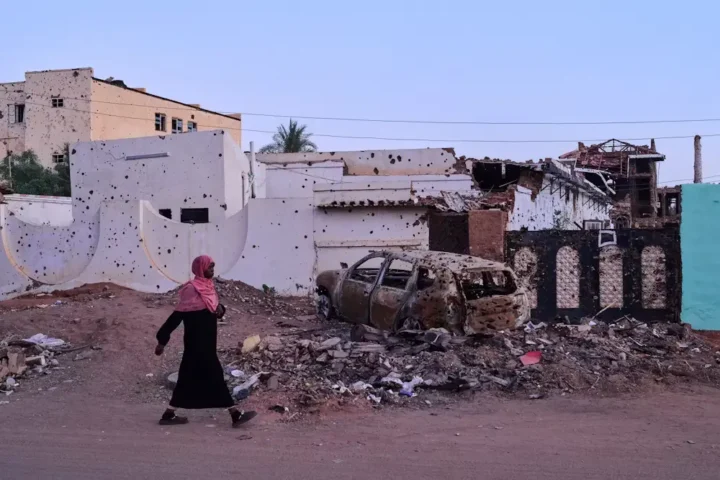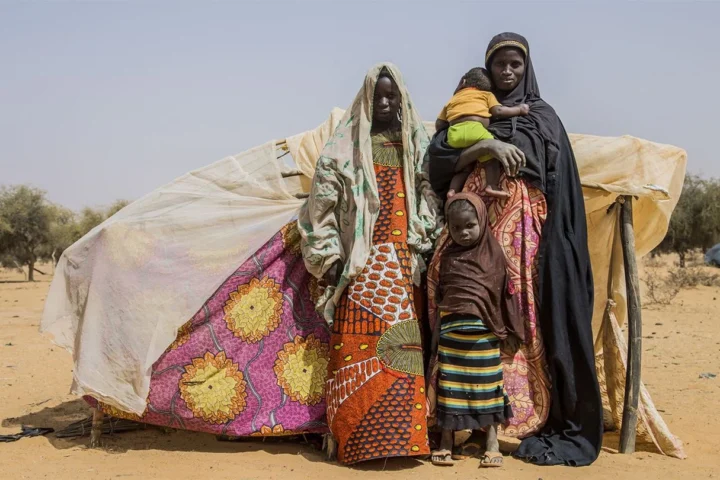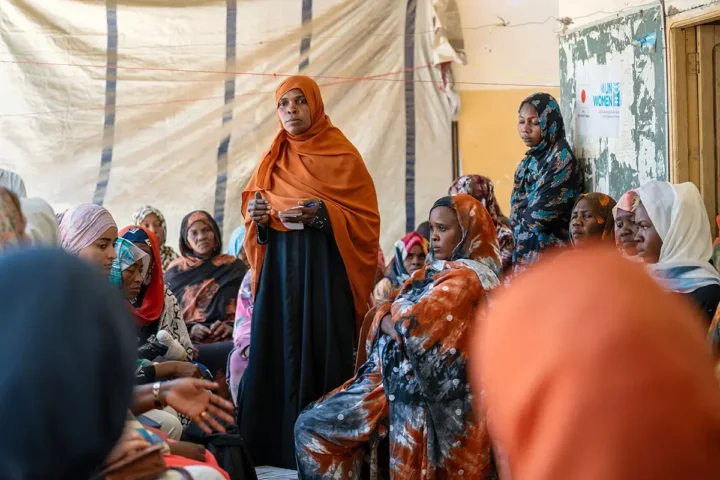
In July 2026, United Nations investigators reached a conclusion that should have stopped world leaders in their tracks: the campaign waged by the Rapid Support Forces in and around al-Fashir bears the hallmarks of genocide. Mass gang rapes. Abductions of women and girls. Sieges engineered to starve entire communities into submission. The Zaghawa and Fur peoples of Darfur are being hunted, again, with a deliberateness that investigators say amounts to policy, not chaos.
The world’s response has been sanctions. But look closely at whom those sanctions target, and a troubling pattern emerges: they punish the visible instruments of the war while leaving its architects almost entirely alone.
The evidence is not ambiguous. The UN Human Rights Council has heard that civilian killings in 2025 more than doubled the year before, with over 11,300 documented deaths and thousands more unaccounted for. The International Criminal Court has confirmed war crimes and crimes against humanity in al-Fashir, describing organized campaigns of mass execution and ethnic targeting moving “town by town.” In February 2026, the Security Council sanctioned four RSF commanders tied to the al-Fashir takeover, including one nicknamed the “Butcher of al-Fashir.”
Then, in June 2026, Washington added eight more individuals and entities to its sanctions list, accused of funneling weapons, explosives, and foreign fighters to both the Sudanese Armed Forces and the RSF, under a legal authority built for chemical and biological weapons proliferation. It followed earlier action against a network of Colombian nationals recruiting mercenaries—including children—to fight for the RSF, and a January 2025 genocide determination that named RSF leader Mohamed Hamdan Dagalo, known as Hemedti, alongside seven RSF-linked companies based in the UAE.
Each of these measures is real. Assets get frozen. Travel gets restricted. A moral line gets drawn on paper. But taken together, they describe a sanctions regime aimed almost exclusively at mid-level facilitators and paramilitary commanders—never at the states and corporate networks that make the war financially and logistically possible in the first place.
This is the contradiction at the heart of the international response. UN documentation and independent reporting have repeatedly traced procurement networks—including entities based in Gulf states—as central to keeping the RSF’s war machine supplied. Yet no government has moved to impose comprehensive state-level sanctions, or even secondary sanctions, on the jurisdictions those networks operate from. Both the SAF and RSF continue to receive imported drones, small arms, and ammunition through channels that are, by now, well documented. And still there is no arms embargo with real enforcement teeth—no sanctions regime that reaches the exporters, insurers, and shipping companies that knowingly move lethal cargo into a war zone where genocide is underway.
The result is a strange kind of selective accountability: the world catalogs atrocities in exacting, courtroom-ready detail, then sanctions the people pulling triggers while leaving untouched the governments and firms who supplied the triggers, financed the ammunition, and kept the supply lines open.
The reasons are not mysterious. Sudan’s war sits at a geopolitical crossroads—Red Sea security, Sahel instability, Gulf rivalries—and major powers are reluctant to alienate regional partners whose cooperation they need on migration, counterterrorism, and energy. Sanctioning a state directly, rather than a handful of its nationals, invites escalation and diplomatic retaliation in ways that sanctioning an individual commander does not. And arms sales, mining contracts, and port access all create domestic constituencies inside the sanctioning countries themselves, constituencies with every incentive to keep the tougher measures off the table.
None of this changes the moral arithmetic. It only explains why the arithmetic keeps getting avoided.
A sanctions policy that matched the scale of what investigators have documented would look different from what currently exists. It would include real secondary sanctions on foreign entities and financial institutions knowingly facilitating weapons transfers or bulk cash flows to either side, regardless of whose flag they fly. It would mean a unified, enforced arms embargo with explicit penalties for exporters, insurers, freight forwarders, and flag states caught moving suspect shipments. It would extend asset freezes and travel bans to senior officials in foreign ministries, defense establishments, and intelligence services materially supporting the war. And it would mean publishing evidence-based lists of the specific companies, banks, and logistics hubs enabling the pipeline—modeled on the kind of terrorism-financing designations that already exist for other conflicts.
None of this is exotic. The legal tools already exist. What’s missing is the political will to point them at capitals rather than commanders.
Every month that foreign patrons remain insulated from consequence, the toll compounds: more mass graves, more survivors of systematic rape, more children starved behind a siege line. The UN and ICC have already done the hard work of establishing what is happening in Darfur beyond reasonable doubt. What remains genuinely uncertain is whether the governments capable of constraining the war’s outside sponsors will ever choose to do so.
Sudan’s civilians are not short on statements of concern. They are short on a sanctions architecture willing to treat foreign sponsorship of genocide as the crime it is—and to act accordingly, even when the sponsor sits at the negotiating table rather than on a battlefield.