A US trade delegation will visit India from June 1–4, to try to lock in the text of an interim trade agreement and push forward work on a broader Bilateral Trade Agreement (BTA) between the two countries. The visit directly follows the February 7 joint framework for an interim deal on “reciprocal and mutually beneficial” trade and comes close on the heels of US Secretary of State Marco Rubio’s outreach to New Delhi to repair strained economic ties.
Background to the interim trade talks
India and the United States launched negotiations on a comprehensive bilateral trade agreement in February 2025 under the Trump–Modi leadership, but progress was complicated by Washington’s steep tariffs on Indian exports and New Delhi’s earlier purchase of Russian oil. Tariffs on Indian goods were raised as high as 50 per cent at one point, before being partially rolled back through temporary arrangements and then affected by a US Supreme Court ruling that invalidated Trump’s earlier tariff measures.
To stabilise the relationship and create a more predictable basis for commerce, both sides agreed to carve out an “interim agreement” that would deliver early benefits while the more complex BTA negotiations continue. This approach mirrors a common trade strategy: locking in partial liberalisation and regulatory cooperation in a first-stage deal, while leaving highly sensitive areas to a longer negotiation track.
The February 7 joint framework
On February 7, 2026, India and the US issued a joint statement announcing a framework for an “Interim Agreement regarding reciprocal and mutually beneficial trade.” The framework reaffirms that both sides remain committed to the broader India–US BTA negotiations launched in 2025, so the interim pact is explicitly designed as a stepping stone rather than a stand‑alone agreement.
According to the Indian government’s press communication, the framework identifies multiple negotiating pillars: market access, non‑tariff measures, technical barriers to trade, customs and trade facilitation, investment promotion, economic security alignment and digital trade. These headings signal that the interim pact will go beyond simple tariff cuts to address regulatory obstacles, standards, and strategic concerns such as supply chain resilience and screening of sensitive investments.
Earlier April round in Washington
Following the February 7 framework, an Indian delegation travelled to Washington, D.C. from April 20–23, 2026 for in‑person meetings with US counterparts to “finalize the details of the Interim Agreement and take forward the negotiations under the broader BTA.” Officials from both countries discussed the full range of topics identified in the framework, including technical barriers, customs issues, investment promotion, economic security, and digital trade, in what the government described as “constructive and positive” meetings.
These Washington talks appear to have clarified many technical elements of the interim pact but stopped short of a complete political green light, prompting the need for another round—this time with the US team travelling to India in early June. The June visit is therefore best understood as a follow‑up round focused on narrowing remaining gaps and preparing a text that could be announced or initialled later in 2026.
Composition and mandate of the US trade team
The June 1–4 delegation will be “led by the Chief Negotiator” for the US side, underlining its formal, technical nature and signalling that the visit is about detailed bargaining rather than only high‑level signalling. The Indian Commerce Ministry has described it as a “team of officials” rather than a political delegation, reinforcing that the primary work will be line‑by‑line text negotiation under the interim agreement framework and BTA roadmap.
While specific names have not been publicly detailed, the functional agenda points to participation from US trade and economic agencies responsible for tariffs, regulatory standards, customs procedures, digital trade, and investment screening, mirrored by Indian officials from the Commerce and Industry Ministry and other economic ministries. Such a configuration suggests that sector‑specific issues—such as agriculture, industrial goods, and technology products—will be addressed by specialised sub‑groups reporting to the chief negotiators.
Core objectives of the June 1–4 round
Official statements from New Delhi consistently describe the purpose of the June visit as two‑fold: to “finalise the details of the Interim Agreement” and to “take forward the negotiations under the broader BTA.” In practice, this means hammering out the schedule of tariff reductions, the legal language on rules of origin, and commitments on non‑tariff barriers, while also making progress on deeper issues that will sit in the future comprehensive agreement.
The interim agreement is explicitly designed to protect domestic sensitivities in both countries while still creating “new export opportunities,” a balance that requires delicate sector‑by‑sector bargaining. Indian ministers have said the framework aims to enhance market access, strengthen supply chain resilience, and promote “reciprocal and mutually beneficial” trade rather than one‑sided concessions. The June round is therefore critical for translating these high‑level principles into concrete tariff lines, regulatory changes, and institutional mechanisms.
Sectoral issues likely on the table
Public reporting on the February framework and subsequent commentary provides a strong indication of the sectors and issues that will dominate the June 1–4 discussions.
- Tariffs on industrial and agricultural goods: Under the interim framework, India is expected to eliminate or significantly reduce tariffs on a broad range of US industrial products and food and agricultural goods, including distillers’ dried grains, red sorghum for animal feed, tree nuts, fresh and processed fruits, soybean oil, wine and spirits. In return, the US would apply a reciprocal tariff rate of 18 per cent on Indian goods such as textiles and apparel, leather and footwear, plastics and rubber, organic chemicals, home décor and some machinery categories, replacing higher earlier duties.
- Preferential market access and tariff‑rate quotas: The framework envisages “sustained preferential market access” in sectors of mutual interest, including tariff‑rate quotas for certain Indian exports like automotive parts, subject to US national security requirements. For India, securing predictable access for labour‑intensive exports such as textiles and footwear is important for employment; for the US, expanded access for farm and industrial goods addresses exporters’ long‑standing complaints about Indian barriers.
- Non‑tariff barriers and rules of origin: Both sides have agreed to establish rules of origin to ensure that the benefits of the interim agreement primarily accrue to products genuinely originating in India and the US, rather than being used as a trans‑shipment route by third countries. Addressing non‑tariff barriers—including standards, licensing requirements, and customs paperwork—will be a key focus, especially in sectors such as medical devices, ICT goods and agricultural products where regulatory hurdles have impeded trade.
- Digital trade and technology: The framework includes cooperation on standards, digital trade, economic security and technology, with an emphasis on enhancing supply chain resilience and deepening trade in advanced technologies, including data‑centre hardware and GPUs. The June round is likely to refine language around cross‑border data flows, localisation, and treatment of digital services in a way that reconciles India’s regulatory concerns with US commercial interests.
- Economic security alignment: Both countries have committed to strengthen alignment on economic security to counter “non‑market policies” of third countries and to coordinate on inbound and outbound investment screening and export controls. In practice, this will likely entail discussions on how to manage supply chains in critical sectors such as semiconductors, telecommunications and critical minerals, while maintaining openness for trusted investors.
Connection to Rubio’s India outreach
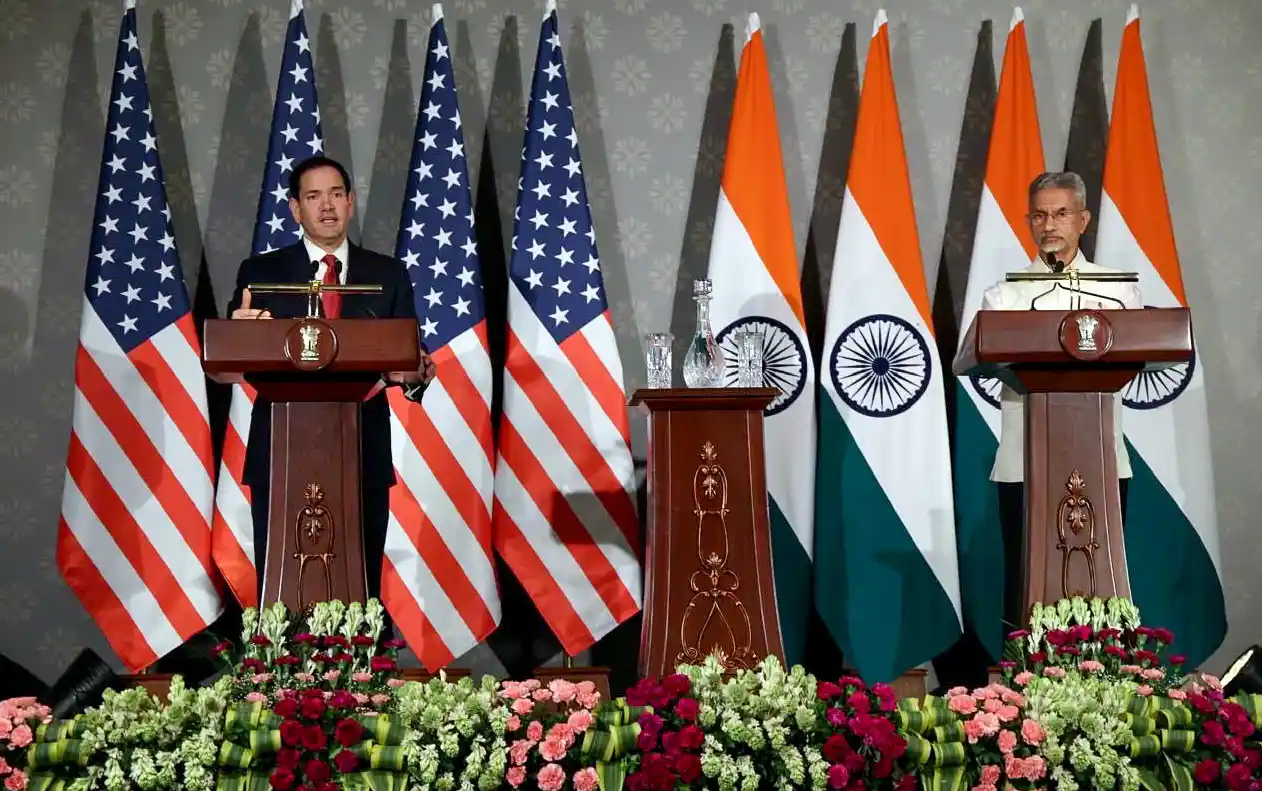
US Secretary of State Marco Rubio’s recent visit to India has set the political backdrop for the June technical talks. During his trip, Rubio met Prime Minister Narendra Modi and Foreign Minister S. Jaishankar to discuss trade, energy, defence and maritime security, with an explicit goal of shoring up ties that had been strained by Washington’s tariffs and engagement with India’s rivals, Pakistan and China.
Rubio and Jaishankar “welcomed” the trade deal elements announced by President Donald Trump and Modi—particularly the move to bring US tariffs on Indian goods down to around 18 per cent—and discussed formalising cooperation on critical minerals exploration, mining and processing. US officials have also repeatedly emphasised that an India–US trade deal and the interim pact will “take bilateral ties to the next level” and reinforce the Quad’s Indo‑Pacific economic and strategic architecture.
By scheduling the June 1–4 trade round soon after Rubio’s visit, both governments are attempting to convert political goodwill into concrete negotiating outcomes. The Secretary of State’s messaging on the need to repair ties and move past earlier tariff conflicts creates a political window that technical negotiators can use to push for compromise in sensitive sectors.
Strategic and economic implications for the United States
For the United States, the interim trade framework and the June 1–4 negotiations promise direct commercial gains alongside longer‑term strategic dividends in the Indo‑Pacific. On the economic side, India’s commitment to eliminate or sharply reduce tariffs on all US industrial goods and a wide range of agricultural and food products opens a fast‑growing consumer market to American exporters in sectors ranging from machinery and high‑tech equipment to farm produce, beverages and processed foods. India has also signalled a willingness to import around 100 billion dollars of US goods annually for five years—roughly 500 billion dollars in total—creating predictable demand for US energy, aircraft, technology hardware and commodities and helping to sustain production and jobs in key swing‑state industries.
US farmers and agribusinesses are among the most immediate beneficiaries, because Indian tariff cuts cover dried distillers’ grains, red sorghum for animal feed, tree nuts, fruits, soybean oil, wine and spirits, all areas where US exporters have long complained of restricted access to India’s vast market. American industrial producers, especially in machinery, aircraft and aircraft parts, also stand to gain as India removes or relaxes tariffs and non‑tariff barriers and Washington rolls back specific Section 232 tariffs on Indian aircraft components, enabling more integrated supply chains in aviation and manufacturing. At the same time, the reciprocal 18 per cent tariff on Indian imports, at least pending the impact of the US Supreme Court ruling on broader tariff measures, gives Washington leverage to manage the pace of Indian export growth into the US market while still delivering cost savings compared with the earlier effective tariff burden of around 50 per cent.
Strategically, the interim pact supports long‑standing US objectives of “de‑risking” supply chains away from China and reinforcing India’s role as a key partner in the Indo‑Pacific. By locking in sector‑specific trade liberalisation and cooperation on economic security, investment screening and export controls, Washington gains a more reliable platform for coordinating with New Delhi on critical minerals, semiconductors, telecommunications networks and data‑centre hardware, which are central both to US industrial policy and to maintaining a technological edge over strategic competitors. The improved trade atmosphere also helps stabilise the broader relationship after a period of tariff escalation, supporting the Trump administration’s effort, highlighted during Secretary Rubio’s outreach, to ensure that friction over Russian oil and market access does not derail cooperation in the Quad and other regional security architectures.
In geopolitical terms, deeper trade ties with India align with the White House’s national security strategy, which calls for “deeper cooperation with New Delhi” to underpin Indo‑Pacific security and recognises the region as a core economic and geopolitical battleground for the United States. A more predictable economic partnership reduces the risk that trade disputes will spill over into defence and diplomatic cooperation and strengthens Washington’s hand in presenting an alternative to China‑centric economic arrangements in Asia. At the same time, tying trade concessions to commitments such as India’s scaling back Russian oil imports and expanding defence cooperation indicates that US policymakers view the interim pact not simply as a commercial bargain, but as part of a broader effort to align India more closely with US strategic priorities—an approach that may yield long‑term benefits but also requires careful management of Indian concerns about strategic autonomy.
Strategic and economic implications for India
For India, the interim agreement and the June visit have both commercial and strategic stakes. On the economic side, India has indicated an intention to purchase goods worth around 500 billion dollars from the US over the next five years, including energy products, aircraft and parts, precious metals, technology products and coking coal. A structured interim pact could ensure that these purchases translate into stable, predictable access to the US market for Indian exports, especially in sectors like textiles, pharmaceuticals, gems and technology products once reciprocal tariffs are gradually eased.
At the same time, the framework is explicitly designed to “protect domestic sensitivities,” particularly in agriculture and certain manufacturing segments where sudden import competition could provoke political backlash. For a state like Uttar Pradesh, which is heavily dependent on agriculture and labour‑intensive manufacturing, the fine print on tariff schedules, safeguard clauses and non‑tariff disciplines will be critical in determining whether the agreement is seen as an opportunity or a threat.
Strategically, closer economic alignment with the US through the interim pact and eventual BTA supports India’s broader Indo‑Pacific positioning by diversifying markets away from China, strengthening supply chain resilience, and anchoring critical technology cooperation in a trusted partnership. Provisions on economic security, investment screening and export controls are likely to be framed in ways that complement broader efforts to respond to non‑market practices by third countries in sectors such as steel, telecom equipment and advanced computing.
What to watch out for
Despite the positive framing from both capitals, the June 1–4 talks face several challenges. First, negotiators must reconcile US demands for deeper access to India’s agricultural and dairy markets with India’s longstanding concerns about rural livelihoods and food security. Even under an interim pact, any tariff cuts or quota openings in politically sensitive farm products will invite scrutiny from state governments and farm lobbies.
Second, questions remain about the sequencing and durability of tariff changes given the interaction between Trump‑era tariffs, their partial rollback, and the recent Supreme Court ruling that affected some of the legal basis for those duties. Crafting an interim agreement that is both WTO‑consistent and robust against domestic legal challenges in the US will require careful drafting of reciprocal tariff provisions.
Third, digital trade and data governance represent a complex domain where India’s regulatory approach—emphasising data localisation and sovereign control—does not fully align with typical US demands for free cross‑border data flows and minimal localisation. Achieving “mutually beneficial” outcomes here may require innovative formulations that commit to cooperation on standards and cybersecurity while postponing the most contentious issues to the full BTA.
Finally, the broader geopolitical environment—including US–China rivalry, energy market volatility, and debates over industrial policy in both countries—can both motivate and complicate the talks. While economic security alignment is a shared priority, specific measures on export controls or investment screening may generate friction with segments of industry in both economies.
Possible outcomes of the June round
If the June 1–4 visit proceeds smoothly, several tangible outcomes are plausible. Negotiators could agree on the core tariff‑reduction schedules for industrial goods and a defined list of agricultural and food products, alongside reciprocal 18 per cent tariff commitments and a roadmap for future reductions. They may also finalise chapters on customs and trade facilitation, including commitments to streamline procedures, digitise documentation, and improve transparency, which would benefit exporters in both countries without major domestic political costs.
Another likely outcome is a more detailed framework for cooperation on economic security and supply chain resilience, potentially identifying priority sectors such as critical minerals, semiconductors, telecom networks and data‑centre hardware where India–US trade and investment will be encouraged. This could be linked to ongoing work in the Quad and other Indo‑Pacific economic initiatives, giving the interim pact a clear strategic dimension beyond traditional tariff bargaining.
Even if all elements of the interim agreement cannot be finalised in this round, a successful visit would at minimum narrow the remaining gaps, lock in progress from the April Washington meetings, and allow both governments to publicly reaffirm their commitment to concluding the interim pact and advancing towards a comprehensive BTA. In that sense, the June trade team’s visit is a critical bridge between high‑level political reassurance following Rubio’s outreach and the eventual legal architecture of a new India–US trade relationship.
References and Further Reading
ABC News. (2026, May 24). Rubio’s visit to India focuses on US trade tensions, Quad. ABC News. https://abcnews.com/US/wireStory/rubios-visit-india-focuses-us-trade-tensions-quad-133278718
Bay Harbor Exports. (2026, February 7). Premium Basmati Rice: US‑India trade deal 2026 guide for American importers. Bay Harbor Exports. https://www.bayharborexports.com/blog/us-india-trade-deal-2026-guide-american-importers
Business Standard. (2025, December 4). US calls for stronger ties with India to bolster Indo‑Pacific. Business Standard. https://www.business-standard.com/external-affairs-defence-security/news/us-national-security-strategy-india-indo-pacific-cooper
Business Standard. (2026, February 7). India‑US trade framework boosts Indo‑Pacific role, tests strategic autonomy. Business Standard. https://www.business-standard.com/economy/news/india-us-trade-framework-boosts-indo-pacific-role-tests-strategic-autonomy-126020
EY. (2026, February 7). United States–India announce framework for interim trade agreement. EY. https://www.ey.com/en_in/technical/alerts-hub/2026/02/united-states-india-announce-framework-for-interim-trade-agreement
KPMG. (2026, February 8). United States removes additional tariffs on imports from India. KPMG Tax Newsflash. https://kpmg.com/us/en/taxnewsflash/news/2026/02/united-states-removes-tariffs-imports-india.html
Lowy Institute. (2026, March 8). Can the Quad regain momentum after the India–US reset? Lowy Institute. https://www.lowyinstitute.org/the-interpreter/can-quad-regain-momentum-after-india-us-reset
Moneycontrol. (2026, February 6). India–US interim trade pact: What’s in it for India, what’s in it for the US. Moneycontrol. https://www.moneycontrol.com/news/business/trade/india-us-interim-trade-pact-what-s-in-it-for-india-what-s-in-it-for-the-us-1381
Moneycontrol. (2026, February 19). Over $8 billion of Indian exports still face US tariffs despite Supreme Court relief. Moneycontrol. https://www.moneycontrol.com/news/business/over-8-billion-of-indian-exports-still-face-us-tariffs-despite-supreme-court-relief
Reuters. (2026, February 7). Highlights of U.S.–India interim trade framework. Reuters. https://www.reuters.com/world/india/highlights-us-india-interim-trade-framework-2026-02-07
CNBC. (2026, May 23). Secretary of State Rubio’s trip to India signals the U.S.’ need to repair ties. CNBC. https://www.cnbc.com/2026/05/23/rubios-trip-to-india-signals-the-us-need-to-repair-ties.html
GFE Business. (2026, February 4). India‑U.S. Trade Deal 2026 | Latest import‑export news & impact. GFE Business. https://www.gfebusiness.org/blog/india-us-trade-deal-2026-import-export-news/
Press Information Bureau, Government of India. (2026). Press release on India–US joint statement on interim trade agreement framework. https://www.pib.gov.in/PressReleaseDetail.aspx?PRID=2255255
Press Information Bureau, Government of India. (2026). Press release on US trade team visit to India June 1–4 for interim trade pact talks. https://www.pib.gov.in/PressReleaseDetail.aspx?PRID=2265880