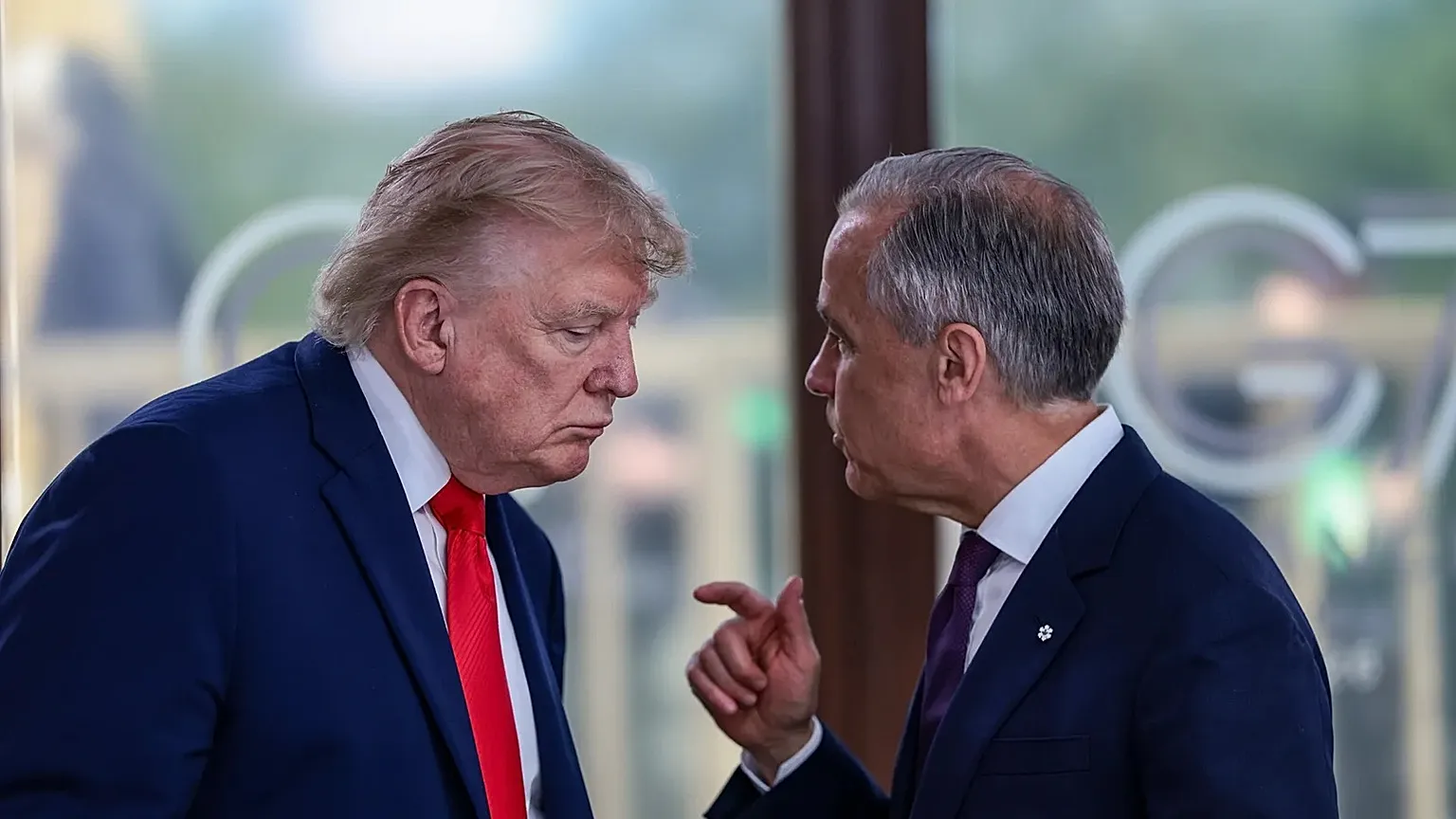
By letting its hurried trade arrangement with Canada collapse, the Trump administration has chosen escalation over certainty — and a political spectacle over a durable North American economic strategy.
At midnight Friday, the United States imposed 50 percent tariffs on roughly $20 billion worth of Canadian goods, including wine, dairy products, furniture, cement, clothing, fishing gear and hockey equipment. Canada’s prime minister, Mark Carney, has said Ottawa will respond “dollar for dollar.” What had been presented days ago as a last-minute breakthrough is now another front in an increasingly reckless trade war between two countries that ought to know better.
There is something almost absurd about the list of goods caught in the crossfire. Hockey skates and fishing rods are not the stuff of a superpower confrontation. Neither, on their own, are bottles of wine, paper products or kitchen cabinets. Yet that is precisely the point. Trade wars are not principally fought in grand abstractions like “the economy” or “the national interest.” They are experienced in specific factories, warehouses, family businesses and checkout aisles. They arrive as canceled orders, higher prices, delayed investments and a quiet decision by an employer not to hire.
The administration will insist that this is the necessary cost of standing up for American producers. Its stated grievances include Canadian treatment of American alcohol, dairy and automobiles, as well as access to Canadian lumber markets. Those disputes are real. Canada’s supply-management system for dairy is protective. Provincial restrictions on alcohol sales have long frustrated American producers. And the United States has every right to pursue fairer terms for its companies.
But there is a difference between pressing a trading partner to negotiate and treating a close ally as an adversary to be economically bludgeoned. The collapse of the agreement suggests that Washington has confused leverage with strategy.
The two governments offer competing accounts of what happened. The United States trade representative, Jamieson Greer, said Canada introduced new demands and backed away from commitments, upsetting an agreement that had supposedly been reached. Mr. Carney said Washington made last-minute changes that were “unfair” and “uneconomic” and called into question whether any deal could be relied upon. It is possible, as it often is in trade talks, that both accounts contain a measure of truth.
But the more important fact is that a deal announced with such confidence was not sufficiently settled to survive three days of drafting. President Trump had declared that the United States and Canada had a deal “subject to the finalization of documents.” That caveat turned out not to be legal boilerplate but the entire story.
A trade agreement is not a social-media post. It is a framework of commitments that businesses use to make investments lasting years or decades. It needs clarity about tariffs, quotas, enforcement, exemptions and retaliation. If the core terms can shift in the final hours, then the supposed agreement offers little more stability than the tariff threat it temporarily postponed.
That instability is especially dangerous in North America, where production is deeply integrated. A car assembled in one country can cross the border several times as parts are manufactured, processed and installed. American companies rely on Canadian materials and components; Canadian companies rely on American customers and inputs. The relationship is not a neat contest in which one side sells and the other buys. It is a continental industrial system.
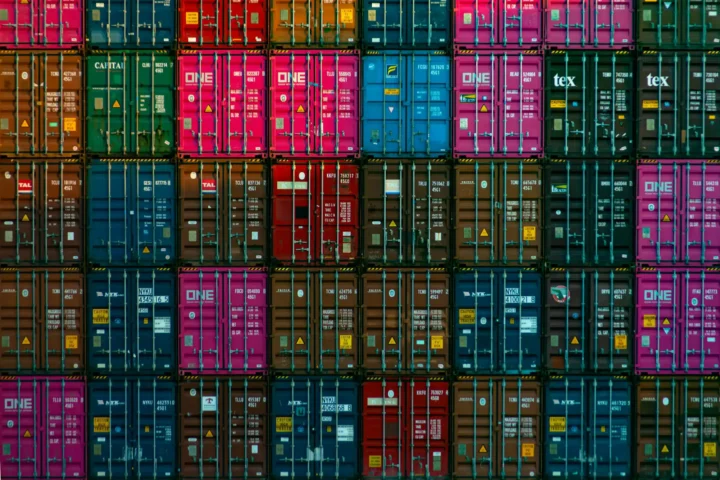
The trade figures make this obvious. Canada was America’s second-largest trading partner, after Mexico, and the United States imported $383 billion in Canadian goods in 2025. The new tariffs cover about 5.2 percent of that total. That means the immediate macroeconomic effect may be limited compared with an across-the-board embargo. But dismissing the tariffs as small because they affect only a slice of trade misses their purpose and their damage.
A 50 percent tariff is not a mild nudge. It can make a product commercially untenable overnight. Alain Ouzilleau, the owner of a Canadian cabinet manufacturer, put the issue plainly: neither producers nor American customers can reasonably absorb a tax of that magnitude. For a large multinational, the response may be to shift suppliers, renegotiate contracts or endure a period of lower margins. For a small manufacturer with a specialized American market, it can mean losing that market altogether.
The cost will not stop at the border. Tariffs are paid initially by importers, not foreign governments. Importers may then pass those costs along to wholesalers, retailers and consumers. That is not an ideological claim; it is how an import tax works. A U.S. distributor buying Canadian goods now faces a choice: raise prices, accept smaller profits or find another supplier. None of those outcomes amounts to a painless triumph for American households.
This matters politically as well as economically. The administration has made affordability central to its argument for economic competence. But it is hard to reconcile that message with an unnecessary policy that raises the cost of consumer goods and business inputs. Americans may not notice a tariff on a hockey stick in isolation. They will notice the accumulated consequences of a government that treats price increases as collateral damage in a perpetual negotiating campaign.
The larger danger, however, is not the price of imported wine. It is the erosion of trust in the North American trading system.
The United States-Mexico-Canada Agreement was designed to provide rules and predictability among the three economies. It was, notably, a Trump-era agreement — negotiated by the first Trump administration to replace Nafta. Yet these new tariffs would apply even to goods that meet the agreement’s requirements for preferential treatment. That sends a discouraging signal: compliance with the rules is no guarantee against sudden political action.
Washington is also approaching the review of the U.S.M.C.A. from a position of self-inflicted weakness. Rather than treating the agreement as a foundation for updating North American supply chains, improving labor standards and competing with China, the administration has left Canada wondering whether the United States views an agreement as a contract or merely as a temporary bargaining chip.
That is a costly uncertainty for America, too. Companies deciding where to build a factory do not care only about a tariff rate on a given day. They care about whether they can predict policy next year. They care whether a cross-border supply chain will remain viable through the life of an investment. They care whether a president can invoke an obscure statute and change the economics of a business with a proclamation.
For these Canadian duties, Mr. Trump invoked Section 338 of the Tariff Act of 1930, a Depression-era provision that permits tariffs of up to 50 percent against countries deemed to discriminate against American commerce. Reuters reported that the provision had not previously been used in this way; it is tied to a tariff law remembered for the destructive logic of the Smoot-Hawley era. The historical analogy should give policymakers pause. The lesson of that period is not that trade disputes should be ignored. It is that protectionism can multiply an economic problem when nations respond to each other’s restrictions in kind.
Mr. Carney’s promise of dollar-for-dollar retaliation is understandable. No Canadian leader can accept punitive tariffs without a response. But retaliation is still a loss, not a win. It would hurt American exporters who had nothing to do with the breakdown in negotiations, and it could feed the same political cycle of grievance that produced the tariffs in the first place.
The better course remains available. The administration should immediately return to negotiations, suspend the new tariffs while talks proceed and make the terms of any interim agreement public enough for businesses and citizens to assess. Canada, for its part, should be prepared to offer genuine movement on the market-access issues that have helped fuel this dispute. Neither side needs to surrender its interests. Both need to stop pretending that economic coercion is a substitute for statecraft.
There is no virtue in turning the world’s most consequential bilateral trading relationship into a test of who can inflict more pain. America’s relationship with Canada has been an enormous strategic asset: a secure border, integrated industries, reliable energy and raw-material flows, and a democratic partner whose prosperity has generally reinforced America’s own.
It is easy to make a tariff threat sound tough. It is much harder to build a durable economic order. The collapse of this deal is not evidence of resolve. It shows the administration has not yet learned the difference.