For decades, the world’s energy-security establishment has worried about one nightmare scenario in the Middle East: the closure of the Strait of Hormuz. What received considerably less attention was what might happen if a crisis in Hormuz were accompanied by instability at the other end of the Arabian Peninsula.
That scenario is now taking shape.
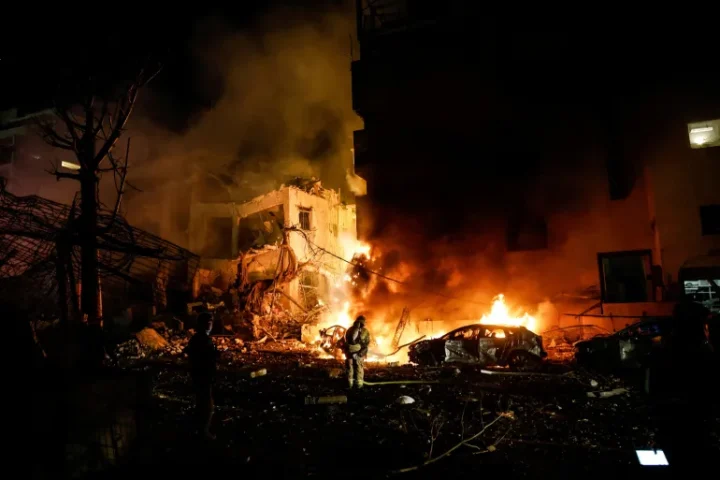
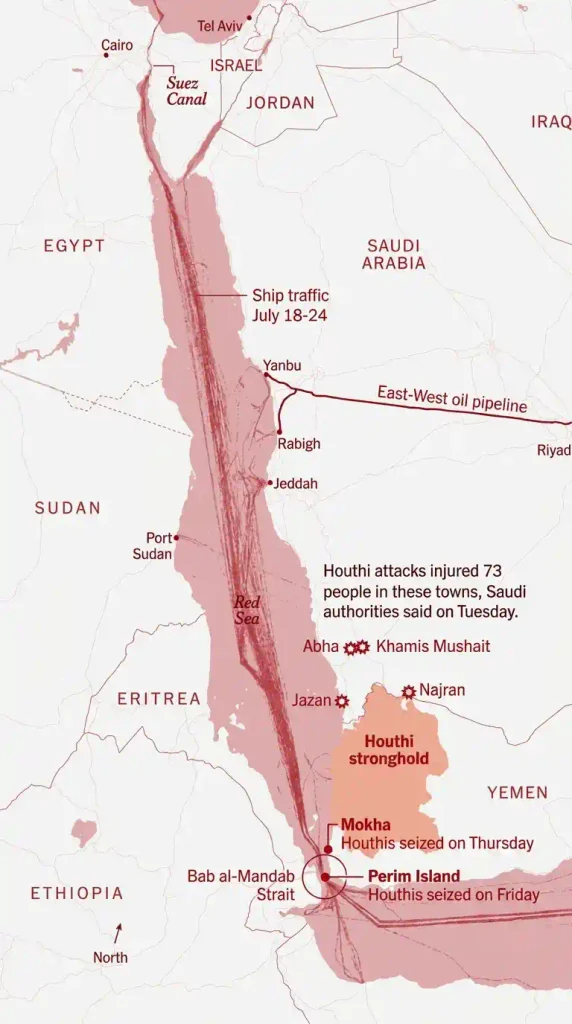
In a dramatic series of attacks and territorial advances this week, Yemen’s Houthi militia struck towns across the Saudi border, captured the strategic Red Sea port of Mokha and seized Perim Island in the Bab al-Mandab Strait. Saudi authorities said Houthi attacks injured 73 people in towns including areas around Abha, Khamis Mushait, Najran and Jazan.
These events could easily be interpreted as another escalation in Yemen’s long-running conflict. They are much more than that.
The Houthis are positioning themselves astride one of the most important maritime corridors in the world — precisely when the Strait of Hormuz has effectively been closed following this year’s widening war involving Iran, Israel and the United States.
The strategic consequence is stark: pressure is being applied simultaneously to the two maritime gateways surrounding the Arabian Peninsula.
For Saudi Arabia, this threatens the very infrastructure designed to protect it from a Hormuz crisis. For global trade, it creates the possibility that disruption in the Persian Gulf will no longer remain a regional energy problem but instead spread into the shipping arteries connecting Asia, Europe and the Mediterranean.
The geography of vulnerability
The Bab al-Mandab — Arabic for the “Gate of Tears” — separates Yemen from Djibouti and Eritrea and connects the Red Sea with the Gulf of Aden and ultimately the Indian Ocean.
At its narrowest points, the strait is only about 12.5 miles wide.
That geographical fact gives events on the Yemeni coastline importance far beyond Yemen itself. Ships moving between Asia or the Gulf and Europe typically pass through Bab al-Mandab, travel north through the Red Sea and then enter the Suez Canal.
The alternative is to sail around the Cape of Good Hope — adding substantial distance, time, fuel consumption and cost.
The Houthi capture of Perim Island is therefore particularly consequential.
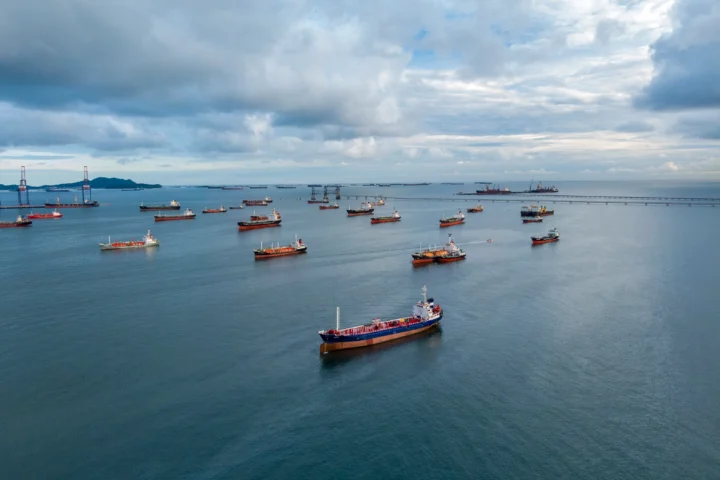
Perim sits directly within Bab al-Mandab. Commercial shipping lanes pass less than three miles from the island. Modern drones, anti-ship missiles and other relatively inexpensive weapons can therefore threaten vessels without requiring anything resembling a traditional blue-water navy.
This illustrates a fundamental transformation in maritime power.
Historically, controlling a strategic sea lane required fleets, warships and enormous military expenditure. Today, a non-state or quasi-state actor equipped with missiles, drones, surveillance systems and coastal territory can impose substantial costs on global shipping.
The objective does not necessarily have to be physically closing a strait.
It can be making passage sufficiently dangerous that insurers raise premiums, shipping companies reroute vessels and naval forces must devote enormous resources to protecting commercial traffic.
In maritime economics, fear itself can function as a blockade.
Saudi Arabia’s escape route is under pressure
The development is especially serious because Saudi Arabia has spent decades preparing for precisely the vulnerability created by the Strait of Hormuz.
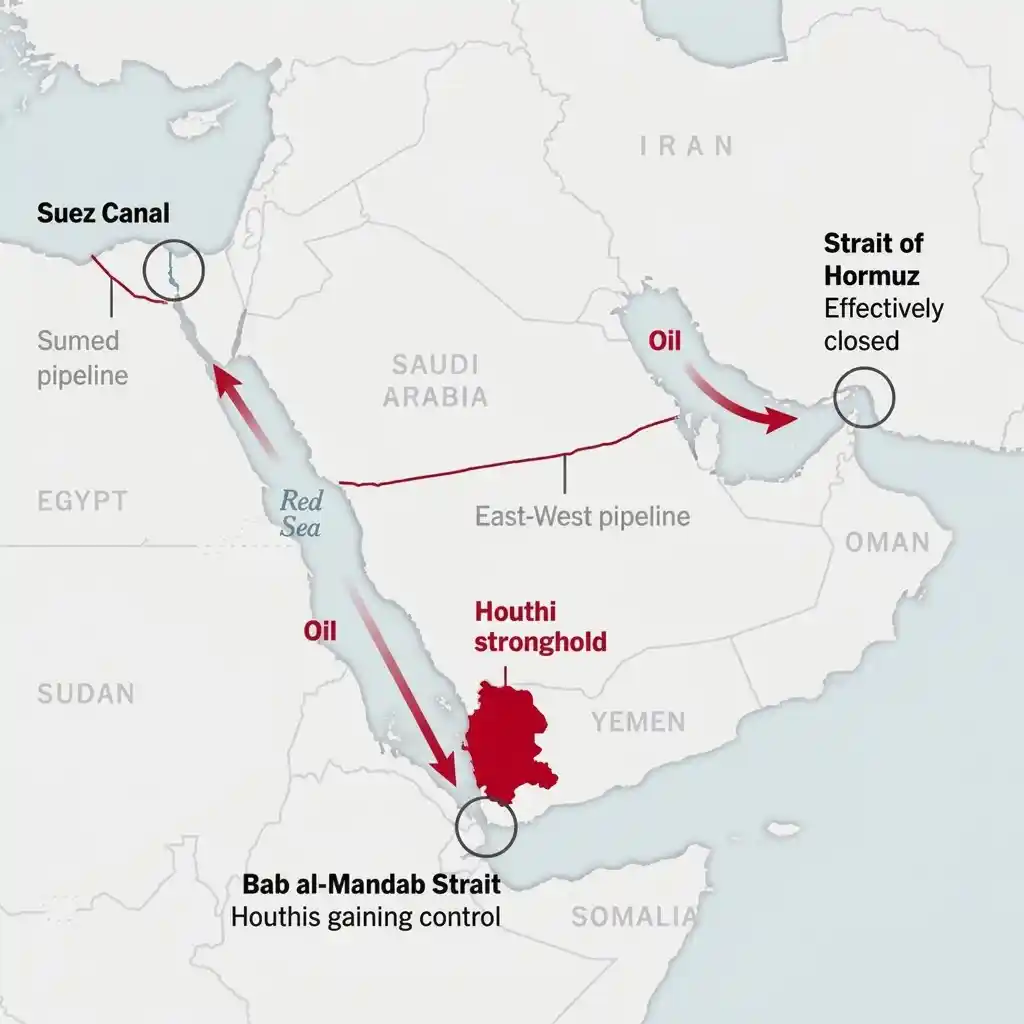
A large portion of Gulf oil exports normally leaves through Hormuz. Recognising the strategic risk of dependence on a narrow waterway bordering Iran, Saudi Arabia developed its East-West pipeline system to transport crude across the kingdom toward Red Sea export facilities.
In theory, the strategy was straightforward.
If Hormuz became unusable, Saudi oil could move westward across the Arabian Peninsula and reach international markets through Red Sea ports.
But that strategy contains an assumption: the Red Sea route itself remains secure.
That assumption is now being tested.
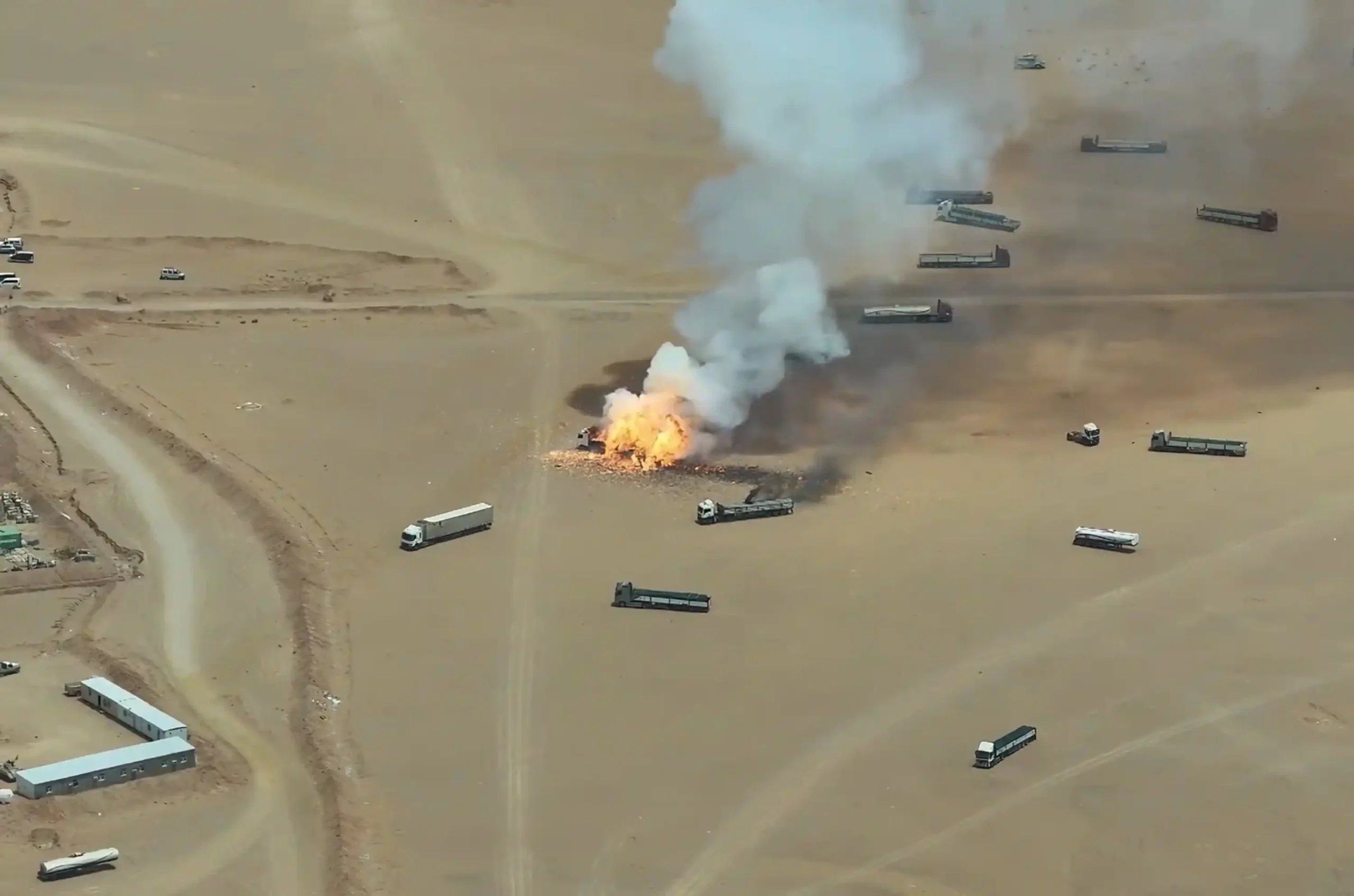
The Saudi government said on Friday that the East-West pipeline had been subjected to several attacks and was shut down as a precautionary measure. Satellite imagery showed a huge plume of black smoke — stretching more than 60 miles — rising from an area near the pipeline.
Saudi Arabia has not publicly identified the source of those attacks.
Yet the strategic significance exists regardless of attribution.
A pipeline built partly to circumvent one geopolitical chokepoint is suddenly vulnerable because another chokepoint has become contested.
This is the deeper danger posed by the current crisis. Energy security does not depend simply on producing oil. It depends on transporting it.
Saudi Arabia possesses enormous hydrocarbon resources, sophisticated infrastructure and access to both the Persian Gulf and Red Sea. But geography means that those advantages ultimately converge upon a relatively small number of pipelines, ports and maritime passages.
The more pressure placed on those nodes simultaneously, the less meaningful theoretical production capacity becomes.
Iran’s strategic depth
The Houthis must not be understood merely as an extension of Tehran. They possess their own political ambitions, local grievances and strategic calculations.
But neither can the Iranian dimension be ignored.
For years, Iran has cultivated relationships with armed groups across the region. The strategic value of this network has sometimes been described primarily in terms of deterrence against Israel or the United States.
Its geographical significance may be even more important.
Iran sits beside the Strait of Hormuz. The Houthis operate beside Bab al-Mandab.
Together, these locations bracket the Arabian Peninsula and sit near two gateways through which Middle Eastern energy and Eurasian commerce must pass.
That does not mean Tehran exercises perfect operational control over every Houthi decision. It does mean that the regional architecture Iran has helped cultivate can generate strategic pressure far beyond Iran’s borders.
The asymmetry is striking.
Western and Gulf governments invest billions of dollars in advanced aircraft, naval vessels, air-defence systems and military bases. Their adversaries can sometimes impose disproportionate economic costs using drones or missiles costing a fraction of the systems required to intercept them.
A missile does not even have to sink a tanker to achieve strategic effect.
It merely has to convince a shipping company, insurer or crew that the next voyage might be the one that gets hit.
From regional war to global economic shock
This is why developments in Mokha and Perim should concern governments thousands of kilometres away.
The Red Sea is not merely a Middle Eastern waterway. It is part of the physical infrastructure of globalisation.
Container ships carrying Asian manufactured goods toward European markets use this route. Energy cargoes move through it. Supply chains built around predictable delivery schedules depend upon it.
If ships avoid Bab al-Mandab, they must travel around Africa.
The consequences cascade outward: longer voyages require more fuel; longer voyages reduce effective shipping capacity; insurance costs rise; freight rates increase; deliveries become less predictable.
Those costs eventually migrate from shipping companies into factories, retailers and households.
The danger therefore is not necessarily a spectacular overnight closure of global commerce.
It is something potentially more persistent: the gradual multiplication of friction throughout the global trading system.
The world economy has already learned how seemingly distant maritime disruptions can travel quickly through supply chains. A chokepoint does not have to remain closed for months to matter. Modern commerce is highly efficient partly because inventories, shipping schedules and production networks assume that major transportation arteries will remain broadly predictable.
Remove that predictability and efficiency becomes vulnerability.
There are alternatives, but no perfect substitute
Saudi Arabia is not trapped.
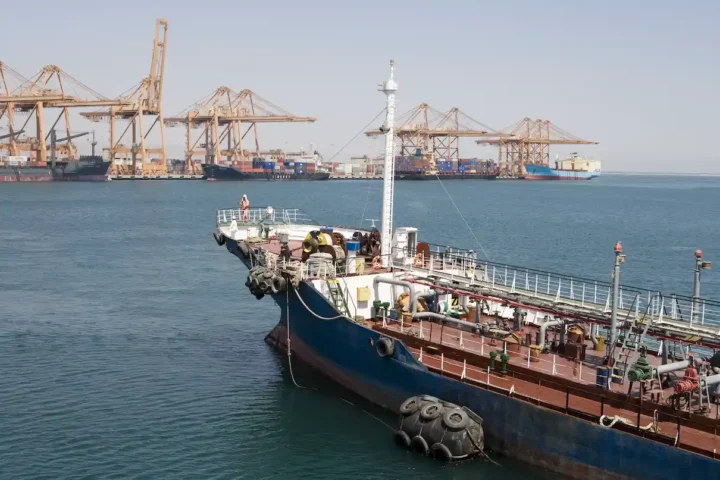
Oil and petroleum products can potentially move northward toward Egypt and the Mediterranean through infrastructure including the SUMED pipeline and the Suez system. Riyadh also retains substantial financial and logistical capacity to adapt.
But alternatives should not be confused with equivalence.
Every diversion introduces constraints. Pipelines have finite capacity. Ports have loading limits. Longer maritime routes consume additional time and shipping capacity.
Most importantly, alternative routes themselves create new concentrations of dependence.
The lesson of the current crisis is therefore larger than Saudi Arabia.
For years, energy security has often been discussed in terms of diversification: more pipelines, more terminals and more export routes. That remains essential.
But diversification loses some of its protective value when multiple pieces of infrastructure can be threatened within the same regional conflict.
Hormuz, the East-West pipeline, Bab al-Mandab, the Red Sea, SUMED and Suez should not be viewed as independent lines on a map. They form an interconnected system.
Disruption at one node redirects pressure toward another.
The Houthis have acquired leverage larger than Yemen
The capture of Mokha and Perim also changes the political significance of the Houthis themselves.
Territorial control near Bab al-Mandab gives them something considerably more valuable than additional Yemeni land: international leverage.
A movement capable of influencing traffic through one of the world’s major shipping corridors cannot be treated purely as a participant in Yemen’s domestic conflict.
This does not mean the Houthis can simply close Bab al-Mandab indefinitely. International naval forces remain vastly superior, and maintaining territorial control while facing sustained military pressure presents its own challenges.
But complete control is unnecessary.
Strategic disruption operates at a much lower threshold.
The Houthis merely need the credible ability to threaten shipping intermittently.
That capability forces everyone else to respond.
Navies deploy. Insurers recalculate risk. Tanker operators reconsider routes. Governments negotiate. Energy traders price uncertainty.
A relatively poor armed movement can consequently impose costs upon some of the richest states and largest corporations in the world.
That is geopolitical leverage in its purest form.
The two-strait problem
The emerging crisis ultimately exposes a weakness in the architecture of Middle Eastern security.
The international community has traditionally treated Hormuz, Yemen, the Red Sea, Suez and Gulf energy infrastructure as related but largely separable security problems.
They no longer are.
The war involving Iran has transformed geography itself into a strategic weapon.
If Hormuz is effectively closed while the Houthis consolidate positions around Bab al-Mandab, Saudi Arabia and its partners confront what might be called the two-strait problem: instability simultaneously affecting the eastern and western maritime exits of the Arabian Peninsula.
That does not automatically produce an energy catastrophe. Saudi Arabia retains alternatives, global oil markets can adapt and military pressure could reduce the Houthis’ ability to threaten shipping.
But the margin for error is shrinking.
A further attack on pipelines, a successful strike against a major tanker, sustained disruption around Perim Island or escalation against Red Sea ports could transform a difficult logistical situation into a much broader economic crisis.
The map now tells the story.
To the east lies Hormuz, effectively closed.
Across Saudi Arabia runs an East-West pipeline that has come under attack.
To the southwest, the Houthis are expanding around the Bab al-Mandab.
Farther north lie the Suez Canal and alternative Egyptian infrastructure upon which even greater strategic weight may now fall.
For decades, Saudi Arabia’s geography appeared to offer an answer to the Hormuz problem: if the eastern gate closed, oil could escape through the western one.
The events of this week pose a far more uncomfortable question.
What happens when both gates become dangerous at the same time?