The deepening strategic and economic partnership between India and Oman is creating an emerging set of trade and energy corridors that largely circumvent the Strait of Hormuz, one of the world’s most critical and vulnerable maritime chokepoints. Recent developments—most notably the India–Oman Comprehensive Economic Partnership Agreement (CEPA), expanded use of Omani ports such as Duqm and Salalah, and renewed momentum behind a deep‑sea Oman–India gas pipeline—have transformed what was once a peripheral relationship into a central element of New Delhi’s energy security and Indo‑Pacific strategy.
Collectively, these moves amount to a potential “Plan B” for India that could partially substitute for, though not fully replace, the role played by the Strait of Hormuz in supplying energy and facilitating trade. The strategic value lies less in volume today than in flexibility tomorrow: Oman’s geography, lying mostly outside the Strait, allows key ports and pipeline landfalls to remain accessible even under conditions in which traffic through Hormuz is disrupted by conflict or coercion.
The Strait of Hormuz: Critical Chokepoint
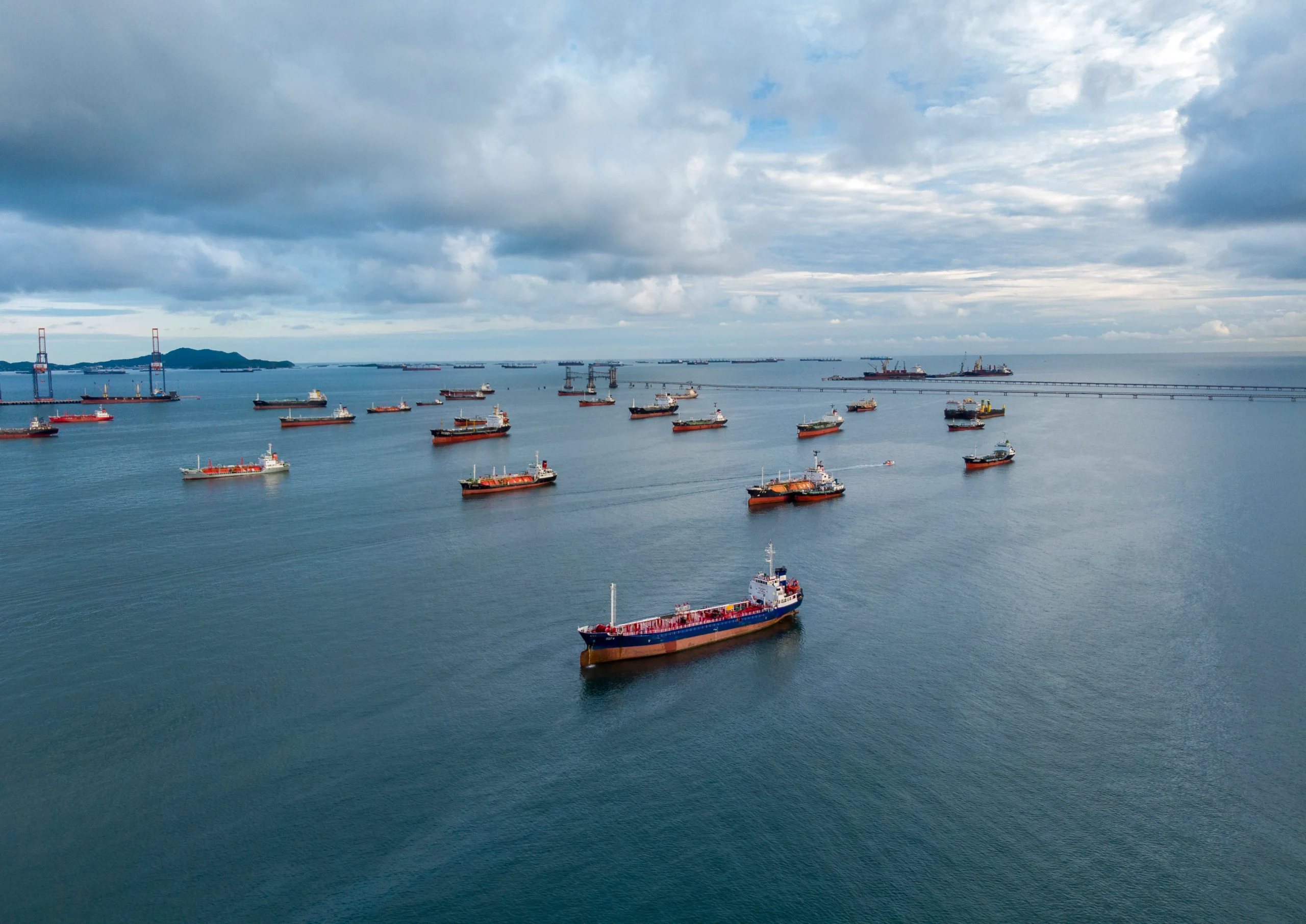
The Strait of Hormuz links the Persian Gulf to the Gulf of Oman and Arabian Sea and is widely considered the world’s most important oil transit chokepoint. According to the U.S. Energy Information Administration (EIA), about 21 million barrels per day of oil flowed through the Strait in 2022—roughly 20–21 percent of global petroleum liquids consumption and more than one‑quarter of all seaborne oil trade. In addition, around one‑fifth of global liquefied natural gas (LNG) trade transited Hormuz in 2022, and a large majority of these flows were destined for Asia, including India.
Beyond raw volumes, recent conflict in the Gulf has dramatized the vulnerability of this narrow corridor. UNCTAD has emphasized that military escalation in and around Hormuz has disrupted shipping flows, with ripple effects across energy markets, maritime transport costs, and global supply chains. During the 2026 Iran conflict, contemporaneous reporting suggests that roughly 90–95 percent of commercial traffic temporarily diverted away from the Strait amid threats to shipping, highlighting the absence of nearby alternative sea routes for Gulf producers such as Iran, Iraq, Kuwait, Saudi Arabia, and the UAE.
Why Oman Matters Geographically
Oman’s strategic value to India stems from the fact that much of its coastline lies outside the Strait of Hormuz, directly on the Arabian Sea and Gulf of Oman, unlike most other Gulf states whose maritime outlets are locked inside the Persian Gulf. Major Omani ports—especially Duqm on the Arabian Sea and Salalah on the Indian Ocean—can therefore remain accessible even when the Strait is unsafe or blocked, providing a potential bypass corridor for shipping and future pipelines.
Analysts at India’s Global Trade Research Initiative (GTRI) argue that the geography of Oman essentially turns it into a “reliable trade and energy gateway” for India during episodes of regional instability that threaten shipping through Hormuz. This is reinforced by Omani policy: Muscat has sought to position its coastal infrastructure—ports, special economic zones (SEZs), and energy terminals—as neutral, commercially oriented hubs linking the Gulf, Indian Ocean, and East Africa.
The India–Oman CEPA: Trade Deal as Strategic Hedge
The centerpiece of the recent “Oman–India deal” is the Comprehensive Economic Partnership Agreement signed in December 2025 and brought into force on June 1, 2026. While its headline numbers—Oman’s GDP of roughly USD 110 billion and a relatively modest bilateral trade volume—suggest limited incremental trade gains, Indian officials and GTRI emphasize that the agreement’s strategic implications far exceed its commercial scale.
Under CEPA, Oman has granted India zero‑duty access on about 98 percent of its tariff lines, covering roughly 99 percent of Indian exports by value. India’s exports to Oman were around USD 4–4.1 billion in FY25–FY26, led by refined petroleum products (naphtha and petrol), calcined alumina, iron and steel, machinery, and rice. In return, India has offered tariff liberalization on about 78 percent of its tariff lines, focused on energy, fertilizers, and industrial raw materials where Oman is already a significant supplier.
The more consequential development is on the import side. India’s imports from Oman reached roughly USD 6.6–7.2 billion in FY25–FY26, dominated by crude oil, LNG, and fertilizers. GTRI notes that India’s imports from most major Gulf economies fell sharply between April 2025 and April 2026 during the Iran conflict, but Oman was the notable exception: its exports to India surged by about 246 percent, underscoring Muscat’s role as a fallback energy supplier when flows via the Strait were disrupted.
Omani LNG and India’s Energy Security
One immediate way in which Oman already functions as a partial alternative to Hormuz is through LNG supply. In early 2026, India significantly increased LNG purchases from Oman, the United States, and Nigeria to compensate for an abrupt halt in imports from Qatar and the UAE as shipping through Hormuz became too risky. Reports in Indian oil and gas trade press describe Oman as India’s largest LNG supplier during this period, contributing about 30–31 percent of total LNG imports as of late March 2026.
From New Delhi’s perspective, this diversification is crucial. India’s domestic gas output remains constrained, and demand from industry and power generation is expected to rise, even if gas’s share in the overall energy mix has slipped in the short term. Relying heavily on LNG from suppliers whose export terminals sit behind Hormuz exposes India to both physical supply cuts and price spikes when the Strait is threatened. Oman’s ability to ship LNG from terminals located outside the Strait helps to mitigate these twin risks, particularly if long‑term contracts are layered on top of CEPA’s tariff and regulatory provisions.
Duqm Port: From Naval Access to Commercial Hub
Duqm, a deep‑water port on Oman’s southern coast, is emerging as perhaps the most visible symbol of the new Oman–India corridor. The facility sits on the north‑western edge of the Indian Ocean and provides direct access to both the Arabian Sea and the Red Sea via the Gulf of Aden, avoiding the narrow funnel of the Strait of Hormuz altogether.
India and Oman first reached an understanding in 2018 granting the Indian Navy access to Duqm for logistics, maintenance, and support, including use of a dry dock. Subsequent visits by senior Indian officials—including National Security Advisor Ajit Doval in June 2026—have reinforced the port’s role in India’s maritime strategy, with Oman formally offering logistical facilities and inviting Indian investment in the broader Special Economic Zone at Duqm (SEZD).
Indian Investment and the Duqm SEZ
Duqm is integrated into a large special economic zone spanning roughly 2,000 square kilometers, which Oman aims to develop into a multi‑sector hub encompassing heavy industry, petrochemicals, logistics, and ship repair. Indian firms already have a foothold in the SEZ: an Indo‑Omani joint venture has invested about USD 1.2 billion in what is described as the Middle East’s largest sebacic acid plant, and Omani authorities have actively courted Indian conglomerates such as the Adani Group for further port and infrastructure development.
Officials from Oman’s Public Authority for Special Economic Zones and Free Zones have described discussions with Adani as ongoing, with a memorandum of understanding signed but detailed project plans still under negotiation. The Omani side has offered incentives including 100 percent foreign ownership, tax exemptions, and preferential land pricing at Duqm to attract large anchor investors, signaling a willingness to tie the port’s long‑term development closely to Indian capital and trade flows.
Ras Markaz and Strategic Oil Storage
Complementing Duqm’s port infrastructure is the planned development of strategic oil storage at Ras Markaz, about 70 kilometers south of Duqm. Omani authorities have floated plans to create a major crude storage and export hub there, with capacity to hold tens of millions of barrels, effectively functioning as a buffer stock and transshipment point that does not require tankers to pass through the Strait of Hormuz.
For India, participation in or access to such facilities could create an offshore extension of its strategic petroleum reserves (SPRs), diversifying away from onshore caverns and storage sites that are constrained by domestic land availability and regulatory hurdles. In a scenario of prolonged disruption in Hormuz, oil stored at Ras Markaz and loaded onto tankers at Duqm could help cushion short‑term supply shocks and give Indian policymakers greater freedom to manage domestic prices and inventories.
Salalah and the Agricultural Trade Angle
While Duqm captures most of the strategic attention, the Port of Salalah—located on Oman’s southern coast near key east–west sea lanes—also figures into India’s emerging use of Omani infrastructure as an alternative logistics hub. GTRI notes that Oman’s ports are being explored as staging points for India’s agricultural exports to West Asia, a trade worth roughly USD 11.8 billion annually and vital to food security in Gulf Cooperation Council (GCC) states.
By routing agricultural cargoes via Omani ports, Indian exporters could reduce exposure to congestion or disruption in Hormuz, while Omani logistics firms gain transshipment volumes and value‑added services. Over time, this could create a web of India–Oman–GCC supply chains in food and agribusiness that mirror the energy corridor, further embedding Muscat in New Delhi’s broader Gulf strategy.
Middle East–India Deepwater Pipeline (MEIDP)
If Duqm and Salalah represent the maritime dimension of the Oman–India corridor, the proposed Middle East–India Deepwater Pipeline (MEIDP) highlights its undersea potential. First conceptualized in the 1990s and promoted by the Indian company South Asia Gas Enterprise (SAGE), MEIDP envisages one or more ultra‑deepwater gas pipelines running from the Gulf region, via the Oman Sea and Arabian Sea, to India’s western coast.
Early iterations of the project contemplated two main branches—one starting at Chabahar on Iran’s southern coast and the other at Ras Al‑Jafan on Oman’s northeastern shoreline—merging in deep water before landfall near Porbandar in Gujarat. Technical studies outlined a pipeline length of roughly 1,300–2,000 kilometers, traversing depths of up to about 3,450 meters, with an eventual capacity on the order of 1.1 billion cubic feet of gas per day.
Revival as Oman–Gujarat Subsea Pipeline
After years of slow progress, the concept has re‑emerged in Indian policy discussions as a dedicated Oman–Gujarat subsea pipeline, framed explicitly as a way to “bypass Hormuz” and secure long‑term gas supplies. Educational and current‑affairs briefings for competitive examinations describe a roughly 2,000‑kilometer corridor with a projected cost in the range of INR 40,000 crore (about USD 4–5 billion) and a transmission capacity of around 31 million metric standard cubic meters per day.
Publicly available material suggests that SAGE and its consortium partners, including European engineering firms and Indian public‑sector entities such as GAIL, Indian Oil Corporation, and Engineers India Limited, have taken the project through pre‑feasibility and design‑basis stages. However, as of mid‑2026, the pipeline remains in the feasibility and regulatory review phase; no final investment decision has been announced, and timelines for completion remain indicative rather than firm.
Technical and Commercial Challenges
The Oman–India subsea pipeline would be a global engineering undertaking, facing challenges that go well beyond cost. Technical studies have highlighted the need to lay most of the 1,300–2,000‑kilometer route in ultra‑deep water, including across complex seabed terrain such as the Murray Ridge and nearby fracture zones. Pipelay vessels capable of operating at depths exceeding 3,000 meters, offshore compression stations, and advanced monitoring systems would all be required, pushing up capital expenditure and operational risk.
Commercially, pipeline economics must compete with LNG imports, which offer flexibility but come with liquefaction and regasification costs. Analyses of similar Middle East–India routes suggest that, for distances up to roughly 2,500–3,000 kilometers, pipeline gas can be more cost‑competitive than LNG, potentially saving several dollars per million British thermal units and generating annual savings on the order of several thousand crore rupees for Indian buyers. Yet these benefits must be weighed against financing hurdles, long‑term supply commitments from Gulf producers, and geopolitical risk along the pipeline’s undersea path.
Strategic Payoffs if the Pipeline Proceeds
If built substantially along the Oman–India corridor, MEIDP would have several strategic payoffs. First, it would connect India directly to a vast regional gas grid spanning Oman, the UAE, Saudi Arabia, Iran, Turkmenistan, and possibly Qatar, unlocking access to an estimated multi‑trillion cubic‑foot reserve base without passing through politically contested transit states or chokepoints such as Hormuz.
Second, by landing in Gujarat—India’s gas and refining hub—the pipeline would integrate into existing domestic trunk pipelines and LNG import infrastructure, reinforcing regional industrial clusters and enabling smoother fuel switching from coal to gas in power and industry. Third, as educational content aimed at Indian civil service aspirants has emphasized, such a project would represent an “energy security imperative” that complements India’s push for a larger role as a net security provider in the Indian Ocean.
India–Oman Defence and Maritime Cooperation
The Oman–India corridor is not purely commercial; it sits atop a deeper defence and security relationship. Oman is often described by Indian analysts as New Delhi’s closest defence partner in the Gulf, with a longstanding framework memorandum of understanding governing military cooperation. The two countries conduct regular bilateral and tri‑service exercises, and India has trained Omani personnel and supplied defence equipment over several decades.
Access to Duqm is central here. By allowing Indian naval ships to refuel, resupply, and undergo maintenance at the port, Oman materially enhances India’s ability to sustain long‑duration deployments in the western Indian Ocean and Arabian Sea. This, in turn, supports India’s self‑image as a “net security provider” in regional sea lanes, particularly at a time when China has expanded its presence through facilities such as Djibouti and potential access to ports in Pakistan and the Gulf.
India’s Broader Gulf Strategy
India’s engagement with Oman cannot be understood in isolation from its broader Gulf and Indo‑Pacific strategies. Over the past five years, India has signed a series of trade agreements with Gulf and near‑Gulf partners—Mauritius, the UAE, the EFTA bloc, the UK, and now Oman—creating a lattice of preferential access that reinforces energy ties and diaspora channels. Oman’s CEPA is only the second such deal with a Gulf state, following the India–UAE agreement, but it carries outsized weight because of Muscat’s geography and longstanding political ties.
Indian firms have an extensive presence in Oman, with more than 6,000 joint ventures and cumulative investments exceeding USD 7.5 billion, according to estimates cited by GTRI and Indian media. These range from petrochemicals and fertilizers to infrastructure and services, creating a business constituency in both countries that favors stable ties even when regional geopolitics are fractious. For Oman, deepening links with India helps diversify economic and strategic dependence beyond traditional partners such as the UK and the United States, and beyond the Gulf’s core monarchies.
Can Oman Really Substitute for the Strait of Hormuz?
Despite the promise of the Oman–India deal, Oman cannot fully “replace” the Strait of Hormuz in global or even Indian energy flows. The Strait currently handles around one‑quarter of global seaborne oil trade and a fifth of LNG; Omani exports, while significant and growing, represent only a fraction of these volumes. Much of the crude and gas India imports from producers like Saudi Arabia, Iraq, and Kuwait still moves through ports inside the Persian Gulf that lack immediate alternative outlets.
What Oman can realistically offer is a combination of partial redundancy, diversification, and strategic leverage. Its ports and potential pipelines provide India with an alternate route for some share of its hydrocarbon imports and non‑energy trade, particularly during crises. The mere existence of such options—combined with offshore storage at Ras Markaz and naval access at Duqm—gives New Delhi marginally more room to maneuver in a Gulf crisis, whether in negotiating with regional actors or managing domestic energy policy.
Risk Factors and Constraints
Several constraints could limit how far the Oman–India corridor can evolve into a genuine alternative to Hormuz. On the Omani side, macroeconomic dependence on hydrocarbons and a relatively small domestic market could constrain the pace of infrastructure investment, even with foreign capital. Political stability has been relatively strong under Sultan Haitham, but Oman sits in a volatile neighborhood and must balance relations with Iran, Saudi Arabia, and other GCC states, as well as with extra‑regional powers.
For India, the main constraint is scale and timing. Building a deep‑sea pipeline will require tens of billions of rupees in upfront spending, strong political commitment across multiple electoral cycles, and a regulatory framework that can entice both Gulf gas suppliers and private Indian buyers into long‑term contracts. Even if MEIDP or an Oman–Gujarat variant proceeds, it will likely not be operational before the early 2030s under optimistic scenarios, leaving India dependent on LNG and crude passing through Hormuz for the foreseeable future.
Implications for Global Energy Markets
The emergence of an Oman–India corridor has broader implications for global energy markets and maritime trade. To the extent that Oman becomes a larger hub for LNG, crude storage, and transshipment serving Asian consumers, some trade volumes that would otherwise route directly from Gulf producers through Hormuz may instead flow via Omani terminals on the Arabian Sea. This could incrementally reduce congestion and risk exposure in the Strait, although any such shift will be marginal relative to total flows.
At the same time, successful development of MEIDP would strengthen the trend toward multi‑route, multi‑modal gas supply chains connecting the Gulf, South Asia, and possibly East Africa. This diversification could dampen price volatility during localized disruptions and enhance the bargaining power of large buyers like India, which could pivot between LNG cargoes and pipeline gas depending on market conditions.
Outlook
The Oman–India deal is best understood not as a single agreement but as a layered architecture of trade, infrastructure, and security ties that collectively create an emerging alternative corridor to the Strait of Hormuz. CEPA institutionalizes preferential trade and signals long‑term political commitment; Duqm, Salalah, and Ras Markaz provide the physical nodes; Omani LNG and prospective pipeline gas supply the molecules; and defence cooperation underwrites the security of the route.
In the near term, this architecture will not displace the Strait of Hormuz as the main artery for Gulf energy exports, but it can modestly reduce India’s vulnerability to disruptions and give policymakers more options during crises. Over the medium term, successful execution of the Oman–Gujarat pipeline and associated storage and port investments could elevate the corridor into a significant secondary axis in the Indo‑Gulf energy system, with implications for global shipping patterns and regional power balances.
For now, the Oman–India corridor represents a hedging strategy that reflects both the promise and peril of 21st‑century energy geopolitics: a bid to secure critical supplies and sea lanes in a region where the world’s most important chokepoint remains as indispensable—and as vulnerable—as ever.
References and Further Reading
ChemAnalyst. (2026, June 1). Oman provides India a secure trade corridor beyond the Strait of Hormuz. ChemAnalyst. https://www.chemanalyst.com/NewsAndDeals/NewsDetails/oman-provides-india-a-secure-trade-corridor-beyond-42541
Global Trade Research Initiative. (2026, May 31). Oman offers India reliable trade route beyond Strait of Hormuz: GTRI. The Tribune / GTRI brief. https://www.tribuneindia.com/news/india/oman-offers-india-reliable-trade-route-beyond-strait-of-hormuz-think-tank-633520
Global Trade Research Initiative. (2026). India expands Gulf trade footprint with Oman CEPA [Flagship report]. Global Trade Research Initiative. https://www.gtri.co.in/gtriFlagshipReports
Indian Defence News. (2024, March 3). Oman’s Duqm port development deal with Adani Group is open. Indian Defence News. https://www.indiandefensenews.in/2024/03/omans-duqm-port-development-deal-with.html
Institute for Defence Studies and Analyses. (2025, February 26). The multi‑faceted trajectory of the India–Oman strategic partnership. Manohar Parrikar Institute for Defence Studies and Analyses. https://idsa.in/publisher/backgrounder/the-multi-faceted-trajectory-of-the-india-oman-strategic-partnership
Ministry of Commerce & Industry, Government of India. (2026, May 31). India–Oman Comprehensive Economic Partnership Agreement: A new trade corridor for Viksit Bharat @2047 [Press release]. Press Information Bureau. https://www.pib.gov.in/PressReleasePage.aspx?PRID=2267513
New Indian Express. (2026, April 15). India increases LNG imports from US, Oman, Nigeria. The New Indian Express. https://www.newindianexpress.com/business/2026/Apr/16/india-increases-lng-imports-from-us-oman-nigeria
PSU Watch. (2026, May 31). Oman offers India reliable trade route beyond Strait of Hormuz: GTRI. PSU Watch. https://psuwatch.com/newsupdates/oman-offers-india-reliable-trade-route-beyond-strait-of-hormuz-gtri
Press Information Bureau. (2026, January 9). India–Oman Comprehensive Economic Partnership Agreement (CEPA) [Information note]. Government of India. https://static.pib.gov.in/WriteReadData/specificdocs/documents/2026/jan/doc2026110754501.pdf
PTI. (2026, May 31). India–Oman pact offers reliable, alternative trade route beyond Strait of Hormuz: Think tank. The Telegraph. https://www.telegraphindia.com/business/india-oman-pact-offers-reliable-alternative-trade-route-beyond-strait-of-hormuz-think-tank/cid/2023501
South Asia Gas Enterprise (SAGE). (n.d.). SAGE undersea gas pipeline project (Middle East–India Deepwater Pipeline). Siddho Mal Group. http://www.siddhomalgroup.com/sage-undersea-gas-pipeline-project.html
South Asia Gas Enterprise (SAGE). (n.d.). SAGE – Middle East–India Deepwater Pipeline (MEIDP). DMS Universe. https://www.dmsuniverse.com/projects/india/sage-middle-east-india-deepwater-pipeline-meidp
Times of India. (2025, December 17). India–Oman trade deal: What the CEPA changes for India’s Gulf strategy, GTRI explains. The Times of India. https://timesofindia.indiatimes.com/business/india-business/india-oman-trade-deal-what-the-cepa-changes-for-indias-gulf-strategy
Times of Oman. (2024, March 4). Duqm Port holds discussions with Adani Group for investment in region. Times of Oman. https://timesofoman.com/article/142871-duqm-port-holds-discussions-with-adani-group-for-investment-in-region
U.S. Energy Information Administration. (2026, May 20). The Strait of Hormuz is the world’s most important oil transit chokepoint. Today in Energy. https://www.eia.gov/todayinenergy/detail.php?id=61002
U.S. Energy Information Administration. (2025, June 23). Today in Energy: Chokepoints – Strait of Hormuz. U.S. Energy Information Administration. https://www.eia.gov/todayinenergy/index.php?tg=+chokepoints
UN Conference on Trade and Development. (2026, March 9). Strait of Hormuz disruptions: Implications for global trade and development. UNCTAD. https://unctad.org/publication/strait-hormuz-disruptions-implications-global-trade-and-development
Byju’s. (2023, May 18). UAE–Gujarat undersea gas pipeline proposed [UPSC current affairs]. BYJU’S. https://byjus.com/free-ias-prep/uae-gujarat-undersea-gas-pipeline-proposed-upsc-current-affairs
2B1st Consulting. (2014, November 5). SAGE to build Middle‑East to India deepwater gas pipeline. 2B1st Consulting. https://2b1stconsulting.com/sage-to-build-middle-east-to-india-deepwater-gas-pipeline
Economic Times. (2026, June 2). NSA visits Oman’s Duqm port where Indian Navy has strategic access. The Economic Times. https://economictimes.indiatimes.com/news/defence/nsa-visits-omans-duqm-port-where-indian-navy-has-strategic-access
ET Infra. (2024, March 4). Duqm port development deal with Adani Group is open: Oman official. ETInfra.com. https://infra.economictimes.indiatimes.com/news/ports-shipping/duqm-port-development-deal-with-adani-group-is-open-oman-official
Indian Oil & Gas. (2026, June 2). Oman remained the single largest supplier of LNG to India. IndianOilandGas.com. https://www.indianoilandgas.com/viewnews.php?id=64752
Petroleum Planning & Analysis Cell. (2026, March 17). Natural gas consumption – India (2024–2026). Ministry of Petroleum and Natural Gas, Government of India. https://ppac.gov.in/natural-gas/consumption
The Diplomat. (2018, February 13). India gains access to Oman’s Duqm port, putting the Indian Ocean geopolitical contest in the spotlight. The Diplomat. https://thediplomat.com/2018/02/india-gains-access-to-omans-duqm-port-putting-the-indian-ocean-geopolitical-contest-in-the-spotlight
Encyclopaedia Britannica. (2026, March 26). How much oil passes through the Strait of Hormuz? Encyclopaedia Britannica. https://www.britannica.com/topic/How-Much-Oil-Passes-Through-the-Strait-of-Hormuz