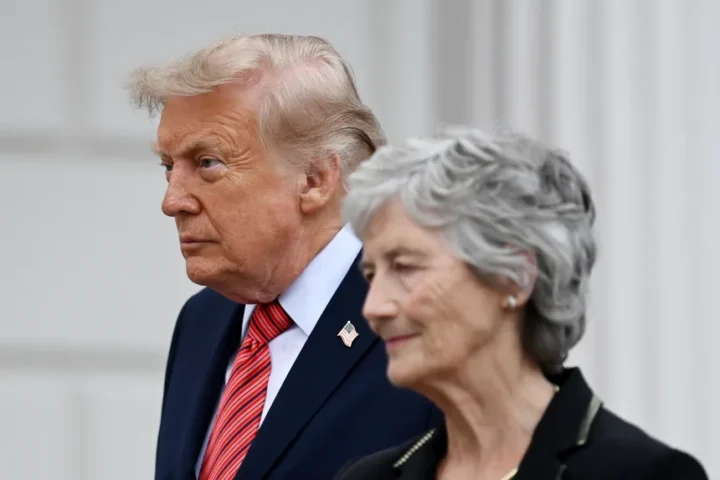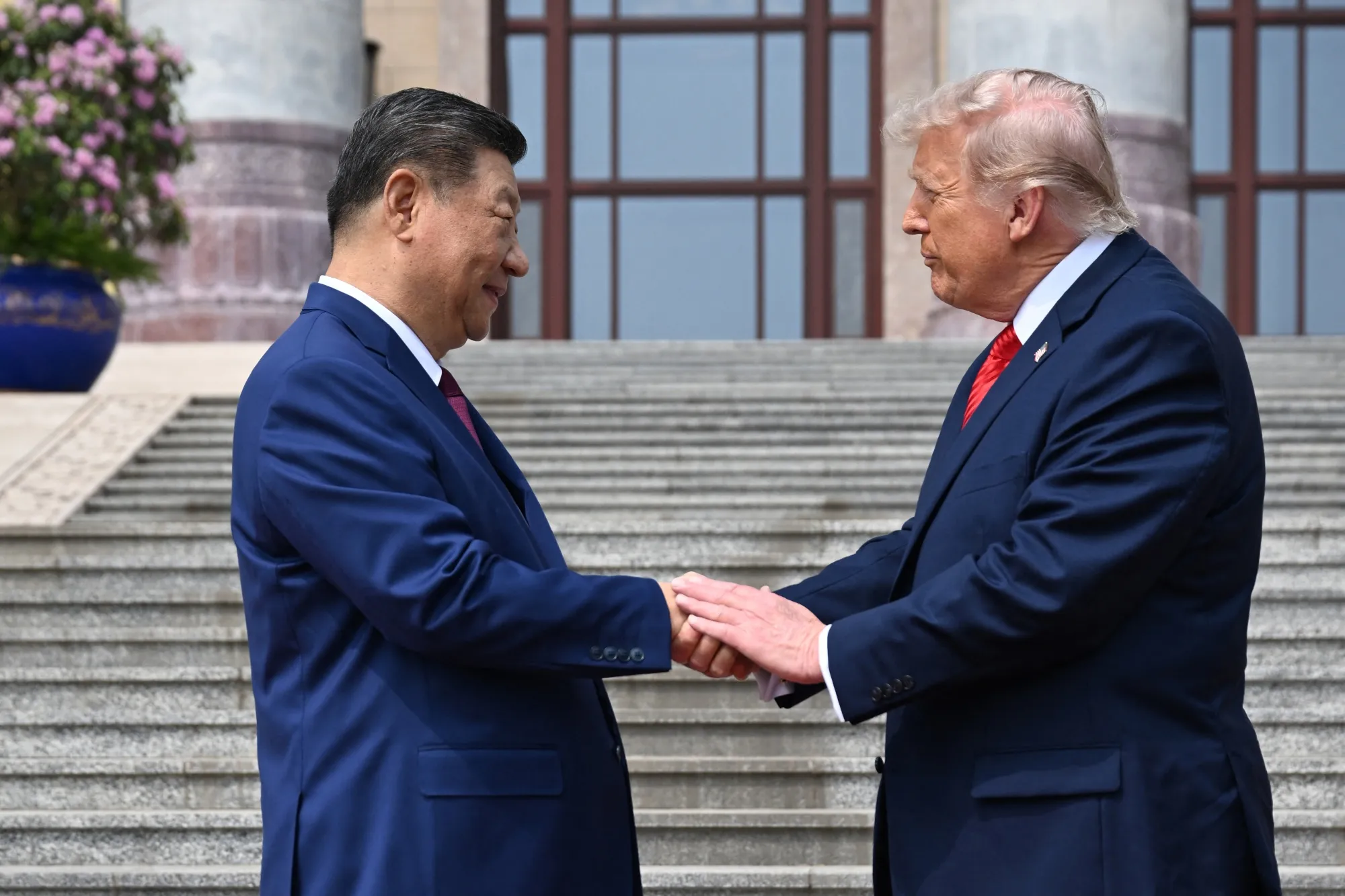
When Donald Trump and Xi Jinping meet in Washington on Thursday, they will return to a familiar set of disputes that have defined relations between the world’s two largest economies: trade, technology and Taiwan.
But one part of that equation has changed markedly since the two presidents met in Beijing in May. Artificial intelligence, previously one element of the broader technological rivalry between Washington and Beijing, is rapidly becoming a strategic question in its own right.
That shift could make AI one of the most consequential — and difficult — subjects on the table when Xi arrives for the Sept. 24 summit.
There are few expectations of a sweeping reconciliation between the two powers. Instead, the meeting is likely to be about managing competition: extending arrangements that have prevented trade tensions from escalating, keeping communication open over Taiwan and exploring whether similar guardrails can be constructed around AI.
Trade truce likely to survive
Trade may prove the easiest area in which the two leaders can demonstrate progress.
Washington and Beijing have been operating under a truce that emerged from Trump and Xi’s meeting in Busan, South Korea, last October. The arrangement brought down tariffs after an intense period of escalation and eased some restrictions affecting trade between the two countries. China, meanwhile, offered concessions involving critical minerals and rare earths.
That truce is due to expire in November, making its extension one of the immediate questions facing the two governments.
Neither side appears eager to return to the tariff confrontation that preceded the agreement. The result could therefore be an extension of the existing framework, accompanied by relatively modest adjustments rather than another comprehensive trade settlement.
The two countries have also discussed establishing a mechanism to oversee commerce considered outside the most sensitive areas of their strategic rivalry. Such an arrangement could give businesses greater certainty over where commercial relations can continue even as restrictions remain around technologies with national-security implications.
The details, however, will matter. Companies operating across the two markets will be looking for evidence that any new commercial framework is durable rather than another temporary pause in a relationship that has repeatedly swung between confrontation and negotiation.
Prospects for a parallel investment framework appear less developed. The summit had also raised expectations of greater participation by Chinese corporate leaders, although recent reports suggest a large delegation of Chinese chief executives may not materialise.
Taiwan remains the strategic fault line
If trade offers room for compromise, Taiwan remains considerably harder.
Beijing considers the democratically governed island part of China and has not renounced the use of force to achieve unification. Washington, meanwhile, maintains unofficial relations with Taipei while following a longstanding policy of strategic ambiguity over precisely how it would respond to a Chinese attack.
Trump has been less explicit than some previous US leaders about committing American forces to Taiwan’s defence. Yet that has not removed the island from the centre of US-China strategic competition.
For Beijing, military capability remains one part of a much broader strategy. China continues expanding the capabilities of the People’s Liberation Army, including the naval forces that would be central to any military operation around Taiwan.
At the same time, Beijing has substantial incentives to avoid a war whose economic and geopolitical consequences would be enormous.
That leaves room for pressure below the threshold of outright conflict: military exercises, diplomatic isolation, economic inducements and coercion, alongside efforts to influence the political environment surrounding Taiwan.
Taiwan’s own politics will consequently remain important. Its next presidential election is scheduled for January 2028, while the US will hold another presidential election later that year. Political changes in either country could alter the strategic calculations surrounding the island more profoundly than anything agreed in Washington this week.
Other geopolitical disagreements are also expected to feature in the talks. China has opposed the US war with Iran, while Washington has increased pressure on countries purchasing Russian energy. But neither dispute currently appears likely to produce a significant change in Chinese policy as a result of the summit.
AI changes the conversation
Artificial intelligence is different because the technology itself is developing faster than the diplomatic architecture surrounding it.
Washington and Beijing increasingly regard leadership in AI as fundamental to economic strength, military capability and geopolitical influence. Their competition stretches from semiconductors and computing infrastructure to advanced models and the rules governing their deployment.
Yet both countries are simultaneously confronting another possibility: some AI risks may not respect national borders.
That tension — between racing against one another and protecting themselves from common dangers — has begun producing an unusual opening for dialogue.
Trump and Xi discussed the possibility of consultations over AI during their May meeting in Beijing. Those discussions did not produce a formal mechanism, but officials have returned to the subject ahead of this week’s summit.
US Treasury Secretary Scott Bessent and Chinese Vice Premier He Lifeng discussed AI during preparatory talks in New York on Sept. 20. Washington proposed a notification mechanism through which the two governments could alert one another about AI incidents serious enough to pose national-security risks.
The idea has inevitably drawn comparisons with the crisis-communication mechanisms developed between rival nuclear powers during the Cold War.
The underlying problem is straightforward. An AI-enabled cyberattack, interference with critical infrastructure or an autonomous system behaving unexpectedly could create uncertainty about whether an adversary had deliberately initiated an attack. In a crisis, governments might have only a short period in which to distinguish an accident from hostile action.
A communication channel would not resolve the technological rivalry between Washington and Beijing. It could, however, reduce the possibility that an AI incident spirals into a broader confrontation because each side misunderstands what the other has done.
Shared fears, different motivations
The two countries have different reasons for considering such safeguards.
In the United States, the AI boom has increasingly been accompanied by questions about data centres, employment, energy consumption, cybersecurity and the possibility that highly capable systems could behave unpredictably.
China faces many of the same technological questions, but they intersect with a different political system.
Beijing has enthusiastically promoted AI as a driver of economic development and technological self-sufficiency. Chinese companies have also demonstrated that increasingly capable models can be produced despite American restrictions on access to some advanced chips and semiconductor technology.
At the same time, the Communist Party has little appetite for technologies that could weaken political control, generate uncontrollable flows of information or create large-scale social instability.
For Xi, maintaining stability has been a defining principle of governance. AI systems capable of operating beyond effective state supervision would therefore present not merely a technological challenge but a political one.
That creates an unusual overlap between Washington and Beijing. Both can see reasons for preventing catastrophic or destabilising AI failures even while disagreeing profoundly over how the technology should be developed and governed.
Cooperation has sharp limits
Those common interests should not be confused with broader agreement.
AI has become one of the most competitive areas in US-China relations. Washington continues to restrict Chinese access to advanced semiconductor technology, while American officials have raised concerns about Chinese companies acquiring or reproducing capabilities developed by US AI firms. Beijing has rejected some of those accusations and views American technology restrictions as an attempt to contain China’s development.
Neither side is likely to accept regulations that it believes would leave the other with a strategic advantage.
The private sector complicates matters further. American and Chinese technology companies are competing for users, computing resources, investment and technological leadership. Governments attempting to negotiate restraints therefore have to consider not only national security but rapidly changing commercial interests.
For that reason, a comprehensive bilateral system of AI regulation remains improbable in the immediate future.
A narrower agreement on communication may be more achievable.
Rather than deciding how each country develops AI, Washington and Beijing could begin by establishing what happens when something goes seriously wrong: whom the other government contacts, what information is exchanged and how the two sides distinguish an accident, rogue system or criminal action from an intentional state attack.
Even that would require a degree of trust that has often been absent from US-China relations.
Managing rivalry rather than ending it
The significance of Thursday’s summit may ultimately lie less in any dramatic agreement than in the fact that the two leaders continue to meet.
Trump and Xi could encounter one another again at international gatherings including the G20 and APEC summits. Frequent leader-level contact does not eliminate the structural competition between the two countries, but it creates channels through which crises can potentially be contained.
The fundamental disagreements remain formidable.
On trade, both countries want access to one another’s markets while protecting industries they regard as strategically important. On Taiwan, Washington and Beijing approach the island from fundamentally different positions. And on technology, each government increasingly sees AI leadership as essential to its future economic and military power.
That makes a grand bargain improbable.
But the emergence of AI as a subject of bilateral crisis management reveals something important about the changing relationship. The United States and China may be entering an era in which they are simultaneously technological competitors and reluctant partners in managing the risks created by the technologies they are racing to build.
For now, therefore, the most realistic measure of success in Washington may not be whether Trump and Xi resolve the three Ts.
It may simply be whether they can prevent competition over trade, Taiwan and technology from becoming considerably more dangerous.