China’s local governments owe at least $12 trillion, a hole the property bust has widened and Beijing’s patches have not closed. The strain will shape Chinese exports, the technology race and America’s response.
A fiscal system built on land
China’s local governments carry about 85% of the country’s public spending, from schools and hospitals to roads and the payrolls of millions of civil servants. They have lost the money that used to pay for much of it. That mismatch sits at the center of a debt problem that, by one estimate built on data from the Wind Financial Terminal, reached at least $12 trillion in 2024, or 64% of China’s gross domestic product.
The design was lopsided from the start. Beijing keeps control of the largest tax streams and leaves provinces, cities and counties to deliver most services. For two decades, local officials closed the gap by selling land-use rights to developers, a business that boomed as long as housing prices rose. Property did not just fund budgets. It collateralized loans, employed millions and made local governments eager borrowers.
That model is now breaking. A property slump that began in mid-2021 has hit land revenue for five years running. Local land-sale revenue fell 14.7% in 2025, the fourth straight annual decline, and national fiscal revenue shrank 1.7%, the first contraction since 2020. Revenue from residential land sales in 2025 was roughly 65% below its 2020 peak, according to the research firm CRIC.
The slide is getting worse, not better. Land-sale revenue tumbled 31.5% in the first half of 2026 to 977.8 billion yuan, even as overall fiscal revenue rose 4.7% on stronger corporate tax receipts. Goldman Sachs now expects a 30% drop in land-sale revenue as China shifts from selling unbuilt apartments to selling finished ones. The money is coming in at the center and draining away where the bills are paid.
The iceberg beneath the bond market
Using data from the Wind Financial Terminal, researchers estimate that local-government debt reached at least $12 trillion in 2024. More than $5 trillion of that, and possibly a good deal more, sat off the books as of December 2024, accumulated through local government financing vehicles, or LGFVs. These state-backed companies borrow from banks, bond investors and shadow lenders to build roads, industrial parks and social housing, while keeping the liabilities out of official budgets.
The opacity is the point, and it makes precise counting impossible. Central bank Governor Pan Gongsheng has pegged LGFV debt at 14.8 trillion yuan. The International Monetary Fund’s estimate is more than four times that, close to half of GDP. The economist Li Daokui has suggested that unpaid contractor bills and civil-servant wages alone may total 10 trillion yuan. Nomura has estimated hidden debt at 50 trillion to 60 trillion yuan, roughly $7 trillion to $8.4 trillion.
Beijing’s own figure is far smaller. The finance ministry says “hidden debt” stood at 14.3 trillion yuan at the end of 2023, and has since fallen to 10.5 trillion yuan at the end of 2024 and 7.4 trillion yuan by the end of 2025. The gap between that narrow definition and outside estimates reflects what each side chooses to count: bank loans to LGFVs, trust products, bonds and supplier arrears all blur together.
The local burden also rides on top of an already heavy national load. China’s overall debt-to-GDP ratio stood at 315% in June 2025. A debt that large is manageable only if the economy keeps growing fast enough to carry it, and Beijing has set its 2026 growth target at just 4.5% to 5%.
Banks hold the bag, quietly
China’s banks have absorbed much of the surge. Government bonds made up 22% of new bank assets over the past five years. People’s Bank of China data show claims on the government reached 16.4% of bank assets in July, up from 11.5%five years earlier. At Agricultural Bank of China, bond investment accounted for more than 90% of first-half growth in interest income.
The resulting concerns for financial stability look modest, and the reasons are instructive. The debt swap program converts shaky LGFV loans into government paper. S&P Global has noted that special bonds carry a risk weight of about 20%, against 75% in the comparison it cited, which lets banks hold less capital against them.
The cost shows up in earnings, not in a crisis. The swap replaces higher-yielding LGFV loans with lower-yielding bonds, and rate cuts compound the effect. Net interest margins at Chinese banks narrowed to 1.42% in 2025 from 1.52% in 2024, and return on assets slipped to 0.60%, according to Lianhe Ratings. Bonds are safe, but they do not grow the balance sheet or lift profits. The result is slower asset growth, thinner profitability and a steady need for fresh capital.
The state is already supplying it. Beijing issued 500 billion yuan of special treasury bonds to recapitalize large banks last year and plans 300 billion yuan more in 2026. Smaller lenders are weaker. Lianhe has seen some rural commercial banks skip calls on their capital bonds and defer interest payments. The pattern is a slow transfer of local fiscal stress onto bank balance sheets.
Patching, not fixing
Local officials have tried to help themselves. They have squeezed out more nontax revenue and trimmed spending on public services. Nontax revenue reached 1.31 trillion yuan in the first quarter of 2026, up 2.9%, and business owners and tax advisers describe more audits, back-tax collections and fines. Caixin commentary argues that one-off surges of this kind are unsustainable and puts the local fiscal deficit at nearly 5 trillion yuan. These measures have not been enough to close the gap.
Beijing’s main answer is the debt swap announced in November 2024. The National People’s Congress raised the local debt ceiling by 6 trillion yuan, to be used over 2024 to 2026 at about 2 trillion yuan a year. Local governments will also devote 800 billion yuan a year of special bonds, or 4 trillion yuan over five years, to the same purpose. In total, 10 trillion yuan (about $1.4 trillion) is meant to replace hidden debt with official bonds by 2028. Finance Minister Lan Fo’an said the plan would cut hidden debt from 14.3 trillion yuan to 2.3 trillion yuan, and officials estimated it would save about 600 billion yuan in interest.
The program is working on its own terms. More than 1.3 trillion yuan of refinancing bonds had been issued by early May 2026, and officials say the five-year plan is on track. Longer maturities and lower coupons ease near-term cash pressure. Swapping 10 trillion yuan of high-cost debt for cheaper paper is a genuine relief.
But it is a change in the label on the debt, not in the arithmetic of the system. Spending duties still sit with local governments, and the revenue to meet them still does not. Swaps and refinancing bonds reduce near-term financing pressure and interest costs while leaving that mismatch intact. They buy time. Time is useful only if Beijing uses it to rewrite the fiscal bargain between center and provinces, through bigger transfers, new local taxes or a reallocation of responsibilities. Heavily indebted provinces such as Guizhou are openly seeking more help from Beijing.
India, China’s immediate neighbor, handles the same problem differently: its states also run most public services, but they borrow within ceilings the Center sets under Article 293 of the Constitution and receive 41% of central tax revenue by formula. As a result, their combined debt is budgeted at 29.2% of GDP and their combined deficit at 3.3%, less than half the 64% of GDP estimated for China’s local governments.
What it means for Beijing
A debt problem rooted in weak local revenue and a collapsing property sector leaves Beijing few options for generating growth at home. The debt problem has three consequences.
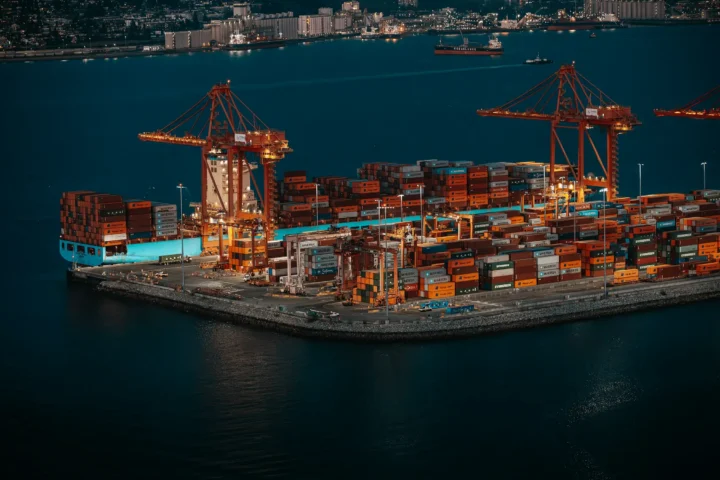
The first is continued pressure to lean on exports. With households cautious and the property sector contracting, the manufacturing sector is the economy’s most reliable engine. China ran a record trade surplus of about $1.19 trillion in 2025, and in the first nine months of 2026 the surplus reached $938 billion. September exports jumped 36% from a year earlier, a figure likely to deepen complaints from trading partners about overcapacity. An economy that cannot consume its own output exports the rest.
The second is a continuing technology contest. With property no longer a growth engine, Beijing has every reason to keep pushing in advanced manufacturing and other strategic industries. That raises the stakes for the United States and for every country whose industries compete with Chinese goods.
The third is the one that matters most for American planners: little prospect of a major slowdown in the military buildup. China raised its official defense budget 7% in 2026, to 1.91 trillion yuan, or about $277 billion. That is a modest 1.7% of GDP, by SIPRI’s 2024 estimate, and the Pentagon has cautioned that China’s real spending is well above the announced figure, by an estimated 32% to 63% for 2024. Local-government debt is a provincial burden, while the military is funded from Beijing. Official spending has risen about 7% a year through the strain.
Strain at home carries risks for Beijing, too. The debt also brings stresses on local well-being and national growth, in the form of squeezed public services and heavier revenue collection. Even so, the evidence points to a state under pressure, not a state in retreat.
What Washington should do
China’s debt trouble is not an opening for complacency. It sharpens the competition, and it carries four lessons for U.S. policy.
Stay focused on technology. If Beijing leans harder on high-tech industry to offset a weak property sector, the technology contest will intensify. The United States should maintain, and probably increase, its counterespionage efforts and reduce its dependence on Chinese inputs in technology supply chains, particularly legacy semiconductors and rare earths. That also means protecting America’s own innovation capacity, through research funding, talent and capital markets, because defense of the lead starts at home.
Turn the export drive into a coalition. China’s push to sell its way out of trouble is straining other countries’ factories. Washington can lead long-standing partners and other countries whose industries are under pressure in a coordinated response. That coalition could become the basis for reforming the world trading system and for giving China an incentive to reform its own economy, by rebalancing toward consumption rather than relying on foreign demand. Unilateral tariffs have not slowed Chinese exports in aggregate, as the 2025 and 2026 surplus figures show. A joint approach could do more.
Compete for talent. If incentives to leave China rise as local economies sour, the United States could benefit by absorbing more highly skilled Chinese immigrants. Security risks are real, but Chinese nationals have contributed to American technology advances, and with proper safeguards they can continue to do so.
Keep deterring. A cash-strapped provincial treasury does not mean a weak military. China will remain a formidable military competitor, and continued U.S. investment in defense to deter Chinese aggression should stay a priority.
The broader point is that China’s fiscal problem is a slow-moving one. It will not produce a sudden collapse that resolves the competition. It will produce a country that is poorer at the margin, more dependent on exports, and no less determined. Washington’s task is to meet that China with patience, allies and an economy that keeps innovating.