Pakistan-administered Kashmir is not just seeing another bout of unrest; it is exposing a political order built on managed representation, coercive policing and a long habit of treating local grievances as a security problem rather than a governance failure. What began as a dispute over reserved assembly seats has become a referendum on whether the region’s residents are citizens with rights or subjects to be disciplined when they protest.
The immediate trigger is narrow but revealing: 12 legislative seats reserved for Kashmiri refugees living in Pakistan, a system the Joint Awami Action Committee says gives outsiders undue influence over local government. The top court in Pakistan-administered Kashmir upheld those seats as constitutionally protected, which may settle one legal question but leaves the political one untouched: why should a region with its own assembly be structurally tilted by representatives who do not live there ?
That dispute sits atop a longer record of public anger over bread-and-butter issues. In 2024, protests over flour and electricity subsidies turned deadly, with Reuters reporting four deaths and more than 100 injuries, and later unrest in 2025 again left people dead as activists demanded relief from high prices and an end to elite privileges. In other words, the current crisis is not an isolated breakdown; it is the cumulative result of repeated failures to provide affordable essentials, responsive administration and a political voice that feels meaningful.
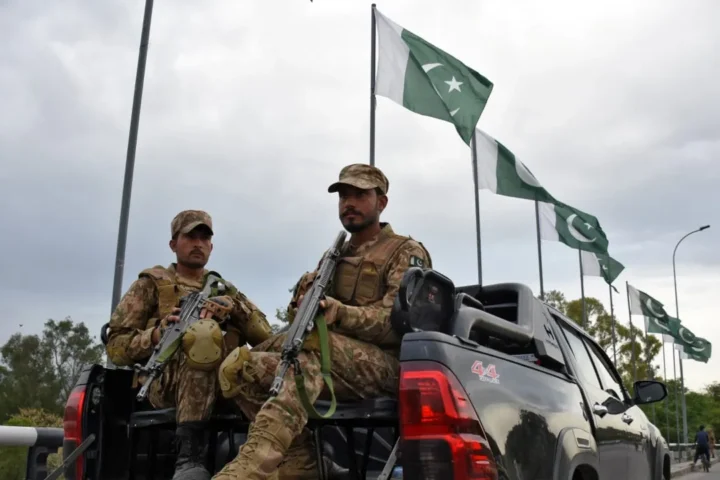
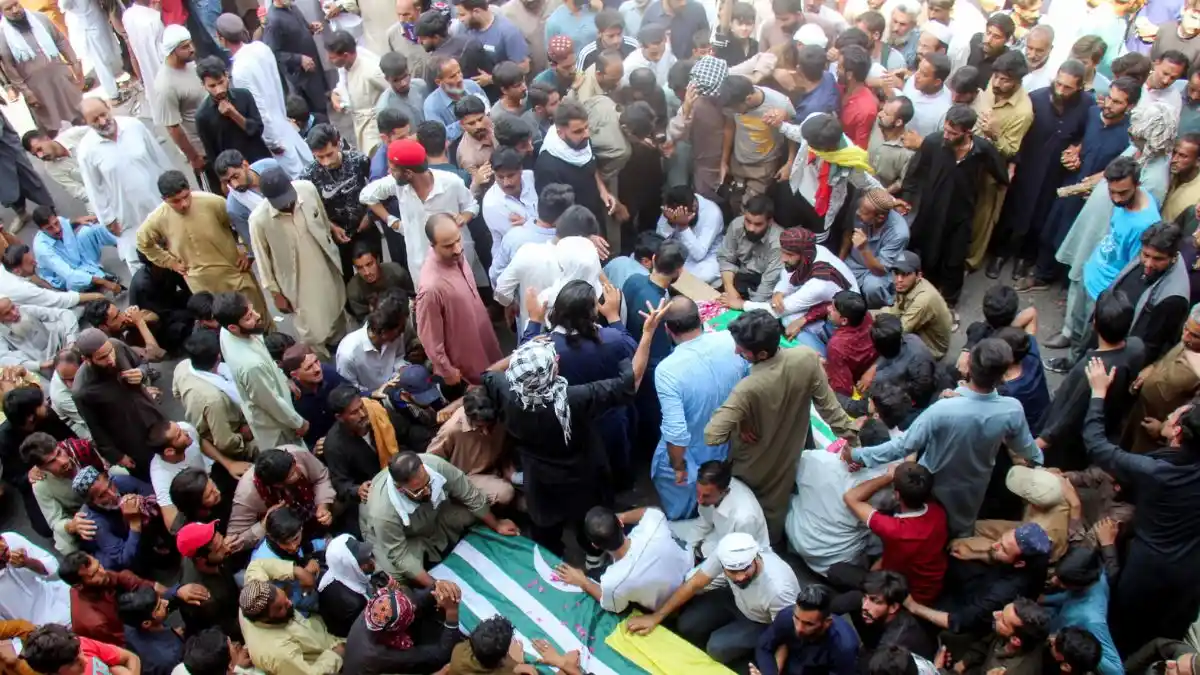
The most striking feature of the latest violence is how quickly a political protest was converted into a law-and-order operation. Reuters reported 11 dead and more than 70 injured as police and paramilitary forces moved to disperse protesters from the banned alliance, while local officials accused protesters of using firearms and petrol bombs. Even allowing for the competing claims, the scale of the deaths tells its own story: a state confident in its legitimacy does not regularly leave a trail of bodies behind when confronting a civil rights movement.
The government’s decision to proscribe the JAAC under anti-terror laws is especially telling. Banning a protest movement does not solve its grievances; it only narrows the space for peaceful bargaining and raises the political cost of compromise. When a movement built around price relief, governance reform and opposition to reserved-seat manipulation is treated as a security threat, the state signals that it has no better answer than force.
The reserved-seat arrangement is worth examining because it reflects a deeper democratic distortion. The seats at issue are for refugees who migrated from Indian-administered Kashmir decades ago, and the authorities say they represent displaced communities with a stake in the dispute. Yet local activists argue that those seats are used by Pakistan’s national parties to shape outcomes in the regional assembly, weakening the autonomy of residents who actually live under its rules.
That complaint should not be dismissed as narrow factionalism. A legislature that is partly shaped by political actors outside the territory is not fully accountable to the people who bear the consequences of its decisions. If the region’s residents believe that their assembly is an instrument for external influence, then every policy failure, every subsidy shortfall and every policing excess will be interpreted through the lens of captured institutions.
The recurring flashpoints are not abstract constitutional questions but ordinary prices. Flour and electricity, the basics of daily life, have become political explosives in Azad Kashmir because the state has repeatedly failed to deliver them on terms local people can tolerate. When a government must offer emergency subsidies after deadly protests, it is effectively acknowledging that its prior policy was unsustainable.
This is the classic authoritarian bargain in miniature: cheap legitimacy through selective patronage, followed by coercion when the bill comes due. Protesters may be imperfect, sometimes unruly and at times violent, but the underlying grievance is legitimate when an impoverished population sees elite privilege protected while its own cost of living rises. That is why these episodes recur. The state patches the crisis, then leaves the structure unchanged, guaranteeing the next eruption.
Pakistan has long portrayed itself as the guardian of Kashmiri rights, yet the record in the territory it administers is harder to square with that rhetoric. A region that is marketed internationally as part of a national cause should not require repeated deployments of force to secure basic compliance from its own inhabitants. The contrast is especially stark because the latest unrest occurred in a territory that is strategically sensitive and heavily narrated through the prism of the India-Pakistan dispute, which often obscures the local democratic deficit.
That matters because grievance politics in Kashmir can be easily instrumentalized by outsiders, but it is rooted first in local realities. If Pakistan wants its Kashmir claim to carry moral force, it must demonstrate that the people living under its administration enjoy more than symbolic autonomy. Otherwise, the state will keep asking locals to accept sacrifices in the name of a national cause while denying them the dignity of self-government.
There is a temptation, especially in Western capitals, to treat every Kashmir flare-up as a sterile bilateral dispute. That misses what is visible in the streets of Rawalakot and Muzaffarabad: a population that believes the system is rigged, the police are too ready to fire, and the political class is too insulated to care. The result is a cycle in which peaceful mobilization slides into confrontation, confrontation is criminalized, and criminalization invites still more resentment.
The state’s defenders will say order must be restored. Of course it must. But order that depends on banning civil groups, shutting down mobility and leaving communities to absorb repeated shocks is not stability; it is containment. A durable settlement would start with less manipulation of representation, more transparency around subsidies and budgets, and a willingness to treat local dissent as politics rather than sedition.
Pakistan-administered Kashmir does not need another declaration that everything is under control. It needs a ruling structure that stops forcing its people to choose between silence and bloodshed. Until then, every crackdown will deepen the suspicion that the region is being governed less as a polity than as a problem to be managed.