France’s spring of football-related violence has handed powerful new material to the far right, which is weaving street chaos, “immigrant youth” and state weakness into a broader campaign narrative for the 2027 presidential race and for tougher immigration and security laws as the country heads into a new football mega‑event cycle. How these incidents are framed politically may matter more than the actual scale of the disorder, because they play directly into long‑running anxieties about identity, inequality and control that far‑right actors have been honing for years.
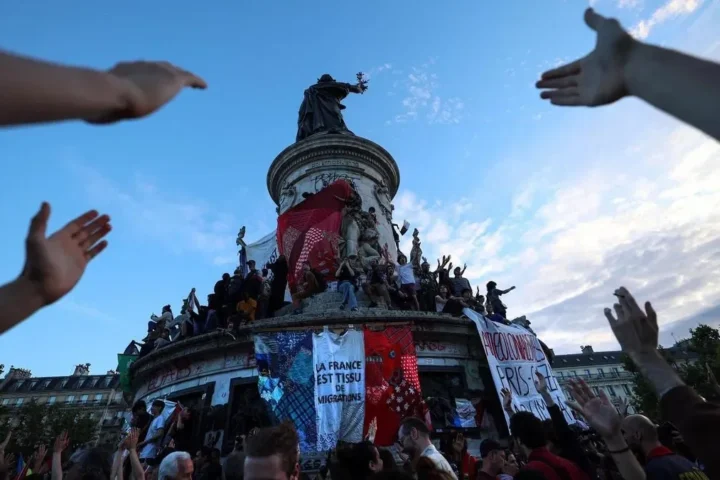
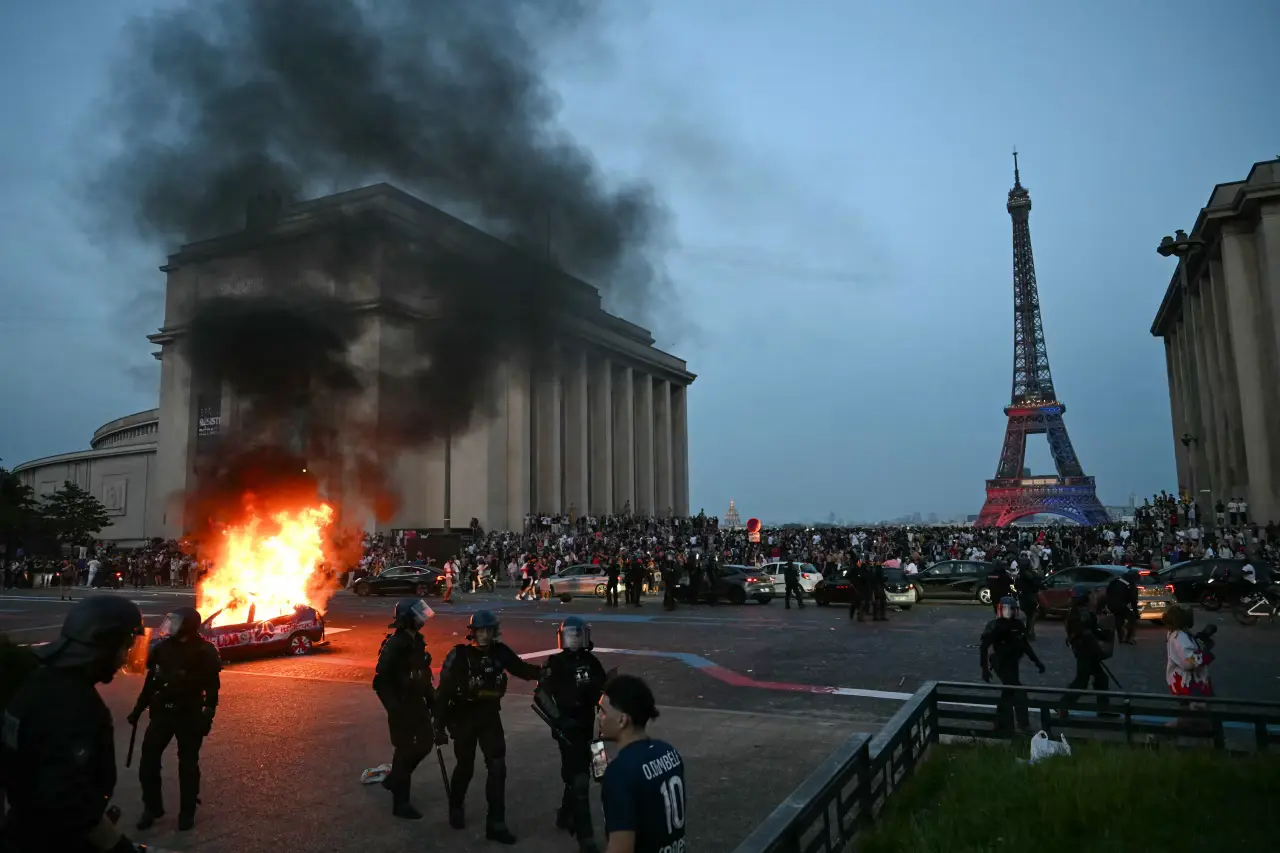
In May, Paris and several other French cities saw large‑scale unrest after Paris Saint‑Germain’s second consecutive Champions League title, despite a massive security deployment. The Interior Ministry reported hundreds of arrests nationwide – figures vary by outlet between roughly 326 and 780 detainees – and dozens of police injuries, as small groups of fans set fires, vandalised shops and clashed with officers while the majority celebrated peacefully.
Gros affrontements en cours près du àParc des Princes.
— Luc Auffret (@LucAuffret) May 30, 2026
Des policiers sont pris pour cible par de nombreux tirs de feux d'artifice et projectiles.#PSG #PSGARS #Arsenal #UCLfinal #Paris pic.twitter.com/tHHxQ5wkeh
Riot police used tear gas to disperse groups on and around the Champs‑Élysées, where about 20,000 people had gathered, and a minority tried to storm a police station and block the Paris ring road. The unrest echoed similar football‑linked riots after PSG’s first Champions League win in 2025, which left two people dead and more than 500 arrests nationwide, establishing a pattern of celebrations turning violent.
Tensions aux abords du Parc des Princes : charges des CRS et usage de gaz lacrymogènes alors que les joueurs du PSG ne devraient plus tarder à présenter le trophée de la Ligue des Champions dans le stade. pic.twitter.com/cTB3Rax75I
— CLPRESS / Agence de presse (@CLPRESSFR) May 31, 2026
The PSG nights were not isolated episodes. Days earlier, a Ligue 1 match between Nantes and Toulouse was abandoned after hooded ultras stormed the pitch, hurled flares and overwhelmed stewards, forcing players to flee and prompting condemnation from Sports Minister Marina Ferrari. In central Paris, ahead of the Coupe de France final between Nice and Lens, a mass brawl near Canal Saint‑Martin involving around 100 Nice supporters – some linked to right‑wing ultra groups – left six injured and led to 65 arrests, with police seizing knives and improvised weapons.
How the far right is weaponising the riots
Far‑right leaders immediately inserted the PSG violence into their broader narrative about “migrant chaos” and state collapse. Marine Le Pen wrote that “only in France does the victory of a football club spark riots” and that ordinary people feel forced to lock themselves in at night to avoid violence, language designed to suggest systemic lawlessness and government failure.
Éric Zemmour went further, claiming the scenes were “the first symptoms of a civilisational guerrilla war” and calling for a “major remigration policy,” explicitly tying football riots to his demand to send large numbers of immigrants or their descendants out of France. Right‑leaning outlets and commentators emphasised that many of those arrested were “immigrant youths,” even though official data are limited and most incidents appear driven by local ultras and youth groups rather than organised ethnic blocs.
This framing plugs directly into the National Rally’s core message that France suffers from an “overwhelming influx” of foreigners and loss of control, even though immigrants remain under 9% of the population and one in three French people has an immigrant background. Analysts of far‑right strategy note that presenting episodic violence as proof of permanent disorder is central to how parties like the RN turn anxieties about crime and identity into demands for radical immigration and security measures.
Football, multiculturalism and mutual mistrust
French football has long been a symbolic battleground over national identity. The national team’s success has depended heavily on players from immigrant families, yet far‑right leaders have repeatedly portrayed the squad as insufficiently “French.” Jean‑Marie Le Pen once derided a diverse France side as “artificial,” and Marine Le Pen has attacked the professional game’s “indecent display of money” and supposed “ethnic, religious clans,” while often ignoring its role as an engine of social mobility in the banlieues.
Current RN figures insist they have modernised, but they still largely engage with football when it helps them stoke controversies about multiculturalism, rather than through genuine investment in the sport. Researchers argue that the party lacks football intellectuals or enthusiasts able to talk about the game on its own terms, and instead uses it as a vehicle for “us versus them” narratives, particularly when defeats or scandals make it easier to question players’ loyalties.
At the same time, French authorities and clubs have struggled for years with violent ultra cultures that include both far‑right and apolitical groups, a reality that complicates simple “immigrant riot” stories. The Paris brawl before the Cup final, where Nice ultras with known right‑wing affiliations were central protagonists, underlines that extremist hooliganism is not reducible to migrant youth from suburbs – even if political actors selectively highlight certain perpetrators and not others.
The policy backdrop: immigration and security
Emmanuel Macron’s government has been trying to thread a narrow path between far‑right pressure and legal and human‑rights constraints. A 2024 immigration law, sold by Macron as a “shield” balancing control and integration, was partially struck down by the Constitutional Council, which rejected several tougher measures as unconstitutional. Critics on the left warned that the original bill already pushed France “to the right” by tightening family reunification and lengthening detention, while the RN denounced the watered‑down version as proof that judges and elites block the “will of the people.”
At the same time, the law created a one‑year “temporary worker” residence card to regularise undocumented workers in so‑called “tense” sectors facing labour shortages, on strict conditions of years of residence and employment, showing the government’s attempt to square economic needs with a hardening political mood. The result is a contradictory mix: symbolic toughness, some pragmatic regularisation, and a public debate that remains dominated by rhetoric about “invasion” and “laxity.”
Beyond immigration, lawmakers have been preparing structurally for recurrent unrest. In 2026 France adopted a reform making riot damage coverage mandatory in all property insurance policies, with a state‑backed reinsurance fund to absorb losses, signalling how routine large‑scale disorder has become in risk calculations. Police and interior officials have also announced new riot‑control units and expanded intelligence operations targeting ultras, with fresh calls after the football incidents to step up stadium bans and surveillance.
Political stakes ahead of 2027
Polls and expert analyses suggest the RN enters the 2027 race as the single strongest force, even if it remains uncertain how the fragmented centre and left will align in a second round. An Elabe poll cited in late 2025 put Jordan Bardella on around 35–37.5% in a hypothetical first round, with Marine Le Pen – currently barred from running pending appeal – still polling in the mid‑30s, and the radical right as a whole surpassing 40% of the vote.
Local elections in 2026 showed that the RN can still underperform in municipal run‑offs, but it continues to lead national‑level intentions, forcing mainstream right and centrist parties to decide whether to co‑opt its themes or confront them. Research on “mainstreaming” in France and Sweden finds that centre‑right parties often adopt far‑right anti‑migrant frames when migration visibility is high and voter competition intense, pushing the entire system’s rhetoric further toward exclusion.
In this context, every night of televised street violence – whether sparked by pension protests, suburban policing or football – is political fuel. It allows the RN and its allies to argue that Macron’s promise of control has failed, that immigration and multiculturalism are unmanageable, and that only a radical break can restore order, even though data from peace and terrorism indices show no robust link between higher migration and terrorism, and highlight domestic political polarisation as the stronger driver of declining peacefulness.
World Cup politics and the global stage
Although France is not hosting the 2026 or 2030 World Cups – which will be staged in North America and then mainly in Spain, Portugal and Morocco – football mega‑events are already intensifying debates over security, immigration and rights across the West. Human‑rights groups warn that discriminatory immigration policies and crowd‑control tactics around the 2026 tournament under President Donald Trump in the US risk deepening social divides, despite FIFA’s formal human‑rights commitments.
Academic work on the 2026 World Cup describes how such tournaments become showcases not just of sport but of “social control,” as host governments invest in surveillance, policing technology and security partnerships that often outlast the event itself. French authorities, already criticised over policing at the 2022 Champions League final in Paris and now facing fresh football unrest, are watching these debates closely because their own domestic security model – heavy deployment, aggressive crowd management, intelligence‑led targeting of “dangerous” groups – is under strain.
For the far right, this global football calendar is another platform to argue for fortress‑style borders and sweeping bans on troublesome supporters, framed as necessary to protect “our” fans and cities from foreign or “unassimilated” elements. For their opponents, it is an opportunity to push for policing reforms, investment in community sport and a more inclusive framing of the national team as a symbol of plural France, as figures like Kylian Mbappé have tried to do while explicitly warning about the consequences of a far‑right presidency.
What comes next
In the short term, France is likely to double down on security: more targeted bans on ultras, expanded video surveillance and tech‑driven crowd control around stadiums and fan zones, and possibly tougher sanctions for clubs deemed unable to control their supporters. This may reduce some immediate risk but, if unaccompanied by serious investment in housing, jobs and policing reform in marginalised neighbourhoods, the underlying conditions that feed both riots and far‑right narratives will remain.
A second pathway is an RN‑led or RN‑dominated presidency after 2027, which would almost certainly bring sharper immigration restrictions, more confrontational law‑and‑order policies and attempts to reshape cultural institutions, including football, around a narrower vision of national identity. Analysts warn that such a shift would also reverberate through EU and foreign policy, tightening France’s stance on migration at European borders and potentially straining human‑rights commitments around future tournaments and international sporting events.
The alternative is that centrist and left forces manage to articulate what Le Monde called a “truth about immigration” – openly acknowledging pressures on housing and services while resisting apocalyptic rhetoric, and coupling firm but targeted enforcement with integration, social investment and institutional reform. Evidence from peace and terrorism research suggests that inclusive governance, credible institutions and long‑term planning are more effective at sustaining social cohesion than securitisation and exclusion, even if such strategies lack the emotional punch of far‑right slogans about “remigration” or “taking back control.”
Whichever course France takes, the images from this football season will stay in the political bloodstream. In a campaign where a few percentage points could decide whether the Elysée goes to a far‑right leader, the battle over what those images mean – immigrant chaos or social neglect, civilisational conflict or policy failure – may prove as decisive as anything that happens on the pitch.