Europe’s food system is settling into an uncomfortable new normal: stress without a clear end date. Climate change is no longer a distant variable in the agri-food equation; it is reshaping the chain at every link, from the field to the cold store, the processing line and the distribution network. The most recent FAO–WMO assessment is blunt about the trajectory, warning that intensifying extreme heat is pushing agri-food systems toward their limits. Against that backdrop of layered, overlapping shocks, almost any easing of pressure can look like rescue.
The reopening of the Strait of Hormuz is one such moment. After a period of disruption, the resumption of traffic through the waterway will register as relief. But for those who think in terms of food security rather than headlines, relief is the wrong frame. Reopening is not a restoration of normal conditions. It is a decision point — the moment when governments and companies reveal whether they have absorbed the lesson of the disruption or simply held their breath until it ended.
A chokepoint mislabelled
Hormuz is usually discussed in the language of energy. That framing is incomplete. The recent disruption exposed how tightly the strait is woven into the global food economy. Fuel and LNG move through it. So do the inputs that fertiliser production depends on, the refrigerated transport that keeps perishables viable, the packaging that food travels in, and the port capacity that determines whether any of it arrives on time. When a single waterway carries that many threads of the agri-food system, its closure is never just an energy story. It is a food-price and food-availability story.
It is also a slow-burning one. The disappearance of ships from a route is dramatic; their return is reassuring and easy to celebrate. But cost increases, scheduling delays and elevated risk perceptions do not clear the moment vessels start moving again. They ripple outward for weeks, sometimes months, working through procurement decisions, insurance premiums and inventory plans long after the strait is open. This is why genuine resilience cannot be reactive. Firefighting during a crisis is necessary, but it is not resilience. Real resilience uses the quieter intervals — including the relief that follows a reopening — to build the adaptive and transformative capacity needed for the next disruption, which is coming whether or not anyone is ready.
That makes one question urgent: when Hormuz reopens, what should the agri-food sector repair before public attention drifts to the next emergency?
The instinct to look inward
Most firms answer that question by looking at themselves. The reflex is understandable. A company has the clearest sightlines into its own operations, so it counts its inventories, dusts off its contingency plans, audits its processes and checks its reserves. These are real buffers, worth having. But a growing body of evidence suggests they are not where resilience in agri-food supply chains actually lives.
A recent study set out to map that resilience systematically. Researchers examined nineteen distinct resilience capabilities spread across three levels — the individual organisation, the wider supply chain, and the industry as a whole — and asked supply chain resilience experts to assess how those capabilities influence one another. One finding rose above the rest. The capabilities clustered at the supply-chain level exerted the strongest pull on the entire system, outweighing both firm-level and industry-level capabilities.
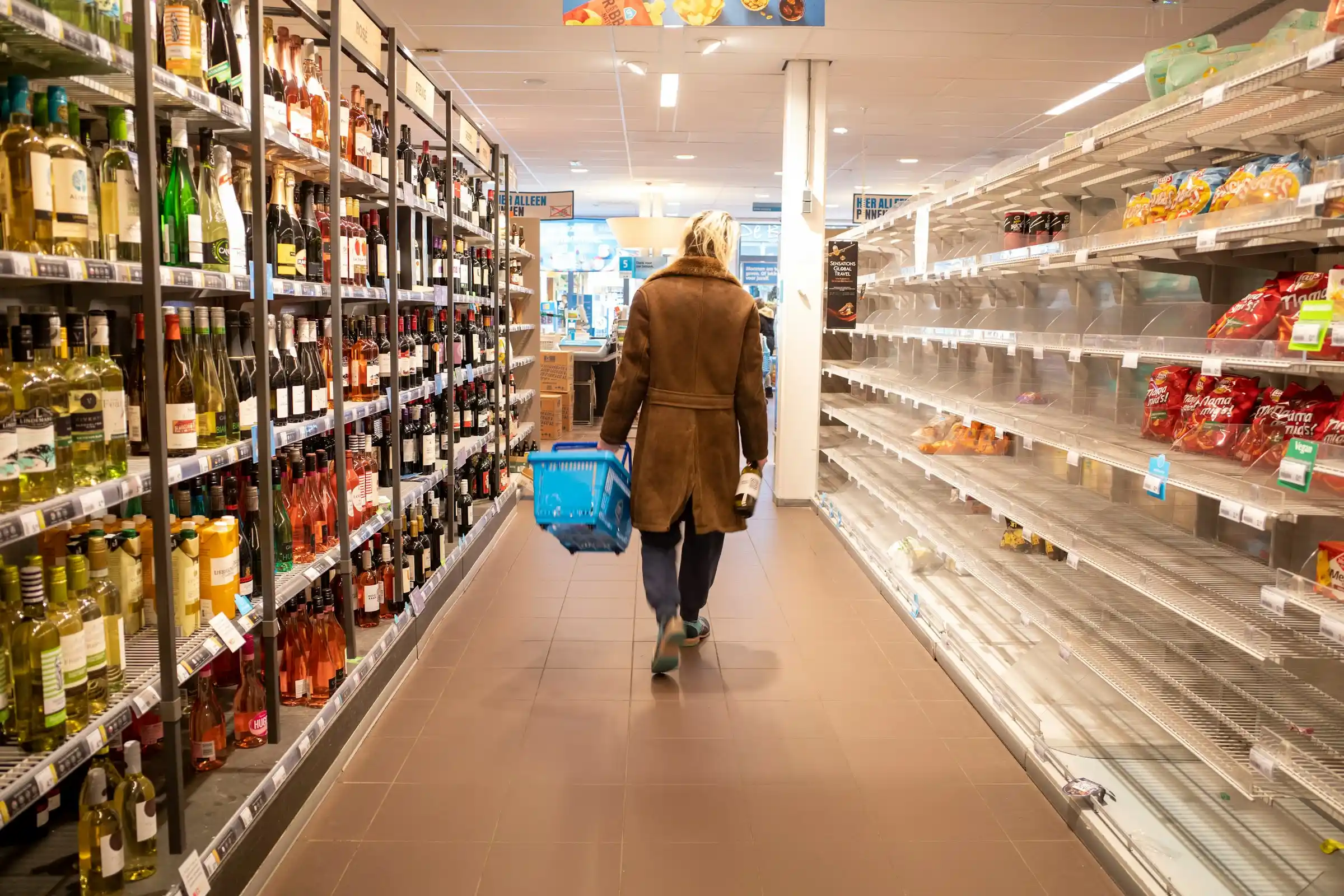
The logic becomes obvious once stated plainly. A supermarket can be the best-run, most efficient and most heavily capitalised actor in its category and still find its shelves empty, because it depends on growers, processors, hauliers, warehouses, packaging suppliers, digital systems, energy providers and regulators. A resilient retailer attached to vulnerable partners is a contradiction that resolves itself badly: in higher prices, and in severe cases, in food that simply is not there. Firm-level strength has a ceiling, and that ceiling is set by the weakest links it depends on.
Resilience lives in the relationships
The Hormuz disruption illustrates why food resilience cannot be assembled one company at a time. A blocked shipping lane does not stop at the port gate. Fertiliser becomes scarcer or dearer. Farmers hesitate over planting decisions. Processors swallow higher input costs. Transport firms absorb climbing fuel bills. And retailers, at the end of the line, face the resulting pressure on price and availability. The shock travels; isolated defences do not.
The capabilities that matter most, the study found, are not locked inside individual firms but distributed across the connections between them. A supply chain needs adaptability, so that production plans can shift when fertiliser is delayed or energy prices spike. It needs agility, so decisions can be made quickly rather than crawling through approval queues while a disruption spreads. It needs supply flexibility, so no firm is hostage to a single supplier, route or region. And it needs collaboration, because no grower, processor, logistics provider or supermarket can ride out a shock like Hormuz alone. Adaptability and agility emerged as the strongest drivers in the model, with supply flexibility and collaboration close behind; four of the five highest-weighted capabilities sat at the supply-chain level.
For managers, this reframes the central question. “Is my company prepared?” is too narrow. The sharper questions are collective: can the supply chain respond as a unit? Can fertiliser buyers reach alternative sources? Can processors re-sequence production? Can logistics partners reroute on short notice? Can retailers warn suppliers earlier about shifts in demand? And can smaller farmers and suppliers be drawn into crisis planning rather than left to absorb the blow alone? Resilience, on this view, is less about stockpiles and slack and more about whether the network can sense change, coordinate a response and absorb disruption together.
Why firms and rules still matter
None of this renders firm-level capability irrelevant. One organisational trait stood out: a risk-aware culture — a company that takes disruption seriously, prepares for it and learns from its mistakes. Yet in the experts’ model, that culture looked less like a starting point and more like a destination. It was strengthened by what happened across the chain — by supply flexibility, supply visibility, collaboration, cross-industry partnership and anticipation. A firm gets better at seeing risk coming when its suppliers share information early, its logistics partners react fast, and its sourcing options stay open. Internal resilience is usually built on external coordination.
Industry-level capabilities mattered too, particularly compliance flexibility and partnerships that reach beyond the supply chain. For a Hormuz-style shock, that means temporary regulatory easing for critical inputs, fast-tracked customs for perishables, emergency freight coordination and explicit support for smaller suppliers who cannot survive months of volatility.
A live rehearsal, not a thicker manual
The practical response should not be another crisis binder destined to gather dust. It should be a live rehearsal of the supply chain. Managers can map which products depend on Hormuz-linked inputs, pre-agree alternative suppliers and routes, test how fast transport can be reallocated, and settle in advance how price spikes or shortages will be shared among farmers, processors, retailers and consumers. Retail offers a concrete example: supermarkets must move past purely transactional relationships and share forecasts — promotions, demand swings — far enough ahead that processors and distributors can adjust capacity without panic and farmers are spared the whiplash of sudden, unmanageable spikes.
Policymakers face parallel questions. Are regulations helping actors adapt, or boxing them in? Are smaller suppliers seated at the planning table? Do public-private partnerships protect the whole chain or only its largest members? The shift required is from rigid, top-down mandates toward agile, inclusive governance — frameworks elastic enough to ease border restrictions on critical perishables during a shock, and safety nets that keep smallholders and cooperatives from bankruptcy when crisis hits.
Global food systems are already absorbing climate extremes, geopolitical friction and volatile trade conditions simultaneously. The reopening of the Strait of Hormuz should be treated not as the final page of a crisis but as a rare opening to reinforce the network before the next one arrives. In that environment, resilience will not be delivered by the single strongest company. It will come from supply chains that can adapt, collaborate and move together.