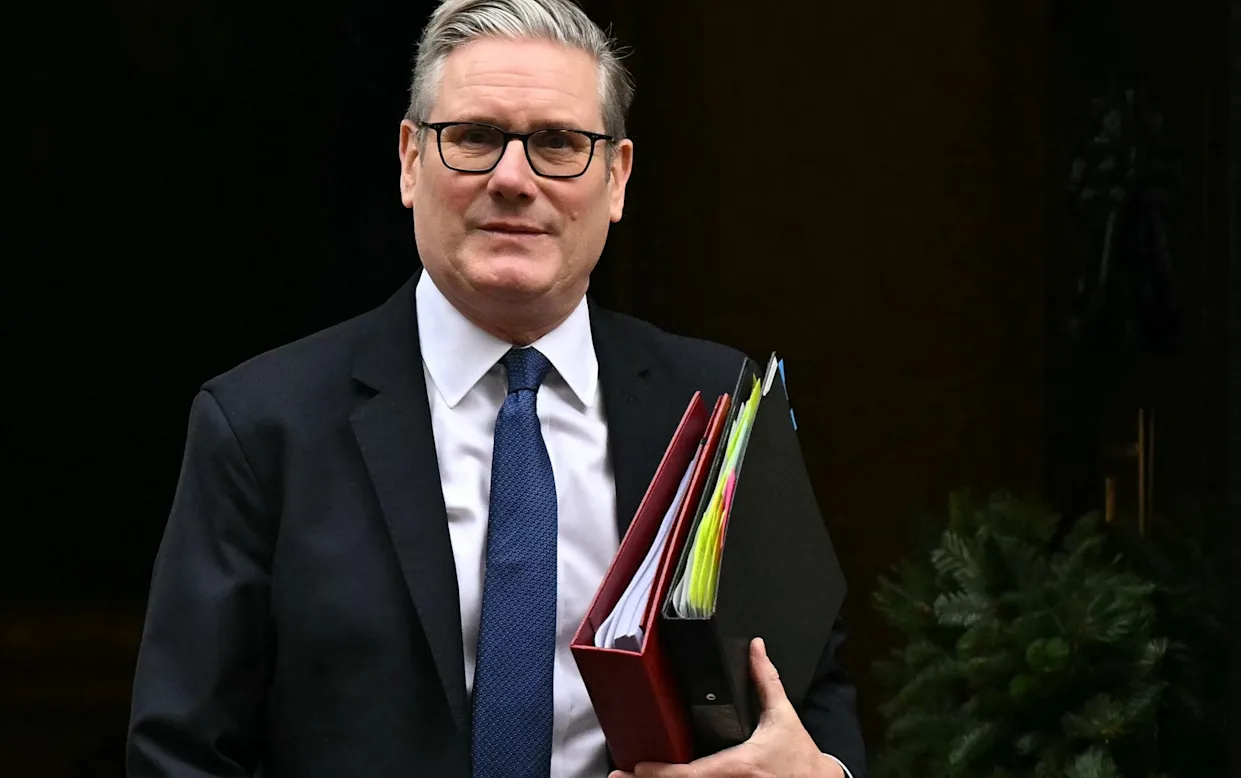
Britain’s Prime Minister, Keir Starmer, is confronting a moment that tests not only his leadership but also his political durability. With murmurs of dissent growing louder within his party and questions emerging about his long-term vision, Starmer has entered a familiar yet perilous phase of governance: proving that he is still worth sticking with.
When Starmer led Labour to victory, he did so on the promise of stability, competence, and a decisive break from the turbulence that had defined both Conservative rule and Labour’s own internal fractures. His appeal was rooted less in charisma and more in reassurance. He was, above all, a corrective figure—a leader meant to restore trust in government rather than redefine its possibilities. That strategy worked electorally. But governing, as Starmer is discovering, demands more than reassurance; it requires momentum.
Now, with a leadership challenge quietly taking shape and sections of his party growing restless, Starmer is attempting to reassert control over the narrative. His message is clear: this government still has “gas in the tank.” It is a phrase meant to signal endurance and direction, but it also reveals the underlying anxiety. Leaders confident in their trajectory rarely need to insist upon it.
The discontent facing Starmer is not yet existential, but it is significant. Critics within Labour argue that his administration has been overly cautious, too managerial, and lacking in bold reform. For a party that returned to power after years in opposition, there is an expectation—perhaps even an impatience—for transformative change. Incrementalism may be politically safe, but it can feel underwhelming to both party members and voters who anticipated a more decisive break from the past.
At the same time, Starmer’s defenders point out that caution was always part of the design. The electorate that handed Labour its mandate was not necessarily clamoring for radicalism. After years of political volatility, many voters wanted competence, predictability, and economic steadiness. Starmer’s governing style reflects that mandate. The question, however, is whether stability alone can sustain political loyalty over time.
Leadership challenges rarely emerge in a vacuum. They are symptoms of a broader unease—about direction, communication, and the perceived gap between promise and delivery. In Starmer’s case, the challenge is compounded by the nature of his leadership brand. Unlike more ideologically driven figures, he does not have a deeply loyal faction that will defend him at all costs. His authority rests on performance, and performance, in politics, is judged relentlessly.
The Prime Minister’s recent efforts to project confidence—highlighting policy wins, emphasizing economic indicators, and framing his government as one still full of energy—are part of a necessary political recalibration. But messaging alone will not suffice. To quiet internal dissent, Starmer must demonstrate not just competence but purpose. He needs to articulate a clearer sense of where his government is heading and why it matters.
This does not necessarily mean a lurch toward radical policy shifts. In fact, such a move could undermine the very stability that brought him to power. Rather, it requires a sharper narrative—one that connects his government’s cautious approach to a broader vision of national renewal. Voters and party members alike need to see not just a steady hand, but a guiding direction.
There is also a personal dimension to this moment. Starmer’s leadership style—disciplined, methodical, and often understated—has been both his strength and his limitation. It has helped him rebuild Labour’s credibility, but it has also made it harder for him to inspire enthusiasm. In times of internal challenge, inspiration can matter as much as competence.
The swirling leadership threat, whether it materializes into a formal challenge or dissipates, serves as a warning. Political capital is not static; it must be continually replenished. For Starmer, that means moving beyond the politics of reassurance and embracing a more assertive form of leadership—one that not only manages expectations but also shapes them.
Ultimately, the question facing Starmer is not simply whether he can survive this moment, but whether he can redefine it. Can he transform a period of internal doubt into an opportunity to reassert his authority and clarify his vision? Can he convince both his party and the public that his government is not merely competent, but consequential?
For now, Starmer is betting that steadiness will prevail—that his record, combined with a renewed sense of direction, will be enough to hold his coalition together. It is a reasonable gamble, but not a guaranteed one. In politics, as in any field, the perception of momentum can be as important as momentum itself.
If Starmer wants to prove he is worth sticking with, he must do more than insist that there is gas left in the tank. He must show where the journey is leading—and why it is still worth taking.