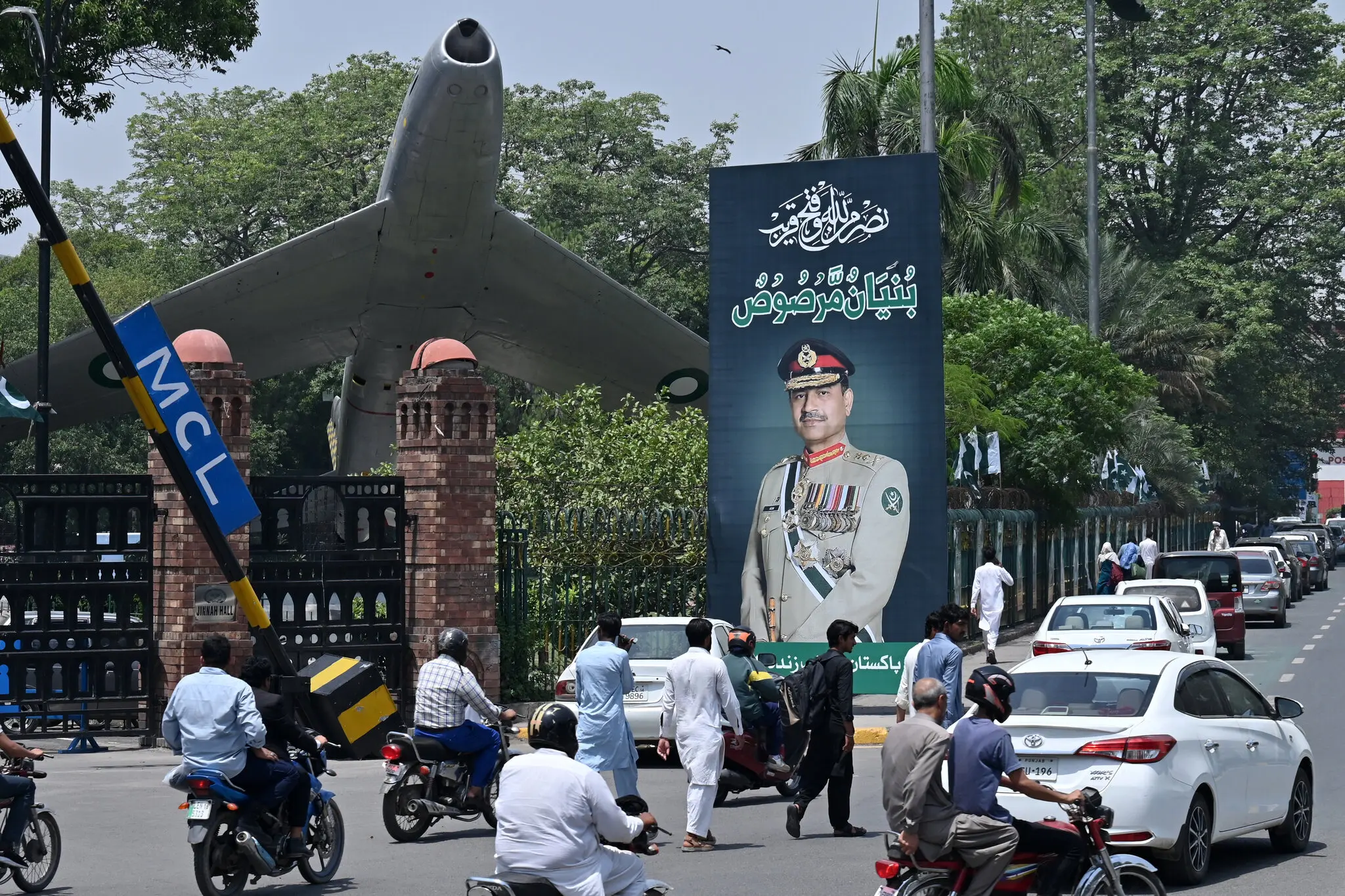
For decades, Pakistan has asked the world to view its troubles through a single lens: an existential rivalry with India that supposedly explains everything from its bloated defense budget to its periodic bouts of political turmoil. It is a convenient story, and Washington and the United Nations have largely accepted it, treating Pakistan as a fragile but essentially well-meaning democracy that deserves patience, bailouts and the benefit of the doubt. That story is no longer credible. The defining feature of Pakistan today is not its posture toward New Delhi but the character of its relationship with its own citizens—a relationship increasingly defined by fear, coercion and selectively applied law, run by a military establishment that has learned to wear democratic clothing without submitting to democratic constraints. The question facing Washington and the U.N. is not whether Pakistan is “unstable.” It is whether their continued indulgence is enabling a slide toward a rights-violating security state operating under a democratic veneer.
An Economy in Permanent Emergency
Start with the economics, because Pakistan’s political repression and its economic dysfunction are not separate stories—they are the same story told twice. Poverty has climbed from roughly 21.9% in 2018-19 to 28.8% in 2024-25, pushing millions of additional Pakistanis into deprivation. Inflation did fall sharply, from nearly 30% at the end of 2023 to low single digits by late 2024, thanks to punishing monetary tightening and an IMF-backed stabilization program. But that disinflation came at a price: growth of roughly 0.9% in mid-2024, a contracting industrial sector, and a fiscal base too narrow to fund the state’s basic obligations to its people.
To avoid outright default, Islamabad completed a short-term IMF Stand-By Arrangement in 2024 before securing a new 37-month, roughly $7 billion Extended Fund Facility—making Pakistan one of the Fund’s largest borrowers. The IMF’s own program documents call for broadening the tax base to include retailers, property owners and agricultural income, rationalizing sales taxes, and lifting the tax-to-GDP ratio by about three percentage points. These are sound technical prescriptions. But they are being layered onto a political system domestic analysts describe as one of the most rigid and contested in Pakistan’s recent history, following a 2024 election that produced a fragile coalition and left investor confidence hostage to Pakistan’s chronic instability rankings.
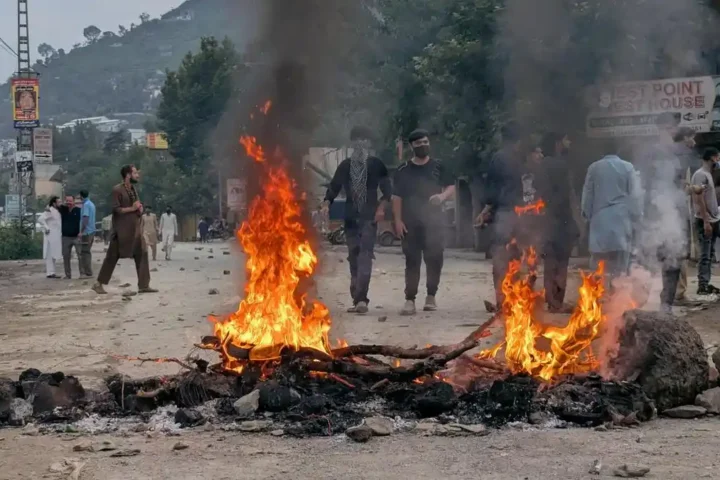
The connection between economic pain and political repression is not incidental; it is mechanical. When flour prices, electricity tariffs and new taxes spiked in Pakistan-administered Kashmir in 2024, the state’s answer to popular protest was not policy adjustment but force: a violent crackdown that killed four people, produced dozens of arrests, and generated credible allegations of torture. Similar economic protests elsewhere have been met with roadblocks, blanket bans on assembly under Section 144 of the criminal code, and internet shutdowns justified as “public order” measures that conveniently also strip citizens of the ability to document what is being done to them. A government that cannot deliver economic relief has instead specialized in delivering silence.
Balochistan: Where Disappearance Is Policy
Nowhere is this pattern more entrenched than in Balochistan, Pakistan’s largest, most resource-rich and most politically marginalized province. Here, the state’s preferred instruments are not policy tools but enforced disappearance, extrajudicial killing and collective punishment. Human Rights Watch and Amnesty International have both documented repeated crackdowns on Baloch demonstrations in 2023-24, including the Baloch Long March and the “Baloch Raji Machi” gatherings, where security forces opened fire on marchers, killed at least three protesters, injured dozens more, and cut mobile and internet access across multiple districts. Organizers including Sammi Deen Baloch were detained, their whereabouts left unconfirmed—a pattern in which demands for accountability over past disappearances are answered with fresh ones.
Baloch civil society has tried to take this case to the world. A 2024 written submission to the U.N. Human Rights Council from the Baloch Human Rights Council reported 65 enforced disappearances and 11 extrajudicial killings by Pakistani security forces in Balochistan in the first quarter of that year alone. Grassroots monitors including Paank and the Human Rights Council of Balochistan continue to log dozens of new cases every month, some of the missing later resurfacing in custody, others as bodies, many simply gone. The U.S. State Department’s own 2024 Human Rights Report on Pakistan corroborates the pattern, describing credible reports of “kill and dump” operations, noting that enforced disappearances remain widespread, and citing more than 10,000 missing-person cases filed with Pakistan’s official commission since 2011—thousands still unresolved.
Islamabad’s standard defense is to point to insurgent violence, and it is true that such violence is real: the Baloch Liberation Army claimed more than 300 attacks in 2024, including a bombing at Quetta’s railway station that killed 26 people, 14 of them soldiers, part of a nationwide toll of more than 2,500 terrorism-related deaths concentrated in Khyber Pakhtunkhwa and Balochistan. But acknowledging genuine security threats does not excuse a system that treats peaceful critics and armed militants alike as targets for disappearance. The State Department’s own assessment is unambiguous: the government “rarely took credible steps” to identify or punish officials responsible for unlawful killings, torture or disappearances. Impunity, not incapacity, is the operating principle.
Refugees as Leverage
Pakistan’s second major front against its own vulnerable population involves people who are not even its citizens: Afghan refugees who have lived in the country for decades, many since the Soviet invasion, and whose fate has become a bargaining chip in Islamabad’s deteriorating relationship with the Taliban government in Kabul. Pakistan hosts roughly 1.3 million officially registered Afghan refugees and asylum-seekers, another 800,000 holding Afghan Citizen Cards, and possibly up to 1.7 million undocumented Afghans. Pakistan has no domestic asylum law and is not a party to the 1951 Refugee Convention; its tolerance of these populations has always been discretionary, and that discretion is now being withdrawn at scale.
Beginning in late 2023, Pakistani authorities launched a nationwide crackdown on “illegal” foreigners that has overwhelmingly targeted Afghans, ordering undocumented migrants to leave by an October 31 deadline under threat of arrest and deportation. U.N. agencies estimated more than 200,000 Afghans returned ahead of that deadline, and subsequent reporting suggests nearly a million undocumented Afghans have been forced out over roughly two years, frequently following raids, arbitrary detentions and confiscation of refugee documents. In June 2025 the campaign widened further still, with Pakistan announcing plans to deport approximately 1.4 million registered refugees holding Proof of Registration cards—effectively stripping legal protection from a population the state itself had recognized for years.
Afghans describe being given minutes to abandon homes built over a lifetime, herded into border camps with minimal assistance, and subjected to police abuse designed, in the assessment of human rights monitors, to manufacture the appearance of “voluntary” return. Both the State Department and Pakistan’s own Human Rights Commission warn that these mass deportations proceed without adequate safeguards for consent or dignity, and in open tension with the principle of non-refoulement—that refugees should not be returned to face persecution. Pakistan’s claim that it is merely enforcing domestic law rings hollow given that its laws provide no meaningful asylum pathway at all, and given that enforcement spikes conveniently track Taliban reluctance to restrain Pakistani Taliban militants operating from Afghan soil. This is not migration policy. It is coercive diplomacy conducted on the bodies of refugees.
Democracy as Décor
None of this should be understood as a collection of isolated excesses. It is the visible symptom of a political order in which Pakistan’s military establishment has methodically consolidated real power behind an electoral façade. The February 2024 general election was marred by allegations of rigging and manipulation, and by the stripping of the main opposition party, Pakistan Tehreek-e-Insaf, of its electoral symbol weeks before the vote—forcing its candidates to run as independents and crippling their ability to campaign. Pakistan’s Human Rights Commission, in its “State of Human Rights in 2024” report, concluded that the resulting government has ceded space to undemocratic forces through hastily passed legislation, including a 26th constitutional amendment widely criticized for enabling executive encroachment on judicial independence, alongside new defamation and assembly laws that constrain peaceful protest.
Media freedom has been a primary casualty. The Human Rights Commission’s reporting on freedom of expression describes tightening restrictions on selected outlets and what journalists wryly call “software updates”—abduction, interrogation and coerced compliance that quietly sideline reporters from their own beats. Ahead of the 2024 election, newsrooms were reportedly instructed not to mention Imran Khan or his party by name at all. The State Department’s human rights report corroborates a landscape of threats, harassment, abductions and killings targeting journalists, the enforcement of blasphemy and anti-Ahmadi laws to suppress speech, and direct regulatory censorship reaching down to the level of altering channel numbers so that critical broadcasters become harder to find.
The repression extends well beyond politics and media. Pakistan’s Human Rights Commission recorded at least 379 new enforced-disappearance cases in 2024, nearly 4,900 “staged” police encounters in Sindh and Punjab alone, more than 1,200 people imprisoned on blasphemy charges—often entrapped online—and the desecration of more than 200 Ahmadi graves and worship sites. Violence against women and children remains pervasive, with hundreds of honor killings and thousands of rape and domestic-murder cases recorded in a single year, while religious minorities and transgender Pakistanis face both violence and legal rollback. Prisons operate at roughly 228% of capacity, more than 6,000 inmates sit on death row, and custodial torture persists despite laws nominally criminalizing it.
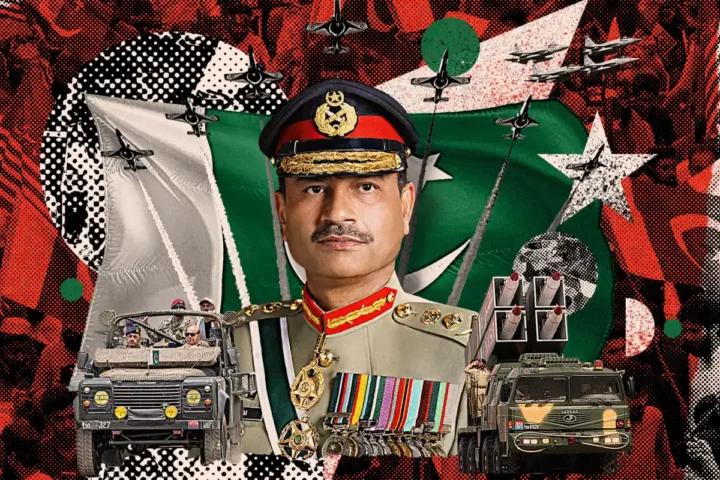
By 2025, the trajectory is unmistakable: what was once a “hybrid” system, placing civilians in the spotlight while the army held real authority behind the scenes, has tipped toward overt military dominance. Parliament is weakened, judges report intimidation by intelligence agencies, and most members of the National Assembly seated after the disputed 2024 vote are closely aligned with the security establishment. Former prime minister Imran Khan’s continued detention on a cascade of widely-questioned charges, along with U.N. special rapporteurs’ concerns about his prolonged solitary confinement, illustrates how thoroughly the law itself has become a weapon against perceived challengers rather than a shield for citizens.
The Cost of Looking Away
None of this is a secret to Pakistan’s allies. The State Department’s own 2024 report is blunt about extrajudicial killings, disappearances, torture, press restrictions and impunity. The IMF’s program documents implicitly acknowledge that recovery depends on governance and political stability, not merely fiscal targets—and independent economists warn that without real institutional reform, the new facility risks repeating a familiar cycle of short-term stabilization followed by long-term drift. Yet geopolitical convenience has repeatedly won out over concern for rights and democratic erosion: Pakistan’s role in Afghan security, its utility in great-power competition with China, and its nuclear arsenal have combined to buy Islamabad a degree of forbearance that few other governments with comparable records would receive.
The first step for Washington is to abandon the pretense that Pakistan’s problem is one of capacity rather than intent. Conditioning security assistance and diplomatic support on concrete, verifiable steps—transparent investigations into enforced disappearances, repeal of laws enabling blanket bans on assembly and speech, restoration of genuine press freedom, and enforceable protections against refoulement for Afghan refugees—would signal that the current arrangement is not an acceptable permanent settlement. The United States can also push the IMF and World Bank to incorporate rights and governance benchmarks more explicitly into their program reviews, rather than treating them as afterthoughts to macroeconomic targets.
The U.N. Human Rights Council, which already receives detailed submissions from Baloch and other Pakistani civil society groups, should move from passive documentation to sustained scrutiny: special sessions, country-specific resolutions, and stronger mandates for special rapporteurs focused on disappearances, extrajudicial killings and refugee protection. Pakistan’s leadership is acutely sensitive to reputational cost, particularly where it intersects with economic lifelines it cannot do without. Coordinated, public pressure from major democracies, paired with sustained support for domestic rights organizations that are already doing the difficult work of documentation at real personal risk, can meaningfully raise the price of continued repression.
Pakistan’s habit of blaming external enemies—India above all—for its troubles is an old and familiar story. What is new, and what deserves far more attention than it currently receives, is the sheer breadth of domestic fronts on which the Pakistani state is now waging war against its own people: Baloch activists, Afghan refugees, opposition politicians, journalists, religious minorities, trade unionists. All the while, Islamabad continues to insist abroad that its democracy is simply “messy but resilient,” a phrase that has done more to launder repression than to describe it. If the United States and its allies continue to accept that narrative without demanding substantive change, they will not merely be overlooking human rights abuses at arm’s length. They will be underwriting a security-state project whose consequences—instability, radicalization, and a further erosion of the rule of law in a nuclear-armed state—will not stay confined within Pakistan’s borders.
Reference and Further Reading
U.S. Department of State. (2025). Pakistan 2024 human rights report. U.S. Department of State. https://www.state.gov/wp-content/uploads/2025/07/624521_PAKISTAN-2024-HUMAN-RIGHTS-REPORT.
Human Rights Commission of Pakistan. (2025). State of human rights in 2024. HRCP. https://hrcp-web.org/hrcpweb/wp-content/uploads/2020/09/2025-State-of-Human-Rights-in-2024-REV.
Haider, I. (2025, May 1). HRCP report highlights decline in civic freedoms, deteriorating law & order. Dawn. https://www.dawn.com/news/1907651
The News International. (2025, April 30). HRCP’s 2024 human rights report paints bleak picture. The News. https://www.thenews.com.pk/print/1307056-hrcp-s-2024-human-rights-report-paints-bleak-picture
International Federation for Human Rights, & Human Rights Commission of Pakistan. (2024, September 16). Pakistan: Report submitted to the United Nations Human Rights Committee. FIDH/HRCP. https://www.fidh.org/en/region/asia/pakistan/pakistan-report-submitted-to-the-united-nations-human-rights
Yusuf, H. (2025, March 4). Pakistan’s path forward requires more than economic recovery. East Asia Forum. https://eastasiaforum.org/2025/03/05/pakistans-path-forward-requires-more-than-economic-recovery/
International Monetary Fund. (2025, February 19). Frequently asked questions on Pakistan. IMF. https://www.imf.org/en/countries/pak/faq
International Monetary Fund. (2024, July 11). Pakistan: IMF reaches staff-level agreement on economic policies with Pakistan for 37-month Extended Fund Facility. IMF. https://www.imf.org/en/News/Articles/2024/07/12/pr-24273-pakistan-imf-reaches-agreement-on-economic-policies-for-37-month-eff
Ahmad, G., & Psaledakis, D. (2024, July 12). IMF reaches agreement with Pakistan for $7 billion extended fund facility. Reuters. https://www.reuters.com/markets/asia/imf-reaches-agreement-with-pakistan-7-billion-extended-fund-facility-2024-07-12/
Human Rights Watch. (2024, July 30). Pakistan: Respect rights in response to Balochistan march. Human Rights Watch. https://www.hrw.org/news/2024/07/31/pakistan-respect-rights-response-balochistan-march
Amnesty International. (2024, July 30). Repeated punitive crackdowns on Baloch protests must end. Amnesty International. https://www.amnesty.org/en/latest/news/2024/07/pakistan-repeated-punitive-crackdowns-on-baloch-protests-must-end/
OpIndia Staff. (2024, June 1). Human Rights body calls on UN to address enforced disappearances, extrajudicial killings in Balochistan. OpIndia. https://www.opindia.com/2024/06/balochistan-pakistan-un-human-rights/
Deutsche Welle. (2023, September 14). Pakistan targets Afghan refugees amid Taliban border tension. DW. https://www.dw.com/en/pakistan-targets-afghan-refugees-amid-taliban-border-tension/a-66806712
Hadid, A. (2023, October 30). In a new expulsion campaign, Pakistan is forcing many Afghans out of the country. NPR. https://www.npr.org/2023/10/31/1209662405/pakistan-afghanistan-deportation-taliban
Bukhari, A., & Gannon, K. (2025, June 12). 45 minutes to pack up a lifetime as Pakistan’s foreigner crackdown sends Afghans scrambling. Associated Press. https://apnews.com/article/afghanistan-pakistan-refugee-expulsion-taliban-torkham-crackdown-4aa29a801b471e8864bee279ca1b278a
Ahmad, J. (2025, August 6). Pakistan’s mass deportations of Afghan refugees: A humanitarian emergency in the making. The Diplomat. https://thediplomat.com/2025/08/pakistans-mass-deportations-of-afghan-refugees-a-humanitarian-emergency-in-the-making/
Congress Research Service. (2024, August 4). Pakistan: Human rights assessments (CRS Report IF12215). U.S. Congress. https://www.congress.gov/crs-product/IF12215