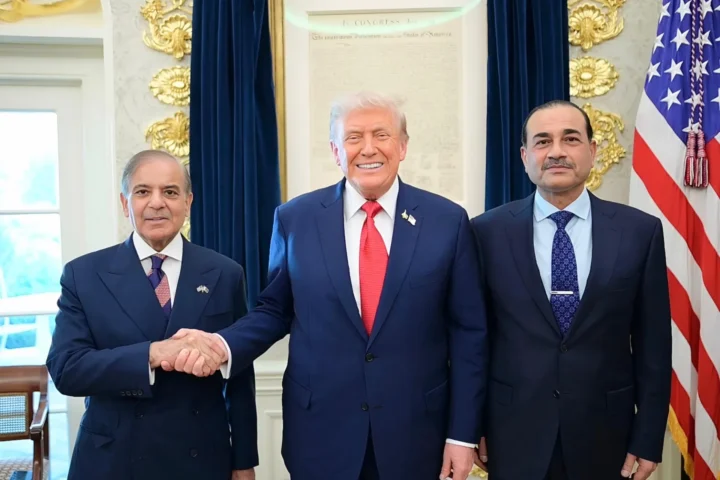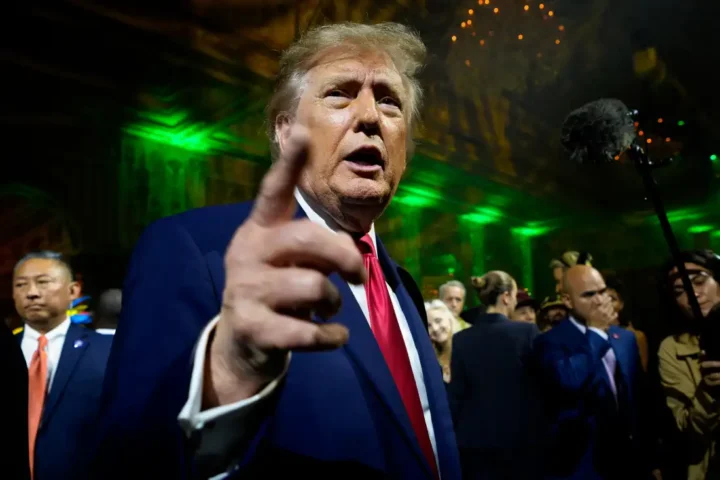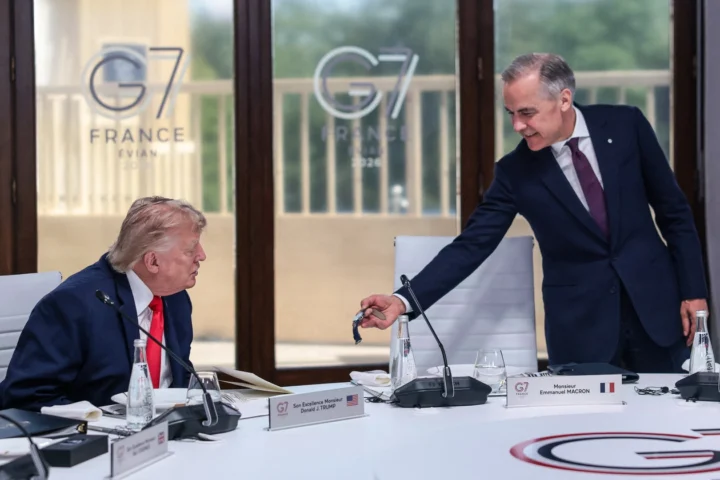
On the day after Donald Trump and Xi Jinping last met, China's Southern Theater Command announced a military exercise around Scarborough Shoal, a disputed feature in the South China Sea claimed by both China and the Philippines, a United States treaty ally. The move drew no discernible response from Washington, though the American ambassador to the Philippines did protest. That episode captures the problem the two leaders face when they meet on the margins of the 33rd Asia-Pacific Economic Cooperation Leaders' Meeting in Shenzhen, China, on November 18 and 19. The modest agenda is probably the right call. The harder question is whether modest expectations can produce something real, or whether they simply become a reason to stage another ceremony.
The pattern is easy to describe: all thunder, no rain. It fits the last two summits and looks likely to fit the next one. The older logic was straightforward. Before a summit, American diplomats would trade optics for substance, offering Beijing protocol concessions in exchange for substantive ones, so the staging functioned as a down payment on results. That exchange appears to have broken down. Both sides now seem content to prioritize optics alone, a kind of pantomime diplomacy. The skepticism is earned. Shenzhen will be the third in-person encounter this calendar year, and the next scheduled meeting is a December gathering on the margins of the G20 in Doral, Florida. Each encounter carries more weight than the last because so little has been built between them to carry it.
The low expectations are, to a large extent, deliberate. Neither side is preparing ambitious deliverables for this meeting, which is unusual for an encounter that normally dominates global news. The headline item is whether the leaders will extend their trade truce past its January deadline. They may feel little pressure to finalize that at Shenzhen, since they plan to meet again in December. On artificial intelligence, expectations should remain low, and a modest first step is on the table: an incident notification mechanism that both sides have already agreed to in principle. The aim is not a rigid protocol for comprehensive disclosure but an open channel through which each side can share nonsensitive technical information as it feels comfortable, such as which AI models or harnesses were involved in a misuse or malfunction, and which safeguards worked.
That restraint has a logic. Many worry the United States and China will move too slowly as AI risks grow and capabilities improve. But an equally serious danger is that official talks could be derailed at the outset, as mounting expectations collide with deep mutual distrust. A process that promises too much and delivers one disappointing readout can poison the next attempt. Starting with limited, deliberately paced exchanges is a way to build habits of communication before asking either government for commitments it cannot easily reverse. The AI agenda is best understood as focused on setting agendas and establishing processes and expectations rather than on breakthroughs.
The critique deserves more than a nod, though. Leaders who skip substance do not merely waste a summit; they send signals to bureaucracies, allies and Beijing about what Washington will tolerate. The Scarborough episode suggests the most consequential signal may be silence. A Philippines that watches a Chinese exercise near its territory and hears only an ambassador's protest has reason to wonder how seriously its alliance is being treated. Low expectations can also become a convenient cover for doing nothing, and a process with no visible output is hard to defend to skeptical legislators or allied capitals. Once modesty becomes the norm, it stops being a strategy and becomes an abdication.
Still, the distinction between a quiet channel and an empty summit matters. Trump and Xi may announce progress on strengthening military crisis communication, including in the nuclear domain. An announcement is not a working capability, and a communiqué can be hollow. But a crisis channel proves its worth only under pressure, and the worst time to learn that no one answers is during an actual confrontation. Measured against that standard, a modest, tested channel beats an ambitious document that no one has the machinery to implement. The incident channel follows the same logic. Sharing which models misbehaved and what fixed the problem is unglamorous work, but it becomes valuable only after it has been exchanged a few times.
The deeper issue is what sustains the relationship between summits. No meetings are currently scheduled after December, and Xi will be increasingly absorbed by preparations for next year's Party Congress. The outcome may come down to a contest between the inertia of Trump and Xi's gentleman's agreement to halt the trade war, and the entropy of two superpowers locked in a competitive dynamic. Personal diplomacy cannot carry that balance alone, because leaders' attention drifts. Institutions, even thin ones such as a standing AI dialogue or an incident reporting channel, can keep working when the principals are occupied elsewhere. That is the real argument for starting small: the goal is a mechanism that outlasts any single meeting.
That is why Shenzhen should be judged less by its joint language than by what outlives it. One reading holds that Xi's goal remains to do as little as possible to mollify Trump, and that deserves to be taken seriously. Beijing has every incentive to capitalize on the tactical truce while it fortifies itself at home. But Beijing also has its own reasons to keep certain channels open, particularly those that reduce the chance of accidents it cannot control. Low expectations are a sensible thing to bring to Shenzhen. Leaving without anything that can be tested, used and built upon would be a different and more costly thing.