Saudi Arabia’s proposed €6 billion entertainment complex near Paris is significant not because France needs another roller coaster, but because it reveals how the country intends to compete for capital, tourism and cultural influence in an increasingly transactional world. If handled well, it could revive an overlooked part of the Paris region; if handled casually, it could become a costly monument to political spectacle.
The announcement has been presented in suitably grand terms. President Emmanuel Macron and Saudi Crown Prince Mohammed bin Salman backed an agreement under which Saudi-backed Qiddiya Investment Company would pursue a mixed-use leisure destination in Cergy-Pontoise, on the former Mirapolis site. The plans currently envisage as many as three major entertainment anchors, hotels, restaurants, leisure and cultural facilities, and housing for young workers and students. The investment could reach €6 billion over the project’s development cycle and is expected to create 22,000 jobs. One proposed park is linked to the Japanese manga and anime phenomenon Dragon Ball.
Yet the vocabulary matters. This is not a fully built, fully financed park with a published opening date. It is an agreement to explore and develop a project, with “up to” three entertainment anchors and an investment “envisaged” at €6 billion. Planning approval, environmental assessment, transport capacity, property arrangements, financing milestones and commercial execution will determine whether the headline becomes concrete reality.
That caveat should not diminish the project’s importance. It should sharpen the questions France asks of it.
More Than Tourism
At first glance, a Saudi-financed theme-park complex outside Paris may look like a simple tourism story: Gulf capital meets French visitors. But the deal sits at the intersection of three larger shifts.
First, France is competing not merely to attract tourists, but to capture more of their spending and lengthen their stays. France remained the world’s leading destination by international arrivals in 2025, receiving 102 million visitors who generated €77.5 billion in tourism revenue. The French government’s broader aim is to reach €100 billion in annual tourism revenue by 2030. A large, destination-scale attraction near Paris could help turn a two-night city break into a longer regional stay, spreading demand toward hotels, restaurants, rail links and local services beyond the capital’s crowded historic core.
Second, Saudi Arabia is no longer only exporting oil; it is exporting investment, brands and strategic ambition. Qiddiya is a Public Investment Fund giga-project intended to make entertainment, sport and the arts a pillar of Saudi Arabia’s Vision 2030 diversification drive. Its domestic purpose is to generate new economic activity and professional pathways for Saudi citizens. A major project in France extends that model outward: it gives the Saudi state-backed investor a foothold in one of the world’s most visible tourism markets and converts financial power into international cultural presence.
Third, the deal reflects Macron’s conception of economic diplomacy. The French-Saudi meetings produced not only the leisure proposal, but a broader package of agreements and prospective finance across sectors. In that sense, the Cergy-Pontoise complex is a symbol: France is offering itself as a destination for long-term sovereign capital, while seeking access for French firms to Saudi Arabia’s vast domestic transformation programme.
This is how modern industrial competition increasingly works. Countries do not simply sell goods abroad; they compete to host capital, headquarters, data centres, factories, research labs and cultural infrastructure. The real prize is not the ribbon-cutting ceremony. It is the ecosystem of construction contracts, design work, food suppliers, transport operators, hotels, training programmes and local small businesses that a successful destination can sustain.
The Mirapolis Lesson
The project’s location gives the proposal both emotional force and a warning label.
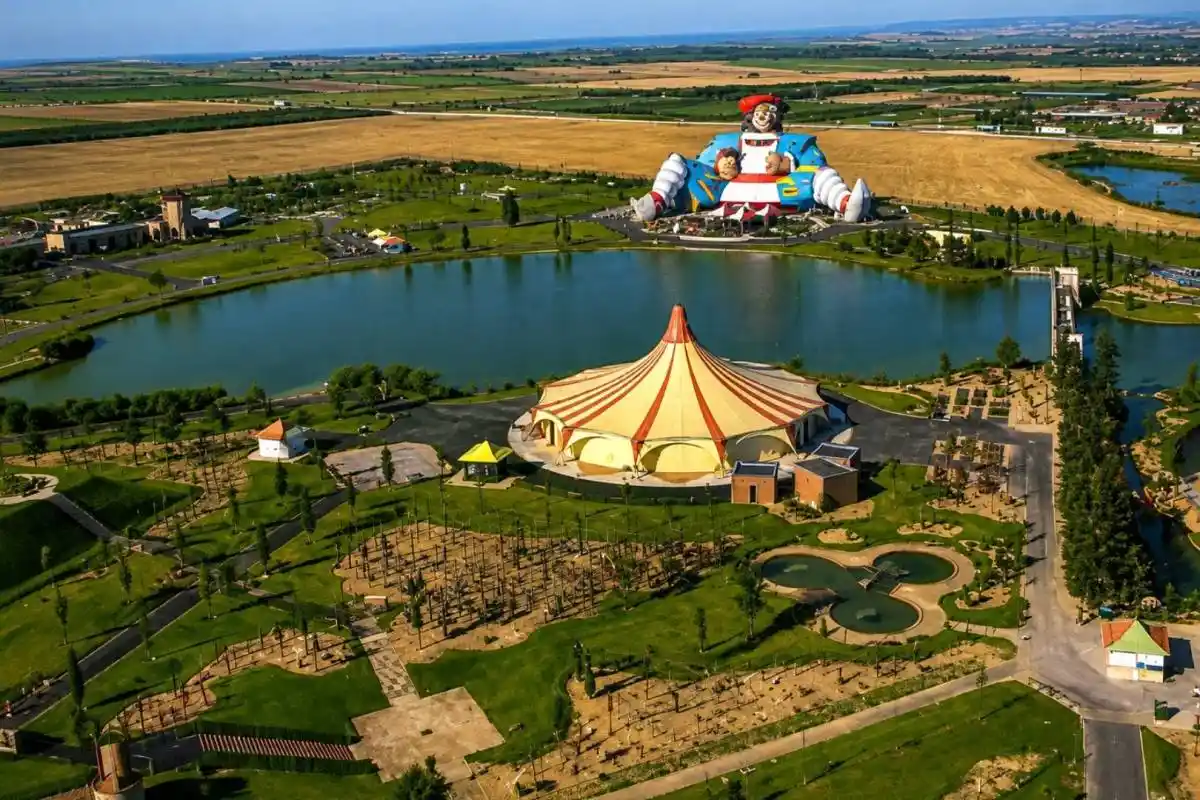
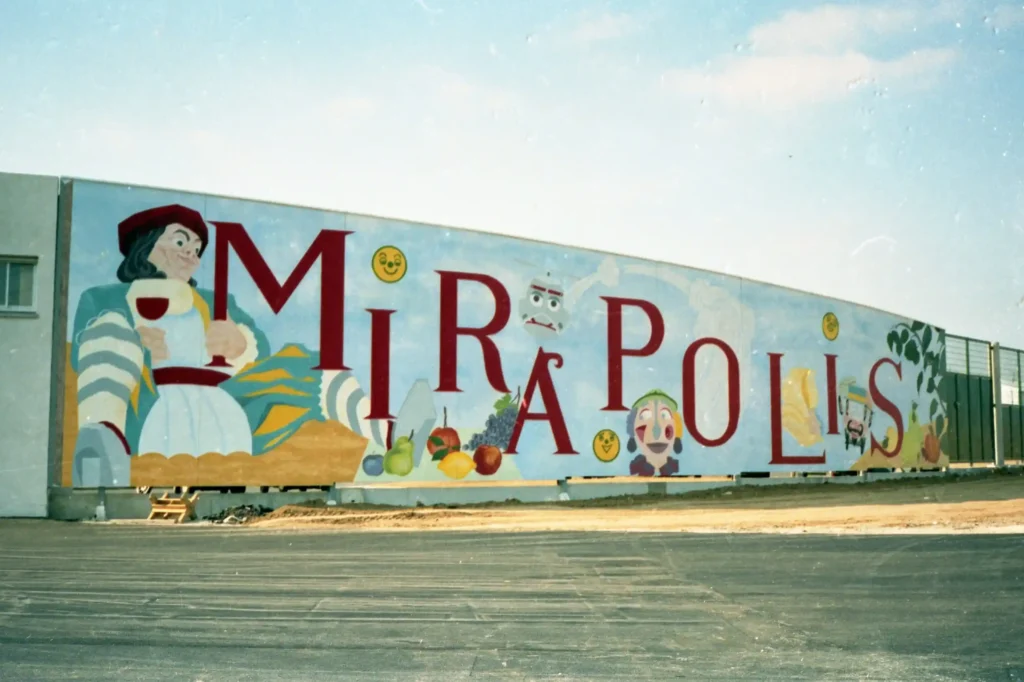
Mirapolis opened near Cergy in 1987 with enormous ambition. Built around French literary and comic imagery, including its giant Gargantua figure, it aspired to draw about two million visitors a year. It closed after only five seasons, in 1991. Attendance came in dramatically below expectations—around 400,000 rather than the intended two million—and the company lost hundreds of millions of francs.
The lesson is not that France cannot support theme parks. Disneyland Paris has demonstrated the opposite: since opening in 1992, it has recorded more than 375 million visits and contributed €84.5 billion to the French economy, according to Disney’s own fact sheet. The difference is that successful destination resorts need more than extravagant structures. They need durable intellectual property, reliable access, repeat visitation, accommodation, pricing that works for families, all-weather appeal, meticulous operations and the ability to evolve for decades.
A Dragon Ball attraction could meet part of that test. It is a globally recognised franchise with a multigenerational audience, and its Japanese cultural identity makes it distinct from the American entertainment brands that dominate the theme-park landscape. It might become a magnet for European fans who currently have few reasons to travel for anime-themed experiences.
But a famous franchise is not a business model. The proposed complex needs a convincing answer to a more basic question: why should visitors choose Cergy-Pontoise over Disneyland Paris, Parc Astérix, central Paris, or a lower-cost holiday elsewhere? The answer cannot be “because it is large” or “because it is Saudi-funded.” Mirapolis was large. It still failed.
That is why public officials should resist the temptation to judge success by announced capital expenditure. €6 billion is a striking figure, but only operating performance will establish whether the project delivers: visitor numbers, year-round jobs, local procurement, tax revenues, housing affordability and the survival rate of businesses built around it.
Jobs Need Conditions
The promise of 22,000 jobs is attractive, especially in a period when major infrastructure and tourism projects are often sold as regional employment engines. But job numbers deserve disaggregation.
How many positions would exist during construction, and for how long? How many would be permanent park and hospitality jobs? What share would be full-time, union-covered and paid enough to live in the area? How many contracts would go to local firms? And how will the promised housing for young workers and students affect existing residents’ access to homes and rents?
These are not anti-investment questions. They are the questions that distinguish inclusive investment from an impressive press release.
France should make the project a demonstration of its own labour and planning standards. Contracts should include enforceable commitments on French labour law, collective bargaining, workplace safety, apprenticeships, local hiring and transparent supply chains. Independent reporting should show the difference between projected jobs and jobs actually created. If public money, land concessions, transport upgrades or tax advantages are involved, the public should know their value and receive clear benefits in return.
The ethical dimension cannot be wished away either. Saudi Arabia is seeking global influence through sports, culture, tourism and investment, even as rights organisations continue to document severe restrictions on freedom of expression and association, as well as widespread abuse affecting migrant workers. Human Rights Watch reports persistent wage theft, unsafe conditions and failures to investigate preventable worker deaths; Amnesty International says the kingdom continues to restrict expression and that migrant workers remain vulnerable to exploitation.
France should engage Saudi Arabia without pretending these concerns do not exist. Refusing every commercial relationship would not necessarily improve human rights. But welcoming investment without standards would send a damaging message: that capital buys silence. The proper response is neither naïve celebration nor performative rejection. It is enforceable accountability, beginning with the project itself.
Build a Public Bargain
The project can become a meaningful success if France treats it as a public bargain rather than a private spectacle.
First, the state and local authorities should publish the project timetable, its financing structure, land arrangements, public subsidies and the conditions attached to them. The difference between a memorandum of understanding and a binding, financed development plan should be made plain.
Second, environmental requirements must be strict from the beginning. Theme parks consume land, energy and water; they also generate road traffic. A complex marketed as a “global destination” must be reachable by low-carbon public transport and should publish credible targets for water reuse, renewable energy, waste reduction and biodiversity protection. A development that adds congestion and emissions to the Île-de-France region will lose public legitimacy quickly.
Third, the project should be culturally reciprocal. If it uses Japanese intellectual property, hosts international visitors and is financed by Saudi capital, it should still create room for French artists, designers, chefs, engineers and independent cultural producers. A destination near Paris should not become a placeless enclosure of imported brands. It should give visitors a reason to experience the wider region.
Finally, France should set hard milestones. The investor should not receive every concession upfront. Land rights, public support and infrastructure commitments should be phased against delivery: planning consent, confirmed financing, workforce standards, transport provision, affordable housing and independently audited local economic gains.
The proposed Cergy-Pontoise complex is therefore not trivial escapism. It is a case study in whether France can turn foreign sovereign wealth into lasting local value. The abandoned Mirapolis site carries the memory of ambition without sustainability. The new project has a chance to tell a different story—but only if its success is measured not by the size of the announcement, but by the quality of the jobs, the resilience of the business model and the benefits that remain long after the opening-day fireworks.