The evolving security environment in Europe has exposed significant vulnerabilities in the United Kingdom’s approach to homeland defence, particularly concerning the protection of military installations and critical national infrastructure. The reported withdrawal of United States bombers from RAF Fairford following a suspected terrorist threat illustrates the growing intersection of conventional military risks, hybrid warfare, and domestic security challenges. Although the United Kingdom possesses sophisticated intelligence capabilities, specialist counter-terrorism units, and established military support mechanisms, it lacks a dedicated territorial force capable of sustaining protective operations across multiple strategic locations. Drawing upon the territorial defence arrangements of Poland and Finland, this paper examines structural deficiencies in British homeland security and proposes a framework for establishing locally recruited, domestically assigned reserve formations. It argues that effective homeland defence requires institutional permanence, clearly defined operational responsibilities, sustained financial commitments, and closer integration between national security decisions and territorial protection requirements.
1. Introduction
The changing character of European security has increasingly blurred the distinction between external military threats and domestic vulnerabilities. Hostile states and affiliated non-state actors possess the capacity to disrupt national security through sabotage, cyberattacks, terrorism, and interference with critical infrastructure, often without engaging in conventional armed conflict.
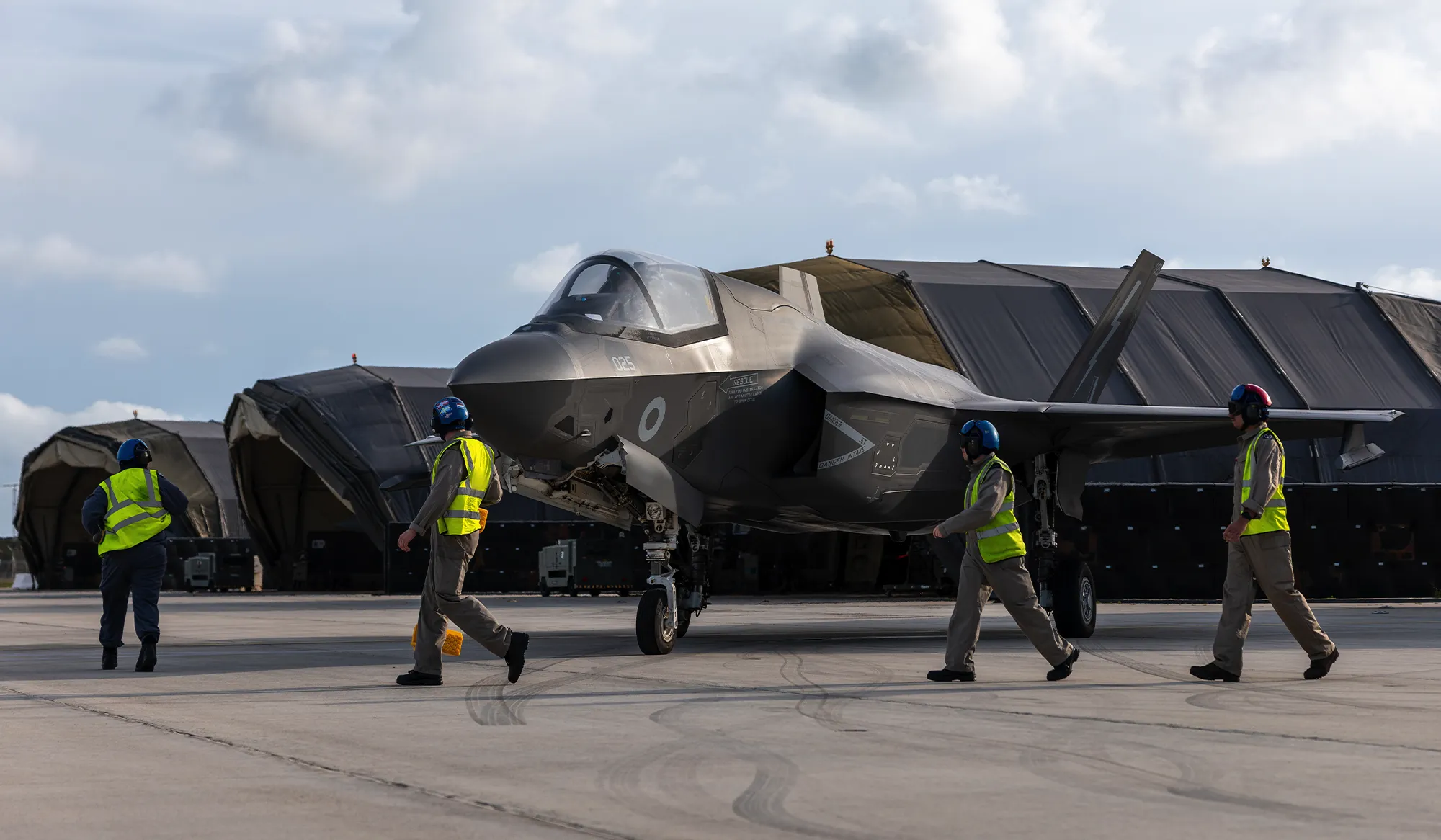
The recent security incident involving RAF Fairford demonstrates the implications of this evolving threat environment. Following the arrest of five individuals near the installation on 27 September, the United States reportedly withdrew its bombers, citing an unspecified security threat. Although British authorities maintained that the base remained secure, the incident raised important questions regarding the United Kingdom’s capacity to protect strategically significant installations during heightened international tensions.
The episode also illustrates the relationship between foreign policy decisions and domestic security exposure. Britain’s authorization of American military operations from RAF Fairford, followed by Iranian warnings concerning facilities supporting operations against its territory, demonstrates how overseas military engagements can generate potential threats within the United Kingdom.
This paper argues that Britain’s existing homeland defence arrangements, while institutionally developed, remain operationally insufficient for prolonged, geographically dispersed protective missions. A dedicated territorial protection capability, informed by European models, would address this structural vulnerability.
2. The Changing Nature of Homeland Security Threats
Contemporary homeland defence must account for threats that operate below the threshold of conventional warfare. Hybrid operations combine military intimidation, clandestine activity, information manipulation, sabotage, and attacks against civilian infrastructure to undermine national resilience.
Russia represents a particularly significant concern within this framework. British authorities have warned critical infrastructure operators and defence companies about persistent Russian threats, while European governments have reported incidents involving suspicious drone activity, sabotage, and arson. These developments suggest that territorial vulnerability can become a strategic instrument through which adversaries impose costs without initiating full-scale military confrontation.
Iran presents a different but relevant challenge, particularly where British facilities support military operations involving Iranian territory. Allegations concerning Iranian involvement in the RAF Fairford incident remain contested and subject to investigation. Nevertheless, the broader strategic issue extends beyond attribution: military installations supporting overseas operations may become potential targets for retaliatory or coercive activity.
A fundamental distinction must therefore be established between reactive security operations and preventive territorial protection.
Counter-terrorism investigations, intelligence assessments, and retaliatory measures primarily address threats through detection, disruption, attribution, and response. Territorial protection, by contrast, requires a persistent physical presence capable of securing infrastructure before attacks occur.
These functions are complementary but operationally distinct. A state may possess advanced investigative capabilities while remaining inadequately prepared to defend numerous geographically dispersed installations simultaneously.
3. Structural Limitations of the British Approach
The United Kingdom maintains several institutions responsible for domestic defence and resilience. The Cabinet Office’s Home Defence Programme seeks to coordinate civilian and military preparedness, while the Ministry of Defence maintains structures responsible for homeland security and support to civil authorities.
Standing Joint Command provides an operational mechanism for coordinating military contributions to domestic resilience. Additionally, the Ministry of Defence Police, Military Provost Guard Service, and RAF Regiment undertake important protective responsibilities at defence establishments.
However, these arrangements do not constitute a comprehensive territorial defence force.
Existing military security personnel primarily concentrate on designated installations, immediate protective responsibilities, and established jurisdictional boundaries. Specialist counter-terrorism formations are designed for intervention rather than prolonged occupation of numerous protective positions.
The Armed Forces Reserve provides additional capacity, but its responsibilities extend beyond domestic defence. Reservists may reinforce regular formations, contribute to NATO operations, or support overseas deployments.
This creates a structural dilemma during simultaneous international and domestic emergencies.
If a European security crisis requires the deployment of substantial British military resources abroad, the availability of personnel for domestic infrastructure protection may decline precisely when threats against the homeland intensify.
Administrative coordination alone cannot resolve this problem. Even a clearly designated lead department requires personnel, equipment, training, and sustained operational readiness to implement its protective responsibilities.
Consequently, Britain’s central deficiency is not simply institutional fragmentation but the absence of a dedicated force specifically organized for persistent territorial security.
4. Comparative Perspectives: Poland and Finland
European experience offers useful models for addressing this capability gap.
4.1 Poland’s Territorial Defence Force
Poland established its Territorial Defence Force in 2017 as a distinct component of its armed forces. Organized around geographically distributed formations and locally recruited personnel, the force emphasizes territorial security, infrastructure protection, and support during national emergencies.
Its principal institutional advantage lies in the alignment between recruitment, geographical responsibility, and operational purpose.
Unlike formations primarily organized for expeditionary deployment, territorial units retain a direct relationship with the communities and infrastructure they protect.
Local recruitment may improve geographical familiarity, mobilization efficiency, and cooperation with civilian authorities.
Although Poland’s security environment differs considerably from Britain’s, particularly because of its proximity to Belarus and Russia’s Kaliningrad region, its organizational principle remains relevant.
Territorial protection becomes a designated military responsibility rather than an additional task assigned to formations already committed elsewhere.
4.2 Finland’s Comprehensive Security Model
Finland offers a broader institutional approach through its comprehensive security framework.
A permanent Security Committee supports coordination across government, defence institutions, businesses, and civil society. Preparedness planning prioritizes the continuity of essential national functions, including energy, transportation, communications, and public services.
Rather than treating homeland defence as an exceptional wartime requirement, Finland integrates national resilience into routine governance and security planning.
Its approach recognizes that military protection and civilian infrastructure continuity are mutually dependent.
However, Finland’s conscription system, geographical circumstances, and established security culture cannot be reproduced directly within the United Kingdom.
The transferable lesson concerns institutional permanence: homeland protection must remain an enduring national responsibility supported by predictable planning and resources.
5. Establishing a British Territorial Protection Capability
A credible British response should combine Poland’s geographically organized territorial formations with Finland’s comprehensive approach to preparedness.
Three reforms are particularly important.
5.1 Dedicated Domestic Reserve Formations
The United Kingdom should establish locally recruited reserve sub-units assigned exclusively to domestic protective responsibilities.
These formations could be positioned near strategically significant military installations, energy facilities, transportation networks, communications infrastructure, and other designated national assets.
Their responsibilities would include reinforcing security beyond installation perimeters, protecting multiple locations during heightened threats, and maintaining a sustained presence over extended periods.
Such formations should complement rather than replace existing police, military security, and counter-terrorism capabilities.
Their distinctive function would be sustained area protection rather than specialist intervention.
Crucially, they should not simultaneously be counted as available reinforcements for overseas operations. Without this separation, competing mobilization requirements would reproduce the existing vulnerability.
5.2 Permanent Funding and Institutional Accountability
A territorial protection capability would require dedicated financial resources, operational standards, and clear command arrangements.
Reliance on discretionary training allocations would undermine readiness, particularly during periods of fiscal pressure.
The government should therefore establish a protected funding framework covering recruitment, training, equipment, exercises, and mobilization arrangements.
A designated lead authority should coordinate responsibilities across the Ministry of Defence, Cabinet Office, police, infrastructure operators, and relevant civilian departments.
Periodic national exercises would help identify operational weaknesses and test the ability to sustain protection across multiple regions.
The principal objective should be institutional continuity rather than temporary expansion during crises.
5.3 Linking Foreign Policy Decisions to Domestic Protection
The third reform concerns strategic decision-making.
Authorizing foreign military operations from British territory can alter the threat exposure of nearby installations and surrounding communities.
Consequently, decisions permitting such operations should incorporate corresponding assessments of domestic protective requirements.
These assessments should examine installation security, surrounding infrastructure, potential disruption, and the availability of reinforcement forces.
The RAF Fairford episode illustrates why homeland protection cannot remain administratively separate from decisions concerning overseas military engagement.
Integrating these processes would make territorial defence more anticipatory and less dependent upon responses to individual incidents.
6. Implementation Challenges and Strategic Trade-offs
Creating a dedicated territorial capability would involve substantial challenges.
Recruitment could place additional pressure on an already constrained military workforce, while new formations would require equipment, training facilities, and command structures.
There would also be difficult decisions concerning the balance between expeditionary military capability and domestic protection.
Personnel committed exclusively to homeland defence would not be available for overseas deployment, potentially reducing the flexibility of British forces.
Nevertheless, this trade-off already exists operationally; it is simply insufficiently acknowledged within current force planning.
A dedicated territorial structure would make the allocation of responsibilities explicit and enable policymakers to evaluate the costs of domestic security more accurately.
Clear legal authorities and coordination with civilian police would also be essential to prevent overlapping responsibilities and ensure accountability.
7. Conclusion
The United Kingdom’s homeland defence challenge is increasingly defined by the possibility of simultaneous external military commitments and sustained domestic security threats.
Although existing institutions provide intelligence, crisis coordination, specialist response, and installation security, they do not collectively constitute a dedicated capability for prolonged territorial protection.
Poland demonstrates the organizational value of locally recruited defence formations, while Finland illustrates the importance of integrating homeland security into permanent national preparedness.
For Britain, the most appropriate solution would be a dedicated domestic reserve capability supported by stable funding, clear institutional leadership, and security planning linked directly to foreign policy decisions.
The central strategic requirement is to move beyond a predominantly reactive approach toward a permanent system of territorial protection.
Homeland defence must be treated not as an emergency responsibility competing with overseas military commitments, but as a foundational and continuously resourced function of national security.