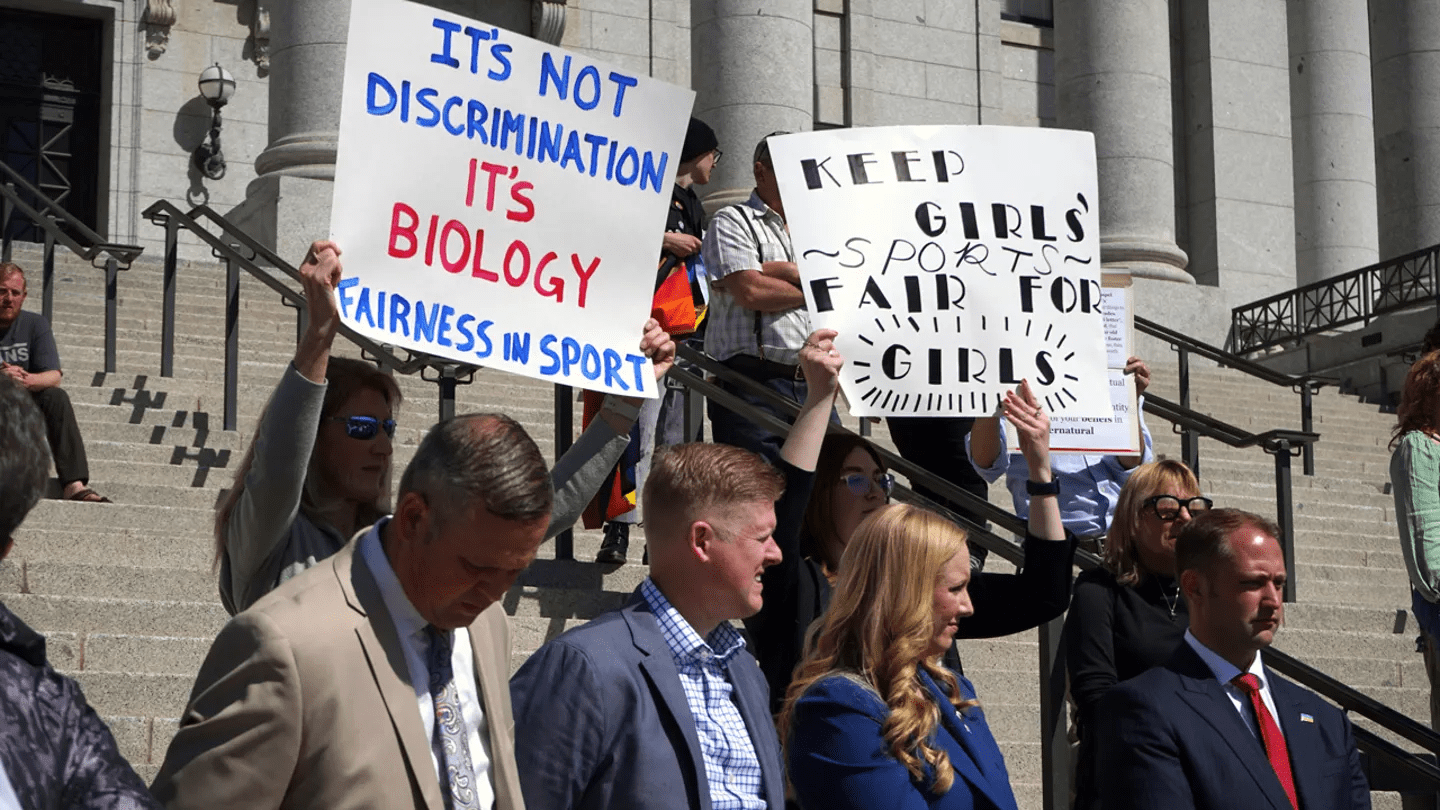
Fifty-three years after the passage of Title IX—the landmark civil rights law that transformed American education and sports—debate over its future has reignited with fresh urgency. What began as a victory for women’s equality in 1972 has now become a national flashpoint, as cultural, political, and legal battles swirl around the meaning of fairness, inclusion, and the definition of womanhood in competitive sports.
Title IX was a hard-fought achievement. Pioneering figures like Rep. Patsy Mink, the first Asian-American woman in Congress, and activist Bernice Sandler—often called the “Godmother of Title IX”—led the charge for a law that would ensure women had equal access to educational and athletic opportunities. Their efforts ushered in a new era, one in which girls could compete, lead, and win on the same playing field as their male counterparts.
That legacy is now at the center of a heated national conversation.
This month, the Trump administration announced that the University of Pennsylvania violated Title IX when it allowed transgender swimmer Lia Thomas to compete in women’s NCAA events. The administration has ordered the school to return awards and honors to the female athletes who were displaced as a result. The move is part of a broader effort by the Department of Education and Department of Justice to roll back recent interpretations of Title IX that expanded protections to include gender identity.
Critics of those policies say they undermine the very foundation of the law.
“To lose that foundational truth—that Title IX was based on biological sex—is to lose the heart of the law itself,” said a former NCAA All-American swimmer, who spoke out after tying with Thomas during the 2022 championships. “This isn’t about trophies. It’s about fairness, safety, and the future of girls’ sports.”
The swimmer described her experience as transformative, shaped by early mornings, grueling workouts, and the discipline required to compete at the highest level. “Title IX gave me more than a sport,” she said. “It gave me a voice.”
That voice has grown louder in recent years, amplified by a growing number of female athletes and parents concerned about what they see as a shift away from equal opportunity. Legal battles in several states have challenged the participation of transgender athletes in women’s sports, while some legislatures have passed laws banning such participation altogether.
Supporters of transgender inclusion argue these restrictions violate the rights of transgender students and ignore the complexity of gender identity. Civil rights groups warn that the rollback of these policies could open the door to broader discrimination.
But for others, including many who credit Title IX with transforming their lives, the concern is centered on the original intent of the law: to protect women’s rights based on biological sex.
“This is not a political issue—it’s a women’s rights issue,” the former swimmer said. “And women have fought too hard, for too long, to have their protections rewritten.”
In response to the controversy, the Trump administration has created a new Title IX Special Investigations Unit tasked with enforcing the law as it was originally written. Funding may be withheld from institutions found in violation, signaling a significant shift in federal policy from the previous administration.
Despite the political tensions, the impact of Title IX remains undeniable. This year alone, more than 235,000 women competed in NCAA sports—a record that illustrates just how far the movement has come.
The anniversary of Title IX is both a celebration and a call to action.
“I honor the women who came before me,” the swimmer said. “They gave us this future. Now it’s our turn to protect it—for ourselves, and for every girl yet to chase her dreams.”
As the nation reflects on more than five decades of progress, one thing is clear: the conversation about Title IX is far from over. The law that once opened doors for women continues to shape not only sports and education—but also the values we hold about equality, identity, and fairness in American life.