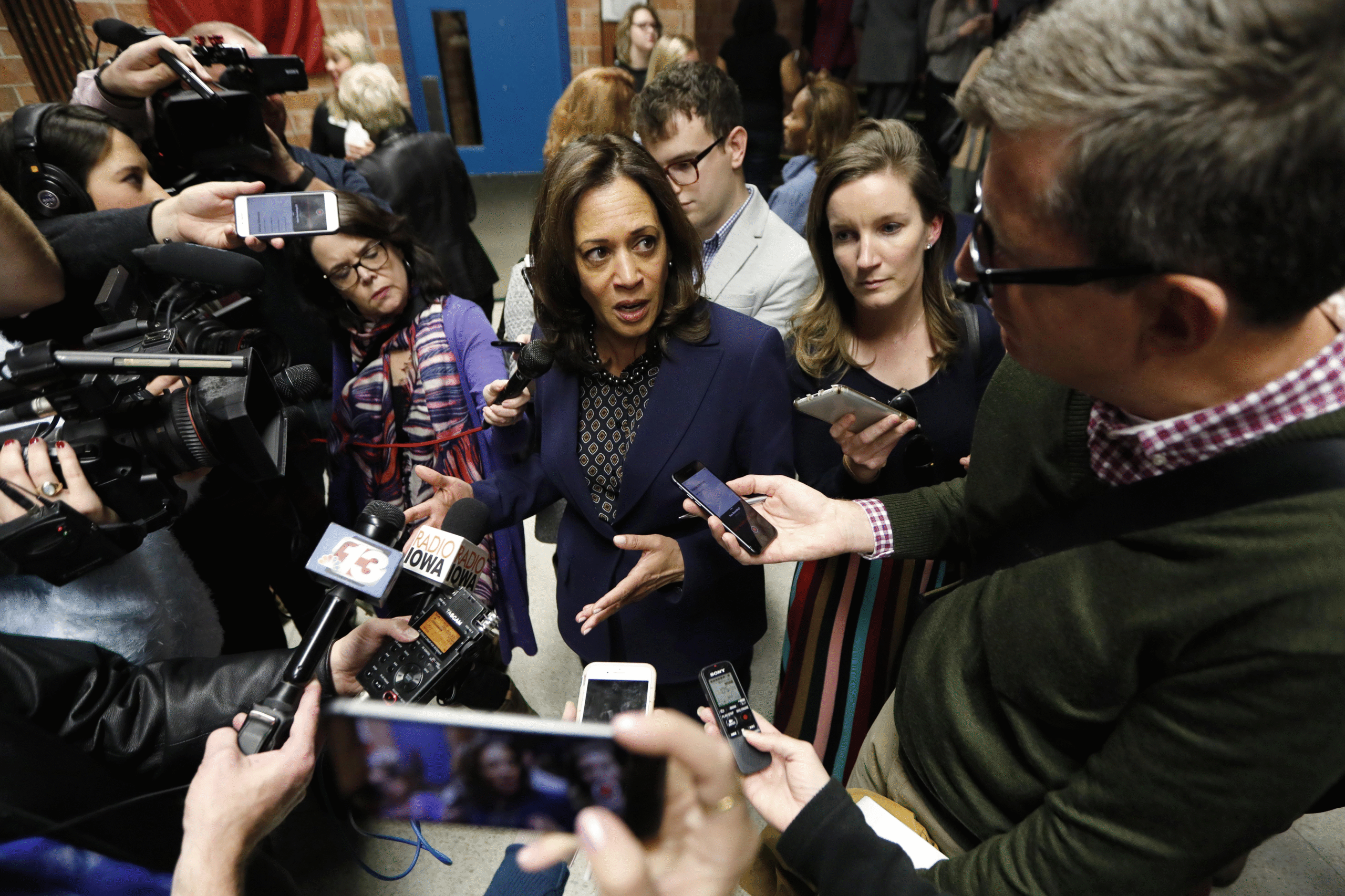
In a revealing interview on The Late Show with Stephen Colbert, former Vice President Kamala Harris gave one of her most candid public assessments of the political landscape in recent memory — and sparked a fresh round of speculation about her future in the process.
“I think it’s broken,” Harris said bluntly of the American political system, eliciting a stunned reaction from Colbert’s audience. While ruling out a run for California governor, she left the door ajar for future national ambitions. Still, she made clear she’s in no rush to dive back into the fray: “I don’t want to go back in the system right now.”
Harris’ remarks came as she embarks on a national listening tour, part of a broader effort to stay engaged without seeking elected office. She is also promoting an upcoming book and considering launching a nonprofit focused on civic engagement.
But among many Democratic officials and strategists, the response to Harris’ reemergence has been far from enthusiastic. In interviews with nearly two dozen party insiders, a common thread emerged: skepticism about her political viability and deep concern over the electoral baggage she carries from the 2024 election, in which the Biden-Harris ticket was defeated.
“She was a drag on our candidates last cycle,” said a national Democratic strategist who requested anonymity to speak freely. “They won because they kept their distance from her and from the national brand.”
That sentiment is already influencing midterm planning for 2026. In New York, Rep. Laura Gillen, who flipped a Republican-held Long Island seat, has no plans to bring Harris into her district. “We will not be asking her to be a surrogate,” said an operative close to the campaign. “We outperformed her last time — we don’t see that changing.”
The concerns aren’t limited to the East Coast. In California, where Harris once served as senator and attorney general, strategists in key congressional districts expressed similar hesitation. “I wouldn’t want her in my district,” said a Los Angeles-based Democratic consultant. “She reminds voters of Biden — and that’s not a good thing right now.”
Despite her struggles, Harris remains a prominent national figure. She continues to command strong fundraising power and leads early polling in the still-forming 2028 Democratic primary field. A July poll from Echelon Insights found her topping the list with 26% support, ahead of Transportation Secretary Pete Buttigieg. However, that figure marked a decline from 32% in May.
Her decision not to run for governor caught some observers by surprise, especially given her profile in California. Yet even among allies, there was little visible momentum for such a campaign. “There was no ‘Draft Harris’ movement,” admitted one longtime supporter.
Still, prominent Democrats continue to praise her publicly. Minnesota Gov. Tim Walz, Harris’ 2024 running mate, said he would “welcome” a 2028 bid. “I think she would make a great president,” he told reporters. Illinois Gov. JB Pritzker, himself a potential contender, called her a “terrific spokesperson” who could help Democrats win over working-class voters.
Veteran strategist Darry Sragow echoed a more optimistic view, suggesting Harris’ decision to take a step back may ultimately benefit her long-term. “It may very well make her a much stronger candidate,” he said. “She’s taking the time to reconnect with people — and that matters.”
But the party remains divided on whether Harris is the best figure to lead it into the next presidential election.
“She’ll be carrying the weight of the Biden years,” warned Jay Surdukowski, a Democratic operative from New Hampshire. “That’s a tough burden, especially with all the questions about what she knew and when she knew it.”
Mark Longabaugh, a longtime adviser to Sen. Bernie Sanders, was even more blunt: “We’re coming off a stinging defeat. I just don’t see how she does it.”
Even among those once closest to her, doubt is setting in. “I don’t think she can win the primary,” said a former senior Harris staffer. “There are better nominees out there who allow us to turn the page.”
For now, Harris appears content to reflect — and regroup. “I want to travel the country,” she told Colbert. “I want to talk with people. And I don’t want it to be transactional.”
Whether the party will ultimately welcome her back into the political arena remains an open question. But one thing is clear: Kamala Harris may not be done with politics — even if many Democrats wish she were.