Pakistan is in the business of rebranding. Deputy Prime Minister Ishaq Dar has declared, with evident pride, that Pakistan is now recognized as a “peacemaker” — a country whose geography, military ties, and relationships with Washington and Tehran have apparently made it a credible intermediary in one of the world’s most combustible diplomatic rivalries. The framing is not entirely wrong. Pakistan did play a meager role in mediating between the United States and Iran.
But a single (minor) diplomatic success, however genuine, does not make a peacemaker. A peacemaker is not a label you earn in one back-channel conversation. It is a reputation you build across the entire breadth of how a state governs — along its borders, inside its courtrooms, toward its minorities, and before its press. By that fuller accounting, Pakistan’s claim deserves far more scrutiny than it is receiving.
Consider what else was happening in the same week Islamabad was collecting diplomatic applause.
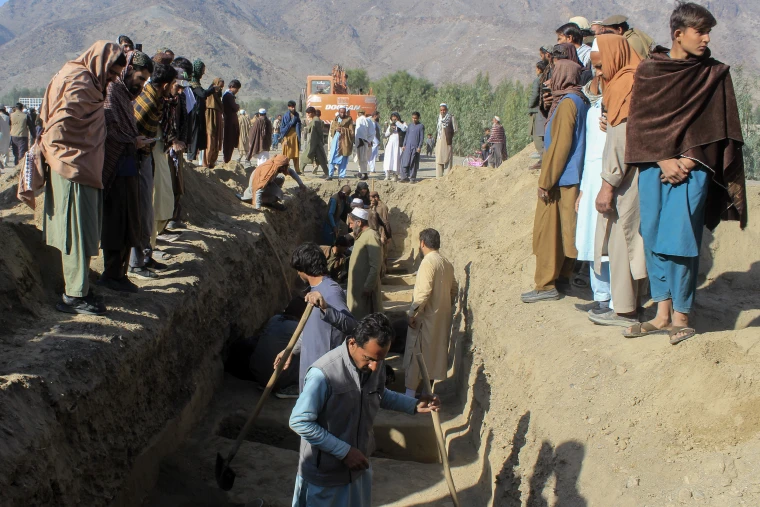
On June 28, Pakistani security forces reported killing 29 fighters in ground operations and air strikes along the Pakistan-Afghanistan border. The official framing was defensive: these were militant hideouts, cross-border threats neutralized. Afghan officials told a different story — civilians killed, women and children among the dead. The full truth of what happened in those mountains may never be independently established. But the episode itself is not exceptional. It is part of a grinding, years-long cycle of militant attacks, retaliatory strikes, disputed casualties, and mutual recriminations between Islamabad and Kabul. Pakistan’s western frontier is not a peace corridor. It is an open wound, and the government’s answer to it remains overwhelmingly military, opaque, and contested.
The same week, Pakistan’s media regulator suspended Geo News for 15 days, citing broadcast content deemed offensive to religious sensitivities. The channel’s offense, in the regulator’s telling, was a programming decision during the Islamic month of Muharram. Whatever the precise editorial judgment at issue, the suspension did not arrive in a vacuum. It arrived in a media environment that Amnesty International described as early as 2014 as defined by intimidation, harassment, and legal threats against journalists — and that has not improved in the decade since. When a state suspends a major broadcaster with the casual authority of an administrative letter, it is not resolving an editorial complaint. It is reinforcing a hierarchy in which political authority decides what the public is permitted to hear. That is not the behavior of a state confident in its legitimacy. It is the behavior of a state that fears scrutiny.
Then there is Mahrang Baloch.
The sentencing of one of Pakistan’s most prominent human rights activists to life imprisonment under anti-terrorism statutes is, by any serious legal or moral standard, an emergency. Amnesty International has been unambiguous: the trial was expedited, conducted in secret, held on jail premises, and produced no credible evidence linking her to violence. She was tried for her activism — for organizing, for speaking, for making the grievances of Baloch families visible to the world. The message sent to Baloch society, to civil society more broadly, and to anyone watching from outside Pakistan is not ambiguous: in this country, peaceful dissent is a terrorism offense if the state decides to call it one.
The significance of her case cannot be separated from what Amnesty and other rights groups have documented in Balochistan for years. Enforced disappearances. Denial of medical care to detainees. Arbitrary detention. Students, journalists, and human rights defenders taken from their families and held in legal limbo, outside the reach of courts or counsel. The pattern is systematic enough that it has its own grim vocabulary — “the disappeared of Balochistan” — and its own geography of grief: families waiting outside detention centers, posting photographs of missing sons and daughters, petitioning courts that cannot or will not compel answers from security institutions that operate, in practice, above the law.
Pakistan’s leadership will argue, as it always does, that Balochistan faces a genuine insurgency — that militant groups are real, that cross-border violence is real, that the state has a legitimate security interest in the region. That is true, as far as it goes. But Amnesty’s central point, and the point that Pakistani officials consistently refuse to engage, is that state repression does not suppress insurgency. It feeds it. When a government answers political grievance with enforced disappearance, it does not win hearts. It creates martyrs. When it sentences activists under anti-terror provisions designed for armed combatants, it does not restore order. It delegitimizes the very legal system it claims to be defending. Repression is not a counterinsurgency strategy. In Balochistan, it has been, for decades, one of the conflict’s primary accelerants.
The contradiction at the heart of Pakistan’s current political moment is this: the same institutions projecting diplomatic sophistication abroad are relying on fear to maintain order at home. These are not separate stories operating on separate tracks. They are aspects of a single political culture — one in which security logic overwhelms legal constraint, in which the military and intelligence establishment operate with effective impunity, and in which the space for independent civil society keeps contracting.
That culture has real consequences for Pakistan’s diplomatic credibility. A mediator’s authority does not derive solely from geography or contacts. It derives from the perception that the mediating state is itself governed in a way that commands respect — that it is restrained by law, tolerant of dissent, and capable of distinguishing between genuine security threats and political inconveniences. When Pakistan sentences Mahrang Baloch to life imprisonment, suspends Geo News with a regulatory letter, and conducts air strikes whose civilian toll remains disputed, it undermines the very image it is trying to project. It becomes easier to use Pakistan as a back channel than to hold it up as a model. Its diplomatic utility and its democratic deficit can coexist — but only one of them makes for good branding.
None of this is beyond remedy. Pakistan has constitutional protections it consistently fails to enforce. It has courts that could exercise independence if permitted to do so. It has civil society organizations, lawyers, and journalists who are doing serious work under serious pressure. The question is whether Pakistan’s political and military leadership has the will to bring the country’s domestic conduct into alignment with its foreign-policy ambitions — to treat media freedom as a strength rather than a vulnerability, to treat Baloch political grievance as a political problem rather than a security one, and to apply anti-terror law to actual terrorism rather than to women who organize protest marches.
That is a harder project than mediating between Washington and Tehran. It requires confronting institutional habits, entrenched interests, and a security establishment that has long operated with its own logic and its own calendar. But it is the only project that would give the “peacemaker” label genuine weight.
Pakistan can be diplomatically useful and domestically repressive at the same time. History is full of such states. But the United States and its allies, who are the principal audience for Pakistan’s current rebranding effort, should be clear-eyed about what they are applauding when they applaud the peacemaker. They are applauding a government’s ability to carry a message between rivals — not evidence that Pakistan has resolved its own relationship with law, liberty, or the people it governs.
Those are different things. Right now, in Balochistan, in the suspended broadcast signal of Geo News, and in the life sentence handed down to a woman whose crime was bearing witness, the difference is very loud indeed.