On Friday October 9th, 2026, former DRC President Joseph Kabila Kabange, addressed the Congolese nation for the second time since leaving office in January 2019. The country did what it has learned to do when Kabila breaks from silence, the Congolese populace stopped and listened.
Silence and action are two of Kabila’s most recognisable characteristics, three days later in Goma, he launched a new politico-military coalition the Front pour La Refondation de Nation (FRN).
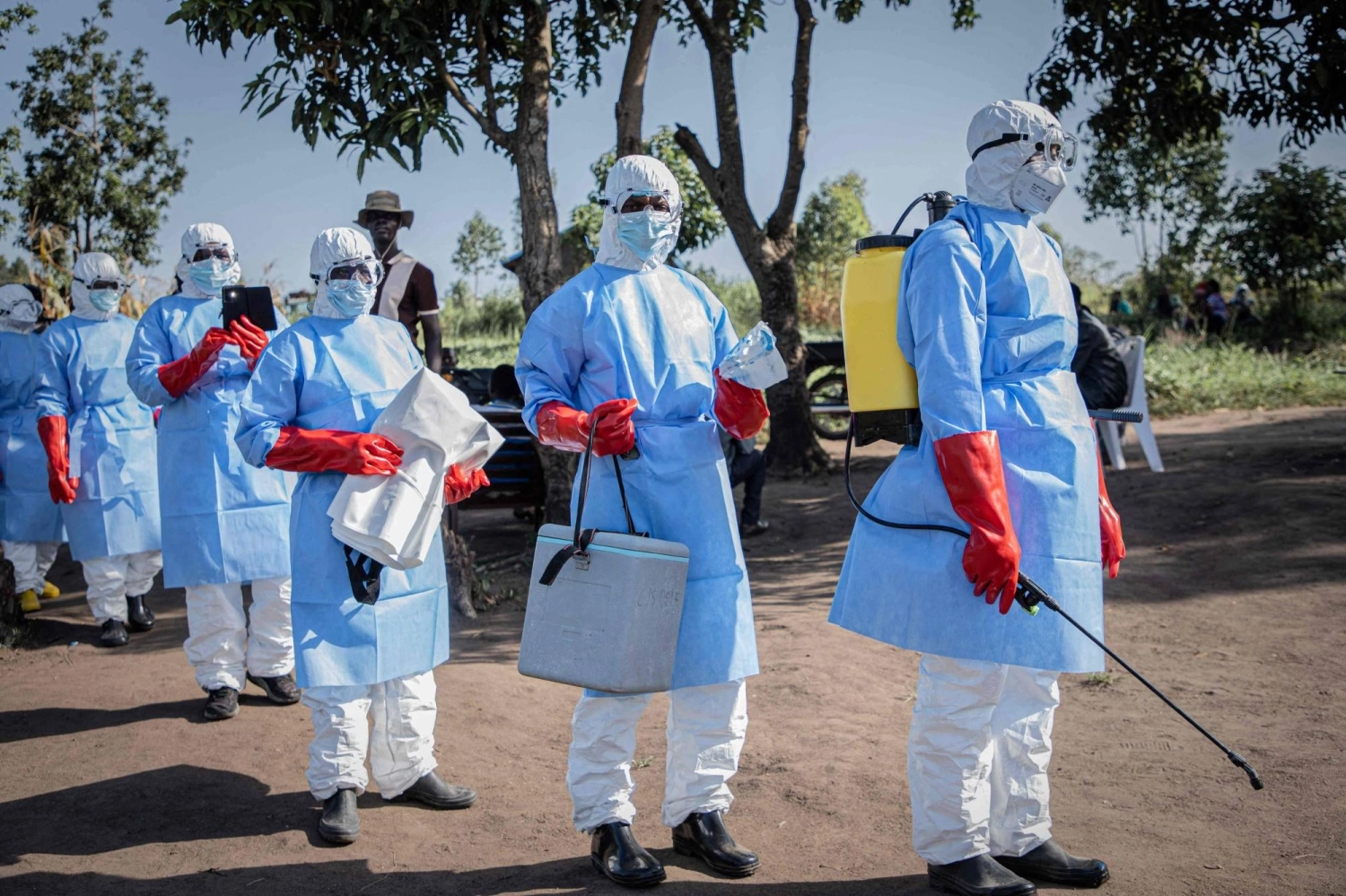
As recently as 19th October, European Health authorities, have counted more than 9,500 confirmed cases of Ebola, with a case fatality close to a 50%, in the Democratic Republic of Congo. The war-ravaged country is often viewed through the eyes of global commodity supply chains; however, a new health security problem has complicated matters.
Will the world remain on the sideline?
According to the WHO (World Health Organisation), the current outbreak is the second documented Bundibugyo virus disease (BVD) outbreak in the country, after the 2012 outbreak, and the largest Ebola disease outbreak ever recorded in the Democratic Republic of Congo, irrespective of virus species. WHO has warned that the BVD has evolved rapidly with a high mortality rate and an increasing risk of further international spread with confirmed cases in Uganda, Kenya and Nigeria.
The US Centres for Disease Control and Prevention (CDC) stated that Ebola does not spread the same way as respiratory viruses like flu and COVID. Nonetheless, the lessons of Covid pandemic as cited in the BMJ are applicable to the Ebola outbreak. Recent history will remind us, the cost of absent leadership and slow global Covid coordination, as it was a price paid by everyone. The BMJ says COVID-19 has been a terrible wake-up call and “the 21st century’s Chernobyl moment.”
The Congo once offered expertise
A little over twelve years ago, at the United Nations General Assembly on 25 September 2014, Kabila about Ebola ravaging West Africa, called for international support and offered the expertise of the DRC, where the first outbreak was recorded more than three decades earlier. This serves as a reminder that Congo once saw themselves as contributors to global health security, which is not the case today.
In 2019, Ebola response was placed directly under the Tshisekedi Presidency, and health minister Olly Ilunga resigned in protest after being stripped of responsibility for managing the country’s Ebola. In September 2020, Ilunga sentenced to five years in September 2020, over misuse of $4.3 million in funds allocated by the US to fight Ebola.
Why did Kabila finally decide to move?
The core takeaway from the twelve points programme set out on 23 May 2025, by Kabila, was that Kinshasa had been warned but failed to listen to him. The timing gave one of twelve points, an end to the use of mercenaries, an unexpected edge. On 09th October 2026, Reuters reported that contractors working for Erik Prince’s company, Vectus Global suffered major loss in an ambush with about 20 dead or wounded. The wounded including former Green Beret Tim Kennedy and the dead included an ex-member of the New Zealand special forces.
An important distinction needs to be made, explaining the FRN or Kabila’s motivation is not the same as endorsing it. A number of variables may have pushed the former president to cross the Rubicon. Kabila was sentenced to death in absentia, in September 2025. In September 2026, General Lucien-Rene Likulia, Auditor General of the Congolese Armed Forces and the military prosecutor who sought the death penalty against Kabila died in an air crash in Kenge, along with the president of the High Military Court.
In March, a French UNICEF employee was killed in a drone strike, in Goma, the Nord Kivu provincial capital held by AFC/M23. Senior officials of AFC/M23 alleged that Kabila whose residence was nearby, was the intended objective and Kinshasa denied responsibility for drone strike. Kabila himself told New York Times that it remained unclear whether he had been the intended target. Against this backdrop, the former Congolese Head of State, warned of an almost certain implosion of the country, which I described in The Africa Report in May as Sudanisation.
In March, I argued that the death of the M23 commander Willy Ngoma marked more than the loss of a field commander, and that the conflict-ridden state was at risk. Seven months on the risk has given birth to FRN. In Fair Observer in July, I warned the American sanction on him on 30th April risked turning Kabila into a martyr, because for some Congolese he represents hope in the face of unemployment, inequality and hunger.
It would be to easy, and equally too strong to suggest Kabila had “no choice,” because would shield the FRN from deservedly hard questions. The Kabila camp would point to the death sentence, the American sanctions and the March strike near his residence as reducing his options which is suggested by Dr Claude Kabemba. The FRN absorbs the AFC/M23 movement, which France 24 describes as materially supported by Rwanda, an accusation Kabila has denied.
The FRN’s stated mission is to end what it calls tyranny by every means, including the use of force and it invokes Article 64 of the Congolese Constitution. By contrast the civic opposition coalition 64, invokes the same to prevent a third presidential term through peaceful means and protests. The launch of the FRN has led some Kabila allies to condemn, distance themself and resign from the PPRD party and FCC.
The nature of Ebola pathogen means that it operates indiscriminately to the shift front lines. Nord Kivu, the province that includes Goma, remains the epicentre of violence between the Congolese Armed Forces and AFC/M23, now renamed the FRN. On 1st October, Africa CDC warned that the ongoing fighting was denying surveillance teams access, while community resistance was further obstructing efforts to monitor the outbreak. In Beni, armed men had killed at least one person and wounding several others at a health checkpoint.
Therefore, the decline in reported cases cannot necessarily be taken as evidence that the outbreak is under control. The ongoing conflict has become a health security problem, because surveillance, contact tracing and community cooperation depend on access to the population, something that neither Kinshasa nor the FRN can currently guarantee.
What mistakes did Kinshasa make?
In my reading, President Tshisekedi made three major errors of judgement. The first was cornering the former president. Tshisekedi was himself humiliated by Kabila’s camp during the FCC and CACH coalition, and once he obtained parliamentary majority in his favour, he repeated the same error, failing to provide his predecessor an honourable exit.
Sun Tzu advised against pressing a surrounded enemy that has no way out, because it fights harder when it has nothing left to lose. Francois Soudan alluded to this in a recent interview, recalling how Kabila explained his beard in December 2018, as a reflection of the “permanent rebel” he has been since the toppling of Field Marshal Mobutu. Soudan observed that the “Che Guevera” beard had become a “Pancho Moustache,” signifying the transformation of man with nothing to lose.
The second misreading was the strategic partnership with Washington and overestimating his usefulness to it. Tshisekedi has continued with the ambition of constitutional change. On 23rd October, the National Assembly re-adopted referendum law which opens the pathway to a potential third term in office. Tshisekedi’s logic is underpinned by the belief that the US-Congo strategic partnership will provide the security of political longevity. However, Kabila responded unequivocally in his 09th October speech, arguing that agreements are bind states, not regimes.
Three weeks later at the Russia-Africa Summit, Tshisekedi told President Putin that the Washington and Doha processes had failed to provide the desired results, and asked Russia to back the UN resolutions demanding the withdrawal of Rwandan forces.
Unwittingly, Tshisekedi has risks opening Pandora’s box and unleashing a vast and unexpected torrent of consequences that cannot be undone including unsettling an already uneasy Washington. Adding fuel to the fire, the US midterms could further complicate matters for Kinshasa, given that in August 54 House Democrats questioned the minerals agreement, and a bill introduced in May would sanction anyone who undermines the Washington Accords.
The third major mistake made by the Congolese President is allowing the pressure to visibly affect him. Whilst in Moscow, Tshisekedi told the diaspora that the opposition activist Manassé Lomboto, who died after the 15 September march in Kinshasa, had died of illness, and he defended the arrest of Prince Epenge.
On 14 October, unprecedent event occurred, the Belgian judicial authorities searched homes of relatives and associates of the president in and around Brussels, in a money laundering inquiry that follows complaints filed in July 2025. The following day, the presidency’s chief of staff banned cabinet staff from contact with the Belgian embassy until further notice.
Kinshasa denies the measures constitute retaliation, while Brussels insists the searches are not political. Yet the fact that Tshisekedi is a sitting president makes the searches unprecedented and hard to ignore.
A war the world cannot ignore
The article asked whether Ebola has made globalised Congo’s war. France, for example, has become the first non-African country to record a case. Africa CDC says more than $700 million disbursed for the Ebola response has yet to be reconciled by Congolese authorities, which risks widening the distrust that complicates the response.
In DRC, the die is cast. Kabila has launched the FRN, the National Assembly has adopted the referendum law and Tshisekedi responded by calling Kabila a “coward.” Is Congo sleepwalking towards a repeat of the events that unfolded in neighbouring Congo-Brazzaville, where the struggle between Lissouba and Sassou-Nguesso resulted in civil war?