In Pakistan, the courts were supposed to be the last line of defense against power. A new report shows how thoroughly that line has been erased.
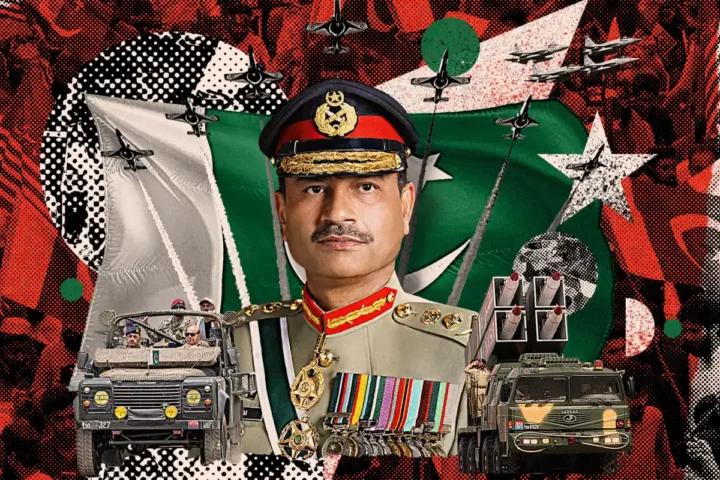
There is a particular kind of despair that sets in when the institutions meant to check power become instruments of it instead. Prisons can be endured, at least in theory, if the promise of a fair hearing still waits somewhere down the road. Censorship can be resisted if a judge, somewhere, still answers to the law rather than to the men who make it. What happens, though, when the last recourse — the courtroom itself — has already been captured? This is the question posed, with damning specificity, by a new report from the International Federation for Human Rights and the Human Rights Commission of Pakistan, Under the Bench: Mapping Corruption Risks in Pakistan’s Justice System. Its conclusion is not that Pakistan’s judiciary is flawed in the ordinary, forgivable way that all human institutions are flawed. It is that the judiciary has been remade — deliberately, methodically — into an extension of the security state it was meant to restrain.
This is worth sitting with, because “corruption” is a word that tends to conjure something smaller than what the report describes: an official pocketing a bribe, a clerk skimming a fee. The FIDH and HRCP researchers, drawing on thirty anonymized interviews with judges, lawyers, journalists, and activists, use a different and more serious term. What they find, they conclude, “may amount to grand corruption” — the abuse of high office at a scale that itself constitutes a human-rights violation. The distinction matters. Petty corruption is a tax on daily life. Grand corruption is a redesign of the system’s purpose, so that courts no longer exist chiefly to adjudicate the law but to protect the people who hold power and discipline those who challenge them.
The mechanics of that redesign are, in their way, almost mundane — which is what makes them so effective. Pakistan’s courts are drowning: some 2.4 million cases sit pending nationwide, and the country ranks 101st of 143 nations on criminal justice and 129th on civil justice in the World Justice Project’s Rule of Law Index. Backlog of this magnitude is not merely an inefficiency; it is a resource that can be allocated. A hearing date can be bought or buried. A First Information Report — the document that formally opens a criminal case in Pakistan — can be delayed or accelerated for a price, and evidence can be quietly reshaped along the way. Justice, under these conditions, does not fail so much as it becomes a commodity, available to whoever can pay, and unavailable, categorically, to whoever cannot.
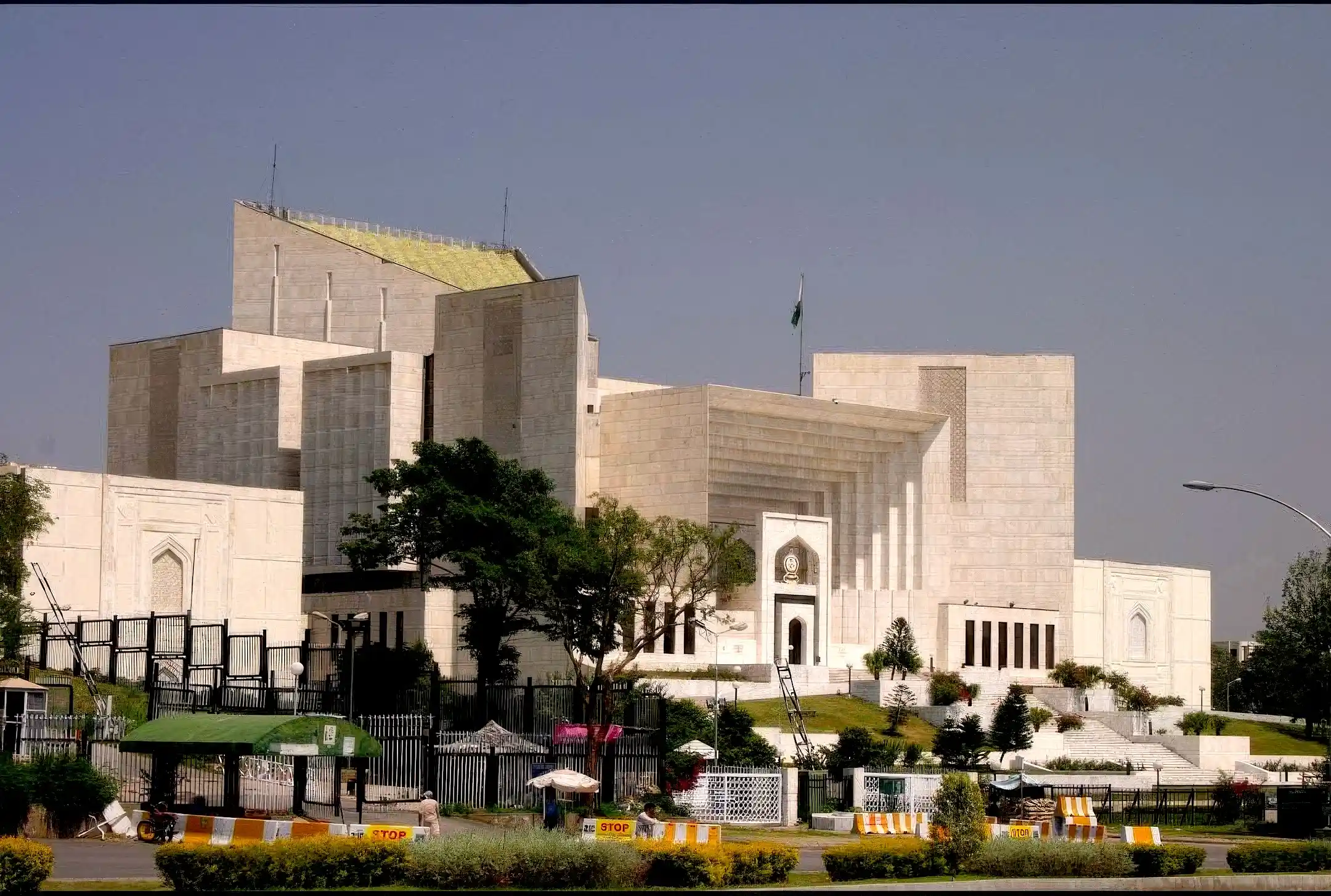
Layered atop this dysfunction is something more deliberate: a constitutional restructuring that has stripped the judiciary of what independence it once had. The 26th and 27th amendments, passed in 2024 and 2025, inserted members of parliament into the body that selects judges, empowered a judicial council to remove judges for the conveniently vague offense of “inefficiency,” and created a new Federal Constitutional Court whose leadership is effectively chosen by the prime minister. Interviewees for the report describe intelligence agencies keeping dossiers on judges’ financial improprieties — not to prosecute them, but to hold them in reserve, as leverage. Judges who rule the wrong way are transferred to punitive postings. The message, absorbed all the way down to the lower courts, is unambiguous: survival on the bench depends on compliance, not integrity.
It is tempting to treat this as an abstraction — a matter of institutional design, of interest mainly to legal scholars. The report insists otherwise, and it does so through cases that make the abstraction impossible to ignore. Imaan Zainab Mazari-Hazir, a human-rights lawyer, and her husband, Hadi Ali Chattha, were accused last August of “cyber terrorism” for social-media posts critical of the military and supportive of Baloch and Pashtun activists; Chattha’s offense, notably, was simply reposting his wife’s words. An Islamabad special court revoked their bail and pushed forward with what Amnesty International called a baseless trial. In January, both were convicted and sentenced to what has been reported as up to seventeen years in prison — for speech. Since then, their appeals have been slow-walked: hearings dropped from the docket, adjournments granted in the prosecution’s absence, deadlines set by the Supreme Court itself quietly ignored. The obstruction is not incidental. It is the point.
Dr. Mahrang Baloch’s case follows the same pattern at even higher stakes. A prominent organizer against enforced disappearances in Balochistan, she was placed in administrative detention last spring, buried under dozens of terrorism and sedition charges, and this past June sentenced to life imprisonment — alongside fellow activist Sibghat Ullah Shah Jee — after a largely secret jail trial that produced no direct evidence linking her to the violence she was accused of inciting. Rights groups have called the verdict what it appears to be: the use of anti-terrorism law not against terrorism, but against a movement.
#Pakistan: UN experts condemn life sentence against Baloch #humanrights defender Dr. Mahrang Baloch as grave injustice. “These convictions risk silencing independent voices in #Balochistan and further shrinking civic space.”https://t.co/0F2GhgyJDY pic.twitter.com/TvTl8WgJrZ
— UN Special Procedures (@UN_SPExperts) July 8, 2026
What connects Mazari and Chattha to Mahrang Baloch is not simply that all three ran afoul of the state. It is that the judiciary functioned, in each instance, exactly as the FIDH–HRCP report says it now functions: as a mechanism for converting dissent into a legal problem, and legal problems into years behind bars.
And it does not stop with high-profile activists. The report’s most sobering finding may be how thoroughly this two-tiered system swallows the powerless by default. In blasphemy cases — nearly eight hundred people were detained on such charges in 2024 alone, overwhelmingly from poor and minority communities — conviction rates run around ninety-five percent, driven by judges reluctant to confront extremist pressure and evidentiary contradictions that no one has the money or connections to challenge. Torture, too, is described as a function of wealth: those who can bribe their way clear of abuse are less likely to be tortured into a confession than those who cannot. Corruption, in this telling, is not a distortion of justice. It is the operating logic that decides who is tortured and who walks free, who is heard and who is silenced — including within the profession itself, where women make up just seventeen percent of enrolled lawyers and hold only seven of 126 seats in the upper judiciary, a “boys’ club,” as the report’s interviewees put it, in which merit competes poorly against patronage.
Anti-corruption bodies that might address any of this — the National Accountability Bureau, the Federal Investigation Agency, the Supreme Judicial Council — are described by those closest to the system not as safeguards but as instruments of selective punishment, wielded against critics of the military and shelved for everyone else. Meanwhile, the journalists and whistleblowers who might expose the pattern face their own legal exposure, under defamation statutes and the same cyber-crime law used against Mazari, for the crime of looking too closely.
It would be reasonable to conclude, after reading this report, that there is nothing left to appeal to — that a judiciary this thoroughly captured cannot, by definition, hold itself to account. And yet the report resists that conclusion, and so should we. Its authors point, rightly, to the fact that Mahrang Baloch and Imaan Zainab Mazari-Hazir are still speaking, still organizing, still testing a system built to exhaust them. They point to Pakistan’s own history — the lawyers’ movement that helped bring down General Pervez Musharraf’s emergency rule was not a myth, and the bar associations now mobilizing over these very arrests suggest that the legal profession’s conscience has not been fully extinguished, whatever has happened to its courts. And they point to the reforms that remain, at least theoretically, on the table: reversing the amendments that politicized judicial appointments, insulating whistleblowers, building accountability mechanisms that investigate power rather than protect it.
None of this amounts to optimism, exactly. A judiciary bent this deliberately into a weapon does not straighten itself out through good intentions. But institutions, unlike the people trapped inside them, are not permanent. They are built, and they can be unbuilt, and rebuilt again — provided enough people still believe the difference between a courtroom and a cell is worth insisting on. That belief, stubbornly, persists in Pakistan, in the lawyers still filing appeals they know will be delayed, and in the activists still speaking the words that got them imprisoned. It is a thin thread. It may be the only one left.