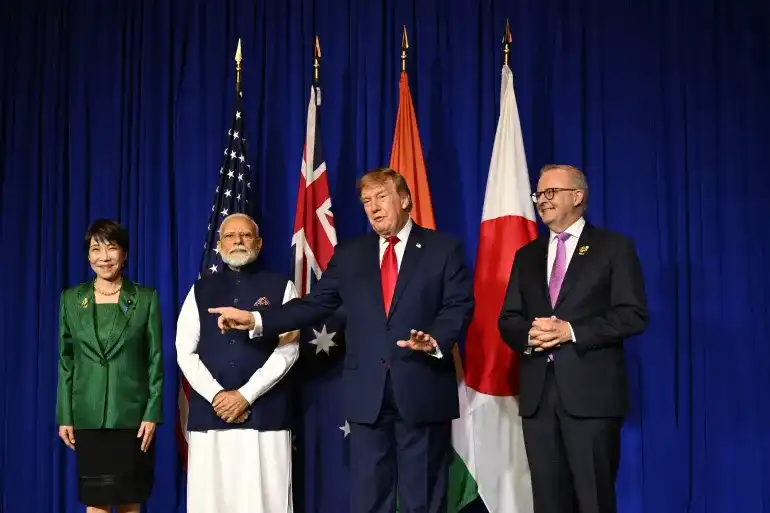
The leaders of the United States, India, Japan and Australia convened in Manila on November 17 for the first Quad summit in more than two years, issuing a joint statement that paired opposition to “destabilizing or unilateral actions” and “economic coercion, including through arbitrary export restrictions,” with a set of concrete operational commitments on maritime surveillance, trusted artificial intelligence, cybersecurity and private-sector ties.
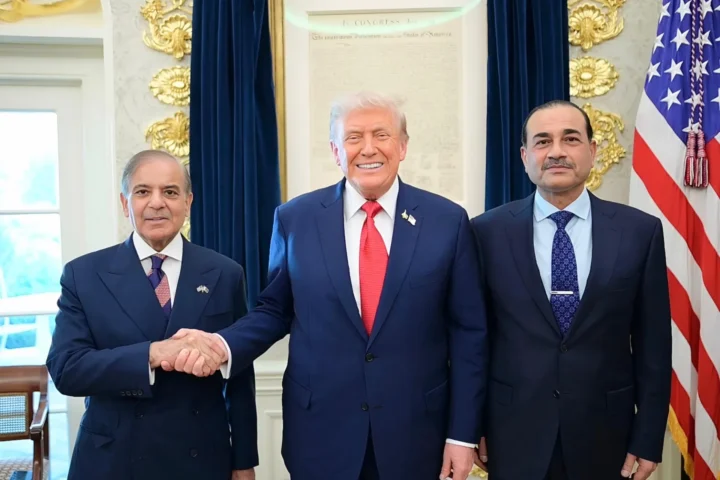
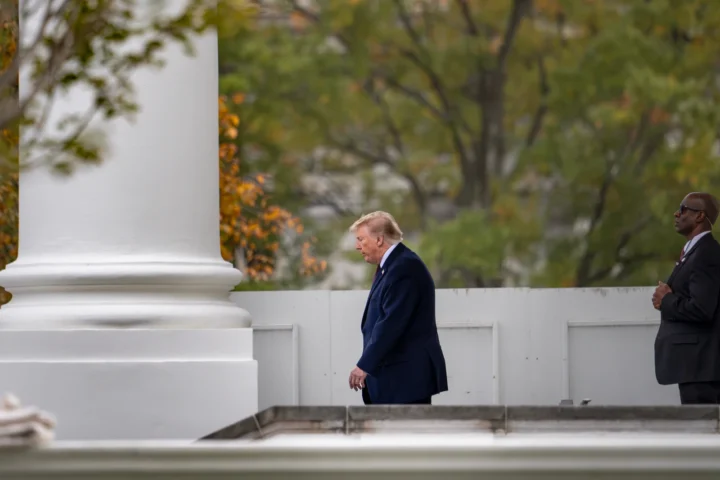
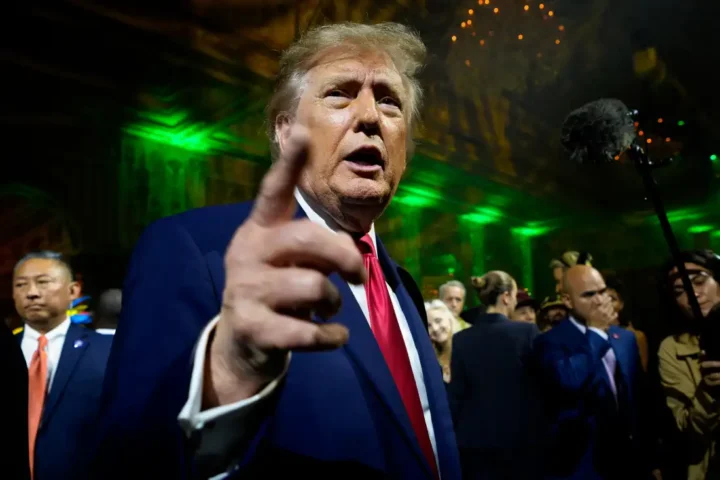
The meeting, held at the Solaire Resort on the margins of the ASEAN-related summits, brought together President Donald Trump, Prime Minister Narendra Modi, Prime Minister Sanae Takaichi and Prime Minister Anthony Albanese. It was Trump’s first Quad leaders’ gathering since returning to office and Takaichi’s first as Japan’s prime minister. The joint press release noted that the gathering marked nearly a decade since the Quad’s revival and the tenth anniversary of the Free and Open Indo-Pacific vision first articulated by the late Japanese Prime Minister Shinzo Abe in 2016. “A decade on, that vision is stronger than ever,” the leaders stated.
The statement reaffirmed unwavering support for ASEAN centrality and unity while committing the four countries to ensure “open, safe, and resilient maritime transit corridors in the Indo-Pacific.” It announced the Indo-Pacific Maritime Surveillance Collaboration, under which the partners’ P-8 and P-3C patrol aircraft are scheduled to fly together in a maritime exercise for the first time in a Quad context in 2027. Indian officials indicated the initial activity is planned alongside Exercise Sea Dragon in Guam in March 2027, focused in part on illegal fishing and trafficking. The release also welcomed progress on the Quad Partnership for Cable Connectivity and Resilience, including an expanded Australian contribution on electricity cables and upcoming undersea cable projects in the Indian Ocean.
On technology, the leaders affirmed the Super Intelligence Accelerator (AI Accelerator in Australian, Indian and Japanese usage), previously announced by foreign ministers in Atlanta, which is intended to coordinate and fund trusted AI access, deployment and technical assistance across the Indo-Pacific. Trump stated that the partners are spending more than $85 million on this effort. They also announced enhanced Quad Cybersecurity Cooperation in response to a “rapid increase in the number and scale of cyber incidents in the region.” Separately, the inaugural Quad Business Leaders’ Forum is scheduled for early 2027; Modi indicated India would host it in Mumbai in the first quarter of that year, bringing together business leaders, officials and policy experts to promote commercial partnerships.
The leaders “unequivocally condemn[ed] terrorism and violent extremism in all its forms and manifestations, including cross-border terrorism,” and committed to strengthening existing counterterrorism cooperation. They expressed “grave concerns about economic coercion, including through arbitrary export restrictions,” and said they are “securing critical supply chains.” No country was named, but the language tracks longstanding concerns over China’s use of export licensing on rare earths and related materials. Chinese shipments of certain rare-earth compounds and metals to the United States have remained substantially below pre-restriction levels even after partial suspensions of broader controls; one analysis found average monthly U.S. imports of rare-earth compounds and metals fell by nearly 75 percent in the period after the October 2025 Busan understanding relative to the prior baseline. China has extended temporary suspensions of certain October 2025 measures into early 2027, but licensing requirements on seven medium and heavy rare earths imposed in April 2025 remain in force.
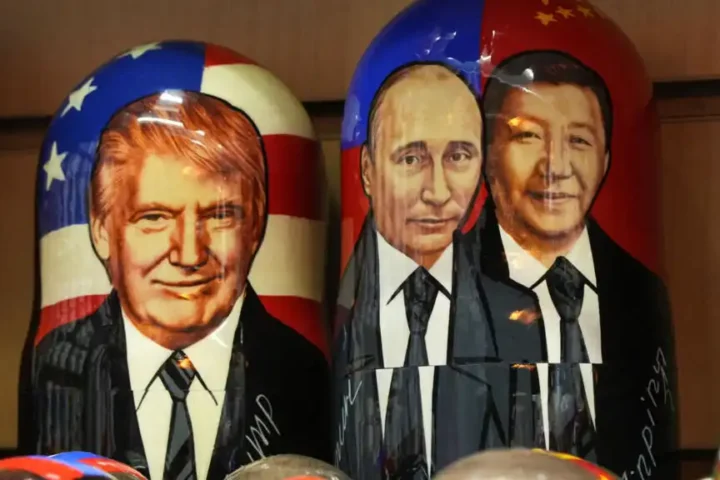
The Manila meeting occurred days before Trump’s scheduled trilateral engagement with Chinese President Xi Jinping and Russian President Vladimir Putin in Shenzhen on the sidelines of the APEC summit. Chinese Premier Li Qiang, who attended the China-ASEAN summit in Manila earlier in the week, called for early conclusion of a Code of Conduct in the South China Sea and for China and ASEAN to “stand united” and “ward off interference.” Chinese state-linked commentary has previously characterized Quad activity as a “small-circle” effort that risks internationalizing South China Sea disputes.
Operational cooperation among the four navies has continued at a lower level. In early November, India, the United States, Japan and Australia conducted Exercise Malabar 2026 in waters south of Tokyo, with a focus on multi-domain operations including anti-submarine warfare. India deployed the indigenous Shivalik-class stealth frigate INS Sahyadri; Japan contributed the helicopter destroyer JS Ise, the frigate JS Mogami and a submarine; Australia sent the frigate HMAS Stuart and a P-8A; and the United States provided P-8A aircraft and amphibious transport docks. This was the 30th iteration of Malabar and the sixth involving all four Quad partners as exclusive participants. Malabar began as a bilateral U.S.-India exercise in 1992 and expanded permanently to include Japan in 2015 and Australia thereafter.
Maritime friction in the region has remained elevated. Philippine authorities reported tracking 101 distinct Chinese navy and coast guard vessels around four disputed features—including Scarborough Shoal, Second Thomas Shoal, Thitu Island and Sabina Shoal—in September 2026, nearly double the prior month’s count. Incidents have included water-cannon use, close approaches by Chinese aircraft to Philippine patrol planes, and interference with resupply or medical-evacuation missions to the grounded Philippine vessel at Second Thomas Shoal. These episodes occur against the backdrop of the 2016 arbitral tribunal award under the United Nations Convention on the Law of the Sea, which rejected China’s “nine-dash line” claims as incompatible with the Convention; China has not accepted the award. The Quad statement in Manila avoided explicit reference to the South China Sea or the arbitral ruling, a point noted by some observers as a softening relative to prior leaders’ documents, while retaining language on freedom of navigation, overflight and opposition to force or coercion.
India’s participation reflected both continuity and practical emphasis. Modi described the Quad as “a constructive and trusted partnership” that should deliver “trusted solutions for the entire Indo-Pacific” across maritime security, supply chains, technology and disaster response. He noted that foreign ministers of the four countries had met five times since January 2025. On the sidelines of the broader ASEAN and East Asia Summit meetings, India proposed longer-term maritime cooperation with ASEAN (including coast-guard coordination and shared domain awareness), free e-tourist visas for ASEAN citizens, and measures on critical-minerals supply chains and cyber-forensics training. India’s real GDP growth accelerated to 8.2 percent year-on-year in the first half of calendar 2026; Moody’s has projected 7 percent growth for fiscal 2026-27, citing private consumption, public infrastructure spending and services strength. The decision to host the inaugural Quad Business Leaders’ Forum in Mumbai places a commercial track in a city that is already a major financial and shipping hub.
The four partners’ combined economic weight and naval capabilities give the practical initiatives some operational grounding. The United States, Japan and Australia operate advanced P-8 maritime patrol aircraft; India has expanded its own maritime surveillance and has integrated indigenous platforms into multilateral exercises. Cable connectivity and critical-minerals efforts address documented vulnerabilities: China dominates processing of many rare earths, and undersea cables carry the bulk of trans-Pacific and Indian Ocean data traffic. The $85 million AI commitment is modest relative to overall regional technology investment but is framed as seed funding for trusted ecosystems rather than a comprehensive industrial policy. Counterterrorism language is longstanding; the explicit reference to cross-border terrorism aligns with positions India has advanced in other multilateral settings.
Whether the new workstreams produce measurable results will depend on follow-through. The 2027 patrol-aircraft exercise, the Mumbai business forum and the AI Accelerator are calendar-specific. Cable and minerals cooperation builds on earlier ministerial frameworks, including a Critical Minerals Initiative discussed by foreign ministers. The absence of a named host or date for the next leaders’ summit leaves open the question of cadence; previous annual summits occurred from 2021 through 2024 before the gap that the Manila meeting closed. The joint release’s emphasis on “partnership of action” and “tangible benefits” is consistent with the Quad’s post-2017 evolution from a diplomatic consultation into a vehicle for functional cooperation in maritime domain awareness, disaster response, infrastructure standards and technology.
The Manila gathering took place in a Philippine capital that has itself been a frontline for South China Sea incidents while simultaneously hosting Chinese Premier Li Qiang for the China-ASEAN summit days earlier. The sequence illustrates the overlapping architectures of the region: ASEAN-centered meetings, the East Asia Summit, the Quad and bilateral channels all operating in the same week. The Quad statement’s explicit endorsement of ASEAN centrality is consistent with prior documents and with the practical reality that many of the maritime and supply-chain issues the partners seek to address run through ASEAN member states’ waters and economies.
The 90-minute leaders’ discussion and the subsequent joint release therefore function both as a political signal and as an operational work plan. The signal is the resumption of leader-level engagement after a two-year hiatus, under new U.S. and Japanese leadership, in a non-member host country, immediately before a U.S.-China-Russia trilateral. The work plan consists of dated exercises, a business forum, funding for trusted AI, expanded cable work and continued information-sharing on maritime domain awareness and cyber incidents. Delivery against those specific items will determine whether the “force for good” formulation in the joint text translates into measurable increments in surveillance capacity, supply-chain diversification and commercial connectivity across the Indo-Pacific.