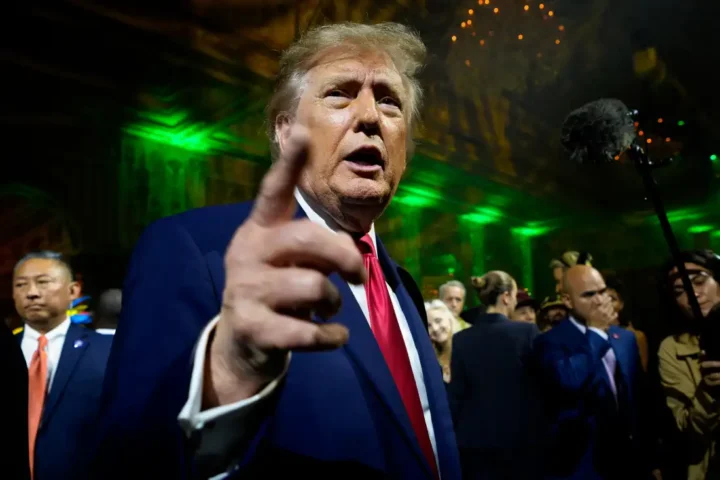
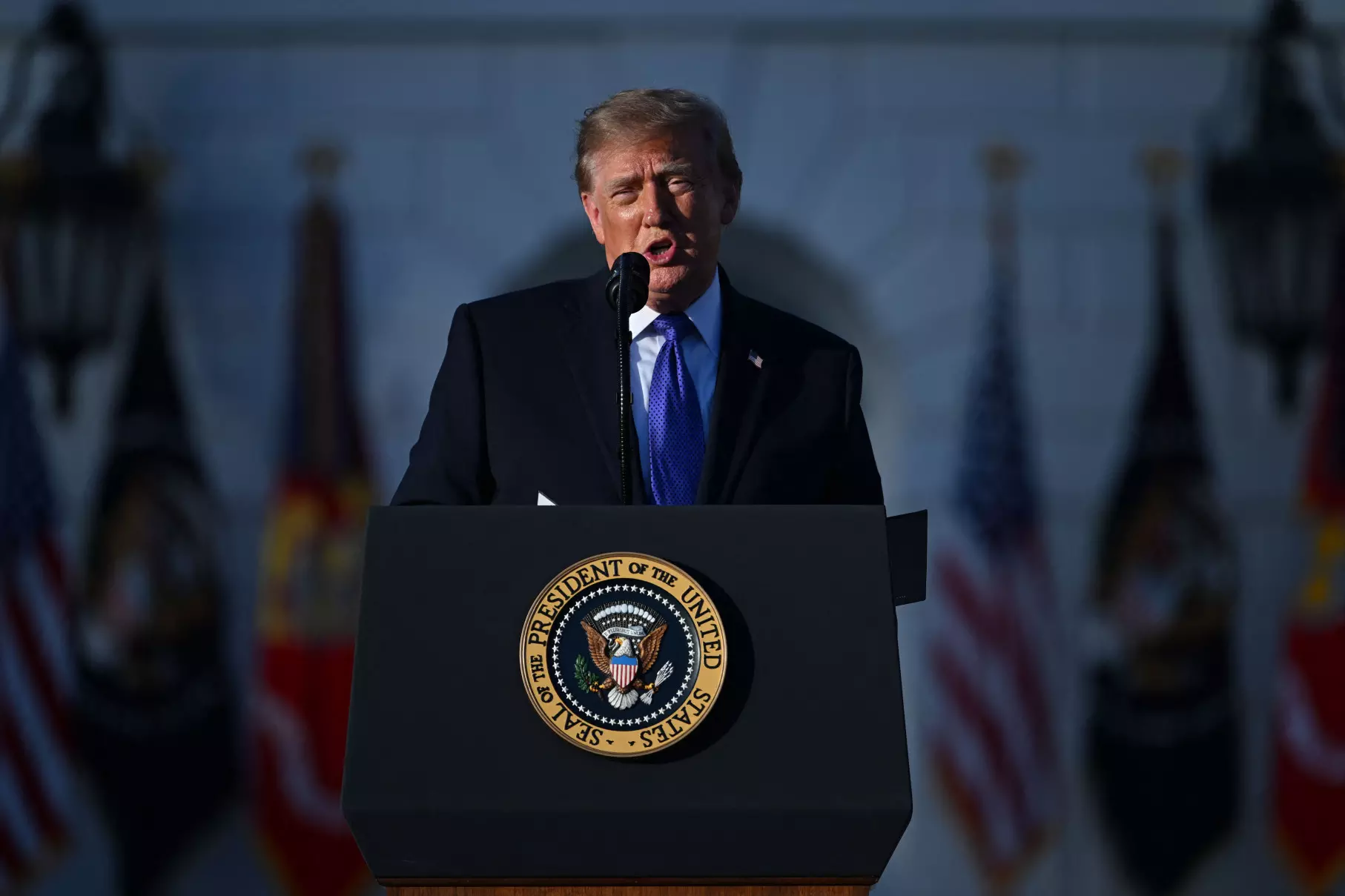
On November 20, 2026, at the White House, President Donald Trump renewed his criticism of the Federal Reserve. He described the central bank as “very political” and said it was “destroying the country” by raising rates whenever strong economic numbers appear. “When we have these great numbers, you shouldn’t keep raising the rates. You should lower rates because we’re a better credit,” he argued. He then pointed to India: low interest rates paired with roughly 7 percent GDP growth, which, he claimed, meant the United States could reach 14, 15, or even 20 percent growth under similar conditions. He praised Alan Greenspan for cutting rates on good data and asserted that each percentage point of rates carries an enormous fiscal cost.
The remarks captured a long-running tension in the U.S. system. The Federal Reserve operates under a dual mandate of price stability and maximum employment. Its independence is designed precisely so that it can tighten when inflation risks rise, even if growth looks solid and political pressure for easier policy is intense. In 2026 that pressure has been constant. Inflation has remained elevated—PCE inflation around 3.6 percent in September, well above the 2 percent target—while real GDP expanded at a 3.4 percent annualized rate in the third quarter, supported by strong consumer spending and heavy AI-related investment. Unemployment has hovered near 4.1 percent. The Fed raised its target range by 25 basis points in September to 3.75–4 percent, held steady in October amid two dissents favoring a further hike, and minutes showed nearly all participants expecting additional tightening to return inflation to target. Markets have priced a high probability of another increase in December.
Contributions to U.S. Real GDP Growth
Q3 2026 (Annualized Rate: 3.4%)
Sources: U.S. Bureau of Economic Analysis (Advance Estimate, Oct 2026); author calculations. Figures in percentage points. Net exports subtract from GDP.
Trump’s preferred logic—that strong data should automatically produce lower rates because the United States becomes a better credit risk—runs counter to standard central-bank practice. When demand is robust and inflation is above target, policy rates are raised to prevent overheating from becoming entrenched. Unchecked inflation erodes real incomes, distorts investment decisions, and eventually forces sharper tightening later. Historical episodes, including the 1970s, illustrate the cost of delaying that adjustment. Greenspan’s era also included rate increases when conditions warranted; the notion that good numbers always justify cuts does not match the record. The claim of 15–20 percent sustainable GDP growth for the United States is outside any credible estimate of potential growth, which most analyses place near 2 percent once productivity and labor-force trends are considered. Short-term surges can occur, but they are not a policy target that monetary easing alone can deliver.
The fiscal arithmetic is real. U.S. public debt has exceeded $40 trillion. Net interest costs reached roughly $1.05 trillion in fiscal 2026 on debt held by the public, with total interest expense near $1.36 trillion. That is among the largest federal outlays and has grown rapidly as older low-rate debt rolls over. Higher policy rates increase the government’s borrowing costs and can crowd out other spending. Yet the alternative—keeping rates artificially low while inflation remains elevated—risks higher long-term yields if investors demand compensation for inflation uncertainty. Political attacks on the Fed’s independence can themselves raise the term premium. Kevin Warsh, the current chair and a Trump appointee, has overseen the September increase and defended the need for price stability, even as the administration has publicly preferred lower rates. That sequence has tested the boundary between presidential preference and institutional mandate.
Major U.S. Federal Spending Categories
Fiscal Year 2026 (Total Net Outlays: ~$7.4 trillion)
Source: U.S. Treasury Monthly Treasury Statement (FY2026 final). Net interest ~$1.05 trillion. Shares of total net outlays. “Other” includes income security, veterans, transportation, and remaining functions.
India’s experience supplies a useful contrast rather than a simple template. The Reserve Bank of India raised its policy repo rate by 25 basis points to 5.50 percent in October 2026—the first increase in nearly four years—and shifted its stance to calibrated tightening. Nominal policy rates in India are therefore higher than the current U.S. federal-funds range, not lower. Real rates depend on the inflation differential; Indian consumer inflation has been rising toward and above the upper end of the RBI’s 2–6 percent tolerance band around its 4 percent target, while growth has remained strong. First-quarter real GDP growth for fiscal 2026–27 reached 7.8 percent, and the central bank projects around 7.1 percent for the full year. The comparison Trump drew therefore rests on an incomplete reading of nominal rates and on the different structural starting points of the two economies.
What India has demonstrated more clearly is the payoff from sustained reforms and institutional arrangements that support higher potential growth. Production-linked incentive schemes have drawn investment into electronics, semiconductors, and other manufacturing segments. Electronics production has expanded sharply over the past decade, and defense production has risen to record levels. Digital public infrastructure—most visibly the Unified Payments Interface—has lowered transaction costs and broadened formal financial access. Goods and Services Tax rationalization, insolvency reforms, and incremental liberalization of foreign investment have reduced some frictions. Gross fixed capital formation remains elevated, and the government has signaled a path of gradual fiscal consolidation. The RBI’s flexible inflation-targeting framework, adopted in 2016, assigns primary weight to price stability while “keeping in mind the objective of growth.” The Monetary Policy Committee’s statutory accountability—requiring an explanation if inflation stays outside the band for three consecutive quarters—creates a clearer nominal anchor than the more open-ended U.S. dual mandate. India’s bond-yield premium over U.S. Treasuries has narrowed over time as risk perceptions have improved, reflecting better fundamentals rather than permanently suppressed policy rates.
These differences matter. India’s growth rate is consistent with a large emerging economy still adding capital, labor, and productivity in a catch-up process. The United States is a mature, high-income economy whose trend growth is constrained by slower labor-force expansion and more modest productivity gains outside specific sectors such as AI. Lowering U.S. policy rates below levels consistent with inflation control would not convert the American economy into an Indian-style high-growth emerging market. It would more likely produce higher inflation, a weaker dollar, and eventually higher long-term rates as markets reprice risk. Emerging-market central banks, including India’s, have historically needed higher nominal rates partly because of larger inflation and exchange-rate volatility; credibility has allowed India to operate with relatively moderate real rates while growth stayed elevated.
The U.S. system’s core issue is not that the Federal Reserve raises rates when data are strong. It is that the political system repeatedly pressures an independent central bank to prioritize short-term growth and financing costs over the longer-term stability that underpins sustainable growth and low risk premiums. High public debt amplifies that pressure because interest costs are now large and visible. Yet the institutional design—independent governors with long terms, a dual mandate that explicitly includes price stability, and transparent communication—exists to resist exactly that pressure. When inflation has remained above target for years amid energy shocks and strong demand, the Fed’s response has been gradual and data-dependent. Market pricing of further hikes suggests investors still expect the institution to lean against persistent price pressures.
India’s recent performance illustrates a complementary point. High growth has coincided with a central bank willing to tighten when inflation risks rise, alongside structural policies that expand productive capacity. Digital infrastructure, targeted manufacturing incentives, and incremental regulatory simplification have supported investment and formalization without requiring the policy rate to remain permanently low. The result is not 15–20 percent growth, but a durable expansion near 7 percent that has proved resilient to external shocks. That combination—credible monetary policy plus reforms that raise potential output—is harder to replicate through rate cuts alone.
Trump’s comparison therefore highlights a genuine policy debate: how much weight should be given to near-term growth and debt-service costs versus the credibility needed to keep inflation expectations anchored. The data show an economy that is expanding solidly while inflation remains above the Fed’s objective, a debt stock whose interest burden has become material, and a central bank that has already begun modest tightening under a chair appointed by the current administration. India’s experience does not validate the idea that low rates automatically produce double-digit growth in a mature economy. It does show that sustained high growth is more likely when monetary policy maintains a clear inflation focus and structural policies expand the economy’s capacity. The U.S. system’s challenge is to preserve the independence that allows the first of those conditions while fiscal and regulatory choices address the second.