America turned 250 with fireworks in the sky, storms on the horizon, and a political argument in the middle of the celebration. That is not a contradiction. It is the most American thing imaginable. The country that likes to present itself as an idea, a promise, and a model for the world also remains a quarrelsome democracy still deciding what, exactly, it owes to its past and its future.
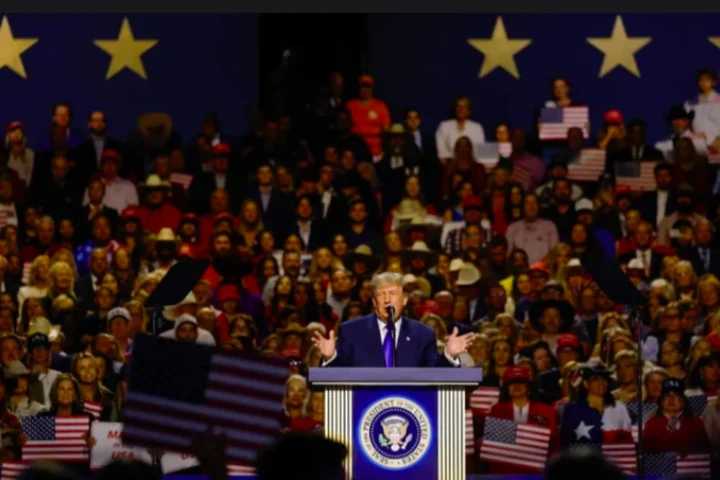
The official mood in Washington was meant to be triumphant. The capital hosted an enormous spectacle, complete with military flyovers, a massive fireworks display, and a presidential speech praising America’s greatness and exceptional role in the world. President Trump framed the anniversary in explicitly exalted terms, declaring that the United States is “the hope, the promise, the light and the glory” among nations. That kind of language is familiar in American civic life. The country has always been fond of describing itself not merely as successful, but as singular.
There is truth in that impulse. For 250 years, the United States has done more than survive. It has expanded across a continent, welcomed generations of immigrants, fought a civil war, built a global economy, helped defeat fascism, and reinvented itself repeatedly through upheaval and protest. It has produced breathtaking innovations in science, industry, art, and political thought. It has also exported a democratic ideal that continues to inspire people well beyond its borders. On a milestone birthday, Americans are right to feel pride in that record.
But pride is not the same as self-admiration. A mature nation should be able to celebrate its achievements without pretending its history is simple or its present is resolved. The deeper question raised by America’s 250th anniversary is not whether the United States has mattered. It obviously has. The question is whether it can still live up to the principles it says it represents. That is where anniversary rhetoric matters. The more loudly a country praises itself, the more carefully it should listen to the gap between its ideals and its behavior.
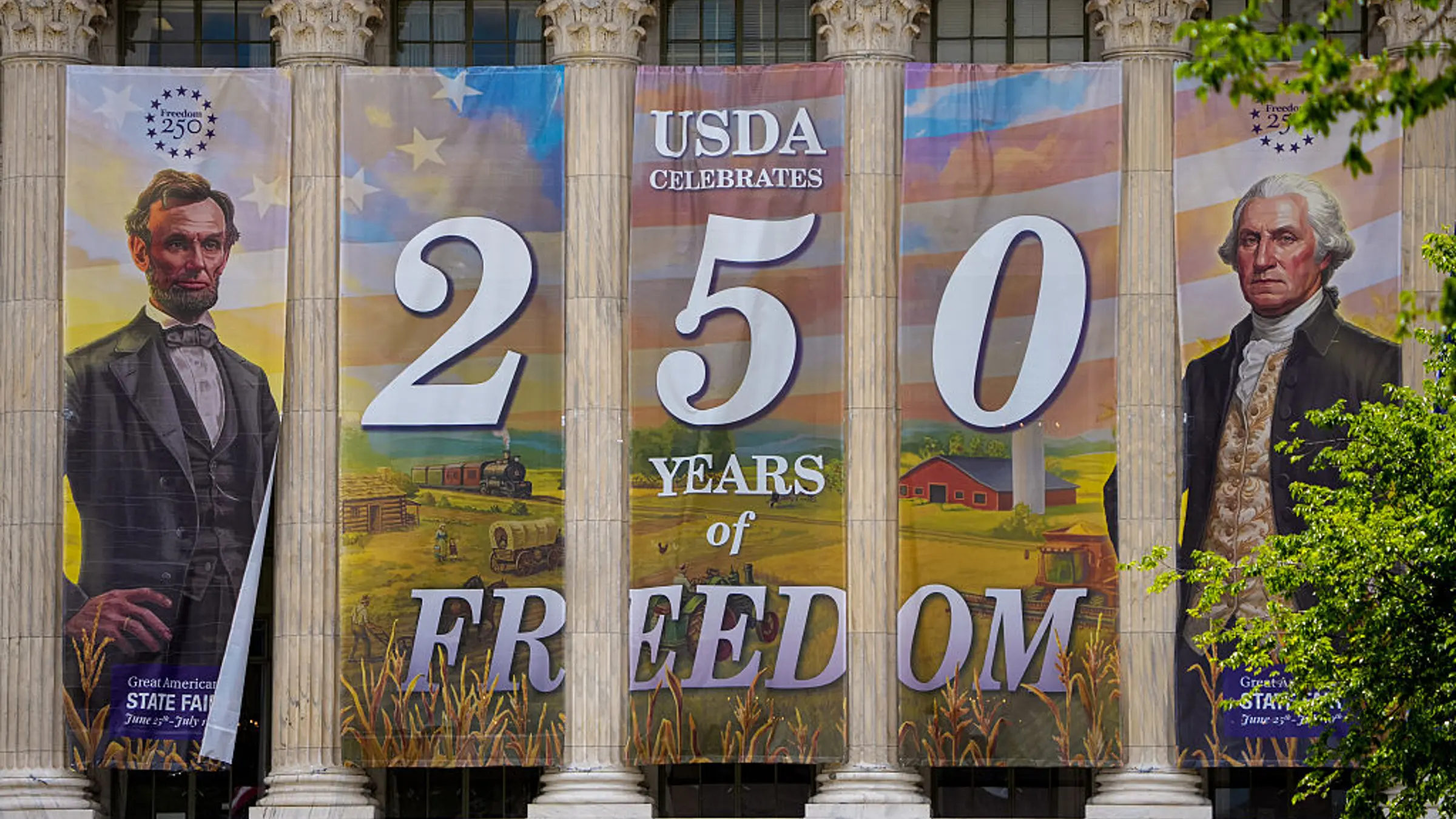
This year’s celebration was complicated by conditions that felt almost symbolic. A dangerous heat wave spread across much of the central and eastern United States, forcing cancellations and postponements of parades, concerts, and fireworks in several states. In Washington, the Great American State Fair on the National Mall briefly closed as temperatures climbed near 101 degrees Fahrenheit, while forecasters warned millions under heat alerts to take precautions. Severe weather later disrupted or delayed events in the capital and other cities, with thunderstorms forcing evacuations and schedule changes. The country’s birthday did not arrive in gentle weather. It arrived under strain.
That matters because climate extremes have become part of the civic landscape, not just the meteorological one. When a national celebration is repeatedly forced to bend around heat alerts, storms, and public safety concerns, the symbolism is unavoidable. America’s 250th did not merely showcase scale and spectacle. It revealed vulnerability. A nation that loves to imagine itself as unstoppable found itself adjusting to the basic limits of the environment it has helped destabilize. In that sense, the weather was not a side story. It was part of the story.
The political atmosphere was just as revealing. Trump’s address leaned hard into American exceptionalism, but also into partisan themes that critics said were unusual for a holiday traditionally used to unify the country. Reports described the speech as mixing patriotic appeals with campaign-style rhetoric, including attacks on political opponents and references to voter ID and the “Save America Act”. Instead of a reflection on shared citizenship, the event often felt like a rally wrapped in red, white, and blue.
That is a choice, and choices on symbolic occasions matter. National anniversaries can either widen the circle of belonging or shrink it. They can remind citizens that democracy rests on pluralism, restraint, and common purpose. Or they can turn public memory into a weapon. When a president uses a moment like this to emphasize enemies, ideological purity, and political loyalty, he is doing more than delivering a speech. He is defining the nation in exclusionary terms, which is a dangerous thing to do on a day that should belong to everyone.
Yet even that tension says something important about the American experiment. The United States has never been a place where the meaning of the nation was settled once and for all. It has always been argued over. The Founders argued over federal power and liberty. Abolitionists argued over slavery. Suffragists argued over citizenship. Civil rights leaders argued over equality. Immigrants, workers, veterans, and dissidents have all widened the nation’s moral vocabulary by refusing to accept that the story was complete. The anniversary becomes richer, not poorer, when we acknowledge those disputes.
That is why the language of “exceptionalism” can be both powerful and risky. At its best, it means that America is exceptional because it is committed to a radical idea: that a diverse people can govern themselves through law, compromise, and consent. At its worst, it becomes a claim that America is morally above criticism. Those are very different propositions. The first is a democratic aspiration. The second is a form of self-congratulation that history rarely rewards.
The 250th birthday should therefore be treated not as a victory lap but as a civic audit. What has the country done with its power? Who has been included in its promises, and who has been left waiting? Which institutions have held, and which have been hollowed out by distrust? These are not anti-American questions. They are the most American questions possible. A republic worth celebrating is one that can face itself honestly.
There is also something instructive in the scale of the celebration itself. Americans tend to mark major anniversaries with outsized confidence: world’s fairs, parades, grand displays, and national self-inventory. That instinct is not accidental. It reflects a country that sees public ceremony as a way of narrating itself into coherence. But the stronger the pageant, the more visible the fractures beneath it. In 2026, those fractures included partisan polarization, climate stress, and a sense that even a birthday party had become politically contested. The lesson is not that celebration should stop. It is that celebration without reflection becomes propaganda.
For all that, the American story still contains genuine reason for admiration. Few countries have repeatedly expanded the circle of rights and belonging as far as the United States has, however unevenly and incompletely. Few have generated such a durable civic mythology while remaining open enough to be remade by newcomers and dissenters. Few have combined grandeur and imperfection so transparently. That combination is not a flaw in the national character. It is the national character.
So yes, America at 250 deserves the fireworks. It deserves the music, the spectacle, the confidence, and the chance to honor the generations who built the republic. But it also deserves candor. The nation’s greatest strength has never been perfection. It has been the capacity to argue over ideals without surrendering them entirely. That is what makes the 250th anniversary meaningful. It is not a declaration that the republic has arrived. It is a reminder that the republic is still being built.
And that may be the most fitting lesson of all. The United States does not need to prove that it is the greatest nation by saying so at full volume. It needs to show, again and again, that its promises are still worth defending, extending, and renewing. At 250, the country’s challenge is not to admire its reflection. It is to decide whether it can still become the best version of itself.